
Finding the right words can make your writing clearer, more descriptive, and more engaging. Learning synonyms for haze helps you express ideas with greater precision, whether you are describing weather conditions, confusion, smoke, mist, or an unclear situation. Choosing the best alternative also improves your vocabulary and prevents repetitive language.
This guide explores the most useful synonyms for haze, along with their meanings, examples, and common usage. Some words work best for natural weather, while others describe mental uncertainty or a smoky atmosphere. Understanding these differences allows you to select the most accurate word for every context.
By practicing synonyms for haze, you can strengthen your speaking and writing skills with confidence. Whether you are a student, writer, professional, or English learner, these alternatives will help you communicate more effectively and make your sentences sound natural and varied.

What Does “Haze” Really Mean?
The word “haze” is a noun and a verb. In simple English, it refers to a thin mist, smoke, or dust in the air that makes it hard to see clearly. It can also describe a state of mental confusion where you cannot think straight.
Native speakers understand this word in two distinct ways. Physically, it refers to reduced visibility caused by weather or pollution. Mentally, it relates to feeling groggy, tired, or emotionally disconnected from reality.
Connotation
Connotation is the emotional feeling or cultural meaning that a word carries or suggests.
- Positive tone: A soft, dreamy, or romantic atmospheric effect.
- Negative tone: Air pollution, smog, dangerous driving conditions, or a state of toxic mental confusion.
- Neutral tone: A basic weather condition or natural atmospheric state.
Etymology
The word “haze” has a mysterious origin. It likely comes from the Old English word hasu, which meant “grey” or “ash-colored.”
- Old English (450–1100): Used primarily to describe a dull, greyish color in nature.
- Middle English (1100–1500): Developed connections to dim or foggy weather conditions.
- Modern English (1500–Present): Shifted into a specific noun for atmospheric blur and mental fog.
Pronunciation
- US: /heɪz/
- UK: /heɪz/
Syllables
The word is a single syllable: haze.
Affixation Pattern
- Root: Haze
- Prefix: None
- Suffix: None
Synonyms List
Mist (Noun) — US: /mɪst/ | UK: /mɪst/
Meaning: A fine spray of tiny water droplets floating in the air near the ground.
Example:
- The morning mist covered the quiet lake.
- Cool mist sprayed from the garden hose.
Smog (Noun) — US: /smɑːɡ/ | UK: /smɒɡ/
Meaning: A thick, dirty fog mixed with smoke and atmospheric pollution.
Example:
- The big city was covered in heavy smog.
- Factory smoke contributes to the daily smog.
Fog (Noun) — US: /fɔːɡ/ | UK: /fɒɡ/
Meaning: A thick cloud of tiny water droplets close to the Earth’s surface that severely limits vision.
Example:
- Drivers slowed down because of the thick fog.
- The airport canceled flights due to heavy fog.
Murk (Noun) — US: /mɜːrk/ | UK: /mɜːk/
Meaning: Deep darkness or thick, dirty air that is very difficult to see through.
Example:
- We could barely see through the murk of the swamp.
- The headlights could not pierce the heavy murk.
Vapor (Noun) — US: /ˈveɪpər/ | UK: /ˈveɪpə/
Meaning: A visible suspension of fine particles of matter, smoke, or moisture in the air.
Example:
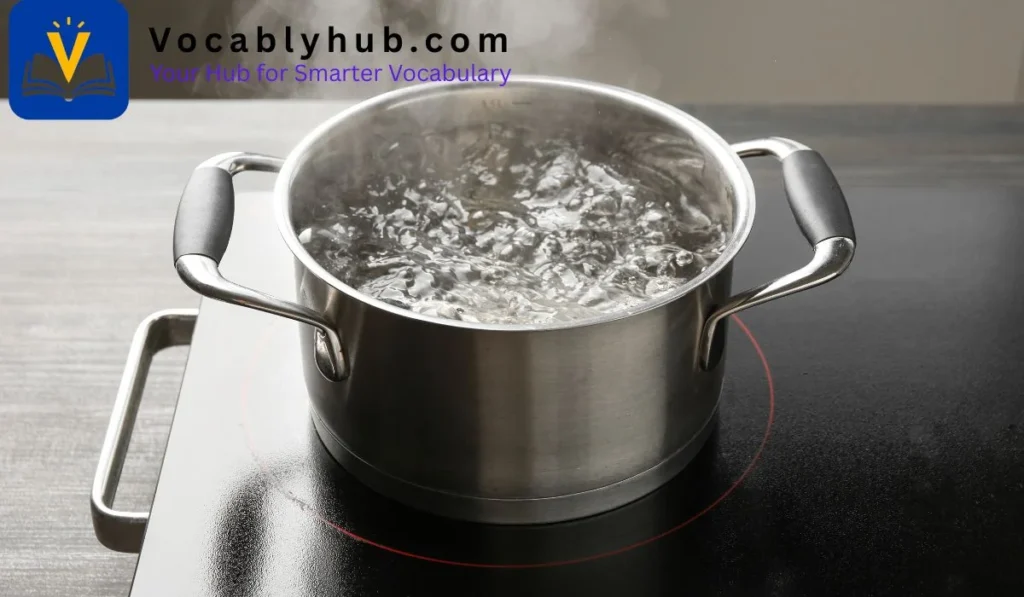
- Water vapor rose quickly from the boiling pot.
- A strange purple vapor filled the science lab.
Cloudiness (Noun) — US: /ˈklaʊdinəs/ | UK: /ˈklaʊdinəs/
Meaning: The state of being gloomy, overcast, or lacking in visual clarity.
Example:
- The pool water had a strange, milky cloudiness.
- We could not see the stars due to the cloudiness.
Blur (Noun) — US: /blɜːr/ | UK: /blɜː/
Meaning: A shape or sight that cannot be seen clearly because its edges are indistinct.
- The speeding car was just a fast blur.
- Without my glasses, everything is a total blur.
Daze (Noun) — US: /deɪz/ | UK: /deɪz/
Meaning: A state of stunned confusion or shock where a person cannot react quickly.
Example:
- He walked around in a daze after the crash.
- The sudden bad news left her in a total daze.
Gloom (Noun) — US: /ɡluːm/ | UK: /ɡluːm/
Meaning: A state of partial or total darkness that creates a sad atmosphere.
Example:
- A single candle flickered in the deep gloom.
- The thick forest was filled with winter gloom.
Fume (Noun) — US: /fjuːm/ | UK: /fjuːm/
Meaning: Strong, unpleasant, and often dangerous gas, smoke, or vapor in the air.
Example:
- The strong chemical fume made everyone cough.
- Gasoline fumes filled the small repair garage.
Steam (Noun) — US: /stiːm/ | UK: /stiːm/
Meaning: The hot vapor that comes from boiling water or wet, hot surfaces.
Example:
- The bathroom mirror was covered in hot steam.
- Steam rose slowly from the hot cup of coffee.
Obscurity (Noun) — US: /əbˈskjʊrəti/ | UK: /əbˈskjʊərəti/
Meaning: The state of being hidden, dark, or impossible to see clearly.
Example:
- The tiny cabin was hidden in mountain obscurity.
- The path vanished into the black obscurity of night.
Dimness (Noun) — US: /ˈdɪmnəs/ | UK: /ˈdɪmnəs/
Meaning: A state of low light or poor visibility where shapes are faint.
Example:
- He strained his eyes in the dimness of the room.
- The dimness of the cave made us feel uneasy.
Confusion (Noun) — US: /kənˈfjuːʒn/ | UK: /kənˈfjuːʒn/
Meaning: A mental state where thoughts are jumbled and nothing makes sense.
Example:
- The complex map caused a lot of confusion.
- Her mind was in a state of utter confusion.
Film (Noun) — US: /fɪlm/ | UK: /fɪlm/
Meaning: A very thin layer of something covering a surface that alters its clarity.
Example:
- A fine film of dust covered the old table.
- A greasy film formed on the kitchen window.
Muzzle (Noun) — US: /ˈmʌzl/ | UK: /ˈmʌzl/
Meaning: A rare dialect term for a dense, smoky fog or suffocating atmospheric mist.
Example:
- The sailors complained about the thick Atlantic muzzle.
- An industrial muzzle settled low over the old town.
Souper (Noun) — US: /ˈsuːpər/ | UK: /ˈsuːpə/
Meaning: An informal slang term for an exceptionally thick, yellowish city fog.
Example:
- We could not walk home in that pea-souper.
- The London streets vanished beneath a heavy souper.
Blanket (Noun) — US: /ˈblæŋkɪt/ | UK: /ˈblæŋkɪt/
Meaning: A thick, continuous layer of mist or smoke covering an entire area.
Example:
- A thick blanket of snow covered the small town.
- A dense blanket of smog rolled over the valley.
Stupor (Noun) — US: /ˈstuːpər/ | UK: /ˈstuːpə/
Meaning: A state of near-unconsciousness or mental insensitivity caused by fatigue or illness.
Example:
- He sat in a sleepy stupor all afternoon.
- The heavy medicine left her in a deep stupor.
Bewilderment (Noun) — US: /bɪˈwɪldərmənt/ | UK: /bɪˈwɪldəmənt/
Meaning: A feeling of being completely baffled, puzzled, or mentally lost.
Example:
- She stared at the hard math problem in bewilderment.
- The sudden change of plans caused total bewilderment.
Brume (Noun) — US: /bruːm/ | UK: /bruːm/
Meaning: A literary term for a heavy, wet, and cold fog or mist rising from the sea.
Example:
- A chilly winter brume rose slowly off the river.
- The old lighthouse was completely hidden by the salt brume.
Mizzle (Noun) — US: /ˈmɪzl/ | UK: /ˈmɪzl/
Meaning: A combination of very fine, misty rain and dense fog.
Example:
- We canceled our outdoor picnic because of the cold mizzle.
- The daily mizzle kept the streets wet and slippery.
Haar (Noun) — US: /hɑːr/ | UK: /hɑː/
Meaning: A cold, wet sea fog that drifts inland over coastal areas.
Example:
- The thick haar rolled in from the North Sea.
- The coastal road was dangerous to drive on due to the haar.
Fret (Noun) — US: /fret/ | UK: /fret/
Meaning: A localized coastal mist or damp sea fog that cools the air rapidly.
Example:
- A sudden damp fret crept over the beach.
- We could feel the cold fret on our faces as we walked.
Exhalation (Noun) — US: /ˌekshəˈleɪʃn/ | UK: /ˌekshəˈleɪʃn/
Meaning: A poetic or scientific term for a vapor, steam, or gas emitted from the ground.
Example:
- Damp exhalations rose from the muddy swamp floor.
- The volcanic exhalations filled the air with sulfur.
Effluvium (Noun) — US: /eˈfluːviəm/ | UK: /eˈfluːviəm/
Meaning: An unpleasant, invisible vapor or waste discharge that hangs in the atmosphere.
Example:
- An acidic effluvium hung over the chemical processing plant.
- The garbage dump released a terrible, smelly effluvium.
Reek (Noun) — US: /riːk/ | UK: /riːk/
Meaning: A thick cloud of strong, smelly smoke or warm, damp vapor.
Example:
- The dark reek of coal fire filled the tiny room.
- A warm reek of cabbage soup floated out of the kitchen.
Smudder (Noun) — US: /ˈsmʌdər/ | UK: /ˈsmʌdə/
Meaning: A dense, suffocating cloud of dust, smoke, or fine soot.
Example:
- The dust storm created a dangerous smudder on the highway.
- We could not breathe because of the heavy coal smudder.
Smother (Noun) — US: /ˈsmʌðər/ | UK: /ˈsmʌðə/
Meaning: A dense, swirling cloud of dust, mist, or spray that makes breathing difficult.
Example:
- A thick smother of fine sand swept across the desert.
- We were blinded by the white smother of the blizzard.
Murkiness (Noun) — US: /ˈmɜːrkinəs/ | UK: /ˈmɜːkinəs/
Meaning: The state of being thick, gloomy, or dirty with very poor light transmission.
Example:
- The lake was closed because of the water’s extreme murkiness.
- The storm added to the overall murkiness of the afternoon.
Opaqueness (Noun) — US: /oʊˈpeɪknəs/ | UK: /əʊˈpeɪknəs/
Meaning: The physical quality of being cloudy or non-transparent so light cannot pass through.
Example:
- The glass window lost its clarity and took on a dusty opaqueness.
- We could not see the fish due to the cloudy opaqueness of the water.
Turbidity (Noun) — US: /tɜːrˈbɪdəti/ | UK: /tɜːˈbɪdəti/
Meaning: The cloudiness or muddiness of a fluid caused by stirred-up sediment or particles.
Example:
- The heavy rains increased the turbidity of the local river.
- We measured the high turbidity of the pond water.
Somberness (Noun) — US: /ˈsɑːmbərnəs/ | UK: /ˈsɒmbənəs/
Meaning: A state of dark, dim, and depressing weather or atmospheric conditions.
Example:
- The winter somberness made us want to stay indoors.
- The gray clouds added to the somberness of the empty street.
Nebulousness (Noun) — US: /ˈneb-jə-ləsnəs/ | UK: /ˈneb-jʊ-ləsnəs/
Meaning: The quality of being cloudy, vague, or lacking distinct form.
Example:
- The nebula was beautiful in its glowing nebulousness.
- His argument was difficult to follow because of its nebulousness.
Vague (Noun) — US: /veɪɡ/ | UK: /veɪɡ/
Meaning: An abstract state of uncertainty, indistinctness, or lack of clear shape.
Example:
- The distant mountain peak was lost in a vague grayness.
- Her memories of the early childhood event were just vague.
Obfuscation (Noun) — US: /ˌɑːbfʌˈskeɪʃn/ | UK: /ˌɒbfʌˈskeɪʃn/
Meaning: The act or state of making something unclear, dark, or hard to understand.
Example:
- The politician’s speech was filled with confusing obfuscation.
- The thick dark smoke was a natural obfuscation.
Bewilderedness (Noun) — US: /bɪˈwɪldərdnəs/ | UK: /bɪˈwɪldədnəs/
Meaning: A state of intense mental confusion or feeling completely lost.
Example:
- He looked around the busy airport in complete bewilderment.
- Her sudden departure left the family in deep bewilderment.
Perplexity (Noun) — US: /pərˈpleksəti/ | UK: /pəˈpleksəti/
Meaning: The state of being highly puzzled, complicated, or difficult to figure out.
Example:
- She scratched her head in sheer perplexity over the puzzle.
- The mysterious instructions caused a lot of perplexity.
Disorientation (Noun) — US: /dɪsˌɔːriənˈteɪʃn/ | UK: /dɪsˌɔːriənˈteɪʃn/
Meaning: A temporary mental state where you lose your sense of direction or time.
Example:
- Jet lag can cause a strange feeling of disorientation.
- The dark cave caused instant spatial disorientation.
Distraction (Noun) — US: /dɪˈstrækʃn/ | UK: /dɪˈstrækʃn/
Meaning: A state of mental division where one is unable to focus or think with clarity.
Example:
- He stared out the window in a quiet state of distraction.
- The loud construction noise caused endless distraction.
Dream (Noun) — US: /driːm/ | UK: /driːm/
Meaning: A state of mind that is quiet, dreamy, and disconnected from surrounding reality.
Example:
- She spent the warm summer afternoon in a lazy dream.
- He walked through his daily chores as if in a dream.
Reverie (Noun) — US: /ˈrevəri/ | UK: /ˈrevəri/
Meaning: A state of being pleasantly lost in one’s own thoughts or a daydream.
Example:
- A loud knock on the front door broke her deep reverie.
- He drifted off into a pleasant reverie during the class.
Trance (Noun) — US: /træns/ | UK: /trɑːns/
Meaning: A half-conscious state of mind characterized by an absence of active thought.
Example:
- The beautiful music put the entire audience in a trance.
- She stared at the flickering fireplace in a quiet trance.
Giddiness (Noun) — US: /ˈɡɪdinəs/ | UK: /ˈɡɪdinəs/
Meaning: A lightheaded, dizzy state of mind where things feel slightly spinning or blurry.
Example:
- The fast roller coaster ride caused a brief moment of giddiness.
- She sat down quickly to stop the sudden wave of giddiness.
Woolliness (Noun) — US: /ˈwʊlinəs/ | UK: /ˈwʊlinəs/
Meaning: A state of being vague, fuzzy, or lacking sharp and clear thinking.
Example:
- Her head cold caused a terrible sense of mental woolliness.
- The proposal was rejected because of the woolliness of its ideas.
Synonyms by Tone
Positive
- Mist: Suggests a beautiful, refreshing, or romantic natural scene.
- Vapor: Sounds scientific, clean, or light.
- Reverie: A beautiful, peaceful mental escape.
Neutral
- Fog: A standard, objective description of weather.
- Blur: Simply describes something that is out of focus.
- Film: Describes a thin layer without any emotional judgment.
- Turbidity: Technical and objective.
Negative
- Smog: Implies dirty pollution and unhealthy living conditions.
- Murk: Carries a spooky, scary, or unpleasant feeling.
- Stupor: Describes an unhealthy or worrisome mental state.
- Effluvium: Associated with bad smells and toxic waste.
Playful / Informal
- Souper: A fun, classic way to describe a very thick fog.
- Woolliness: A funny way to describe fuzzy thoughts.
Mini Comparison: Haze vs. Mist vs. Smog
Understanding the tiny differences between these words keeps your writing accurate.
- Haze: Caused by heat, dust, or dry particles. It looks like a thin, shimmering veil across the sky. Use it for hot summer days or distant views.
- Mist: Caused entirely by water droplets. It feels wet, cool, and fresh. Use it for mornings near lakes, rivers, or rainstorms.
- Smog: Caused by human pollution mixed with fog. It is dirty, yellow or grey, and hard to breathe. Use it for busy cities and industrial zones.
Context-Based Usage
Daily Conversation
In casual chats, people rarely say “atmospheric haze.” They usually say fog or mist when talking about weather. If they feel tired, they might say they are in a daze or a blur.
Writing or Blogging
Bloggers use words like smog to highlight environmental issues. They might use blanket to make their travel and lifestyle descriptions sound poetic.
Professional or Academic Tone
Academics prefer precise terms like obscurity, vapor, or turbidity. These words sound objective and professional in research papers.
Creative or Informal Use
Novelists love words like murk or gloom to build suspense in a spooky story. Slang like souper adds historical flavor to fiction.
Common Mistakes & Native Usage
Misuse Scenarios
Do not use smog to describe a beautiful mountain morning. Smog always implies pollution. Similarly, do not use stupor to describe a simple, quick moment of forgetfulness.
Overuse Warnings
Using the word “haze” too many times makes your writing repetitive. Swap it out for specific options based on whether you mean weather or a mental state.
Register Notes
- Formal Written: Obscurity, Cloudiness, Vapor, Turbidity.
- Informal Spoken: Blur, Daze, Souper, Woolliness.
Real-Life Mini Scenarios
Workplace
An employee stays up all night working on a big project. The next morning, they sit through a meeting in a complete daze, unable to follow the presentation.

Social Situations
Friends driving to a concert notice the city lights are dim. One explains that the heavy summer smog is trapping the city lights.
Media / Pop Culture
A movie director uses a machine to create artificial mist on set. This gives the haunted house scene a spooky appearance.
Writing or Storytelling
An author describes a detective walking through the London murk to find clues. The word choice instantly creates suspense.
Practice Exercise:
Choose the best synonym to complete each sentence.
- A thick _______ covered the valley early in the morning.
- A. Mist
- B. Sunshine
- C. Rainbow
- His explanation only added to the _______ surrounding the issue.
- A. Clarity
- B. Confusion
- C. Certainty
- Smoke created a light _______ over the city after the fire.
- A. Haze
- B. Brightness
- C. Shadow
- The distant mountains appeared through a soft _______.
- A. Fog
- B. Desert
- C. River
- After working all night, she felt mentally _______.
- A. Clear
- B. Foggy
- C. Energetic
- The photographer captured the landscape through a golden _______ at sunrise.
- A. Haze
- B. Thunder
- C. Storm
- The witness’s memory remained _______ after so many years.
- A. Vague
- B. Exact
- C. Perfect
- Warm weather often creates a light _______ above the road.
- A. Mist
- B. Snow
- C. Ice
- The details became lost in a _______ of uncertainty.
- A. Cloud
- B. Precision
- C. Confidence
- Which word is the closest synonym for haze in the sentence, “A haze hung over the lake”?
- A. Mist
- B. Flame
- C. Rock
Application Task
Write one short paragraph describing a walk through a forest or a busy city street. Use at least two synonyms from this article to describe the air or your thoughts.
Answer Key
- A, 2. B, 3. A, 4. A, 5. B, 6. A, 7. A, 8. A, 9. A, 10. A
Conclusion
Learning synonyms for haze helps you communicate more clearly and choose words that match different situations. Whether you are describing weather, smoke, unclear views, or confusion, using the right synonym makes your writing more accurate and engaging.
By understanding the meanings and contexts of different synonyms for haze, you can avoid repetition and express your ideas with greater confidence. Regular practice also expands your vocabulary and improves both spoken and written English.
Keep exploring and using synonyms for haze in everyday conversations and writing exercises. The more you practice these alternatives, the easier it becomes to select the perfect word for any sentence and strengthen your overall language skills.
FAQs
1. What does “haze” mean?
“Haze” refers to a light mist, smoke, dust, or other particles in the air that make distant objects look unclear or less visible.
2. What is the best synonym for “haze”?
Depending on the context, mist, fog, smog, murk, and cloudiness can be used as synonyms for “haze.”
3. Is “haze” the same as “fog”?
Not exactly. Fog is mainly made of tiny water droplets and can greatly reduce visibility, while haze is often caused by dust, smoke, pollution, or other fine particles.
4. What are some synonyms for “haze” in a figurative sense?
For an unclear mental or emotional state, alternatives include confusion, uncertainty, obscurity, bewilderment, and cloudiness.
5. What is the opposite of “haze”?
Depending on the context, opposites include clarity, clearness, visibility, and transparency.

Shahzeena Shazadi is the founder and lead writer at VocablyHub.com, where she creates accurate, reader-focused English language content designed to help people communicate with clarity and confidence. She specializes in synonyms, antonyms, word meanings, idioms, and practical vocabulary guides that simplify complex language concepts for everyday use. Every article is carefully researched, fact-checked, and written in clear, accessible language using reliable references and real-world examples. Her goal is to provide helpful, trustworthy content that supports learners at every stage of their English language journey.
Her editorial approach focuses on accuracy, transparency, and user value while following modern content quality standards. She regularly reviews and updates content to keep information relevant, useful, and easy to understand. Through VocablyHub.com, Shahzeena Shazadi is committed to publishing reliable language resources that help students, writers, educators, professionals, and English learners expand their vocabulary, improve their writing skills, and communicate with confidence in academic, professional, and everyday situations.