
Finding the right synonyms for lake can help you describe bodies of water with greater variety and precision. Depending on the size, location, and appearance of the water, different words may create a more accurate picture for your readers.
Learning synonyms for lake can also expand your vocabulary and make descriptive writing more engaging. Words such as pond, reservoir, lagoon, and waterbody may work in certain contexts, but each has its own meaning and usage.
In this guide, you’ll discover useful synonyms for lake with clear meanings and practical examples. You’ll learn how each alternative differs and when it can be used naturally in everyday or creative writing.
Whether you’re a student, writer, or English learner, understanding these alternatives can help you choose words more confidently. With the right vocabulary, you can create clearer descriptions and make your writing more vivid and natural.
What Does “Lake” Really Mean?
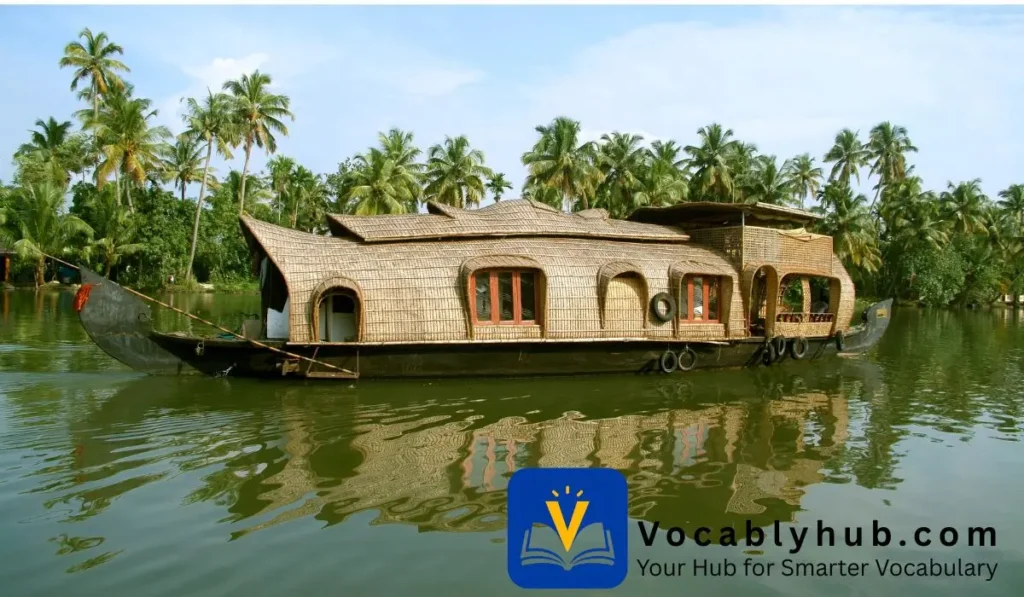
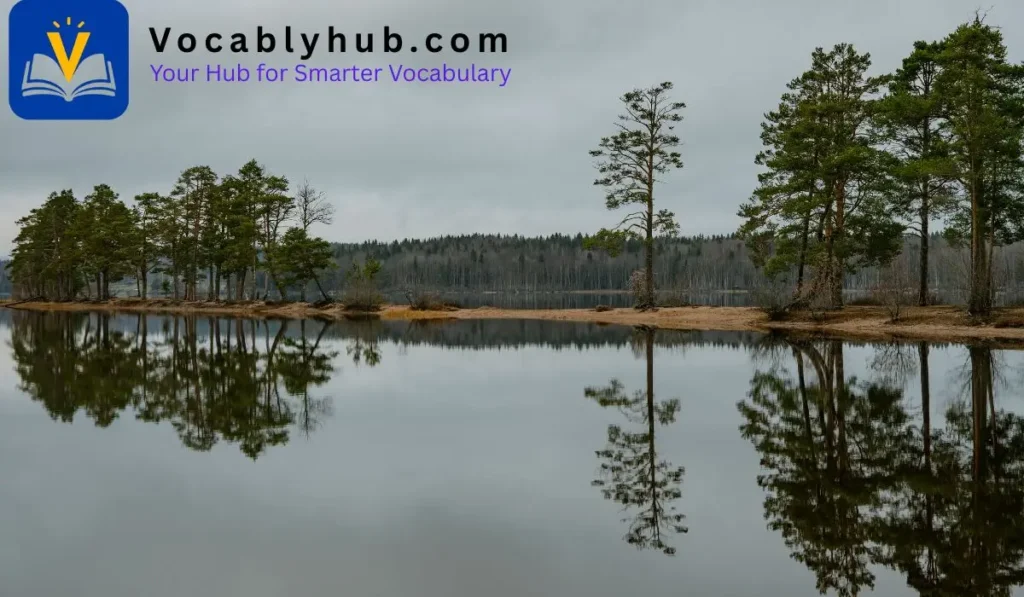
Lake describes a large body of water surrounded by land. The emotional tone is typically peaceful, scenic, and refreshing. Native speakers use it when talking about outdoor recreation, geography, or waterfront vacations.
It functions as a noun. A simple definition is a large inland body of standing water.
Connotative Meaning
The emotional tone of this word is predominantly positive, tranquil, and evocative of nature.
(Connotation refers to the emotional or cultural associations surrounding a word, apart from its literal dictionary definition.)
Etymology
The term originates from Middle English and Old English, derived from the Latin word lacus, meaning basin or pond.
- Old English (450–1100): The word appeared as lac, referring to a pool, pit, or body of standing water.
- Middle English (1100–1500): Evolved into lake, widening in use to describe larger inland water basins.
- Modern English (1500–Present): Fully established to denote any extensive inland sheet of water.
Pronunciation (US & UK – IPA)
- US: /leɪk/
- UK: /leɪk/
Syllables
lake
Affixation Pattern
- Root: Lake (Indo-European base root meaning hole or fluid expanse)
- Prefix: None
- Suffix: None (monosyllabic base noun)
Synonyms List
Pond (Noun) — US / UK: /pɑːnd/ / /pɒnd/
- Meaning: A small body of still water, typically smaller than a lake.
- Tone/Register: Everyday / Common
- Examples:
- Frogs croaked loudly near the edge of the quiet garden pond.
- Children sailed small wooden toy boats across the calm village pond.
Reservoir (Noun) — US / UK: /ˈrɛz.ɚ.vwɑːr/ / /ˈrɛz.ə.vwɔː/
- Meaning: A large natural or artificial lake used as a source of water supply.
- Tone/Register: Technical / Formal
- Examples:
- The city water reservoir levels dropped significantly during the summer drought.
- Engineers monitored the large municipal reservoir for structural safety.
Lagoon (Noun) — US / UK: /ləˈɡuːn/ / /ləˈɡuːn/
- Meaning: A stretch of salt water separated from the sea by a low sandbank or coral reef.
- Tone/Register: Descriptive / Coastal
- Examples:
- Bright blue tropical fish swam near the shallow island lagoon.
- Tourists rented kayaks to explore the calm turquoise coastal lagoon.
Pondlet (Noun) — US / UK: /ˈpɑːnd.lɪt/ / /ˈpɒnd.lɪt/
- Meaning: A very small pond or depression holding water.
- Tone/Register: Literary / Descriptive
- Examples:
- Rainwater collected in a tiny forest pondlet after the storm.
- Birds gathered around the shallow woodland pondlet to drink.
Tarn (Noun) — US / UK: /tɑːrn/ / /tɑːn/
- Meaning: A small mountain lake or pool formed by glacial activity.
- Tone/Register: Geographic / Formal
- Examples:
- Hikers paused to photograph the crystal-clear glacial tarn high above.
- The remote mountain tarn reflected the jagged rocky peaks perfectly.
Basin (Noun) — US / UK: /ˈbeɪ.sɪn/ / /ˈbeɪ.sɪn/
- Meaning: A large depression in the surface of the land containing water.
- Tone/Register: Geological / Formal
- Examples:
- The arid geological basin filled with temporary water during floods.
- Scientists studied the underground water flow within the mountain basin.
Pool (Noun) — US / UK: /puːl/ / /puːl/
- Meaning: A small area of still, deep water, especially one left by the tide.
- Tone/Register: Common / Casual
- Examples:
- Small minnows darted back and forth inside the rocky tidal pool.
- Sunlight sparkled across the deep forest pool hidden behind ferns.
Loch (Noun) — US / UK: /lɑːk/ / /lɒx/
- Meaning: A Scottish term for a lake or sea inlet.
- Tone/Register: Regional / Scottish
- Examples:
- Fog rolled slowly over the surface of the deep Scottish loch.
- Travelers admired the ancient castle ruins standing by the loch.
Lough (Noun) — US / UK: /lɑːk/ / /lɒx/
- Meaning: An Irish term for a lake or sea inlet.
- Tone/Register: Regional / Irish
- Examples:
- Fishermen cast their lines into the cold waters of the lough.
- Green hills surrounded the peaceful western lough at sunset.
Mere (Noun) — US / UK: /mɪər/ / /mɪə/
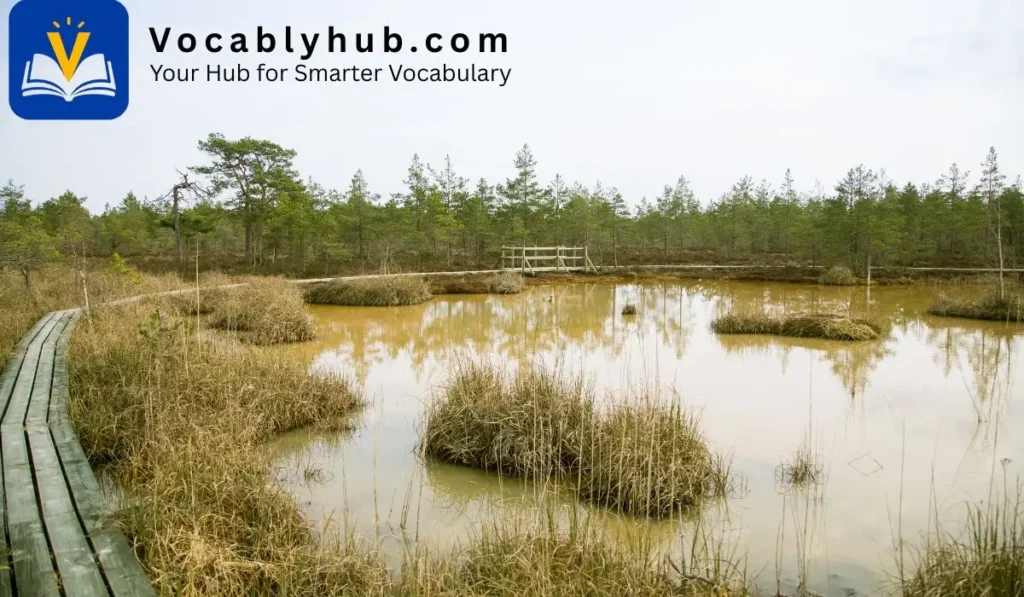
- Meaning: A sheet of standing water, a lake, or a marsh.
- Tone/Register: Archaic / Literary
- Examples:
- The old poem described a mysterious monster dwelling in the mere.
- Reeds swayed gently along the misty banks of the rural mere.
Oxbow (Noun) — US / UK: /ˈɑːks.boʊ/ / /ˈɒks.bəʊ/
- Meaning: A curved lake formed when a wide loop of a river is cut off.
- Tone/Register: Geographical / Technical
- Examples:
- Wildlife thrives undisturbed within the secluded river oxbow ecosystem.
- Geographers mapped the abandoned oxbow created by the shifting river.
Billabong (Noun) — US / UK: /ˈbɪl.ə.bɑːŋ/ / /ˈbɪl.ə.bɒŋ/
- Meaning: An arm of a river branching off and ending in a dead end, forming a stagnant pool.
- Tone/Register: Australian / Regional
- Examples:
- Kangaroos gathered near the muddy Australian billabong at dusk.
- The dry season turned the flowing creek into isolated billabongs.
Playa (Noun) — US / UK: /ˈplɑː.jə/ / /ˈplɑː.jə/
- Meaning: The flat bottom of an undrained desert basin that becomes a shallow lake after heavy rain.
- Tone/Register: Geological / Arid
- Examples:
- A rare desert rainstorm transformed the dry playa into a shallow lake.
- Reflections mirrored the cloudy sky across the vast white playa.
Lagoonlet (Noun) — US / UK: /ləˈɡuːn.lɪt/ / /ləˈɡuːn.lɪt/
- Meaning: A very small lagoon.
- Tone/Register: Rare / Descriptive
- Examples:
- The coral reef sheltered a calm little lagoonlet near the shore.
- Crabs scuttled along the sandy edge of the coastal lagoonlet.
Wetland (Noun) — US / UK: /ˈwɛt.lənd/ / /ˈwɛt.lənd/
- Meaning: Land consisting of marshes or swamps; saturated land.
- Tone/Register: Environmental / Formal
- Examples:
- Conservationists protected the vital wetland habitat from commercial development.
- Migratory birds nested safely within the protected coastal wetland.
Marsh (Noun) — US / UK: /mɑːrʃ/ / /mɑːʃ/
- Meaning: An area of low-lying land that is flooded in wet seasons.
- Tone/Register: Environmental / Common
- Examples:
- Tall grasses swayed in the breeze across the sprawling coastal marsh.
- Frogs and dragonflies inhabited the damp, nutrient-rich river marsh.
Swamp (Noun) — US / UK: /swɑːmp/ / /swɒmp/
- Meaning: An area of low, uncultivated ground where water collects.
- Tone/Register: Common / Descriptive
- Examples:
- Cypress trees grew thick and tall throughout the southern swamp.
- Alligators drifted silently through the dark waters of the swamp.
Fen (Noun) — US / UK: /fɛn/ / /fɛn/
- Meaning: A low and marshy or frequently flooded area of land.
- Tone/Register: Ecological / Formal
- Examples:
- Rare wildflowers bloomed across the damp peat fen in spring.
- Ecologists surveyed the unique plant species living in the fen.
Bog (Noun) — US / UK: /bɑːɡ/ / /bɒɡ/
- Meaning: Wet, spongy ground consisting essentially of decayed moss.
- Tone/Register: Descriptive / Common
- Examples:
- His heavy boots sank deep into the soft mossy highland bog.
- The ancient peat bog preserved historical artifacts for centuries.
Estuary (Noun) — US / UK: /ˈɛs.tʃuː.er.i/ / /ˈɛs.tjuː.ə.ri/
- Meaning: The tidal mouth of a large river, where the tide meets the stream.
- Tone/Register: Geographic / Scientific
- Examples:
- Saltwater mixed with fresh river water throughout the wide estuary.
- Flocks of shorebirds fed along the muddy banks of the estuary.
Inlet (Noun) — US / UK: /ˈɪn.lɛt/ / /ˈɪn.lɛt/
- Meaning: A narrow strip of water leading into land from a larger body.
- Tone/Register: Geographical / Common
- Examples:
- Small fishing boats anchored safely inside the sheltered rocky inlet.
- Waves gently lapped against the quiet shore of the coastal inlet.
Frith (Noun) — US / UK: /frɪθ/ / /frɪθ/
- Meaning: An arm of the sea or a deep estuary.
- Tone/Register: Archaic / Scottish
- Examples:
- Strong winds whipped across the cold Scottish frith on Saturday.
- Historical maps labeled the deep coastal indentation as a frith.
Reach (Noun) — US / UK: /riːtʃ/ / /riːtʃ/
- Meaning: A continuous stretch of river or water between two bends.
- Tone/Register: Nautical / Descriptive
- Examples:
- Sailors navigated carefully along the straight river reach at dawn.
- The calm water reach provided ideal conditions for rowing practice.
Slough (Noun) — US / UK: /sluː/ / /sluː/
- Meaning: A swamp or shallow body of water in a wetland region.
- Tone/Register: Regional / Common
- Examples:
- Turtles sunned themselves on logs floating in the quiet slough.
- Waterfowl nested peacefully among the reeds of the marshy slough.
Backwater (Noun) — US / UK: /ˈbækˌwɔː.tər/ / /ˈbækˌwɔː.tə/
- Meaning: Part of a river not reached by the current, where the water is stagnant.
- Tone/Register: Descriptive / Informal
- Examples:
- The canoe drifted slowly into the quiet, tree-lined river backwater.
- Lilliputian water lilies covered the surface of the stagnant backwater.
Deadwater (Noun) — US / UK: /ˈdɛdˌwɔː.tər/ / /ˈdɛdˌwɔː.tə/
- Meaning: A part of a river or stream with little or no current.
- Tone/Register: Specialized / Technical
- Examples:
- Anglers cast their flies toward the smooth surface of the deadwater.
- The stream current slowed to a complete halt in the deadwater.
Plash (Noun) — US / UK: /plæʃ/ / /plæʃ/
- Meaning: A small pool of standing water.
- Tone/Register: Literary / Archaic
- Examples:
- Rain collected in a grassy plash near the old wooden gate.
- Birds splashed happily in the garden plash after the shower.
Vlei (Noun) — US / UK: /fleɪ/ / /vleɪ/
- Meaning: A shallow minor lake or marsh, common in South Africa.
- Tone/Register: Regional / South African
- Examples:
- Flamingos gathered in large flocks at the seasonal desert vlei.
- The local vlei filled rapidly during the heavy rainy season.
Broad (Noun) — US / UK: /brɔːd/ / /brɔːd/
- Meaning: An expanse of shallow water formed by the widening of a river.
- Tone/Register: Regional / British
- Examples:
- Sailing boats glided smoothly across the open Norfolk broad.
- Holidaymakers rented motor cruisers to explore the scenic broad.
Tarnlet (Noun) — US / UK: /ˈtɑːrn.lɪt/ / /ˈtɑːn.lɪt/
- Meaning: A very small mountain tarn.
- Tone/Register: Rare / Literary
- Examples:
- A tiny tarnlet sparkled like a diamond among the alpine rocks.
- Melting snow fed the icy mountain tarnlet throughout June.
Inland Sea (Noun Phrase) — US / UK: /ˈɪn.lənd siː/ / /ˈɪn.lənd siː/
- Meaning: A very large saline or freshwater lake resembling a sea.
- Tone/Register: Descriptive / Grand
- Examples:
- Cargo ships navigated the massive waves of the inland sea.
- Sandy beaches stretched along the shores of the vast inland sea.
Waterhole (Noun) — US / UK: /ˈwɔː.tər.hoʊl/ / /ˈwɔː.tə.həʊl/
- Meaning: A natural hollow containing water, especially in a dry region.
- Tone/Register: Arid / Common
- Examples:
- Elephants gathered around the remote desert waterhole at midday.
- Travelers tracked wildlife near the shaded rural waterhole.
Quagmire (Noun) — US / UK: /ˈkwæɡ.maɪr/ / /ˈkwæɡ.maɪə/
- Meaning: A soft, boggy area of land that yields underfoot.
- Tone/Register: Literary / Descriptive
- Examples:
- The heavy wagon wheels became stuck in the thick muddy quagmire.
- Hikers avoided the treacherous quagmire hidden beneath tall reeds.
Sump (Noun) — US / UK: /sʌmp/ / /sʌmp/
- Meaning: A pit or hollow in which liquid collects.
- Tone/Register: Technical / Industrial
- Examples:
- Rainwater drained directly into the concrete basement sump.
- Engineers cleared debris from the drainage system sump.
Lagoonal Basin (Noun Phrase) — US / UK: /ləˈɡuː.nəl ˈbeɪ.sɪn/ / /ləˈɡuː.nəl ˈbeɪ.sɪn/
- Meaning: A geological depression containing a lagoon environment.
- Tone/Register: Scientific / Formal
- Examples:
- Geologists analyzed sediment layers inside the ancient lagoonal basin.
- Marine fossils were discovered throughout the protected lagoonal basin.
Splash Pool (Noun Phrase) — US / UK: /splæʃ puːl/ / /splæʃ puːl/
- Meaning: A small basin of water formed beneath a waterfall.
- Tone/Register: Descriptive / Outdoor
- Examples:
- Cool mist rose from the rocky splash pool below the falls.
- Hikers cooled their tired feet in the mountain splash pool.
Moraine Lake (Noun Phrase) — US / UK: /məˈreɪn leɪk/ / /mɒˈreɪn leɪk/
- Meaning: A body of water dammed by glacial debris or moraines.
- Tone/Register: Geographic / Technical
- Examples:
- The brilliant turquoise moraine lake attracted photographers worldwide.
- Glacial runoff fed the cold alpine moraine lake continuously.
Caldera Lake (Noun Phrase) — US / UK: /kælˈdɛr.ə leɪk/ / /kælˈdɛə.rə leɪk/
- Meaning: A lake formed in a volcanic crater or caldera collapse depression.
- Tone/Register: Geological / Scientific
- Examples:
- Deep blue water filled the steep walls of the extinct caldera lake.
- Scientists studied volcanic vents at the bottom of the caldera lake.
Ribbon Lake (Noun Phrase) — US / UK: /ˈrɪb.ən leɪk/ / /ˈrɪb.ən leɪk/
- Meaning: A long, narrow lake occupying a glacial trough.
- Tone/Register: Geographic / Formal
- Examples:
- Glaciers carved out the deep ribbon lake nestled between mountains.
- Tourists sailed canoes down the scenic length of the ribbon lake.
Crater Lake (Noun Phrase) — US / UK: /ˈkreɪ.tər leɪk/ / /ˈkreɪ.tə leɪk/
- Meaning: A lake that forms within a volcanic crater.
- Tone/Register: Geographic / Common
- Examples:
- Snow-capped peaks surrounded the pristine volcanic crater lake.
- Visitors hiked along the rim trail overlooking the crater lake.
Kettle Lake (Noun Phrase) — US / UK: /ˈkɛt.əl leɪk/ / /ˈkɛt.əl leɪk/
- Meaning: A shallow, sediment-filled body of water formed by retreating glaciers.
- Tone/Register: Geological / Technical
- Examples:
- The small kettle lake provided a habitat for diverse amphibians.
- Geology students mapped the scattered kettle lakes across the plain.
Intermittent Lake (Noun Phrase) — US / UK: /ˌɪn.tɚˈmɪt.ənt leɪk/ / /ˌɪn.təˈmɪt.ənt leɪk/
- Meaning: A lake that exists only during certain wet seasons or years.
- Tone/Register: Scientific / Environmental
- Examples:
- Wildlife flourished around the shores of the seasonal intermittent lake.
- The dry summer caused the intermittent lake to vanish completely.
Salt Lake (Noun Phrase) — US / UK: /sɔːlt leɪk/ / /sɔːlt leɪk/
- Meaning: A landlocked body of water with high concentrations of salts.
- Tone/Register: Geographical / Common
- Examples:
- Flocks of migratory birds rested near the expansive salt lake.
- Crystals formed along the white, crusty shores of the salt lake.
Fjord Lake (Noun Phrase) — US / UK: /fjɔːrd leɪk/ / /fjɔːd leɪk/
- Meaning: A deep lake situated inside a glaciated coastal valley.
- Tone/Register: Geographic / Scenic
- Examples:
- Cliffs plunged directly into the dark waters of the fjord lake.
- Tour boats navigated the calm interior of the scenic fjord lake.
Oxbow Lake (Noun Phrase) — US / UK: /ˈɑːks.boʊ leɪk/ / /ˈɒks.bəʊ leɪk/
- Meaning: A crescent-shaped lake formed when a meander of a river is cut off.
- Tone/Register: Geographic / Common
- Examples:
- Willow trees lined the banks of the peaceful oxbow lake.
- Beavers built a lodge near the secluded oxbow lake.
Synonyms for “Lake” by Tone
Understanding tone helps writers choose the exact right word for their audience. Words carry emotional weight that shapes how readers perceive a message.
- Positive Tone: Tarn, Lagoon, Broad, Pool, Backwater, Splash Pool, Ribbon Lake, Caldera Lake.
- Neutral Tone: Pond, Reservoir, Basin, Loch, Lough, Wetland, Marsh, Fen, Estuary, Inlet, Reach, Slough, Deadwater, Vlei, Playa, Billabong, Oxbow, Inland Sea, Waterhole, Sump, Lagoonal Basin, Moraine Lake, Crater Lake, Kettle Lake, Intermittent Lake, Salt Lake, Fjord Lake, Oxbow Lake.
- Negative Tone: Swamp, Bog, Quagmire (when implying murky or difficult terrain).
Mini Comparison
Lake vs. Pond vs. Reservoir
- Lake: Focuses on a large, natural inland body of standing water. Use it for scenic or geographic descriptions.
- Pond: Focuses on a smaller, shallower body of standing water, often artificial or garden-sized. Use it for small-scale settings.
- Reservoir: Focuses on an artificial or natural body of water used specifically for water supply storage. Use it for municipal or engineering contexts.
Context-Based Usage
In daily conversation, speakers often use simpler words like pond or lake. People prefer natural phrasing when talking to friends or family members about outdoor trips.
In writing and blogging, content creators choose terms like reservoir or lagoon to add professional polish and precise clarity. This creates informative imagery for readers.
In professional or academic writing, authors rely on formal choices such as wetland or estuary. These words maintain an authoritative, scientific tone.
Common Mistakes and Native Usage
Learners frequently misuse these terms by treating pond and lake as completely identical. Ponds are typically small enough for sunlight to reach the bottom, whereas lakes are much deeper.
Another common error is confusing regional terminology. Calling a Scottish loch a lake can feel culturally inaccurate to local speakers.
Native speakers reserve these specific nouns for settings matching the correct physical size and geography. Furthermore, they avoid overusing them in every single sentence.
Real-Life Mini Scenarios
- Workplace: Environmental engineers inspected the municipal water reservoir after heavy rainfall.
- Social Situations: Families rented a cabin by the scenic lake for weekend boating.
- Media / Pop Culture: The documentary explored foreign wildlife thriving inside a tropical coastal lagoon.
- Writing / Storytelling: The weary traveler rested beside a mirror-like mountain tarn at dusk.
Conclusion
Choosing the right synonyms for lake can make your writing more descriptive and precise. Words such as pond, reservoir, lagoon, and waterbody can describe related types of water features, but each term has a specific meaning and context.
By learning synonyms for lake, you can avoid repetition and choose words that better match the size, setting, and purpose of a body of water. This helps make your descriptions clearer and more engaging for readers.
Keep practicing synonyms for lake by using these alternatives in sentences and everyday writing. A stronger vocabulary will help you communicate ideas naturally and create more vivid descriptions with confidence.
Interactive Practice Quiz
- The children enjoyed swimming in the small ________ near their village.
- A. Pond
- B. Desert
- C. Valley
- The city built a large ________ to store drinking water.
- A. Reservoir
- B. Meadow
- C. Stream
- The tropical island was surrounded by a beautiful coastal ________.
- A. Lagoon
- B. Canyon
- C. Plateau
- The peaceful ________ reflected the mountains in the distance.
- A. Waterbody
- B. Highway
- C. Forest
- A small ________ formed after heavy rainfall.
- A. Pool
- B. Hill
- C. Field
- The researchers studied the plants and animals living in the freshwater ________.
- A. Ecosystem
- B. Road
- C. Garden
- The fishing boat moved slowly across the calm ________.
- A. Inland water
- B. Grassland
- C. Woodland
- The park contains a scenic ________ where visitors can enjoy boating.
- A. Pond
- B. Cave
- C. Cliff
- The region depends on the large ________ for irrigation during dry seasons.
- A. Reservoir
- B. Forest
- C. Waterfall
- The birds gathered around the shallow ________ near the wetlands.
- A. Waterbody
- B. Mountain
- C. Trail
Reflection Task:
Write one original sentence using the synonym “pond” to describe a backyard water feature.
Answer Key:
- A, 2. A, 3. A, 4. A, 5. A, 6. A, 7. A, 8. A, 9. A, 10. A
Frequently Asked Questions
1. Can “lake” refer to an underground body of water?
No, lakes are surface water bodies exposed to the atmosphere, whereas underground water collections are typically called aquifers or subterranean pools.
2. What is the primary physical difference between a lake and a pond?
Lakes are generally much deeper and larger, featuring a zone where sunlight does not reach the bottom, unlike shallow ponds.
3. Is the word lake used the same way in all English dialects?
Yes, the term is universally understood, though regional variants like loch, lough, or mere are preferred in specific geographic areas.
4. Can this word appear in formal scientific publications?
Yes, lake is standard scientific terminology, though researchers frequently use broader limnological classifications depending on depth and origin.
5. How can I practice using these water synonyms effectively?
You can substitute these descriptive terms into your travel journals, nature essays, or blog posts whenever you describe outdoor landscapes.

Shahzeena Shazadi is the founder and lead writer at VocablyHub.com, where she creates accurate, reader-focused English language content designed to help people communicate with clarity and confidence. She specializes in synonyms, antonyms, word meanings, idioms, and practical vocabulary guides that simplify complex language concepts for everyday use. Every article is carefully researched, fact-checked, and written in clear, accessible language using reliable references and real-world examples. Her goal is to provide helpful, trustworthy content that supports learners at every stage of their English language journey.
Her editorial approach focuses on accuracy, transparency, and user value while following modern content quality standards. She regularly reviews and updates content to keep information relevant, useful, and easy to understand. Through VocablyHub.com, Shahzeena Shazadi is committed to publishing reliable language resources that help students, writers, educators, professionals, and English learners expand their vocabulary, improve their writing skills, and communicate with confidence in academic, professional, and everyday situations.