
Synonyms for earnestness can help when you want to express sincere seriousness without repeating the same word. Imagine a student discussing a goal with complete honesty and focus.
In everyday English, earnestness shows that someone truly means what they say. For example, a sincere apology can reveal earnestness through honest words and genuine emotion.
Learning a synonym for earnestness gives students and writers more precise vocabulary. It also helps bloggers, content creators, and daily English users express subtle differences.
Although earnestness is common in thoughtful speech and writing, its alternatives can sound more natural in specific contexts. Therefore, choosing the right word matters.
What Does “Earnestness” Really Mean?
Earnestness means the quality of being sincere, serious, genuine, and deeply committed to something.
In simple English, it describes an attitude that shows you genuinely mean what you say or do.
For example:
Her earnestness was obvious when she talked about helping her community.
The sentence suggests that she was not joking, pretending, or speaking casually. Instead, she showed sincere concern and serious intention.
Native speakers often use earnestness in formal writing, literature, essays, speeches, reviews, personal discussions, and descriptions of someone’s personality.
Part of speech: Noun
Easy definition: The quality of being sincere, serious, and genuinely committed.
The word can have slightly different shades depending on context. Sometimes it suggests emotional sincerity. In other situations, it highlights serious purpose or wholehearted commitment.
Connotative Meaning
Connotation (the feeling or association a word suggests beyond its basic dictionary meaning) affects how earnestness feels in a sentence.
Positive tone: Earnestness can suggest honesty, sincerity, dedication, integrity, care, and genuine concern.
Negative tone: Excessive earnestness can sometimes suggest that someone is too serious, intense, solemn, or unable to relax.
Neutral tone: It can simply describe a sincere and serious attitude without expressing approval or criticism.
Thus, the surrounding situation is important. A person can show admirable earnestness during an important conversation, while the same quality may seem excessive during a playful situation.
Etymology of Earnestness
The noun earnestness comes from the adjective earnest, which developed from Germanic roots.
The word is connected with Old English eornost, referring to seriousness, sincerity, zeal, or serious purpose. Over time, related forms developed into the modern English earnest and earnestness.
Old English (450–1100)
In Old English, eornost referred to seriousness, sincerity, or genuine intention. It was associated with treating something as real and important.
Middle English (1100–1500)
During Middle English, forms such as ernest continued to express serious intention and sincerity. The meaning remained closely connected with genuine purpose.
Modern English (1500–Present)
Modern English uses earnest as an adjective and earnestness as a noun. The modern noun describes sincere seriousness, genuine feeling, or wholehearted intention.
The expression “in earnest” means seriously or sincerely.
Example:
She began studying in earnest after deciding to pursue the subject professionally.
Pronunciation
US: /ˈɝːnɪstnəs/
UK: /ˈɜːnɪstnəs/
Syllables
earn-est-ness
Affixation Pattern of Earnestness
Root: earnest
Prefix: none
Suffix: -ness
The suffix -ness changes the adjective earnest into a noun describing a quality or state.
Synonyms List:
The following alternatives are arranged alphabetically and by meaning. Each one has its own shade, so they should not be treated as completely interchangeable.
Sincerity (Noun) — US: /sɪnˈserəti/ | UK: /sɪnˈserəti/
Meaning: Sincerity means being genuine and honest in your feelings, words, or intentions.
Tone/Register: Neutral, formal, everyday
Example:
Her sincerity made the apology believable.
I could hear sincerity in his voice.

Seriousness (Noun) — US: /ˈsɪriəsnəs/ | UK: /ˈsɪəriəsnəs/
Meaning: Seriousness describes an attitude that treats something as important rather than playful.
Tone/Register: Neutral, formal, academic
Example:
The seriousness of the issue became clear.
His seriousness surprised everyone in the room.
Genuineness (Noun) — US: /ˈdʒenjuɪnnəs/ | UK: /ˈdʒenjuɪnnəs/
Meaning: Genuineness describes the quality of being real, sincere, and free from pretence.
Tone/Register: Neutral, conversational, formal
Example:
Her genuineness made people comfortable around her.
The genuineness of his concern was obvious.
Solemnity (Noun) — US: /səˈlemnəti/ | UK: /səˈlemnəti/
Meaning: Solemnity refers to a deeply serious or dignified emotional atmosphere.
Tone/Register: Formal, literary
Example:
The ceremony was filled with solemnity.
Everyone noticed the solemnity of the occasion.
Gravity (Noun) — US: /ˈɡrævəti/ | UK: /ˈɡrævəti/
Meaning: Gravity emphasizes the seriousness and importance of a matter.
Tone/Register: Formal, academic, literary
Example:
She understood the gravity of the decision.
His expression showed the gravity of the situation.
Commitment (Noun) — US: /kəˈmɪtmənt/ | UK: /kəˈmɪtmənt/
Meaning: Commitment emphasizes a strong promise or dedication to a person, goal, or responsibility.
Tone/Register: Neutral, professional, academic
Example:
Her commitment to the project never weakened.
The team’s commitment impressed the director.
Dedication (Noun) — US: /ˌdedɪˈkeɪʃən/ | UK: /ˌdedɪˈkeɪʃən/
Meaning: Dedication means giving sustained effort and attention to an important purpose.
Tone/Register: Positive, professional, academic
Example:
His dedication to teaching is inspiring.
Years of dedication shaped her career.
Devotion (Noun) — US: /dɪˈvoʊʃən/ | UK: /dɪˈvəʊʃən/
Meaning: Devotion describes deep loyalty, affection, or dedication toward someone or something.
Tone/Register: Emotional, formal, literary
Example:
Her devotion to her family was clear.
He showed devotion to his artistic work.
Wholeheartedness (Noun) — US: /ˌhoʊlˈhɑːrtɪdnəs/ | UK: /ˌhəʊlˈhɑːtɪdnəs/
Meaning: Wholeheartedness means giving complete and sincere support, effort, or feeling.
Tone/Register: Positive, warm, expressive
Example:
She accepted the challenge with wholeheartedness.
His wholeheartedness made the team feel supported.
Zeal (Noun) — US: /ziːl/ | UK: /ziːl/
Meaning: Zeal means strong enthusiasm and passionate commitment to a cause or activity.
Tone/Register: Formal, positive, literary
Example:
She approached the campaign with zeal.
His zeal for education motivated others.
Ardor (Noun) — US: /ˈɑːrdər/ | UK: /ˈɑːdə/
Meaning: Ardor describes intense passion, enthusiasm, or emotional warmth.
Tone/Register: Formal, literary
Example:
He spoke about the subject with ardor.
Her ardor for music remained strong.
Passion (Noun) — US: /ˈpæʃən/ | UK: /ˈpæʃən/
Meaning: Passion refers to powerful enthusiasm or emotional commitment.
Tone/Register: Neutral, positive, everyday
Example:
Her passion for teaching was obvious.
He brings passion to every performance.
Conviction (Noun) — US: /kənˈvɪkʃən/ | UK: /kənˈvɪkʃən/
Meaning: Conviction describes a strong belief held firmly and sincerely.
Tone/Register: Formal, academic, professional
Example:
She defended her argument with conviction.
He spoke with conviction during the debate.
Intentness (Noun) — US: /ɪnˈtentnəs/ | UK: /ɪnˈtentnəs/
Meaning: Intentness describes focused attention and serious concentration on a particular purpose.
Tone/Register: Formal, literary
Example:
His intentness was noticeable during the interview.
She listened with complete intentness.
Purposefulness (Noun) — US: /ˈpɜːrpəsfəlnəs/ | UK: /ˈpɜːpəsfəlnəs/
Meaning: Purposefulness describes deliberate action guided by a clear goal.
Tone/Register: Formal, professional
Example:
She approached the task with purposefulness.
His purposefulness kept the group focused.
Determination (Noun) — US: /dɪˌtɜːrməˈneɪʃən/ | UK: /dɪˌtɜːməˈneɪʃən/
Meaning: Determination means a firm decision to achieve a goal despite difficulties.
Tone/Register: Neutral, positive, professional
Example:
Her determination helped her overcome failure.
He showed determination throughout the competition.
Resolve (Noun) — US: /rɪˈzɑːlv/ | UK: /rɪˈzɒlv/
Meaning: Resolve means firm inner strength and a strong decision to continue with a course of action.
Tone/Register: Formal, professional, literary
Example:
She faced the challenge with resolve.
His resolve remained strong after the setback.
Diligence (Noun) — US: /ˈdɪlədʒəns/ | UK: /ˈdɪlɪdʒəns/
Meaning: Diligence means careful and persistent effort toward a task.
Tone/Register: Formal, academic, professional
Example:
Her diligence improved the quality of the research.
He completed the assignment with diligence.
Conscientiousness (Noun) — US: /ˌkɑːnʃiˈenʃəsnəs/ | UK: /ˌkɒnʃiˈenʃəsnəs/
Meaning: Conscientiousness describes careful attention to duties and responsibilities.
Tone/Register: Formal, academic
Example:
His conscientiousness made him dependable.
She handled every responsibility with conscientiousness.
Single-Mindedness (Noun) — US: /ˌsɪŋɡəlˈmaɪndɪdnəs/ | UK: /ˌsɪŋɡəlˈmaɪndɪdnəs/
Meaning: Single-mindedness means focusing strongly on one goal or purpose.
Tone/Register: Neutral, formal
Example:
Her single-mindedness helped her finish the research.
His single-mindedness sometimes limited his flexibility.
Authenticity (Noun) — US: /ˌɔːθenˈtɪsəti/ | UK: /ˌɔːθenˈtɪsəti/
Meaning: Authenticity means being genuine and true rather than artificial or pretended.
Tone/Register: Neutral, professional, contemporary
Example:
Readers valued the authenticity of her story.
His authenticity made the interview engaging.
Candor (Noun) — US: /ˈkændər/ | UK: /ˈkændə/
Meaning: Candor means expressing thoughts and feelings openly and honestly.
Tone/Register: Formal, professional
Example:
I appreciated her candor during the meeting.
His candor helped us solve the problem.
Frankness (Noun) — US: /ˈfræŋknəs/ | UK: /ˈfræŋknəs/
Meaning: Frankness means communicating openly and directly without hiding important opinions.
Tone/Register: Neutral, conversational, professional
Example:
Her frankness made the conversation easier.
I respect his frankness, even when he disagrees.
Integrity (Noun) — US: /ɪnˈteɡrəti/ | UK: /ɪnˈteɡrəti/
Meaning: Integrity describes honesty and strong moral principles.
Tone/Register: Formal, professional, academic
Example:
Her integrity earned everyone’s trust.
He handled the situation with integrity.
Loyalty (Noun) — US: /ˈlɔɪəlti/ | UK: /ˈlɔɪəlti/
Meaning: Loyalty means faithful support for a person, group, relationship, or cause.
Tone/Register: Neutral, emotional, everyday
Example:
His loyalty to his friends was remarkable.
She showed loyalty when the team needed her.
Fidelity (Noun) — US: /fɪˈdeləti/ | UK: /fɪˈdeləti/
Meaning: Fidelity means faithfulness to a person, promise, principle, or purpose.
Tone/Register: Formal, literary, academic
Example:
The writer maintained fidelity to the original idea.
Her fidelity to the principle never changed.
Steadfastness (Noun) — US: /ˈstedfæstnəs/ | UK: /ˈstedfæstnəs/
Meaning: Steadfastness means remaining firm and unwavering despite difficulties.
Tone/Register: Formal, literary, positive
Example:
His steadfastness encouraged the entire group.
She showed steadfastness during the crisis.
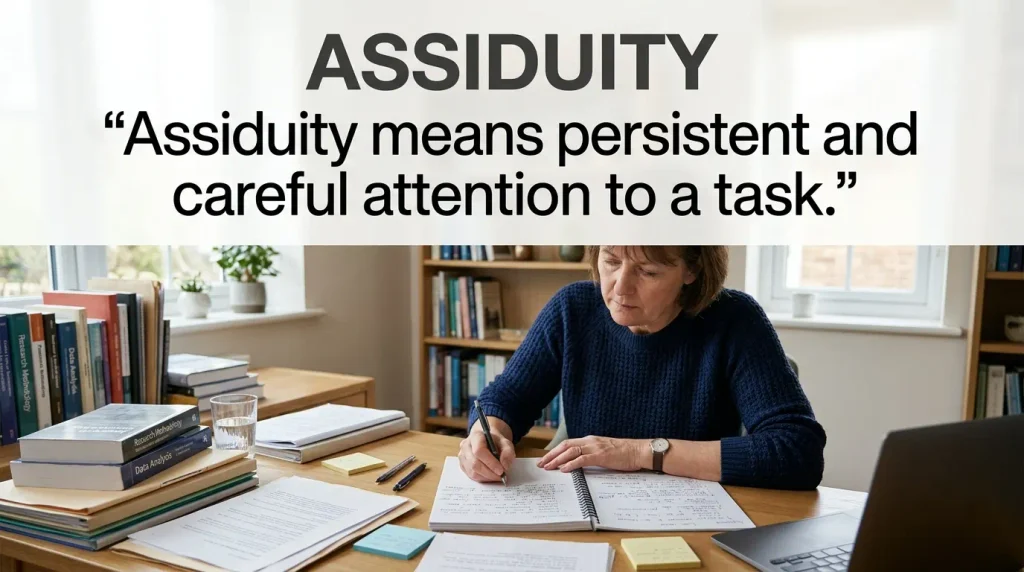
Assiduity (Noun) — US: /ˌæsɪˈduːəti/ | UK: /ˌæsɪˈdjuːəti/
Meaning: Assiduity means persistent and careful attention to a task.
Tone/Register: Formal, academic
Example:
Her assiduity was evident throughout the research.
He earned praise for his assiduity.
Fervor (Noun) — US: /ˈfɜːrvər/ | UK: /ˈfɜːvə/
Meaning: Fervor describes intense enthusiasm and passionate feeling.
Tone/Register: Formal, literary, expressive
Example:
The crowd responded with fervor.
She defended the cause with genuine fervor.
Earnest Intention (Noun Phrase) — US: /ˈɜːrnɪst ɪnˈtenʃən/ | UK: /ˈɜːnɪst ɪnˈtenʃən/
Meaning: Earnest intention means a genuine and serious purpose behind an action.
Tone/Register: Formal, professional
Example:
She expressed an earnest intention to improve.
His earnest intention was visible in his actions.
Good Faith (Noun Phrase) — US: /ɡʊd feɪθ/ | UK: /ɡʊd feɪθ/
Meaning: Good faith refers to honest and sincere intention to act fairly.
Tone/Register: Formal, legal, professional
Example:
They entered the negotiation in good faith.
The proposal was made in good faith.
Uprightness (Noun) — US: /ˈʌpraɪtnəs/ | UK: /ˈʌpraɪtnəs/
Meaning: Uprightness describes moral honesty and principled behavior.
Tone/Register: Formal, literary
Example:
Her uprightness earned lasting respect.
He was known for his uprightness.
Thoughtfulness (Noun) — US: /ˈθɔːtfəlnəs/ | UK: /ˈθɔːtfəlnəs/
Meaning: Thoughtfulness describes careful consideration of ideas, situations, or people’s feelings.
Tone/Register: Neutral, positive
Example:
Her thoughtfulness was clear in the response.
He answered with genuine thoughtfulness.
Serious-Mindedness (Noun) — US: /ˌsɪriəsˈmaɪndɪdnəs/ | UK: /ˌsɪəriəsˈmaɪndɪdnəs/
Meaning: Serious-mindedness describes a tendency to approach matters carefully and seriously.
Tone/Register: Formal, neutral
Example:
His serious-mindedness made him a reliable adviser.
The position requires patience and serious-mindedness.
Truthfulness (Noun) — US: /ˈtruːθfəlnəs/ | UK: /ˈtruːθfəlnəs/
Meaning: Truthfulness means being honest and committed to telling the truth.
Tone/Register: Neutral, formal
Example:
Her truthfulness strengthened the relationship.
Everyone respected his truthfulness.
Honesty (Noun) — US: /ˈɑːnəsti/ | UK: /ˈɒnəsti/
Meaning: Honesty is the quality of being truthful, sincere, and free from deception.
Tone/Register: Neutral, everyday
Example:
I value your honesty.
His honesty made the discussion easier.
Open-Heartedness (Noun) — US: /ˌoʊpənˈhɑːrtɪdnəs/ | UK: /ˌəʊpənˈhɑːtɪdnəs/
Meaning: Open-heartedness means expressing genuine feelings with warmth and emotional openness.
Tone/Register: Warm, emotional, literary
Example:
Her open-heartedness made people feel welcome.
He spoke with remarkable open-heartedness.
Whole-Souledness (Noun) — US: /ˌhoʊlˈsoʊldnəs/ | UK: /ˌhəʊlˈsəʊldnəs/
Meaning: Whole-souledness describes complete and deeply sincere involvement in something.
Tone/Register: Literary, expressive
Example:
She pursued her dream with whole-souledness.
His whole-souledness conveyed emotional depth.
Moral Seriousness (Noun Phrase) — US: /ˈmɔːrəl ˈsɪriəsnəs/ | UK: /ˈmɒrəl ˈsɪəriəsnəs/
Meaning: Moral seriousness describes a deeply serious approach to ethical values and responsibilities.
Tone/Register: Academic, formal
Example:
The essay shows strong moral seriousness.
His moral seriousness influenced his decisions.
Emotional Sincerity (Noun Phrase) — US: /ɪˈmoʊʃənəl sɪnˈserəti/ | UK: /ɪˈməʊʃənəl sɪnˈserəti/
Meaning: Emotional sincerity means expressing genuine feelings without pretending.
Tone/Register: Neutral, emotional
Example:
The film succeeds through emotional sincerity.
Her emotional sincerity made the story believable.
Purposefulness (Noun) — US: /ˈpɜːrpəsfəlnəs/ | UK: /ˈpɜːpəsfəlnəs/
Meaning: Purposefulness describes deliberate behavior directed toward a clear objective.
Tone/Register: Formal, professional
Example:
His purposefulness was visible from the first meeting.
She moved forward with purposefulness.
Intentionality (Noun) — US: /ɪnˌtenʃəˈnæləti/ | UK: /ɪnˌtenʃiˈænələti/
Meaning: Intentionality refers to acting with deliberate awareness and clear purpose.
Tone/Register: Academic, professional
Example:
The writer used intentionality in every detail.
Her intentionality gave the project a clear direction.
Serious Intent (Noun Phrase) — US: /ˈsɪriəs ɪnˈtent/ | UK: /ˈsɪəriəs ɪnˈtent/
Meaning: Serious intent means having a genuine and important purpose behind an action.
Tone/Register: Neutral, formal
Example:
The message showed serious intent.
Her serious intent was clear from the beginning.
Sober-Mindedness (Noun) — US: /ˌsoʊbərˈmaɪndɪdnəs/ | UK: /ˌsəʊbəˈmaɪndɪdnəs/
Meaning: Sober-mindedness describes a calm, thoughtful, and serious approach to a situation.
Tone/Register: Formal, literary
Example:
His sober-mindedness helped the team stay calm.
She approached the issue with sober-mindedness.
Earnestness of Purpose (Noun Phrase) — US: /ˈɜːrnɪstnəs əv ˈpɜːrpəs/ | UK: /ˈɜːnɪstnəs əv ˈpɜːpəs/
Meaning: Earnestness of purpose describes sincere and serious dedication to a particular aim.
Tone/Register: Formal, literary
Example:
Her earnestness of purpose impressed the committee.
The project showed earnestness of purpose from start to finish.
Sincerity of Purpose (Noun Phrase) — US: /sɪnˈserəti əv ˈpɜːrpəs/ | UK: /sɪnˈserəti əv ˈpɜːpəs/
Meaning: Sincerity of purpose means having a genuine and honest reason for pursuing an objective.
Tone/Register: Formal, professional
Example:
The organization demonstrated sincerity of purpose.
His sincerity of purpose was easy to recognize.
Faithfulness (Noun) — US: /ˈfeɪθfəlnəs/ | UK: /ˈfeɪθfəlnəs/
Meaning: Faithfulness means remaining loyal or true to a person, belief, promise, or purpose.
Tone/Register: Neutral, formal, literary
Example:
Her faithfulness to the original plan was admirable.
His faithfulness to his principles never changed.
Intentness of Spirit (Noun Phrase) — US: /ɪnˈtentnəs əv ˈspɪrɪt/ | UK: /ɪnˈtentnəs əv ˈspɪrɪt/
Meaning: Intentness of spirit describes deeply focused and sincere dedication to an important purpose.
Tone/Register: Literary, expressive
Example:
Her intentness of spirit shaped the entire performance.
His intentness of spirit was clear in his work.
Deep Sincerity (Noun Phrase) — US: /diːp sɪnˈserəti/ | UK: /diːp sɪnˈserəti/
Meaning: Deep sincerity describes especially genuine and heartfelt feeling.
Tone/Register: Neutral, emotional
Example:
Her words carried deep sincerity.
The message was delivered with deep sincerity.
Heartfeltness (Noun) — US: /ˈhɑːrtfeltnəs/ | UK: /ˈhɑːtfeltnəs/
Meaning: Heartfeltness describes the quality of expressing genuine and deeply felt emotion.
Tone/Register: Warm, informal, expressive
Example:
The heartfeltness of his apology was touching.
Her speech had warmth and heartfeltness.
Seriousness of Purpose (Noun Phrase) — US: /ˈsɪriəsnəs əv ˈpɜːrpəs/ | UK: /ˈsɪəriəsnəs əv ˈpɜːpəs/
Meaning: Seriousness of purpose emphasizes determined and sincere attention to an important objective.
Tone/Register: Formal, professional
Example:
Her seriousness of purpose was evident.
The team worked with seriousness of purpose.
Profound Sincerity (Noun Phrase) — US: /prəˈfaʊnd sɪnˈserəti/ | UK: /prəˈfaʊnd sɪnˈserəti/
Meaning: Profound sincerity means exceptionally deep and genuine feeling or intention.
Tone/Register: Formal, literary
Example:
His words reflected profound sincerity.
The letter communicated profound sincerity.
Genuine Commitment (Noun Phrase) — US: /ˈdʒenjuɪn kəˈmɪtmənt/ | UK: /ˈdʒenjuɪn kəˈmɪtmənt/
Meaning: Genuine commitment means sincere and dependable dedication to a goal or responsibility.
Tone/Register: Professional, neutral
Example:
The project requires genuine commitment.
Her genuine commitment was clear to everyone.
Deep Commitment (Noun Phrase) — US: /diːp kəˈmɪtmənt/ | UK: /diːp kəˈmɪtmənt/
Meaning: Deep commitment describes a strong and lasting dedication to something important.
Tone/Register: Professional, emotional
Example:
His deep commitment to education inspired his students.
She showed deep commitment to the cause.
Unfeignedness (Noun) — US: /ʌnˈfeɪndnəs/ | UK: /ʌnˈfeɪndnəs/
Meaning: Unfeignedness describes the quality of being genuine and not pretended.
Tone/Register: Formal, literary
Example:
The unfeignedness of her response was refreshing.
His unfeignedness made the conversation feel honest.
Outspokenness (Noun) — US: /ˌaʊtˈspoʊkənnəs/ | UK: /ˌaʊtˈspəʊkənnəs/
Meaning: Outspokenness means expressing opinions openly and directly.
Tone/Register: Neutral, conversational
Example:
Her outspokenness was appreciated by the team.
His outspokenness sometimes surprised new colleagues.
Forthrightness (Noun) — US: /ˈfɔːrθraɪtnəs/ | UK: /ˈfɔːθraɪtnəs/
Meaning: Forthrightness means direct, honest, and open communication.
Tone/Register: Professional, formal
Example:
I admired his forthrightness during the meeting.
Her forthrightness prevented unnecessary confusion.
Earnest Conviction (Noun Phrase) — US: /ˈɜːrnɪst kənˈvɪkʃən/ | UK: /ˈɜːnɪst kənˈvɪkʃən/
Meaning: Earnest conviction describes a sincerely and deeply held belief.
Tone/Register: Formal, literary
Example:
She defended the proposal with earnest conviction.
His earnest conviction was clear in every statement.
Heartfelt Sincerity (Noun Phrase) — US: /ˈhɑːrtfelt sɪnˈserəti/ | UK: /ˈhɑːtfelt sɪnˈserəti/
Meaning: Heartfelt sincerity means genuine emotion expressed openly and honestly.
Tone/Register: Emotional, warm
Example:
Her heartfelt sincerity touched the audience.
The message carried heartfelt sincerity.

Serious Devotion (Noun Phrase) — US: /ˈsɪriəs dɪˈvoʊʃən/ | UK: /ˈsɪəriəs dɪˈvəʊʃən/
Meaning: Serious devotion describes strong and sincere dedication to a person, belief, or purpose.
Tone/Register: Formal, emotional
Example:
His serious devotion to the craft was remarkable.
She demonstrated serious devotion to her work.
Synonyms by Tone
Positive
For a positive impression, use sincerity, genuineness, dedication, devotion, wholeheartedness, authenticity, integrity, steadfastness, determination, commitment, heartfeltness, and genuine commitment.
These choices work especially well when praising someone’s character or effort.
Neutral
For a neutral description, consider seriousness, purposefulness, intentness, honesty, truthfulness, loyalty, frankness, candor, outspokenness, and serious intent.
These words describe behavior without necessarily praising or criticizing it.
Formal or Literary
In formal and literary writing, solemnity, gravity, zeal, ardor, conviction, diligence, conscientiousness, assiduity, fidelity, probity, uprightness, and steadfastness can be useful.
However, register matters. A sophisticated word is not automatically a better word.
Emotional
For emotional contexts, devotion, passion, wholeheartedness, open-heartedness, emotional sincerity, deep sincerity, profound sincerity, heartfelt sincerity, and whole-souledness can create a stronger feeling.
Potentially Negative
Some terms can develop a negative shade depending on context. Solemnity, gravity, single-mindedness, serious-mindedness, and excessive seriousness may suggest that someone is too intense or formal.
Therefore, always consider the situation before selecting an alternative.
Earnestness vs Close Alternatives
Earnestness vs Sincerity
The term Earnestness combines seriousness with genuine intention. Sincerity focuses more strongly on honesty and genuine feeling.
Use earnestness when someone’s serious attitude matters. Choose sincerity when the main point is that their words or emotions are genuine.
Earnestness vs Seriousness
Seriousness highlights importance and a lack of playfulness. Earnestness adds an element of sincerity and personal intention.
For example, a meeting can have seriousness because the topic is important. A person’s earnestness suggests that they genuinely care about the matter.
Earnestness vs Commitment
Commitment focuses on continued dedication. Earnestness focuses more on sincere seriousness.
Thus, an employee can demonstrate commitment through long-term effort, while their earnestness may appear in how sincerely they discuss the work.
How Earnestness Changes by Context
Daily Conversation
In casual conversation, earnestness is understandable but somewhat more formal than sincerity or seriousness.
For example, instead of saying, “I admired his earnestness,” a speaker might naturally say, “I could tell he really meant it.”
However, the noun works well when describing someone’s overall attitude.
Writing and Blogging
Bloggers can use earnestness to describe sincere personal writing.
For example, a personal essay about failure may have an earnest quality when the writer discusses mistakes honestly and avoids pretending to have everything figured out.
Similarly, authenticity, sincerity, honesty, and genuineness can make descriptions more precise.
Professional English
In workplace writing, the best alternative depends on the intended meaning.
Choose commitment when you want to express sustained dedication. For careful and consistent effort, diligence is a suitable choice. A firmly held belief can be described as conviction.
When emphasizing open and honest communication, candor or frankness can convey the meaning effectively.
Academic English
Academic writing usually benefits from precise vocabulary rather than emotional exaggeration.
For example, seriousness, conviction, conscientiousness, diligence, and purposefulness can work when their exact meanings fit the argument.
Nevertheless, earnestness can be useful when discussing a writer’s tone, intentions, or intellectual approach.
Creative Writing
In fiction, earnestness can reveal personality.
An earnest character may appear sincere, idealistic, vulnerable, serious, or deeply committed.
By contrast, deliberately excessive earnestness can create humor when other characters are relaxed or sarcastic.
Common Mistakes Learners Make
Using Every Synonym Interchangeably
The biggest mistake is assuming that every alternative means the same thing.
For example, zeal emphasizes enthusiastic energy, while sincerity emphasizes genuine feeling.
Confusing Earnestness With Eagerness
Earnestness means sincere seriousness or genuine intention.
Eagerness means strong enthusiasm or willingness.
Therefore, they may appear in similar situations, but they are not exact synonyms.
Making Casual Speech Too Formal
Words such as assiduity, probity, solemnity, and fidelity can sound formal or literary.
In everyday speech, sincerity, honesty, seriousness, or commitment may sound more natural.
Assuming Earnestness Is Always Positive
Earnestness is often associated with sincerity and good intentions. However, excessive earnestness can sometimes sound humorless or overly intense.
Context determines the final impression.
Choosing a Word Only Because It Sounds Sophisticated
A simple word is often the best choice.
For example, honesty may communicate an idea more clearly than probity for a general audience.
Good vocabulary is not about using the hardest word. It is about choosing the most accurate word.
Native Usage Notes
Native speakers commonly use earnest as an adjective more frequently than earnestness as a noun in everyday communication.
Natural:
“She gave me an earnest response.”
Noun form:
“Her earnestness was obvious.”
The phrase “in earnest” is also useful.
Example:
He started looking for a new job in earnest.
This means he began the search seriously and with genuine effort.
For casual conversations, phrases such as “really mean it,” “be sincere,” “take it seriously,” and “be genuine” are often more conversational.
Real-Life Mini Scenarios
Workplace
A team leader explains why an important deadline cannot be ignored. Her earnestness shows that she genuinely cares about the outcome.
Here, seriousness, commitment, and purposefulness may also describe her attitude.
Social Situations
A friend apologizes after saying something hurtful. The important quality is usually sincerity.
If the apology sounds completely genuine, you might describe the person’s genuineness or heartfelt sincerity.
Media and Pop Culture
A performer may deliver a speech with powerful conviction.
If the performance feels deeply sincere, viewers may also notice its earnestness.
Writing and Storytelling
A novelist can use earnestness to create an emotionally honest character.
Alternatively, exaggerated serious-mindedness can make a fictional character appear unintentionally funny.
How to Choose the Best Synonym
If you mean honest and genuine, choose sincerity, honesty, or genuineness.
For something important and serious, seriousness or gravity may be the best choices.
When talking about long-term dedication, consider commitment or dedication.
To express deep loyalty, you can use devotion, loyalty, or fidelity.
For strong enthusiasm, suitable options include zeal, ardor, passion, or fervor.
When referring to a firm belief, conviction is a strong alternative.
If the context involves careful effort, use diligence, conscientiousness, or assiduity.
In situations involving open honesty, candor, frankness, or forthrightness work well.
For unwavering dedication, consider steadfastness or resolve.
Consequently, the best synonym depends on the exact shade of meaning you want to communicate.

Interactive Practice Quiz
Choose the best word for each sentence.
1. The student spoke with _____ when explaining her plans.
A) sincerity
B) silliness
C) confusion
D) boredom
2. Her _____ to the community project lasted for several years.
A) commitment
B) hesitation
C) amusement
D) uncertainty
3. He defended his opinion with strong _____.
A) conviction
B) confusion
C) humor
D) silence
4. The memorial service was marked by deep _____.
A) solemnity
B) excitement
C) playfulness
D) informality
5. Her _____ to teaching inspired her students.
A) dedication
B) doubt
C) distraction
D) carelessness
6. The researcher completed the study with great _____.
A) diligence
B) humor
C) impatience
D) uncertainty
7. His _____ helped him continue after repeated failures.
A) determination
B) boredom
C) hesitation
D) amusement
8. I respected her _____ because she gave me an honest opinion.
A) candor
B) secrecy
C) confusion
D) hesitation
9. The activist spoke about the cause with great _____.
A) zeal
B) boredom
C) indifference
D) uncertainty
10. Readers appreciated the _____ of her personal story.
A) authenticity
B) confusion
C) exaggeration
D) artificiality
11. His _____ toward his family remained strong during difficult times.
A) devotion
B) hesitation
C) uncertainty
D) amusement
12. She understood the _____ of the situation immediately.
A) gravity
B) humor
C) randomness
D) simplicity
13. His _____ made him speak openly during the meeting.
A) forthrightness
B) secrecy
C) hesitation
D) shyness
14. The manager valued her _____ and careful attention to detail.
A) conscientiousness
B) frivolity
C) carelessness
D) confusion
15. The emotional speech was powerful because of its _____.
A) heartfelt sincerity
B) boredom
C) uncertainty
D) indifference
Reflection Task
Write one sentence using earnestness or one of its synonyms. Then replace that word with another alternative and notice how the meaning or tone changes.
Answer Key: 1-A, 2-A, 3-A, 4-A, 5-A, 6-A, 7-A, 8-A, 9-A, 10-A, 11-A, 12-A, 13-A, 14-A, 15-A
FAQs
1. What is the closest synonym for earnestness?
The closest everyday synonym is usually sincerity, especially when you mean genuine and honest feeling. However, seriousness can be closer when the focus is on treating something as important. If the context involves dedication, commitment or dedication may communicate the idea more precisely.
2. What is a synonym for earnestness in a sentence?
A useful replacement depends on the sentence. For example, “Her earnestness impressed me” could become “Her sincerity impressed me” if you want to emphasize genuine feeling. You could use dedication if her serious attitude is connected to sustained effort toward a goal.
3. What is the difference between earnestness and sincerity?
Earnestness suggests both sincerity and serious intention, while sincerity primarily focuses on genuine feelings or honest expression. Therefore, someone can be sincere without being especially serious. Earnestness usually creates a stronger impression of purpose, seriousness, or wholehearted intention.
4. Is earnestness a positive word?
Generally, yes. Earnestness often suggests honesty, sincerity, care, and serious commitment. Nevertheless, it can become slightly negative when used to describe someone who takes every situation too seriously. The context and surrounding adjectives determine whether the quality sounds admirable, neutral, or excessive.
5. What is a formal synonym for earnestness?
Formal alternatives include gravity, solemnity, conviction, conscientiousness, assiduity, fidelity, probity, and steadfastness. Still, these words do not have identical meanings. Gravity emphasizes importance, conviction emphasizes belief, and conscientiousness emphasizes responsible attention to duties.
6. What is a good synonym for earnestness in academic writing?
For academic writing, seriousness, conviction, diligence, conscientiousness, commitment, and purposefulness can be effective choices. The best word depends on your intended meaning. For example, use diligence for careful research effort and conviction for a strongly held academic position.
7. Can earnestness be used in everyday conversation?
Yes, but it can sound somewhat formal. Native speakers often use earnest more naturally than earnestness in casual speech. Expressions such as “he really meant it,” “she was sincere,” or “he took it seriously” are often more conversational.
8. What is the opposite of earnestness?
Depending on the context, opposites include insincerity, frivolity, flippancy, superficiality, and unseriousness. Insincerity is the clearest opposite when the issue is pretending or being dishonest. Frivolity is more suitable when someone treats a serious matter too casually.
Conclusion
Earnestness expresses sincere seriousness, genuine intention, and deep commitment. Its meaning becomes clearer when you choose alternatives that match the exact emotion or attitude.
Words such as sincerity, dedication, conviction, honesty, and commitment can strengthen writing and speaking. Each alternative adds a slightly different shade of meaning.
For students, bloggers, and content writers, varied vocabulary makes sentences more natural and engaging. It also helps readers understand the writer’s exact intention without unnecessary repetition.
Keep practicing these words in essays, emails, stories, and daily conversations. Try one new synonym today and compare its tone with earnestness.

Shahzeena Shazadi is the founder and lead writer at VocablyHub.com, where she creates accurate, reader-focused English language content designed to help people communicate with clarity and confidence. She specializes in synonyms, antonyms, word meanings, idioms, and practical vocabulary guides that simplify complex language concepts for everyday use. Every article is carefully researched, fact-checked, and written in clear, accessible language using reliable references and real-world examples. Her goal is to provide helpful, trustworthy content that supports learners at every stage of their English language journey.
Her editorial approach focuses on accuracy, transparency, and user value while following modern content quality standards. She regularly reviews and updates content to keep information relevant, useful, and easy to understand. Through VocablyHub.com, Shahzeena Shazadi is committed to publishing reliable language resources that help students, writers, educators, professionals, and English learners expand their vocabulary, improve their writing skills, and communicate with confidence in academic, professional, and everyday situations.