
A synonym for otherworldly is ethereal, unearthly, supernatural, celestial, or dreamlike. These words describe something that feels beyond ordinary experience. Some suggest spirits or mysterious forces, while others emphasize heavenly beauty, fantasy, or an atmosphere that seems unreal.
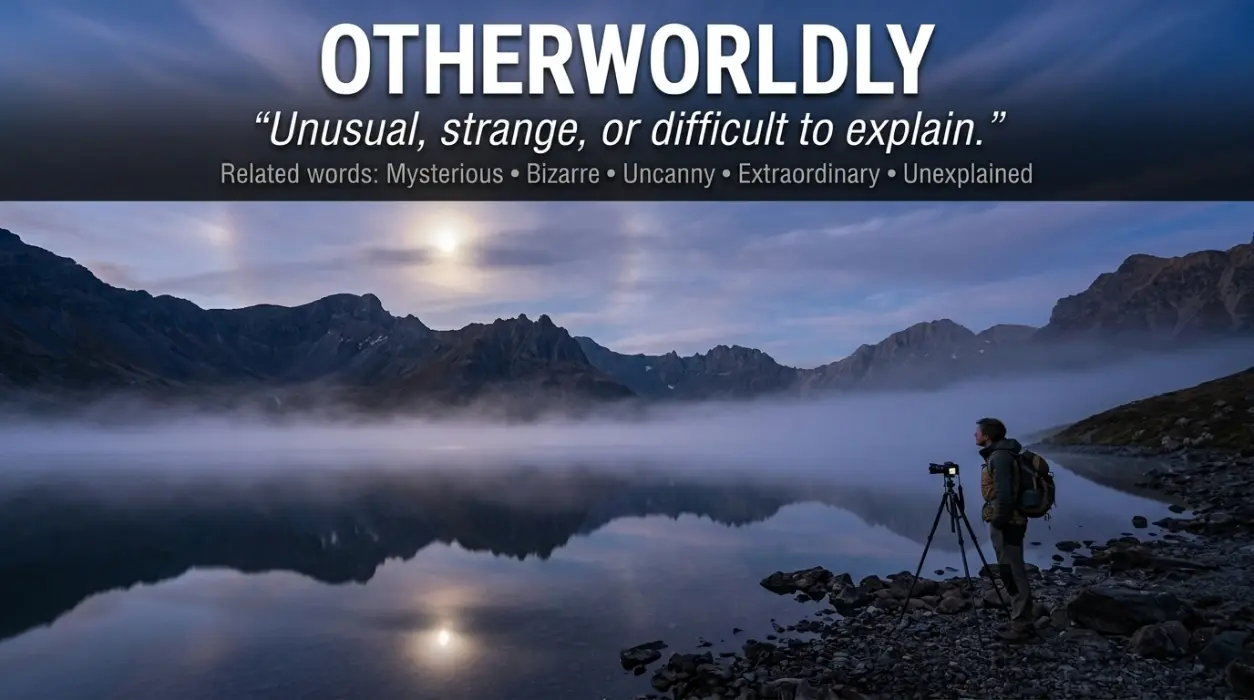
Imagine watching a misty lake glow beneath a full moon. The scene feels almost magical. You could call it otherworldly, ethereal, or dreamlike, depending on the feeling you want to create.
The phrase synonym for otherworldly is useful when you want to describe unusual beauty, mysterious places, supernatural events, or experiences that seem outside everyday reality.
Students can use these alternatives in essays and literary analysis. Bloggers and content writers can create vivid descriptions, while everyday English users can express wonder or mystery more precisely.
The word otherworldly appears in fiction, film reviews, travel writing, fantasy, music criticism, and descriptions of striking natural scenery. Its alternatives help you capture the exact mood rather than relying on one adjective.
What Does “Otherworldly” Really Mean?
Otherworldly is an adjective describing something that seems connected to another world, a spiritual realm, or a reality beyond ordinary human experience. It can suggest something supernatural, mysterious, dreamlike, or extraordinarily beautiful.
For example, a glowing cave may look otherworldly because its colors and shapes seem unreal. A character may seem otherworldly because they appear distant from everyday concerns or possess an unusual spiritual quality.
Native English speakers use the word in both literal and imaginative ways. It can describe supernatural beings, fantasy settings, unusual sounds, striking landscapes, or people with a detached, dreamy manner.
The word does not always mean frightening. An otherworldly scene can feel peaceful, beautiful, unsettling, or mysterious.
Part of speech: Adjective.
Simple definition: Something is otherworldly when it seems to belong to a different, spiritual, supernatural, or imaginary world rather than ordinary life.
Connotative Meaning
(Connotation means the feelings, associations, or emotional impressions a word carries beyond its basic definition.)
- Positive tone: “The singer’s otherworldly voice filled the room.” This suggests extraordinary beauty or an almost magical quality.
- Negative tone: “His otherworldly detachment made it difficult to discuss practical matters with him.” Here, the word suggests distance from everyday reality.
- Neutral tone: “The documentary explored beliefs about otherworldly beings.” This simply describes a subject connected with another realm.
The word often creates a sense of wonder. However, the surrounding context determines whether that feeling is comforting, eerie, spiritual, or unsettling.
Etymology of “Otherworldly”
Otherworldly combines three elements: other, world, and the suffix -ly. The phrase other world has been used in English for centuries to refer to an afterlife, a spirit realm, or a reality different from ordinary existence.
The adjective otherworldly appeared in the nineteenth century. Early uses connected it with spiritual concerns and life beyond the present world. Its meaning later expanded to include imaginative, strange, and fantastical qualities.
Short History
- Old English (450–1100): The word other came from Old English ōþer, meaning “second” or “different.” World came from Old English woruld, which referred to human life and worldly existence. The modern compound had not yet developed.
- Middle English (1100–1500): The phrase other world appeared in writing with meanings connected to the afterlife, a spirit realm, and a form of existence beyond ordinary life.
- Modern English (1500–present): Otherworldly emerged as an adjective in the nineteenth century. Writers gradually used it for spiritual subjects, imaginary places, supernatural beings, and experiences that seem strangely beautiful or unreal.
Pronunciation
- US: /ˌʌð.ɚˈwɝːld.li/
- UK: /ˌʌð.əˈwɜːld.li/
Syllables
oth-er-world-ly — usually four syllables.
Affixation Pattern
- Root elements: other + world
- Prefix: None.
- Suffix: -ly, which forms an adjective here and means “relating to” or “characterized by.”
Compare worldly, which often describes practical concerns or experience of ordinary life, with otherworldly, which suggests a connection to something beyond ordinary existence.
Synonyms List
The following alternatives cover related shades of meaning, including supernatural, spiritual, dreamlike, mysterious, and extraordinarily beautiful. They are not all interchangeable. Choose the one that best matches the scene or feeling you want to communicate.
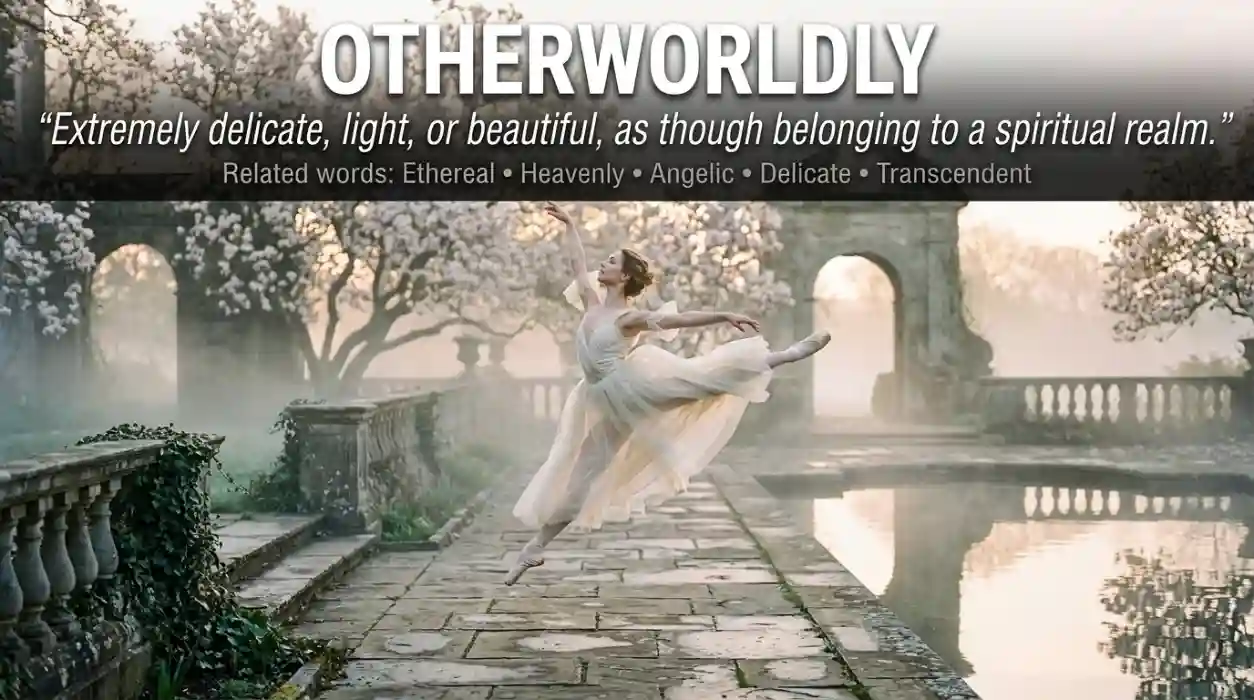
1. Ethereal (adjective) — US / UK: /ɪˈθɪriəl/
Meaning: Extremely delicate, light, or beautiful, as though belonging to a spiritual realm.
Tone/Register: Poetic, positive, and descriptive.
Examples:
An ethereal mist floated above the lake at sunrise.
Her voice had an ethereal quality that held the audience still.
2. Unearthly (adjective) — US / UK: /ʌnˈɜːrθli/
Meaning: So strange or unusual that it seems to come from beyond the natural world.
Tone/Register: Mysterious; sometimes eerie.
Examples:
An unearthly glow appeared between the trees.
The creature made an unearthly sound in the darkness.
3. Supernatural (adjective) — US / UK: /ˌsuːpərˈnætʃərəl/
Meaning: Connected with forces or beings that appear to go beyond the laws of nature.
Tone/Register: Neutral, often associated with horror, fantasy, or spiritual belief.
Examples:
The novel follows a family haunted by supernatural events.
They debated whether the strange occurrence had a supernatural explanation.
4. Celestial (adjective) — US / UK: /səˈlɛstiəl/
Meaning: Relating to the heavens or suggesting heavenly beauty.
Tone/Register: Elevated, poetic, and often positive.
Examples:
Celestial light shimmered across the snowy mountains.
The composer created a celestial atmosphere with soft strings.
5. Dreamlike (adjective) — US / UK: /ˈdriːmˌlaɪk/
Meaning: Resembling a dream because it feels unreal, fluid, or strangely beautiful.
Tone/Register: Creative and descriptive.
Examples:
The empty streets looked dreamlike beneath the pink clouds.
The film moves through a dreamlike series of memories.
6. Mystical (adjective) — US / UK: /ˈmɪstɪkəl/
Meaning: Connected with spiritual mysteries or experiences beyond ordinary understanding.
Tone/Register: Spiritual, reflective, and sometimes poetic.
Examples:
The old temple had a mystical atmosphere.
The story explores a mystical connection between the characters and the sea.
7. Magical (adjective) — US / UK: /ˈmædʒɪkəl/
Meaning: Seeming to possess magic or creating an extraordinary sense of wonder.
Tone/Register: Positive, accessible, and expressive.
Examples:
The garden looked magical under the tiny lanterns.
Their first meeting felt like a magical moment.
8. Enchanted (adjective) — US / UK: /ɪnˈtʃæntɪd/
Meaning: Seeming to be under a spell or filled with magical charm.
Tone/Register: Whimsical, romantic, and often positive.
Examples:
They wandered through an enchanted forest in the story.
The candlelit courtyard felt enchanted after dark.
9. Fantastical (adjective) — US / UK: /fænˈtæstɪkəl/
Meaning: Imaginative or extraordinary in a way associated with fantasy.
Tone/Register: Creative and literary.
Examples:
The artist filled the mural with fantastical creatures.
Its fantastical setting made the adventure feel limitless.
10. Surreal (adjective) — US / UK: /səˈriːəl/
Meaning: So strange or unexpected that it seems disconnected from normal reality.
Tone/Register: Artistic, modern, and sometimes unsettling.
Examples:
Walking through the empty stadium felt surreal.
The photograph shows a surreal landscape of floating houses.
11. Eerie (adjective) — US / UK: /ˈɪri/
Meaning: Strange and frightening in a way that creates unease.
Tone/Register: Suspenseful and often negative.
Examples:
An eerie silence settled over the abandoned station.
The flickering lights gave the hallway an eerie appearance.
12. Uncanny (adjective) — US / UK: /ʌnˈkæni/
Meaning: Strange or mysterious in a way that feels difficult to explain.
Tone/Register: Analytical, mysterious, and sometimes unsettling.
Examples:
The portrait had an uncanny resemblance to my grandmother.
She had an uncanny ability to predict what people would say.
13. Ghostly (adjective) — US / UK: /ˈɡoʊstli/
Meaning: Resembling a ghost or seeming pale, shadowy, and insubstantial.
Tone/Register: Gothic, spooky, and descriptive.
Examples:
Ghostly shapes appeared through the fog.
A ghostly reflection moved across the old window.
14. Spectral (adjective) — US / UK: /ˈspɛktrəl/
Meaning: Relating to a ghost or having a pale, shadowlike appearance.
Tone/Register: Formal, literary, and eerie.
Examples:
A spectral figure stood at the end of the corridor.
The moon cast spectral shadows over the ruined building.
15. Phantasmal (adjective) — US / UK: /fænˈtæzməl/
Meaning: Seeming to exist only as an illusion, apparition, or product of imagination.
Tone/Register: Literary and atmospheric.
Examples:
A phantasmal ship appeared beyond the rocks.
The story follows a phantasmal visitor who appears at midnight.
16. Paranormal (adjective) — US / UK: /ˌpærəˈnɔːrməl/
Meaning: Relating to events or experiences claimed to fall outside ordinary scientific explanation.
Tone/Register: Neutral, investigative, or supernatural.
Examples:
The podcast examines reports of paranormal activity.
They stayed in the old hotel because of its paranormal reputation.
17. Preternatural (adjective) — US / UK: /ˌpriːtərˈnætʃərəl/
Meaning: Beyond what is ordinary or expected in nature, without necessarily being strictly supernatural.
Tone/Register: Formal and literary.
Examples:
She maintained a preternatural calm during the emergency.
The animal displayed preternatural speed in the final stretch.
18. Transcendent (adjective) — US / UK: /trænˈsɛndənt/
Meaning: Going beyond ordinary limits or everyday experience.
Tone/Register: Elevated, philosophical, and often positive.
Examples:
The choir delivered a transcendent performance.
The view from the summit gave him a transcendent sense of peace.
19. Transcendental (adjective) — US / UK: /ˌtrænsɛnˈdɛntəl/
Meaning: Relating to existence or knowledge beyond ordinary physical experience.
Tone/Register: Philosophical, spiritual, and formal.
Examples:
The essay explores transcendental ideas about nature and the self.
The retreat focused on transcendental meditation and reflection.
20. Spiritual (adjective) — US / UK: /ˈspɪrɪtʃuəl/
Meaning: Relating to the spirit, inner life, or matters beyond purely physical concerns.
Tone/Register: Reflective and often religious or personal.
Examples:
The mountain retreat offered a spiritual sense of renewal.
Her music has a spiritual quality that many listeners find moving.

21. Divine (adjective) — US / UK: /dɪˈvaɪn/
Meaning: Relating to a god or possessing extraordinary, heavenly beauty or excellence.
Tone/Register: Reverent, elevated, or enthusiastically positive.
Examples:
The cathedral’s ceiling seemed to glow with divine light.
The dessert tasted divine after a long day.
22. Heavenly (adjective) — US / UK: /ˈhɛvənli/
Meaning: Resembling heaven or feeling exceptionally beautiful, peaceful, or delightful.
Tone/Register: Warm, positive, and expressive.
Examples:
The garden smelled heavenly after the rain.
A heavenly melody drifted from the open window.
23. Angelic (adjective) — US / UK: /ænˈdʒɛlɪk/
Meaning: Resembling an angel in beauty, goodness, or gentleness.
Tone/Register: Positive, tender, and sometimes idealized.
Examples:
The choir’s angelic voices filled the chapel.
The child gave an angelic smile before hiding the broken vase.
24. Seraphic (adjective) — US / UK: /səˈræfɪk/
Meaning: Having the serene beauty or purity associated with angels.
Tone/Register: Formal, literary, and reverent.
Examples:
A seraphic expression softened her face.
The painting gives the figure a seraphic glow.
25. Sublime (adjective) — US / UK: /səˈblaɪm/
Meaning: So beautiful, impressive, or powerful that it inspires awe.
Tone/Register: Elevated and strongly positive.
Examples:
The desert sky was sublime at dusk.
His final movement transformed the performance into something sublime.
26. Beatific (adjective) — US / UK: /ˌbiːəˈtɪfɪk/
Meaning: Showing deep happiness or peaceful joy, often with a spiritual quality.
Tone/Register: Literary and positive.
Examples:
She wore a beatific smile after hearing the good news.
The monk’s beatific expression reflected years of quiet contemplation.
27. Elysian (adjective) — US / UK: /ɪˈlɪziən/
Meaning: Resembling a place of perfect happiness or paradise.
Tone/Register: Poetic and literary.
Examples:
They imagined an Elysian garden beyond the mountains.
The novel describes an Elysian island untouched by conflict.
28. Empyrean (adjective) — US / UK: /ˌɛmpɪˈriːən/
Meaning: Relating to the highest heaven or a region of ideal celestial beauty.
Tone/Register: Highly literary and uncommon.
Examples:
The poet described an empyrean realm above the stars.
An empyrean glow surrounded the fantasy kingdom.
29. Otherworldly-Looking (adjective phrase) — US / UK: /ˌʌðərˈwɜːrldli ˈlʊkɪŋ/
Meaning: Having an appearance that seems unfamiliar, supernatural, or unreal.
Tone/Register: Informal and descriptive.
Examples:
The rock formations looked otherworldly under the colored lights.
The costume gave the performer an otherworldly appearance.
Usage note: “Otherworldly appearance” is more natural and concise than “otherworldly-looking” in many sentences.
30. Unworldly (adjective) — US / UK: /ʌnˈwɜːrldli/
Meaning: Not very concerned with practical or ordinary worldly matters.
Tone/Register: Neutral to critical, sometimes spiritual.
Examples:
His unworldly manner made office politics seem baffling to him.
The character is kind but unworldly about money.
31. Immaterial (adjective) — US / UK: /ˌɪməˈtɪriəl/
Meaning: Not physical or material; sometimes relating to something abstract or spiritual.
Tone/Register: Formal and philosophical.
Examples:
The story asks whether memories are more than immaterial traces of experience.
The discussion considered the immaterial aspects of consciousness.
32. Incorporeal (adjective) — US / UK: /ˌɪnkɔːrˈpɔːriəl/
Meaning: Having no physical body or material form.
Tone/Register: Formal, philosophical, and supernatural.
Examples:
The legend describes an incorporeal guardian who cannot be seen.
The character’s incorporeal presence moves through locked doors.
33. Intangible (adjective) — US / UK: /ɪnˈtændʒəbəl/
Meaning: Impossible to touch physically or difficult to define in concrete terms.
Tone/Register: Neutral, abstract, and professional.
Examples:
The room had an intangible sense of peace.
Trust is an intangible quality that takes time to build.
34. Inscrutable (adjective) — US / UK: /ɪnˈskruːtəbəl/
Meaning: Difficult to understand, interpret, or read.
Tone/Register: Formal and mysterious.
Examples:
The stranger gave an inscrutable smile.
The film’s inscrutable ending left viewers debating its meaning.
35. Enigmatic (adjective) — US / UK: /ˌɛnɪɡˈmætɪk/
Meaning: Mysterious and difficult to explain or understand.
Tone/Register: Literary, thoughtful, and intriguing.
Examples:
The artist left an enigmatic symbol in the corner of the painting.
Her enigmatic remarks made the interview more compelling.
36. Mystifying (adjective) — US / UK: /ˈmɪstɪfaɪɪŋ/
Meaning: Causing confusion or wonder because something is difficult to explain.
Tone/Register: Neutral, curious, or unsettling.
Examples:
The lights appeared in a mystifying pattern over the hills.
His sudden disappearance remained mystifying.
37. Bizarre (adjective) — US / UK: /bɪˈzɑːr/
Meaning: Very strange or unusual in a way that surprises people.
Tone/Register: Informal to neutral, sometimes critical.
Examples:
The museum displayed a bizarre sculpture made from old clocks.
A bizarre sequence of events changed their plans.
38. Weird (adjective) — US / UK: /wɪrd/
Meaning: Unusual, strange, or difficult to explain.
Tone/Register: Informal and flexible.
Examples:
There was a weird blue light coming from the basement.
The dream felt weirdly real after I woke up.
39. Fantastic (adjective) — US / UK: /fænˈtæstɪk/
Meaning: Imaginative or seemingly beyond ordinary reality; it can also mean excellent.
Tone/Register: Creative or enthusiastic.
Examples:
The illustrator created a fantastic world filled with floating cities.
The mountains looked fantastic beneath the stars.
40. Mythical (adjective) — US / UK: /ˈmɪθɪkəl/
Meaning: Relating to myths, legendary beings, or stories that are not established as historical fact.
Tone/Register: Literary, cultural, and descriptive.
Examples:
The game features mythical creatures from ancient legends.
They searched for a mythical city said to lie beneath the desert.
41. Fanciful (adjective) — US / UK: /ˈfænsɪfəl/
Meaning: Imaginative or shaped by fantasy rather than practical reality.
Tone/Register: Creative and sometimes gently critical.
Examples:
She designed a fanciful palace with spiral towers.
His explanation was fanciful but entertaining.
42. Illusory (adjective) — US / UK: /ɪˈluːsəri/
Meaning: Appearing real but not actually existing as it seems.
Tone/Register: Formal, analytical, and sometimes philosophical.
Examples:
The distant lights created an illusory city on the horizon.
The sense of control proved illusory.
43. Unreal (adjective) — US / UK: /ʌnˈriːəl/
Meaning: Seeming impossible, dreamlike, or different from normal reality.
Tone/Register: Everyday and expressive.
Examples:
The view from the glass bridge looked unreal.
It felt unreal to see her name on the award.
44. Gossamer (adjective) — US / UK: /ˈɡɑːsəmər/
Meaning: Extremely delicate, light, or fine, like a thin web.
Tone/Register: Poetic and descriptive.
Examples:
Gossamer clouds stretched across the pale morning sky.
The costume was made from layers of gossamer fabric.
45. Vaporous (adjective) — US / UK: /ˈveɪpərəs/
Meaning: Misty, hazy, or resembling vapor rather than a solid form.
Tone/Register: Literary and atmospheric.
Examples:
Vaporous fog drifted between the ancient trees.
The painting uses vaporous shapes to suggest distant mountains.
46. Wraithlike (adjective) — US / UK: /ˈreɪθlaɪk/
Meaning: Resembling a ghost or a thin, shadowy spirit.
Tone/Register: Gothic and eerie.
Examples:
A wraithlike figure crossed the empty courtyard.
The fog gave the bare branches a wraithlike appearance.
47. Phantasmal (adjective) — US / UK: /fænˈtæzməl/
Meaning: Appearing like a ghostly illusion or an imagined vision.
Tone/Register: Literary and supernatural.
Examples:
A phantasmal tower rose above the mist in the painting.
The narrator follows a phantasmal voice through the ruins.
48. Occult (adjective) — US / UK: /əˈkʌlt/
Meaning: Relating to hidden supernatural powers, secret knowledge, or practices associated with them.
Tone/Register: Specialized, mysterious, and sometimes unsettling.
Examples:
The mystery novel explores occult symbols in an old manuscript.
The historian studied the occult traditions of the fictional society.
49. Otherworldly-Beautiful (adjective phrase) — US / UK: /ˌʌðərˈwɜːrldli ˈbjuːtɪfəl/
Meaning: So beautiful that it seems beyond ordinary experience.
Tone/Register: Expressive and creative.
Examples:
The northern lights created an otherworldly-beautiful display.
The garden looked otherworldly in the early morning mist.
Usage note: In polished writing, “otherworldly in its beauty” or “unearthly beautiful” may sound more natural.
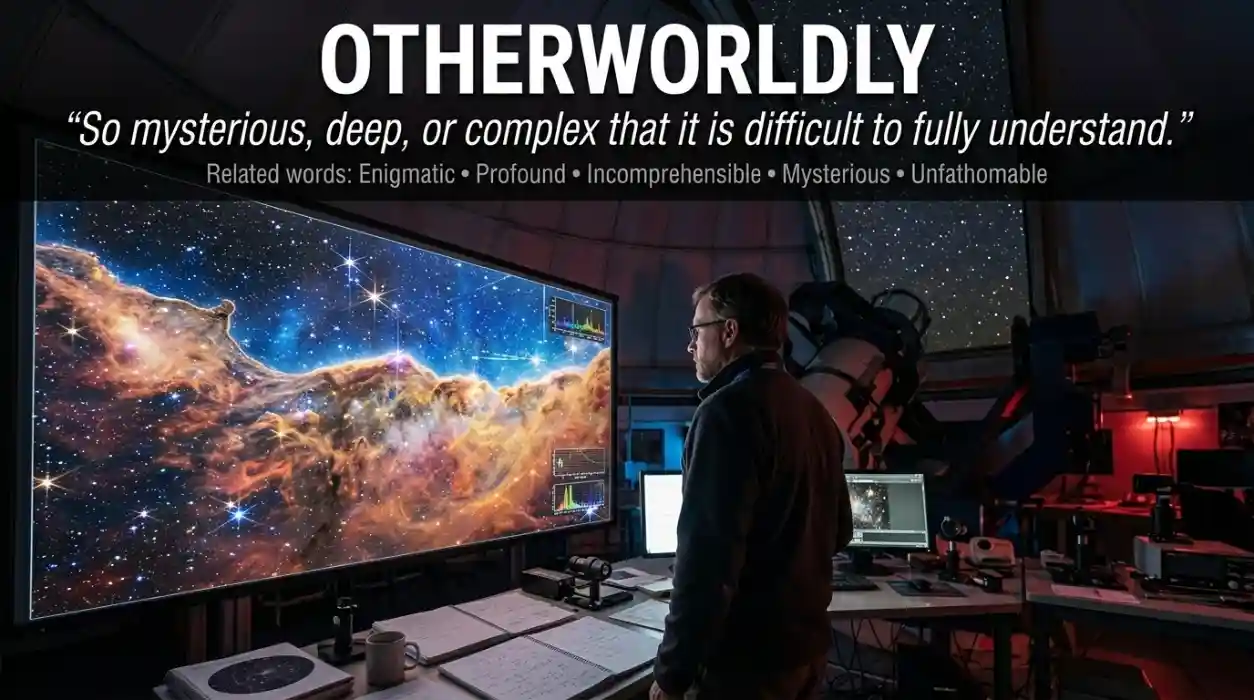
50. Unfathomable (adjective) — US / UK: /ʌnˈfæðəməbəl/
Meaning: So mysterious, deep, or complex that it is difficult to understand fully.
Tone/Register: Formal, reflective, and sometimes dramatic.
Examples:
The night sky seemed to hold an unfathomable depth.
The character was drawn to the unfathomable mystery of the universe.
Usage note: Unfathomable emphasizes difficulty of understanding, not necessarily a supernatural origin.
Synonyms by Tone
Tone matters because a word can change the emotional effect of an entire sentence. Choose based on whether you want to suggest beauty, spirituality, mystery, fear, or fantasy.
Positive and Beautiful
- Ethereal
- Celestial
- Heavenly
- Angelic
- Sublime
- Elysian
- Enchanted
Use these when describing peaceful scenery, beautiful music, or an extraordinary experience.
Neutral or Spiritual
- Supernatural
- Spiritual
- Mystical
- Transcendental
- Paranormal
- Immaterial
- Incorporeal
These words are useful when discussing spiritual ideas, unusual experiences, or beliefs about realities beyond the physical world.
Dark or Unsettling
- Eerie
- Ghostly
- Spectral
- Wraithlike
- Uncanny
- Occult
- Bizarre
These alternatives suit horror stories, mysterious places, and scenes designed to create unease.
Dreamlike and Imaginative
- Dreamlike
- Surreal
- Fantastical
- Fanciful
- Illusory
- Mythical
- Unreal
Use these when a scene feels unreal, belongs to fantasy, or follows the strange logic of a dream.
Playful or Informal
- Magical
- Weird
- Fantastic
- Enchanted
These words are accessible and conversational. They work well in casual descriptions, social media captions, and informal storytelling.
“Otherworldly” vs. Close Alternatives
| Word | Main meaning | Best use |
|---|---|---|
| Otherworldly | Seems connected to another realm or beyond normal experience | General descriptions of strange, spiritual, or unreal qualities |
| Ethereal | Delicate, light, and almost heavenly | Beauty, music, appearance, and atmosphere |
| Supernatural | Beyond ordinary natural explanation | Ghosts, spirits, magical forces, and paranormal events |
| Surreal | So unusual that it seems unreal or dreamlike | Art, films, dreams, and strange experiences |
| Unearthly | Unnaturally strange or beyond familiar experience | Eerie sounds, unusual light, and mysterious beings |
Examples:
- “The singer had an ethereal voice.” This emphasizes delicate beauty.
- “The house was haunted by a supernatural presence.” This suggests something beyond natural explanation.
- “The empty city looked surreal.” This emphasizes the feeling of unreality.
- “An unearthly cry echoed across the valley.” This suggests something strange and possibly frightening.
How “Otherworldly” Changes by Context
Daily Conversation
In everyday speech, magical, dreamlike, unreal, and weird may sound more natural than transcendental or preternatural.
For example, “The sky looked unreal tonight” is simple and conversational. “The sky had a celestial quality” sounds more poetic.
Writing and Blogging
Writers can choose more vivid alternatives to create a specific atmosphere. Use ethereal for delicate beauty, eerie for unease, and surreal for something that feels disconnected from reality.
Specific adjectives help readers picture the scene instead of relying on a general word.
Professional and Academic Writing
In academic writing, the best choice depends on the subject. Supernatural may fit a discussion of folklore. Transcendental may fit philosophical ideas. Surreal may be suitable for art criticism.
Avoid treating these words as scientific proof of supernatural events. They describe concepts, perceptions, or interpretations.
Creative and Informal Use
Fiction, poetry, film reviews, and music criticism often benefit from atmospheric vocabulary. A ghostly silhouette creates a different impression from an angelic face or a surreal landscape.
Choose the word that supports the mood you want readers to feel.
Common Mistakes and Native Usage
Mistake 1: Using “Ethereal” for Every Strange Thing
Ethereal usually suggests delicacy or lightness. It is not the best choice for a loud, threatening monster. Uncanny, eerie, or supernatural may fit better.
Mistake 2: Confusing “Surreal” With “Supernatural”
Surreal means dreamlike or strangely unreal. Supernatural refers to forces or beings believed to go beyond ordinary natural laws. A bizarre dream can be surreal without involving anything supernatural.
Mistake 3: Using “Celestial” When You Mean “Ghostly”
Celestial usually relates to the heavens or heavenly beauty. Ghostly suggests a ghostlike appearance. They can both describe an unusual scene, but they create very different images.
Mistake 4: Overusing Dramatic Adjectives
Too many words such as ethereal, sublime, celestial, and transcendent can make a paragraph feel exaggerated. Mix vivid vocabulary with simple, concrete details.
Register Notes
- Formal or literary: preternatural, transcendental, empyrean, phantasmal.
- Neutral: supernatural, spiritual, mysterious, unreal.
- Informal: weird, magical, fantastic.
- Poetic: ethereal, celestial, gossamer, Elysian.
For further vocabulary practice, explore a related lesson on synonyms for mysterious or dreamlike.
Real-Life Mini Scenarios
Workplace:
A designer presents a digital environment with glowing shapes and floating structures. A reviewer calls the visual effect surreal or otherworldly.
Social situation:
Friends visit a quiet lake at dawn. One describes the mist as ethereal, while another simply says the view looks magical.
Media and pop culture:
A film uses strange lights, ghostlike figures, and unexplained sounds. A critic may describe its atmosphere as eerie, supernatural, or surreal, depending on the effect.
Writing and storytelling:
A fantasy author introduces a city above the clouds. Words such as celestial, enchanted, and fantastical help establish the setting’s mood.
Practice Quiz
1. A singer’s voice sounds delicate, light, and almost heavenly.
A. Bizarre
B. Ethereal
C. Occult
D. Uncanny
2. A story features ghosts and unexplained forces that go beyond nature.
A. Supernatural
B. Gossamer
C. Celestial
D. Fanciful
3. A photograph looks so strange that it resembles a dream.
A. Practical
B. Surreal
C. Ordinary
D. Tangible
4. A dark corridor creates a strange, frightening feeling.
A. Heavenly
B. Eerie
C. Angelic
D. Elysian
5. A landscape seems connected to heaven and the stars.
A. Celestial
B. Bizarre
C. Occult
D. Inscrutable
6. A person is difficult to understand because their expressions reveal very little.
A. Enchanted
B. Inscrutable
C. Magical
D. Heavenly
7. A fantasy garden seems to be under a spell.
A. Enchanted
B. Immaterial
C. Unworldly
D. Illusory
8. A thin figure resembles a ghost moving through fog.
A. Seraphic
B. Wraithlike
C. Fantastic
D. Divine
9. A scene appears real at first but turns out to be an optical illusion.
A. Illusory
B. Angelic
C. Celestial
D. Paranormal
10. A writer describes a perfect, paradise-like place.
A. Elysian
B. Eerie
C. Bizarre
D. Uncanny
Answer key: 1-B | 2-A | 3-B | 4-B | 5-A | 6-B | 7-A | 8-B | 9-A | 10-A | 11-B | 12-A
Reflection task:
Write two sentences describing a place, sound, or experience that feels unusual. Use otherworldly in the first sentence and a more precise synonym in the second. Explain how the mood changes.
External references
- Cambridge Dictionary — Definition and pronunciation of otherworldly. It identifies the spiritual sense and lists formal alternatives such as preternatural and transcendental. English meaning – Cambridge Dictionary+1
- Cambridge Thesaurus — Synonyms and antonyms of otherworldly. Useful for exploring related meanings such as spectral, mystical, celestial, and dreamlike.
- Etymonline — History and origin of otherworldly. Useful for checking the word’s historical development
Conclusion
Learning synonyms for otherworldly helps you describe beauty, mystery, spirituality, and fantasy with greater precision. Words such as ethereal, surreal, and supernatural each create a different impression.
Students can strengthen literary analysis, while bloggers and content writers can create more vivid descriptions. Everyday English users can also express wonder and curiosity more naturally.
You do not need to memorize all 50 words at once. Start with a few familiar alternatives and notice how each one changes the mood of a sentence.
Practice by describing a song, landscape, film, or dream with one new synonym today. Small steps will help you build vocabulary and express your imagination with confidence.
Frequently Asked Questions
1. What is the most poetic synonym for otherworldly?
Ethereal is often an excellent poetic alternative when you want to suggest delicate beauty, lightness, or a spiritual quality. Celestial works well for heavenly imagery, while Elysian evokes paradise-like beauty. The best choice depends on whether your description focuses on softness, the heavens, or an ideal place.
2. What is a good synonym for otherworldly in fantasy writing?
Enchanted, fantastical, mythical, supernatural, and unearthly are useful choices in fantasy writing. Use enchanted for a place filled with magic, mythical for legendary beings, and unearthly for something unfamiliar or strange. Choose based on the role the setting or creature plays in your story.
3. Is otherworldly a positive or negative word?
Otherworldly can be positive, negative, or neutral. It may describe a beautiful voice, an eerie landscape, or a belief about spiritual beings. The surrounding details shape the reader’s reaction. Words such as ethereal often suggest beauty, while eerie and ghostly create a darker mood.
4. What is the difference between otherworldly and ethereal?
Otherworldly suggests a connection to another realm or something beyond ordinary experience. Ethereal usually emphasizes delicate, light, or heavenly beauty. A ghostly figure may be otherworldly without being ethereal, while a soft melody can sound ethereal without suggesting anything supernatural.
5. Which synonym for otherworldly is best for describing a place?
Use surreal when a place looks unreal, enchanted when it seems magical, celestial when it resembles the heavens, and eerie when it creates unease. For a place that combines strange beauty with a sense of another realm, otherworldly itself may remain the most accurate choice.

Shahzeena Shazadi is the founder and lead writer at VocablyHub.com, where she creates accurate, reader-focused English language content designed to help people communicate with clarity and confidence. She specializes in synonyms, antonyms, word meanings, idioms, and practical vocabulary guides that simplify complex language concepts for everyday use. Every article is carefully researched, fact-checked, and written in clear, accessible language using reliable references and real-world examples. Her goal is to provide helpful, trustworthy content that supports learners at every stage of their English language journey.
Her editorial approach focuses on accuracy, transparency, and user value while following modern content quality standards. She regularly reviews and updates content to keep information relevant, useful, and easy to understand. Through VocablyHub.com, Shahzeena Shazadi is committed to publishing reliable language resources that help students, writers, educators, professionals, and English learners expand their vocabulary, improve their writing skills, and communicate with confidence in academic, professional, and everyday situations.