
Finding the right words can make your writing more natural, expressive, and precise. If you want to describe someone speaking in a teasing, sarcastic, or ridiculing way, learning synonyms for mockingly can help you choose the best word for each situation.
The word mockingly describes an action or tone that makes fun of someone or something. Depending on the context, alternatives can express different shades of meaning, such as sarcastically, derisively, tauntingly, scornfully, or ridiculously.
In this guide, you will discover useful synonyms for mockingly along with clear meanings and simple examples. These alternatives can help ESL learners, students, writers, and anyone looking to improve their everyday vocabulary.
Understanding the subtle differences between these words is important because not every synonym has exactly the same tone. Some sound playful, while others suggest strong disrespect or contempt. Learning these distinctions will help you communicate your meaning more accurately.
What Does “Mockingly” Really Mean?
Mockingly describes an action done in a way that laughs at, ridicules, or makes fun of someone or something. Native speakers understand this term as an attitude showing scorn, disrespect, or playful imitation. The word usually carries a sharp emotional tone of irony or superiority. It frequently appears in narrative fiction, psychological dramas, and descriptions of snide social interactions.
Part of Speech: Adverb. Simple Definition: Doing or saying something in a way that ridicules someone.
Connotative Meaning
- Positive tone: Can occasionally imply playful, harmless banter among close friends.
- Negative tone: Usually implies cruelty, disdain, bullying, or bitter disrespect.
- Neutral tone: Merely describes a mimicry or stylistic imitation without deep malice.
- (Connotation refers to the emotional or cultural feeling associated with a word beyond its strict dictionary definition.)
Etymology
- Source Language: Derived from Middle English and Old French terms related to imitation and derision.
- Old English (450–1100): Early roots involved mimicking sounds or gestures, evolving later into mockery.
- Middle English (1100–1500): The verb “moken” entered via Old French, meaning to deride or jeer.
- Modern English (1500–Present): Transformed into “mock” with the suffix “-ingly” added to form the modern adverb.
Pronunciation & Morphology
- US Pronunciation: /ˈmɑː.kɪŋ.li/
- UK Pronunciation: /ˈmɒk.ɪŋ.li/
- Syllables: mock-ing-ly (3 syllables)
- Affixation Pattern:
- Root: mock (verb/noun)
- Prefix: None
- Suffix: -ing (present participle) + -ly (adverbial suffix)
Synonyms List:
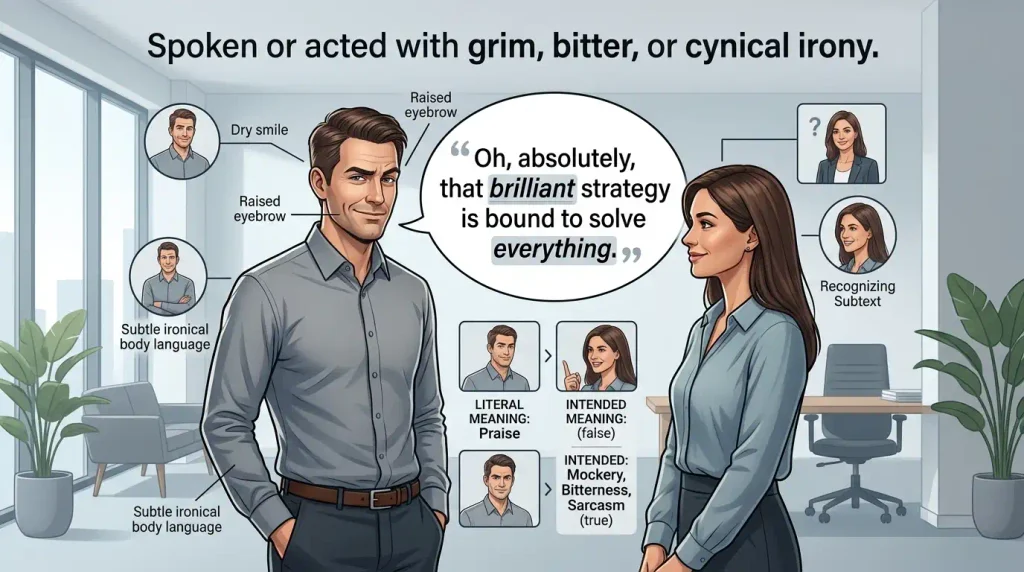
Sardonically (Adverb) — US /sɑːrˈdɑːn.ɪk.li/ / UK /sɑːˈdɒn.ɪk.li/
Meaning: Spoken or acted with grim, bitter, or cynical irony.
Tone/Register: Formal, Literary
Example:
He smiled sardonically as the flawed plan began to collapse.
She laughed sardonically at the corporate promise of fairness.
Scornfully (Adverb) — US /ˈskɔːrn.fəl.i/ / UK /ˈskɔːn.fəl.i/
Meaning: Done with a feeling of intense dislike or contempt toward someone.
Tone/Register: Serious, Formal
Example:
The critic looked scornfully at the amateur painting.
He spoke scornfully about the lazy efforts of his team.
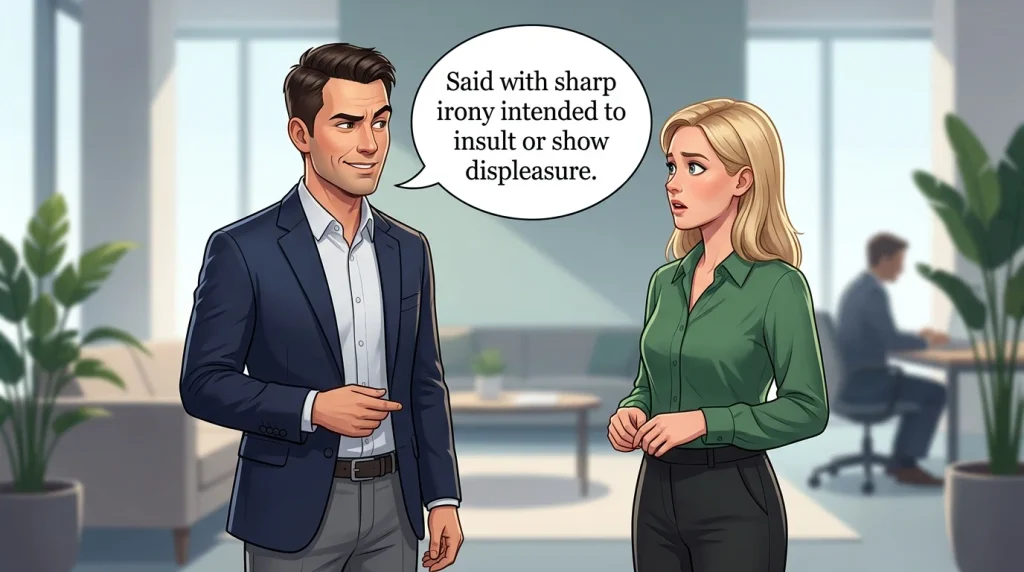
Sarcastically (Adverb) — US /sɑːrˈkæs.tɪ.k.li/ / UK /sɑːˈkæs.tɪ.kli/
Meaning: Said with sharp irony intended to insult or show displeasure.
Tone/Register: Conversational, Common
Example:
She clapped sarcastically when he finally arrived an hour late.
He muttered sarcastically about the wonderful weather during the storm.
Derisively (Adverb) — US /dɪˈraɪ.sɪv.li/ / UK /dɪˈraɪ.sɪv.li/
Meaning: Expressing contemptuous ridicule or a belief that someone is foolish.
Tone/Register: Academic, Formal
Example:
The panel chuckled derisively at the unrealistic budget proposal.
He snorted derisively when his rival tripped on stage.
Ironically (Adverb) — US /aɪˈrɑː.nɪ.kəl/i/ / UK /aɪˈrɒn.ɪ.kl.i/
Meaning: Expressing a meaning opposite to the literal text, often with humor.
Tone/Register: Standard, Conversational
Example:
He smiled ironically as his umbrella broke in the sunshine.
She spoke ironically about loving mandatory Monday morning meetings.
Disdainfully (Adverb) — US /dɪsˈdeɪn.fəl.i/ / UK /dɪsˈdeɪn.fəl.i/
Meaning: Acting with a strong sense of superiority and contempt for others.
Tone/Register: Formal, Literary
Example:
The noblewoman turned away disdainfully from the muddy beggar.
He looked disdainfully at the cheap plastic watch.
Sneeringly (Adverb) — US /ˈsnɪr.ɪŋ.li/ / UK /ˈsnɪr.ɪŋ.li/
Meaning: Done while curling the upper lip to show contempt or derision.
Tone/Register: Descriptive, Narrative
Example:
The villain spoke sneeringly about the hero’s humble origins.
He smiled sneeringly while watching his opponent stumble.
Jeeringly (Adverb) — US /ˈdʒɪr.ɪŋ.li/ / UK /ˈdʒɪr.ɪŋ.li/
Meaning: Shouted or performed with crude taunts and rude mocking cries.
Tone/Register: Informal, Confrontational
Example:
The crowd shouted jeeringly as the referee made a bad call.
Children laughed jeeringly at the broken toy on the sidewalk.
Tauntingly (Adverb) — US /ˈtɑːn.tɪŋ.li/ / UK /ˈtɔːn.tɪŋ.li/
Meaning: Done in a provoking manner meant to anger or challenge someone.
Tone/Register: Conversational, Narrative
Example:
She waved the winning ticket tauntingly in front of her brother.
The cat sat just out of reach, looking tauntingly at the puppy.
Satirically (Adverb) — US /səˈtɪr.ɪ.kəl.i/ / UK /səˈtɪr.ɪ.kl.i/
Meaning: Using wit, irony, or sarcasm to expose human foolishness.
Tone/Register: Literary, Journalistic
Example:
The columnist wrote satirically about modern political corruption.
The comedian commented satirically on celebrity culture.
Cynically (Adverb) — US /ˈsɪn.ɪ.kəl/i/ / UK /ˈsɪn.ɪ.kl.i/
Meaning: Expressing a belief that people are motivated purely by self-interest.
Tone/Register: Intellectual, Serious
Example:
He remarked cynically that honesty never pays off.
She smiled cynically when corporate announced another restructuring.
Teasingly (Adverb) — US /ˈtiː.zɪŋ.li/ / UK /ˈtiː.zɪŋ.li/
Meaning: Done in a lighthearted, playful manner without true malice.
Tone/Register: Friendly, Informal
Example:
She poked him teasingly about burning the toast again.
He whispered teasingly that she took way too long to dress.
Jokingly (Adverb) — US /ˈdʒoʊ.kɪŋ.li/ / UK /ˈdʒəʊ.kɪŋ.li/
Meaning: Said or done as a joke rather than with serious intent.
Tone/Register: Casual, Friendly
Example:
He suggested jokingly that they should move to Hawaii tomorrow.
She added jokingly that her coffee addiction kept the office running.
Insultingly (Adverb) — US /ɪnˈsʌl.tɪŋ.li/ / UK /ɪnˈsʌl.tɪŋ.li/
Meaning: Done in a way that causes deliberate offense or disrespect.
Tone/Register: Direct, Confrontational
Example:
The manager offered an insultingly low salary to the expert.
He spoke insultingly about her creative design choices.
Contemptuously (Adverb) — US /kənˈtemp.tʃu.əs.li/ / UK /kənˈtemp.tʃu.əs.li/
Meaning: Showing deep hatred, disgust, or total lack of respect.
Tone/Register: Formal, Severe
Example:
She looked contemptuously at the forged document.
He spoke contemptuously of anyone who cheated on exams.
Scoffingly (Adverb) — US /ˈskɑː.fɪŋ.li/ / UK /ˈskɒf.ɪŋ.li/
Meaning: Spoken while expressing derisive doubt or outright disbelief.
Tone/Register: Casual, Expressive
Example:
He dismissed the warning scoffingly and walked outside.
She laughed scoffingly at the idea of running a marathon.
Cuttingly (Adverb) — US /ˈkʌt.ɪŋ.li/ / UK /ˈkʌt.ɪŋ.li/
Meaning: Said with sharp, hurtful words that wound someone’s feelings.
Tone/Register: Sharp, Emotional
Example:
She replied cuttingly when questioned about her late arrival.
He remarked cuttingly on his colleague’s poor presentation.
Smirkingly (Adverb) — US /ˈsmɝː.kɪŋ.li/ / UK /ˈsmɜː.kɪŋ.li/
Meaning: Done with a self-satisfied, smug, or arrogant grin.
Tone/Register: Descriptive, Narrative
Example:
He nodded smirkingly after winning the minor argument.
She watched smirkingly as her sibling faced minor trouble.
Playfully (Adverb) — US /ˈpleɪ.fəl.i/ / UK /ˈpleɪ.fəl.i/
Meaning: Done with humor and fun rather than serious intent.
Tone/Register: Casual, Warm
Example:
He nudged his friend playfully during the boring lecture.
She argued playfully about who makes the best coffee.
Wryly (Adverb) — US /ˈraɪ.li/ / UK /ˈraɪ.li/
Meaning: Expressing dry, mocking humor, often about a difficult situation.
Tone/Register: Literary, Sophisticated
Example:
He smiled wryly when his car battery died in the rain.
She commented wryly on her complete lack of cooking skills.
Superciliously (Adverb) — US /ˌsuː.pɚˈsɪl.i.əs.li/ / UK /ˌsuː.pəˈsɪl.i.əs.li/
Meaning: Behaving or speaking as though one thinks one is superior to others.
Tone/Register: Highly Formal, Intellectual
Example:
The professor corrected the student superciliously.
She looked superciliously at their modest apartment.
Backhandedly (Adverb) — US /ˈbækˌhæn.dɪd.li/ / UK /ˈbækˌhæn.dɪd.li/
Meaning: Done with an ambiguous tone that contains hidden insults.
Tone/Register: Subtle, Conversational
Example:
He complimented her backhandedly on her strange outfit.
She praised his work backhandedly by calling it surprisingly decent.
Snidely (Adverb) — US /ˈsnaɪd.li/ / UK /ˈsnaɪd.li/
Meaning: Spoken in a nasty, derogatory, or sneeringly indirect manner.
Tone/Register: Informal, Critical
Example:
He whispered snidely about his coworker’s promotion.
She remarked snidely on the quality of the restaurant food.
Bitingly (Adverb) — US /ˈbaɪ.tɪŋ.li/ / UK /ˈbaɪ.tɪŋ.li/
Meaning: Done with sharp, severe, or stinging sarcasm.
Tone/Register: Literary, Intense
Example:
The review criticized the new movie bitingly.
She commented bitingly on his failure to keep promises.
Deridingly (Adverb) — US /dɪˈraɪ.dɪŋ.li/ / UK /dɪˈraɪ.dɪŋ.li/
Meaning: Spoken or performed while expressing rude mockery and scorn.
Tone/Register: Formal, Literary
Example:
The critic smiled deridingly at the flawed theatrical performance.
He laughed derisively when his opponent suggested a compromise.
Derisively (Adverb) — US /dɪˈraɪ.sɪv.li/ / UK /dɪˈraɪ.sɪv.li/
Meaning: Spoken or performed in a way that expresses contemptuous mockery.
Tone/Register: Formal, Academic
Example:
The panel chuckled derisively at the unrealistic proposal.
He snorted derisively when his rival stumbled on stage.
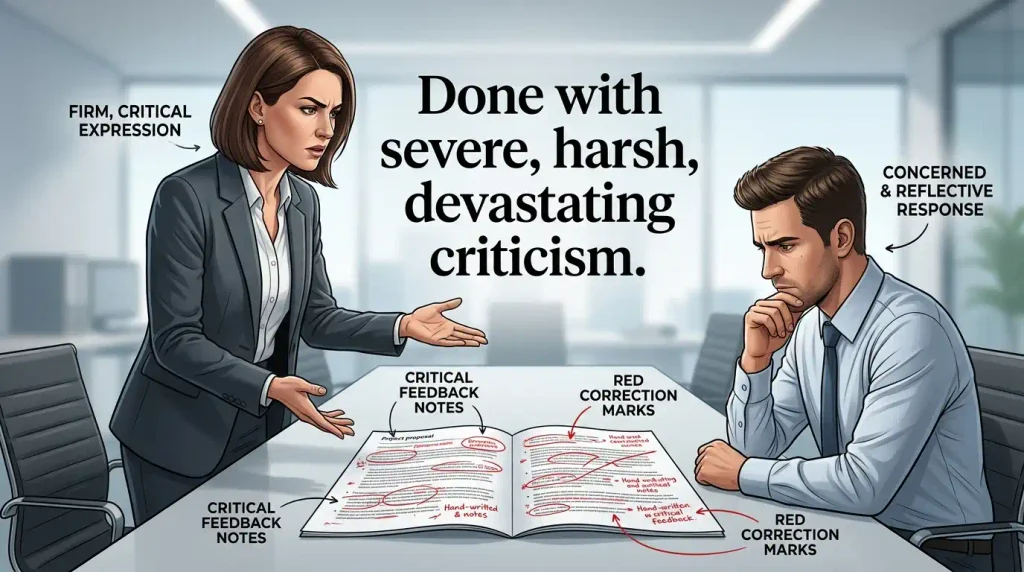
Scathingly (Adverb) — US /ˈskeɪ.ðɪŋ.li/ / UK /ˈskeɪ.ðɪŋ.li/
Meaning: Done with severe, harsh, and devastating criticism.
Tone/Register: Literary, Intense
Example:
The reviewer wrote scathingly about the flawed screenplay.
She spoke scathingly regarding the company’s failed safety record.
Mockingly-playful (Adverbial phrase) — US /ˈmɑː.kɪŋ.li ˈpleɪ.fəl.i/ / UK /ˈmɒk.ɪŋ.li ˈpleɪ.fəl.i/
Meaning: Expressing light teasing mixed with harmless fun.
Tone/Register: Casual, Friendly
Example:
He winked mockingly-playfully during the friendly debate.
She nudged her teammate mockingly-playfully after winning the round.
Smirkingly-sarcastic (Adverbial description) — US /ˈsmɝː.kɪŋ.li sɑːrˈkæs.tɪ.kli/ / UK /ˈsmɜː.kɪŋ.li sɑːˈkæs.tɪ.kli/
Meaning: Delivered with a smug grin and pointed irony.
Tone/Register: Conversational, Narrative
Example:
He replied smirkingly-sarcastic when asked about his late arrival.
She smiled smirkingly-sarcastic while holding the winning card.
Scornfully-bitter (Adverbial phrase) — US /ˈskɔːrn.fəl.i ˈbɪt.ɚ.li/ / UK /ˈskɔːn.fəl.i ˈbɪt.ə.li/
Meaning: Conveying deep resentment wrapped in intense disdain.
Tone/Register: Formal, Emotional
Example:
He complained scornfully-bitter about the unfair division of labor.
She remarked scornfully-bitter about past betrayals.
Jeeringly-hostile (Adverbial phrase) — US /ˈdʒɪr.ɪŋ.li ˈhɑː.stəl/ / UK /ˈdʒɪr.ɪŋ.li ˈhɒs.taɪl/
Meaning: Shouted with open aggression and public mockery.
Tone/Register: Confrontational, Informal
Example:
The angry audience reacted jeeringly-hostile toward the referee.
Protesters shouted jeeringly-hostile outside the municipal gates.
Teasingly-light (Adverbial phrase) — US /ˈtiː.zɪŋ.li laɪt/ / UK /ˈtiː.zɪŋ.li laɪt/
Meaning: Spoken with gentle humor that avoids any harsh sting.
Tone/Register: Casual, Warm
Example:
She reminded him teasingly-lightly about his silly mistake.
He laughed teasingly-lightly over the burnt breakfast pancakes.
Sardonic-wise (Adverbial modifier) — US /sɑːrˈdɑːn.ɪk waɪz/ / UK /sɑːˈdɒn.ɪk waɪz/
Meaning: Exhibiting a dry, cynical, and mocking demeanor.
Tone/Register: Literary, Stylistic
Example:
He observed sardonic-wise that perfection is rare.
She reacted sarcastically to the sudden change in schedule.
Irreverently-mocking (Adverbial phrase) — US /ɪˈrev.ər.ənt.li ˈmɑː.kɪŋ/ / UK /ɪˈrev.ər.ənt.li ˈmɒk.ɪŋ/
Meaning: Making fun of serious traditions with playful disrespect.
Tone/Register: Informal, Expressive
Example:
The student joked irreverently, mocking during the history lecture.
He commented irreverently, mocking the royal protocol.
Cynically amused (Adverbial phrase) — US /ˈsɪn.ɪ.kəl.i əˈmjuːzd/ / UK /ˈsɪn.ɪ.kl.i əˈmjuːzd/
Meaning: Finding amusement in the foolishness or greed of others.
Tone/Register: Intellectual, Observational
Example:
She watched cynically-amused as the rivals argued over pennies.
He smiled cynically-amused at the corporate restructuring memo.
Banteringly-sharp (Adverbial phrase) — US /ˈbæn.tər.ɪŋ.li ʃɑːrp/ / UK /ˈbæn.tər.ɪŋ.li ʃɑːp/
Meaning: Delivered through fast-paced, witty, and pointed verbal sparring.
Tone/Register: Conversational, Witty
Example:
They traded jokes banteringly sharp across the dinner table.
He responded banteringly sharp to the playful challenge.
Satirically-pointed (Adverbial phrase) — US /səˈtɪr.ɪ.kəl/i ˈpɔɪn.tɪd/ / UK /səˈtɪr.ɪ.kl.i ˈpɔɪn.tɪd/
Meaning: Framed with sharp wit designed to expose social flaws.
Tone/Register: Journalistic, Literary
Example:
The essay addressed corruption satirically-pointed and clear.
The author criticized modern habits satirically and pointedly.
Superciliously-cold (Adverbial phrase) — US /ˌsuː.pɚˈsɪl.i.əs.li koʊld/ / UK /ˌsuː.pəˈsɪl.i.əs.li kəʊld/
Meaning: Exhibiting an arrogant, freezing attitude toward peers.
Tone/Register: Formal, Superior
Example:
She evaluated the newcomer superciliously-cold.
He answered superciliously-cold when questioned about his credentials.
Snidely-critical (Adverbial phrase) — US /ˈsnaɪd.li ˈkrɪt.ɪ.kəl/ / UK /ˈsnaɪd.li ˈkrɪt.ɪ.kl/
Meaning: Expressing small, mean-spirited complaints behind a smile.
Tone/Register: Gossip, Informal
Example:
She whispered snidely-critical remarks about the presentation.
He spoke snidely-critical about the office décor.
Bitingly-ironic (Adverbial phrase) — US /ˈbaɪ.tɪŋ.li aɪˈrɑː.nɪk/ / UK /ˈbaɪ.tɪŋ.li aɪˈrɒn.ɪk/
Meaning: Expressing an outcome or statement with a sharp, painful twist.
Tone/Register: Literary, Sharp
Example:
The tragedy unfolded bitingly ironic on national television.
She commented bitingly-ironically on her own bad luck.
Wryly amused (Adverbial phrase) — US /ˈraɪ.li əˈmjuːzd/ / UK /ˈraɪ.li əˈmjuːzd/
Meaning: Showing a dry, quiet smile toward an ironic situation.
Tone/Register: Sophisticated, Calm
Example:
He accepted the delay, wryly amused.
She watched the chaos unfold, wryly amused.
Patronizingly-sweet (Adverbial phrase) — US /ˈpeɪ.trə.naɪ.zɪŋ/ li swiːt/li swiːt/ / UK /ˈpæ.trə.naɪ.zɪŋ.li swiːt/
Meaning: Using an exaggeratedly sweet voice to talk down to someone.
Tone/Register: Condescending, Conversational
Example:
She spoke patronizingly sweet while fixing his tie.
He smiled patronizingly sweet to mask his annoyance.
Cockily-dismissive (Adverbial phrase) — US /ˈkɑː.kəl.i dɪˈsmɪs.ɪv/ / UK /ˈkɒk.ɪ.li dɪˈsmɪs.ɪv/
Meaning: Rejecting advice with arrogant overconfidence.
Tone/Register: Informal, Arrogant
Example:
He waved away the warning cockily-dismissively.
She answered cockily-dismissively when asked about her study habits.
Flippantly-casual (Adverbial phrase) — US /ˈflɪp.ənt.li ˈkæʒ.u.əl/ / UK /ˈflɪp.ənt.li ˈkæʒ.u.əl/
Meaning: Treating critical matters with inappropriate lightness.
Tone/Register: Careless, Conversational
Example:
He brushed off the financial penalty flippantly-casual.
She spoke flippantly-casual about missing her flight.
Acrimoniously-harsh (Adverbial phrase) — US /ˌæk.rɪˈmoʊ.ni.əs.li hɑːrʃ/ / UK /ˌæk.rɪˈməʊ.ni.əs.li hɑːʃ/
Meaning: Expressing deep hostility and bitter resentment.
Tone/Register: Severe, Formal
Example: The dispute concluded acrimoniously- harshly in front of witnesses.
They argued acrimoniously- harshly over property lines.
Offensively-taunting (Adverbial phrase) — US /əˈfen. sɪv/li ˈtɑːn.tɪŋ/ / UK /əˈfen.sɪv.li ˈtɔːn.tɪŋ/
Meaning: Provoking others deliberately with offensive remarks.
Tone/Register: Confrontational, Rude
Example:
He behaved offensively-taunting during the sports match.
She whispered offensively taunting phrases across the aisle.
Disdainfully-silent (Adverbial phrase) — US /dɪsˈdeɪn.fəl/i ˈsaɪ.lənt/ / UK /dɪsˈdeɪn.fəl.i ˈsaɪ.lənt/
Meaning: Expressing total contempt by refusing to speak at all.
Tone/Register: Formal, Descriptive
Example:
She remained disdainfully silent throughout the apology.
He sat disdainfully silent during the entire complaint meeting.
Condescendingly-praiseful (Adverbial phrase) — US /ˌkɑːn.dɪˈsen.dɪŋ.li ˈpreɪz.fəl/ / UK /ˌkɒn.dɪˈsen.dɪŋ.li ˈpreɪz.fəl/
Meaning: Offering compliments that sound like an insult from above.
Tone/Register: Insincere, Professional
Example:
He commented condescendingly-praiseful on her basic draft.
She offered a condescendingly-praiseful review of the artwork.
Glibly-insincere (Adverbial phrase) — US /ˈɡlɪb.li ɪn.sɪnˈsɪr/ / UK /ˈɡlɪb.li ɪn.sɪnˈsɪə/
Meaning: Speaking smoothly with an obvious lack of genuine feeling.
Tone/Register: Superficial, Critical
Example:
He apologized glibly- insincerely for the massive scheduling error.
She promised reform glibly- insincerely during the interview.
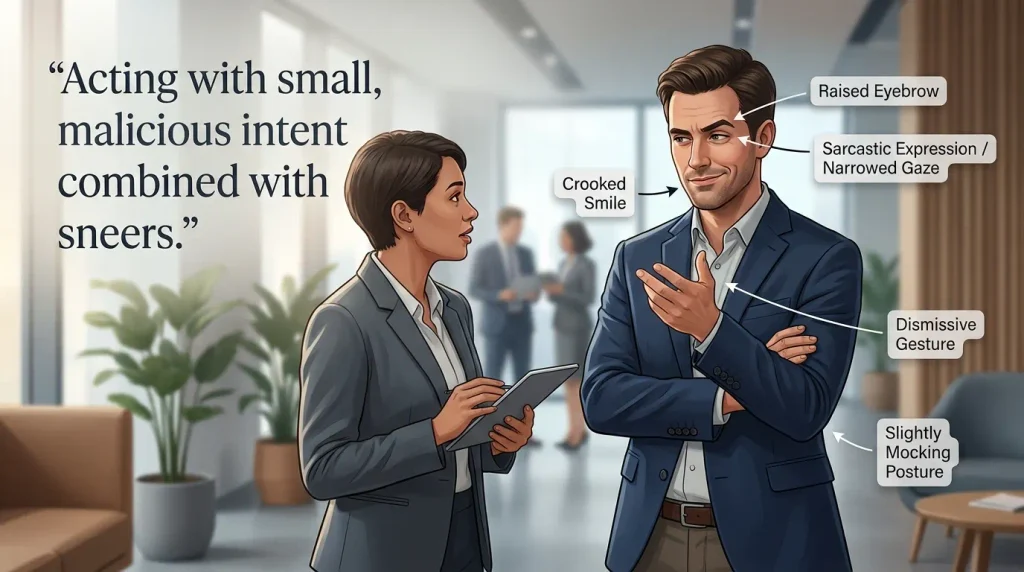
Spitefully-sneering (Adverbial phrase) — US /ˈspaɪt.fəl.i ˈsnɪr.ɪŋ/ / UK /ˈspaɪt.fəl.i ˈsnɪə.ɪŋ/
Meaning: Acting with small, malicious intent combined with sneers.
Tone/Register: Bitter, Malicious
Example:
He smiled spitefully, sneering upon hearing the bad news.
She laughed spitefully, sneering at her opponent’s setback.
Synonyms for “Mockingly” by Tone
Word choice communicates attitude just as much as literal meaning. Selecting the correct register ensures your tone matches your context.
- Positive / Playful: Teasingly, Jokingly, Playfully (Brings lighthearted humor and friendly banter without true malice).
- Neutral / Objective: Ironically, Satirically (Describes stylistic literary devices or observational humor).
- Negative / Severe: Scornfully, Contemptuously, Sneeringly, Superciliously (Conveys deep disrespect, arrogance, or hostility).
- Informal / Conversational: Sarcastically, Scoffingly, Snidely (Commonly heard in daily arguments or casual exchanges).
Mini Comparison:
- Mockingly: Refers broadly to actions or speech that mimic or ridicule someone for amusement or mild cruelty. Use this for general storytelling and character actions.
- Sardonically: Describes bitter, cynical, or grimly ironic humor born of disbelief. Use this when a character feels disillusioned or world-weary.
- Scornfully: Implies intense contempt, disgust, and absolute lack of respect. Use this when a person looks down on someone with severe moral superiority.
Context-Based Usage
Daily Conversation
In casual speech, people typically say “sarcastically” or “teasingly” when sharing friendly jokes or minor arguments with peers. Therefore, keeping your language natural helps avoid sounding overly theatrical in normal chats.
Writing or Blogging
Writers crafting fiction or opinion blogs often swap simple adverbs with “sardonically,” “wryly,” or “snidely” to build rich character depth. Consequently, varied vocabulary keeps readers visually and emotionally invested in the narrative.
Professional or Academic Tone
Formal essays and literary critiques prefer precise analytical terms like “satirically,” “derisively,” or “ironically.” As a result, these terms maintain intellectual credibility while discussing complex themes.
Common Mistakes & Native Usage
Common Mistakes Learners Make
- Confusing Adverb Forms: Beginners often use adjectives like “mock” instead of the adverb “mockingly” to modify verbs. Always ensure your descriptor ends correctly in “-ly.”
- Mismatched Tone: Using severe words like “contemptuously” for a friendly tease sounds overly dramatic. Match your vocabulary intensity to the actual situation.
Register Notes
Native speakers instantly catch subtle differences; “snidely” feels petty and gossipy, whereas “sardonically” feels intellectual and sharp. Choose your adverb based on the specific social dynamic you wish to portray.
Real-Life Mini Scenarios
- Workplace: When the printer jammed yet again, he remarked sardonically that technology always loves Mondays.
- Social Situations: She poked her brother teasingly when he admitted he forgot his own house keys.
- Media / Pop Culture: The film critic wrote bitingly about the predictable plot twists in the summer blockbuster.
- Writing or Storytelling: The antagonist smiled sneeringly as the young hero struggled to lift the heavy iron gate.
Conclusion
Expanding your vocabulary with accurate synonyms transforms your writing from repetitive to remarkably expressive. Whether you are crafting fiction, writing a blog post, or improving your daily conversational English, choosing precise adverbs makes your descriptions shine.
Learning new terms takes a little bit of practice, but the payoff in clarity and communication skill is huge. Furthermore, mastering these nuances helps you capture precise emotional tones in all your written work.
Why not try using one new synonym today? Take a moment to practice writing a short email, journal entry, or story sentence using a word like “wryly” or “sardonically” to boost your active vocabulary right now.
Interactive Practice Quiz
1. Which term best describes a lighthearted and friendly way of teasing someone?
- A) Scornfully
- B) Teasingly
- C) Contemptuously
- D) Sneeringly
2. Which word implies bitter, cynical, or grimly ironic humor?
- A) Sardonically
- B) Jokingly
- C) Playfully
- D) Accidentally
3. Which adverb works best when a character shows intense, hateful disgust for another person?
- A) Contemptuously
- B) Wryly
- C) Ironically
- D) Casually
4. What part of speech is the focus keyword “mockingly”?
- A) Verb
- B) Adjective
- C) Adverb
- D) Noun
5. Which synonym carries a sophisticated, dry literary tone about a tricky situation?
- A) Wryly
- B) Jeeringly
- C) Insultingly
- D) Loudly
6. Which term describes speaking in a nasty, gossipy, and snide manner?
- A) Snidely
- B) Radically
- C) Politely
- D) Tenderly
7. What is the primary benefit of using varied synonyms in your writing?
- A) Making sentences excessively long
- B) Avoiding boring repetition and adding precise emotional color
- C) Confusing readers completely
- D) Eliminating verbs entirely
8. Which word is most appropriate for a formal literary review analyzing biting political humor?
- A) Satirically
- B) Playfully
- C) Silently
- D) Joyfully
9. How many syllables does the word “mockingly” contain?
- A) One
- B) Two
- C) Three
- D) Four
10. Which tone category does the word “scornfully” fit into best?
- A) Positive
- B) Negative / Severe
- C) Playful
- D) Neutral technical
Answer Key: 1-B, 2-A, 3-A, 4-C, 5-A, 6-A, 7-B, 8-A, 9-C, 10-B
Reflection Task: Create your own original sentence using the synonym “wryly” in a modern workplace or school setting.
FAQs
1. What is the difference between mockingly and sarcastically?
Mockingly is a broad term for ridiculing or mimicking someone, whereas sarcastically specifically involves using sharp, ironic statements meant to sting or express displeasure.
2. Is sardonically a formal word in English?
Yes, sardonically is a formal literary term used to describe grim, cynical, or bitter humor, making it popular in novels and professional writing rather than casual chat.
3. How do you pronounce mockingly in US and UK English?
In US English, it is pronounced as /ˈmɑː.kɪŋ.li/, while UK English uses /ˈmɒk.ɪŋ.li/, differing primarily in the vowel sound of the first syllable.
4. Can mockingly be used in positive contexts?
Generally, mockingly implies ridicule or derision, making it mostly negative or neutral. For positive humor, words like teasingly or playfully are much more suitable choices.
5. Why should writers avoid repeating the word mockingly?
Repeating the exact same adverb too frequently makes your writing style sound monotonous and robotic. Using diverse semantic alternatives keeps your reader engaged and expresses exact nuances.

Shahzeena Shazadi is the founder and lead writer at VocablyHub.com, where she creates accurate, reader-focused English language content designed to help people communicate with clarity and confidence. She specializes in synonyms, antonyms, word meanings, idioms, and practical vocabulary guides that simplify complex language concepts for everyday use. Every article is carefully researched, fact-checked, and written in clear, accessible language using reliable references and real-world examples. Her goal is to provide helpful, trustworthy content that supports learners at every stage of their English language journey.
Her editorial approach focuses on accuracy, transparency, and user value while following modern content quality standards. She regularly reviews and updates content to keep information relevant, useful, and easy to understand. Through VocablyHub.com, Shahzeena Shazadi is committed to publishing reliable language resources that help students, writers, educators, professionals, and English learners expand their vocabulary, improve their writing skills, and communicate with confidence in academic, professional, and everyday situations.