
Finding the right words can make your writing more natural, expressive, and engaging. If you are looking for synonyms for muttered, there are many alternatives that can describe quiet, unclear, reluctant, or under-the-breath speech.
The word muttered usually describes speaking in a low or difficult-to-hear voice, often because someone is annoyed, nervous, embarrassed, or simply does not want to speak loudly. Depending on the situation, words such as murmured, whispered, grumbled, mumbled, and uttered can offer slightly different meanings.
Learning synonyms for muttered is especially useful for students, ESL learners, writers, and anyone who wants to improve their vocabulary. Choosing the right alternative helps you show the speaker’s emotion and the way their words were delivered.
In this guide, you’ll discover useful synonyms for muttered, along with their meanings and example sentences. This will help you understand the subtle differences between each word and use them confidently in everyday English and creative writing.
What Does “Muttered” Really Mean?
Muttered means to speak quietly, unclearly, or in a low voice. People usually do this when they are annoyed, embarrassed, or trying to hide their words.
Native speakers use this term when someone talks under their breath. It often appears in novels, personal essays, and dramatic reporting.
The word functions grammatically as a verb, specifically the past tense of mutter. Its simple definition is uttering words indistinctly with lips barely moving.
Connotative Meaning
- Positive tone: N/A (Rarely used in an uplifting context)
- Neutral tone: Speaking softly for privacy or low energy.
- Negative tone: Complaining bitterly or hiding malicious thoughts. (Connotation refers to the emotional or cultural association attached to a word beyond its literal dictionary definition.)
Etymology
Mutter originates from Middle English moteren and Old High German mula, mimicking the sound of low, closed-mouth speech.
- Old English (450–1100): Rooted in early Germanic sound-imitation words for mumbling noises.
- Middle English (1100–1500): Evolved into moteren, meaning to speak in a low, indistinct murmur.
- Modern English (1500–Present): Standardized as mutter to describe quiet, mumbled complaints or speech.
Pronunciation & Structure
- US: /ˈmʌt.ɚd/
- UK: /ˈmʌt.əd/
- Syllables: mut-tered
- Affixation Pattern:
- Root: mutter (verb)
- Prefix: none
- Suffix: -ed (past tense marker)
Synonyms List
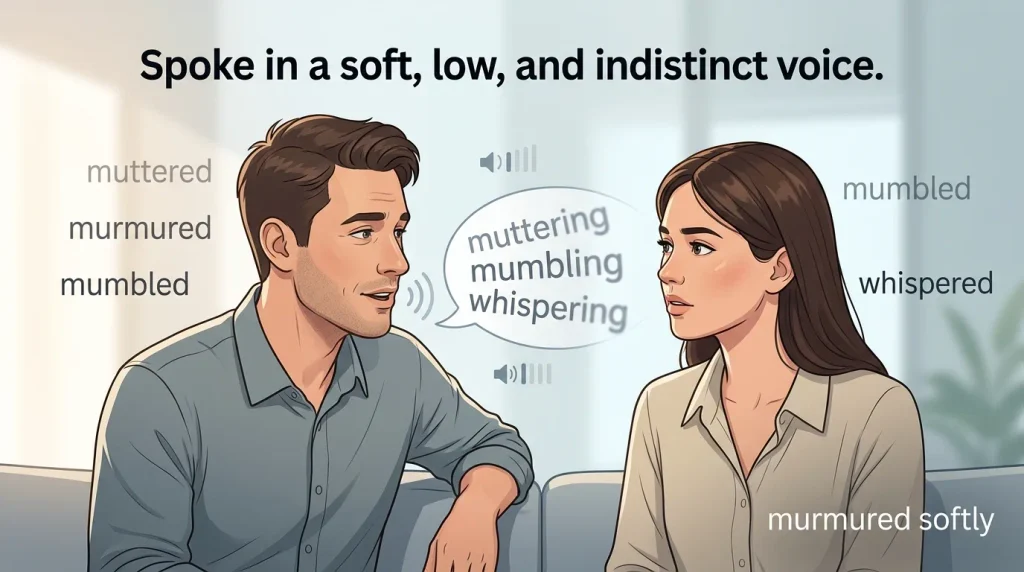
Murmured (V) — /ˈmɜː.məd/ (US) / /ˈmɜː.məd/ (UK)
- Meaning: Spoke in a soft, low, and indistinct voice.
- Tone/Register: Neutral / Literary
- Example: She murmured a sweet goodnight to her sleeping child.
- Example: The guests murmured while waiting for the show.
Whispered (V) — /ˈwɪs.pəd/ (US) / /ˈwɪs.pəd/ (UK)
- Meaning: Spoke very softly using one’s breath rather than vocal cords.
- Tone/Register: Informal / Intimate
- Example: He whispered a secret into his best friend’s ear.
- Example: She whispered her password so nobody else could hear.
Grumbled (V) — /ˈɡrʌm.bld/ (US) / /ˈɡrʌm.bld/ (UK)
- Meaning: Complained in a bad-tempered, low voice.
- Tone/Register: Informal / Negative
- Example: He grumbled about the early morning meeting schedule.
- Example: The customer grumbled about the slow service.
Mumbled (V) — /ˈmʌm.bld/ (US) / /ˈmʌm.bld/ (UK)
- Meaning: Said something quietly and unclearly, making it hard to understand.
- Tone/Register: Casual / Informal
- Example: He mumbled his apology and looked at the floor.
- Example: She mumbled the lyrics because she forgot them.
Grunted (V) — /ˈɡrʌn.tɪd/ (US) / /ˈɡrʌn.tɪd/ (UK)
- Meaning: Made a low, short sound in the throat to express dissatisfaction.
- Tone/Register: Casual / Informal
- Example: The tired worker grunted and lifted the heavy box.
- Example: He grunted in agreement without looking up.
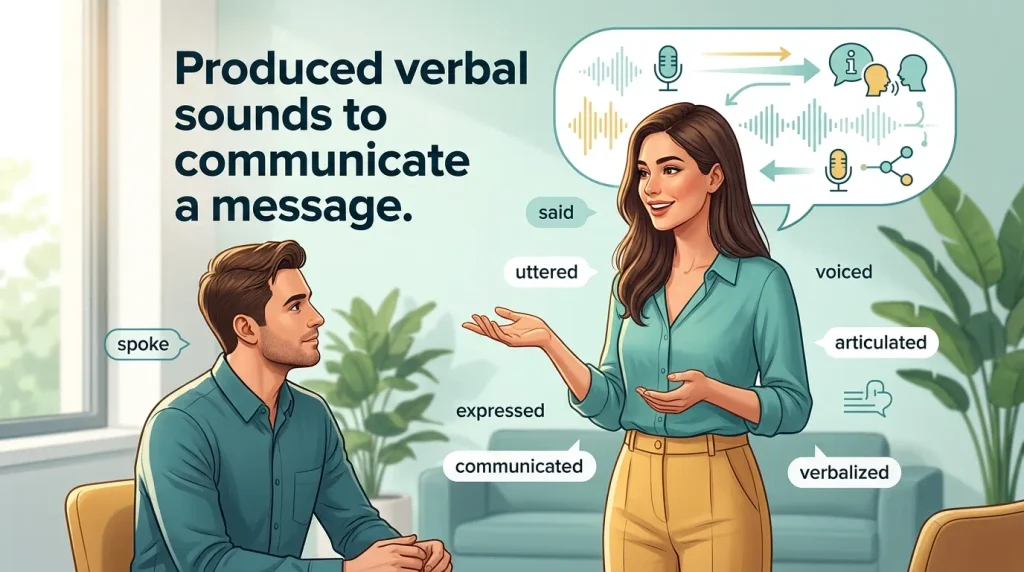
Spoke (V) — /spoʊk/ (US) / /spəʊk/ (UK)
- Meaning: Produced verbal sounds to communicate a message.
- Tone/Register: Neutral / Standard
- Example: She spoke softly so she would not wake the baby.
- Example: He spoke about his travel experiences with great passion.
Uttered (V) — /ˈʌt.əd/ (US) / /ˈʌt.əd/ (UK)
- Meaning: Made a sound or said a word aloud.
- Tone/Register: Formal / Literary
- Example: She never uttered a single complaint during the ordeal.
- Example: He barely uttered a word all evening.
Stuttered (V) — /ˈstʌt.əd/ (US) / /ˈstʌt.əd/ (UK)
- Meaning: Spoke with involuntary repetition of initial consonant sounds.
- Tone/Register: Neutral / Clinical
- Example: He stuttered nervously when asked to present first.
- Example: She stuttered her name due to extreme stage fright.
Faltered (V) — /ˈfɔːl.təd/ (US) / /ˈfɔːl.təd/ (UK)
- Meaning: Spoke in a hesitant or unsteady voice.
- Tone/Register: Formal / Emotional
- Example: His voice faltered as he read the sad letter.
- Example: She faltered slightly during her wedding vows.
Sighed (V) — /saɪd/ (US) / /saɪd/ (UK)
- Meaning: Released a long, deep breath expressing tiredness or relief.
- Tone/Register: Informal / Emotional
- Example: She sighed heavily when she saw the messy room.
- Example: He sighed with relief after passing the exam.
Growled (V) — /ɡraʊld/ (US) / /ɡraʊld/ (UK)
- Meaning: Uttered a low, guttural sound expressing anger.
- Tone/Register: Informal / Aggressive
- Example: The hungry dog growled at the mail carrier.
- Example: He growled an angry threat across the table.
Snapped (V) — /snæpt/ (US) / /snæpt/ (UK)
- Meaning: Said something quickly and sharply out of annoyance.
- Tone/Register: Informal / Negative
- Example: She snapped at her brother for interrupting her work.
- Example: He snapped an irritated reply when questioned twice.
Bleated (V) — /ˈbliː.tɪd/ (US) / /ˈbliː.tɪd/ (UK)
- Meaning: Complained whiningly in a weak, high-pitched voice.
- Tone/Register: Informal / Pejorative
- Example: He bleated about how unfair the rules were.
- Example: She bleated excuses for missing the deadline.
Whined (V) — /waɪnd/ (US) / /waɪnd/ (UK)
- Meaning: Gave a long, high-pitched cry or complaint.
- Tone/Register: Informal / Childish
- Example: The puppy whined by the closed door.
- Example: He whined about having to do household chores.
Panted (V) — /ˈpæn.tɪd/ (US) / /ˈpæn.tɪd/ (UK)
- Meaning: Breathed with short, quick gasps while speaking.
- Tone/Register: Informal / Physical
- Example: She panted out directions while running toward the finish line.
- Example: He panted after rushing up four flights of stairs.
Gasped (V) — /ɡæspt/ (US) / /ɡɑːspt/ (UK)
- Meaning: Inhaled suddenly with surprise, pain, or shock.
- Tone/Register: Emotional / Dramatic
- Example: She gasped when she saw the stunning sunset.
- Example: He gasped for air after diving underwater.
Wheezed (V) — /wiːzd/ (US) / /wiːzd/ (UK)
- Meaning: Breathed with a whistling sound while speaking.
- Tone/Register: Informal / Medical
- Example: He wheezed out a laugh at the silly joke.
- Example: The patient wheezed while describing his chest pain.
Coughed (V) — /kɒft/ (US) / /kɒft/ (UK)
- Meaning: Expelled air from the lungs with a sudden sharp sound.
- Tone/Register: Neutral / Physical
- Example: He coughed politely to clear his dry throat.
- Example: She coughed during the quiet library lecture.
Hemmed (V) — /hɛmd/ (US) / /hɛmd/ (UK)
- Meaning: Made a throat-clearing sound when hesitating to speak.
- Tone/Register: Informal / Old-fashioned
- Example: He hemmed and hawed before answering the question.
- Example: She hemmed nervously before sharing her idea.
Stammered (V) — /ˈstæm.əd/ (US) / /ˈstæm.əd/ (UK)
- Meaning: Spoke with sudden pauses and repetition due to nervousness.
- Tone/Register: Neutral / Descriptive
- Example: He stammered an apology for dropping the glass.
- Example: She stammered when the teacher called on her.
Blurted (V) — /ˈblɜː.tɪd/ (US) / /ˈblɜː.tɪd/ (UK)
- Meaning: Said something suddenly without thinking first.
- Tone/Register: Informal / Impulsive
- Example: He blurted out the surprise party secret.
- Example: She blurted her feelings before stopping herself.
Hissed (V) — /hɪst/ (US) / /hɪst/ (UK)
- Meaning: Said something in a sharp, low, threatening whisper.
- Tone/Register: Dramatic / Negative
- Example: She hissed a warning through clenched teeth.
- Example: The cat hissed when approached by strangers.
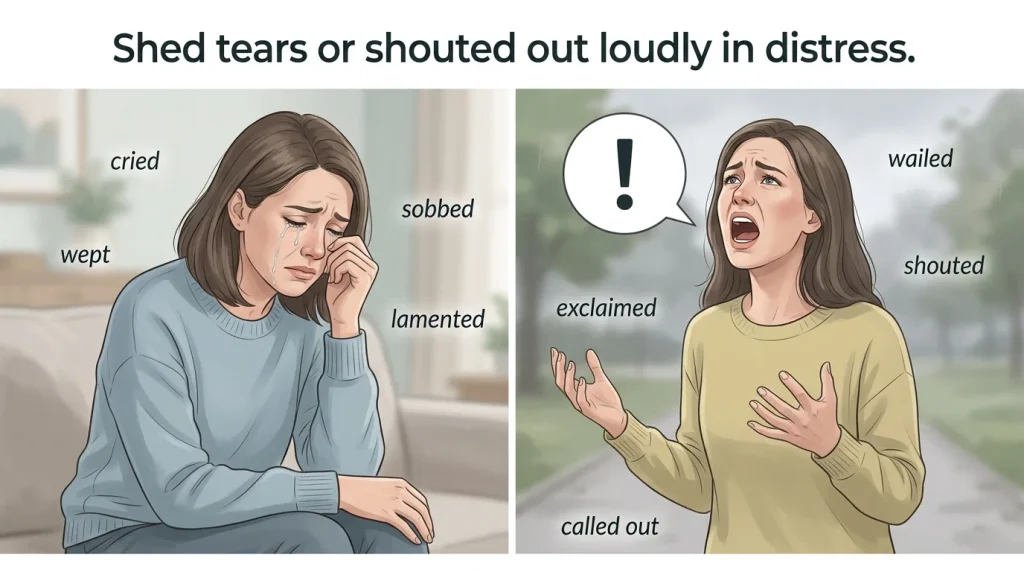
Cried (V) — /kraɪd/ (US) / /kraɪd/ (UK)
- Meaning: Shed tears or shouted out loudly in distress.
- Tone/Register: Emotional / Expressive
- Example: The baby cried for milk in the middle of the night.
- Example: She cried out in joy when winning the prize.
Sobbed (V) — /sɒbd/ (US) / /sɒbd/ (UK)
- Meaning: Cried noisily with gasps of breath.
- Tone/Register: Emotional / Dramatic
- Example: He sobbed quietly into his soft pillow.
- Example: She sobbed after hearing the heartbreaking news.
Whimpered (V) — /ˈwɪm.pəd/ (US) / /ˈwɪm.pəd/ (UK)
- Meaning: Made low, weak crying sounds.
- Tone/Register: Sympathetic / Emotional
- Example: The injured dog whimpered softly in the cage.
- Example: She whimpered when the dentist entered the room.
Complained (V) — /kəmˈpleɪnd/ (US) / /kəmˈpleɪnd/ (UK)
- Meaning: Expressed dissatisfaction or annoyance about something.
- Tone/Register: Formal / Professional
- Example: He complained about the poor restaurant hygiene.
- Example: She complained that the room was too cold.
Protested (V) — /prəˈtɛs.tɪd/ (US) / /prəˈtɛst.ɪd/ (UK)
- Meaning: Expressed strong objection or disagreement.
- Tone/Register: Formal / Assertive
- Example: They protested against the new office policy.
- Example: He protested that he was innocent of the crime.
Objected (V) — /əbˈdʒɛk.tɪd/ (US) / /əbˈdʒɛkt.ɪd/ (UK)
- Meaning: Expressed formal opposition to an idea or action.
- Tone/Register: Legal / Formal
- Example: The lawyer objected to the unfair witness question.
- Example: She objected to changing the meeting schedule.
Remonstrated (V) — /ˈrɛm.ən.streɪ.tɪd/ (US) / /ˈrɛm.ən.streɪ.tɪd/ (UK)
- Meaning: Made forceful, reproachful protests.
- Tone/Register: Highly Formal / Literary
- Example: He remonstrated with the manager over the unfair bill.
- Example: She remonstrated against the harsh grading system.
Expostulated (V) — /ɪkˈspɒs.tʃʊ.leɪ.tɪd/ (US) / /ɪkˈspɒs.tʃʊ.leɪ.tɪd/ (UK)
- Meaning: Expressed strong disapproval or disagreement persuasively.
- Tone/Register: Academic / Literary
- Example: He expostulated with his friend about reckless driving.
- Example: She expostulated against the proposed budget cuts.
Mutter (V) — /ˈmʌt.ɚ/ (US) / /ˈmʌt.ə/ (UK)
- Meaning: Present tense form of speaking quietly to oneself.
- Tone/Register: Casual / Everyday
- Example: Do not mutter under your breath when spoken to.
- Example: He tends to mutter answers when he is tired.
Mumble (V) — /ˈmʌm.bl̩/ (US) / /ˈmʌm.bl̩/ (UK)
- Meaning: Present tense form of speaking unclearly.
- Tone/Register: Casual / Everyday
- Example: Please speak clearly and do not mumble.
- Example: Actors must practice so they never mumble lines.
Whisper (V) — /ˈwɪs.pɚ/ (US) / /ˈwɪs.pə/ (UK)
- Meaning: Present tense form of speaking without vocal cords.
- Tone/Register: Casual / Everyday
- Example: Whisper your order so nobody else hears.
- Example: Students whisper during quiet study hours.
Murmur (V) — /ˈmɜː.mɚ/ (US) / /ˈmɜː.mə/ (UK)
- Meaning: Present tense form of making a soft continuous sound.
- Tone/Register: Literary / Poetic
- Example: Streams murmur through the quiet green valley.
- Example: Lovers murmur sweet phrases into the evening breeze.
Groan (V) — /ɡroʊn/ (US) / /ɡrəʊn/ (UK)
- Meaning: Make a deep mournful sound of pain or grief.
- Tone/Register: Casual / Everyday
- Example: Floors groan under the weight of heavy furniture.
- Example: Fans groan when their team misses a goal.
Rumble (V) — /ˈrʌm.bl̩/ (US) / /ˈrʌm.bl̩/ (UK)
- Meaning: Make a continuous deep, resonant sound.
- Tone/Register: Descriptive / Neutral
- Example: Thunder begins to rumble across the dark sky.
- Example: Empty stomachs rumble before lunchtime arrives.
Drone (V) — /droʊn/ (US) / /drəʊn/ (UK)
- Meaning: Speak in a dull, monotonous low tone.
- Tone/Register: Formal / Boring
- Example: The professor continued to drone on about history.
- Example: Air conditioners drone quietly in the background.
Purr (V) — /pɜːr/ (US) / /pɜː/ (UK)
- Meaning: Make a low continuous vibratory sound of contentment.
- Tone/Register: Informal / Descriptive
- Example: Engines purr smoothly when properly maintained.
- Example: Cats purr happily when stroked behind the ears.
Hum (V) — /hʌm/ (US) / /hʌm/ (UK)
- Meaning: Make a low, steady continuous buzz sound.
- Tone/Register: Casual / Everyday
- Example: She hums a cheerful tune while cooking dinner.
- Example: Computers hum softly inside the server room.
Croak (V) — /kroʊk/ (US) / /krəʊk/ (UK)
- Meaning: Speak with a deep, harsh, hoarse voice.
- Tone/Register: Informal / Humorous
- Example: He croaked a greeting with a sore throat.
- Example: Frogs croak loudly near the pond at night.
Muttering (V) — /ˈmʌt.ɚ.ɪŋ/ (US) / /ˈmʌt.ər.ɪŋ/ (UK)
- Meaning: The continuous act of speaking in a low, indistinct voice.
- Tone/Register: Casual / Descriptive
- Example: He spent the afternoon muttering complaints at his desk.
- Example: She heard someone muttering outside the front door.
Sputtered (V) — /ˈspʌt.əd/ (US) / /ˈspʌt.əd/ (UK)
- Meaning: Uttered hastily with explosive or spitting sounds due to agitation.
- Tone/Register: Informal / Dramatic
- Example: He sputtered an excuse when caught off guard.
- Example: She sputtered in disbelief over the sudden news.
Chattered (V) — /ˈtʃæt.əd/ (US) / /ˈtʃæt.əd/ (UK)
- Meaning: Talked rapidly and casually about trivial matters.
- Tone/Register: Informal / Conversational
- Example: They chatted quietly in the corner of the room.
- Example: The children chattered excitedly before bedtime.
Intoned (V) — /ɪnˈtoʊnd/ (US) / /ɪnˈtəʊnd/ (UK)
- Meaning: Said something in a slow, solemn, musical tone.
- Tone/Register: Formal / Literary
- Example: The priest intoned a brief prayer before dinner.
- Example: He intoned the final verdict with deep seriousness.
Ranted (V) — /ˈræn/.tɪd/ (US) / /ˈræn.tɪd/ (UK)
- Meaning: Spoke or shouted in an angry, impassioned way.
- Tone/Register: Informal / Emotional
- Example: He ranted about the unfair parking fines for hours.
- Example: She ranted against the poor management decisions.
Giggled (V) — /ˈɡɪɡ.əld/ (US) / /ˈɡɪɡ.əld/ (UK)
- Meaning: Laughed in a light, silly, half-suppressed manner.
- Tone/Register: Informal / Playful
- Example: The students giggled softly during the boring lecture.
- Example: She giggled at the funny text message.
Chortled (V) — /ˈtʃɔːr.təld/ (US) / /ˈtʃɔː.təld/ (UK)
- Meaning: Expressed amusement with a low, proud chuckle.
- Tone/Register: Informal / Literary
- Example: He chortled quietly over his clever prank.
- Example: She chortled as she read the humorous article.
Snickered (V) — /ˈsnɪk.ərd/ (US) / /ˈsnɪk.əd/ (UK)
- Meaning: Laughed in a half-suppressed, disrespectful manner.
- Tone/Register: Informal / Casual
- Example: The boys snickered at the minor mistake.
- Example: She snickered behind her hand during the speech.
Snuffled (V) — /ˈsnʌf.əld/ (US) / /ˈsnʌf.əld/ (UK)
- Meaning: Breathed noisily through the nose while speaking or crying.
- Tone/Register: Informal / Descriptive
- Example: He snuffled an apology through a heavy cold.
- Example: She snuffled softly while wiping away tears.
Yawoped (V) — /ˈjɔːpt/ (US) / /ˈjɔːpt/ (UK)
- Meaning: Uttered a loud, harsh cry or exclamation.
- Tone/Register: Literary / Archaic
- Example: He yawped a greeting across the crowded field.
- Example: The poet yawped a fierce song of freedom.
Bellowed (V) — /ˈbɛl.oʊd/ (US) / /ˈbɛl.əʊd/ (UK)
- Meaning: Emitted a deep roar in pain or anger.
- Tone/Register: Informal / Dramatic
- Example: The coach bellowed instructions from the sideline.
- Example: He bellowed a warning when the branch snapped.
Squawked (V) — /skwɔːkt/ (US) / /skwɔːkt/ (UK)
- Meaning: Said something in a loud, harsh, complaining voice.
- Tone/Register: Informal / Humorous
- Example: She squawked a protest when her seat was taken.
- Example: He squawked in surprise as the lights went out.
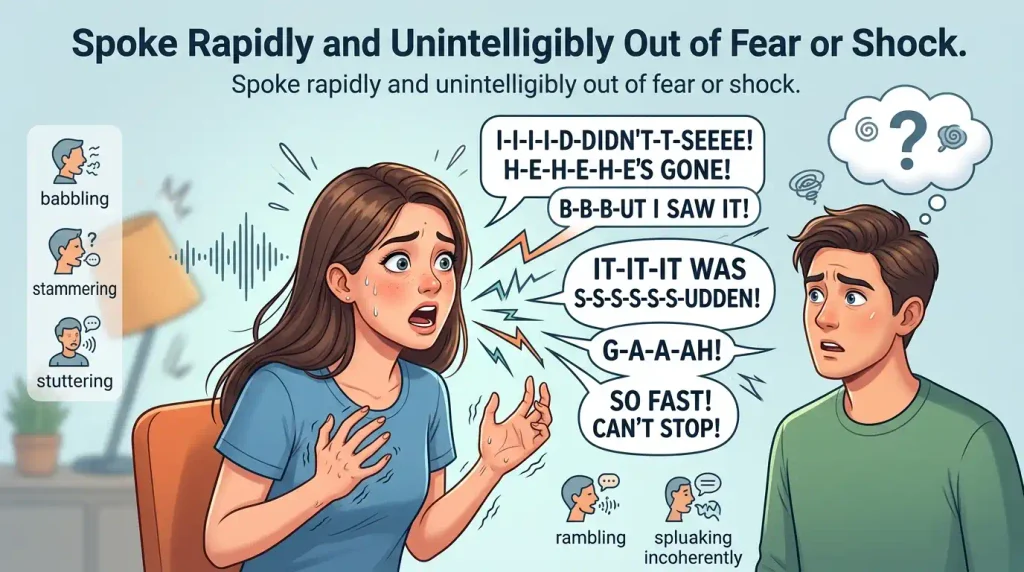
Gibbered (V) — /ˈdʒɪb.əd/ (US) / /ˈdʒɪb.əd/ (UK)
- Meaning: Spoke rapidly and unintelligibly out of fear or shock.
- Tone/Register: Informal / Dramatic
- Example: He gibbered in terror during the sudden storm.
- Example: She gibbered nonsense when the ghost story started.
Responded (V) — /rɪˈspɒn.dɪd/ (US) / /rɪˈspɒn.dɪd/ (UK)
- Meaning: Said something in reply to a question or statement.
- Tone/Register: Neutral / Standard
- Example: He responded with a quiet nod of approval.
- Example: She responded politely to every single inquiry.
Synonyms by Tone
Understanding word tone prevents awkward dialogue mistakes in writing. Word choice establishes character mood instantly.
- Positive / Gentle: Murmured, Whispered, Purred, Hummed
- Neutral / Descriptive: Spoke, Uttered, Mumbled, Stammered
- Negative / Annoyed: Grumbled, Growled, Snapped, Whined, Hissed
- Formal / Academic: Objected, Protested, Remonstrated, Expostulated
Mini Comparison
Muttered vs. Murmured vs. Grumbled
- Muttered: Involves quiet, low speech often driven by irritation, low confidence, or secrecy. Use it when characters talk under their breath so others barely hear.
- Murmured: Focuses on softness and gentle auditory quality without necessary anger. Use it for romantic or calm, soothing conversational settings.
- Grumbled: Emphasizes clear dissatisfaction and bad temper. Use it when someone explicitly voices a complaint or annoyance.
Context-Based Usage
Daily Conversation
In casual speaking, use common words like mumbled or whispered naturally. Avoid overly formal terms unless joking with friends.
Writing or Blogging
Creative writers benefit from replacing repeated verbs with vivid choices like hissed or snapped. This builds stronger scene tension.
Professional or Academic Tone
Professional settings require formal alternatives like objected or complained. Academic papers avoid emotional speech tags entirely.
Common Mistakes & Native Usage
Common Mistakes Learners Make
- Using aggressive words like growled for normal quiet speech.
- Confusing positive whispering with negative muttering.
- Overusing a single dialogue tag throughout a long story.
Register Notes
Native speakers match dialogue tags directly to emotional context. Written fiction values variety, whereas spoken English relies on simple verbs.
Real-Life Mini Scenarios
- Workplace: He muttered a quiet complaint when assigned extra weekend duties.
- Social Situations: She whispered a funny joke to her friend during the boring lecture.
- Media / Pop Culture: The movie villain growled a dark threat before walking away.
- Writing or Storytelling: The detective muttered clues to himself while inspecting the dark room.
Conclusion
Mastering synonyms for muttered transforms flat dialogue into engaging, colorful storytelling. Varied vocabulary elevates your writing quality across blogs, essays, and stories.
Writers and speakers who explore diverse terms communicate emotions with high precision. Small adjustments in word choice make your creative projects memorable.
Practice applying these words in your daily emails, stories, and journal entries. Consistent practice builds natural English fluency over time.
Start upgrading your active vocabulary today by trying out three new dialogue verbs in your next writing piece.
Interactive Practice Quiz
1. Which synonym best describes a quiet, romantic bedroom conversation?
- A) Growled
- B) Murmured
- C) Snapped
- D) Grumbled
2. Which word fits an angry person complaining under their breath?
- A) Whispered
- B) Grumbled
- C) Purred
- D) Hummed
3. If a character speaks nervously with repeated consonant sounds, they:
- A) Stuttered
- B) Droned
- C) Croaked
- D) Hissed
4. Which term describes a sharp, hostile whisper through clenched teeth?
- A) Hissed
- B) Murmured
- C) Whined
- D) Spoke
5. What word means speaking in a dull, monotonous low tone?
- A) Drone
- B) Whisper
- C) Snap
- D) Cry
6. Which synonym is best for sudden, impulsive speech without thinking?
- A) Blurted
- B) Remonstrated
- C) Objected
- D) Hemmed
7. When a dog or angry person makes a low guttural sound, they:
- A) Growled
- B) Purred
- C) Whispered
- D) Sighed
8. Which word implies formal legal or professional disagreement?
- A) Objected
- B) Whined
- C) Mumbled
- D) Croaked
9. What describes making a low, steady continuous buzz sound?
- A) Hum
- B) Shouted
- C) Yelp
- D) Scream
10. Which term represents a weak, high-pitched complaint?
- A) Whined
- B) Spoke
- C) Uttered
- D) Laughed
Reflection Task: Write one short sentence using the synonym “murmured” to describe a peaceful morning interaction.
Answer Key: B, B, A, A, A, A, A, A, A, A
FAQs
1. What is the difference between muttered and mumbled?
Muttered implies speaking quietly with an attitude of annoyance or secrecy. Mumbled refers strictly to unclear articulation where words blur together due to poor projection or laziness.
2. Can muttered be used in professional writing?
Muttered is too informal for formal essays or business reports. Professional writing benefits from precise alternatives like stated, remarked, or objected, depending on the context.
3. Why do authors avoid repeating dialogue tags?
Repeating words like said or muttered distracts readers and lowers narrative flow. Varied verbs maintain high engagement and paint clearer emotional pictures for the audience.
4. How do native speakers use muttered in daily conversation?
Native speakers use it when describing someone talking to themselves in frustration or whispering complaints where others can barely catch the words.
5. Are there positive synonyms for muttered?
No direct positive equivalents exist because the base action implies secrecy or discontent. Words like murmured or whispered serve as gentle, positive alternatives for quiet speech.

Shahzeena Shazadi is the founder and lead writer at VocablyHub.com, where she creates accurate, reader-focused English language content designed to help people communicate with clarity and confidence. She specializes in synonyms, antonyms, word meanings, idioms, and practical vocabulary guides that simplify complex language concepts for everyday use. Every article is carefully researched, fact-checked, and written in clear, accessible language using reliable references and real-world examples. Her goal is to provide helpful, trustworthy content that supports learners at every stage of their English language journey.
Her editorial approach focuses on accuracy, transparency, and user value while following modern content quality standards. She regularly reviews and updates content to keep information relevant, useful, and easy to understand. Through VocablyHub.com, Shahzeena Shazadi is committed to publishing reliable language resources that help students, writers, educators, professionals, and English learners expand their vocabulary, improve their writing skills, and communicate with confidence in academic, professional, and everyday situations.