
When you are deep into writing about nature, geography, or real estate, finding the exact right word matters. Sometimes, repeating the same term over and over can make your writing feel repetitive, which is why searching for effective synonyms for hillside becomes essential for enhancing your vocabulary and keeping readers engaged.
Whether you are describing a gentle slope covered in wildflowers or a steep incline leading up to a mountain cabin, varying your language creates a much more vivid picture. Using different synonyms for “hillside” allows you to tailor the tone of your content, ensuring that, whether your style is formal, poetic, or purely descriptive, your imagery remains striking and fresh.
Ultimately, mastering these descriptive alternatives helps elevate your content and prevents your writing from sounding monotonous. By exploring various synonyms for hillside, you will discover terms that capture the exact steepness, elevation, and character of the landscape you are trying to portray.
What Does “Hillside” Really Mean?
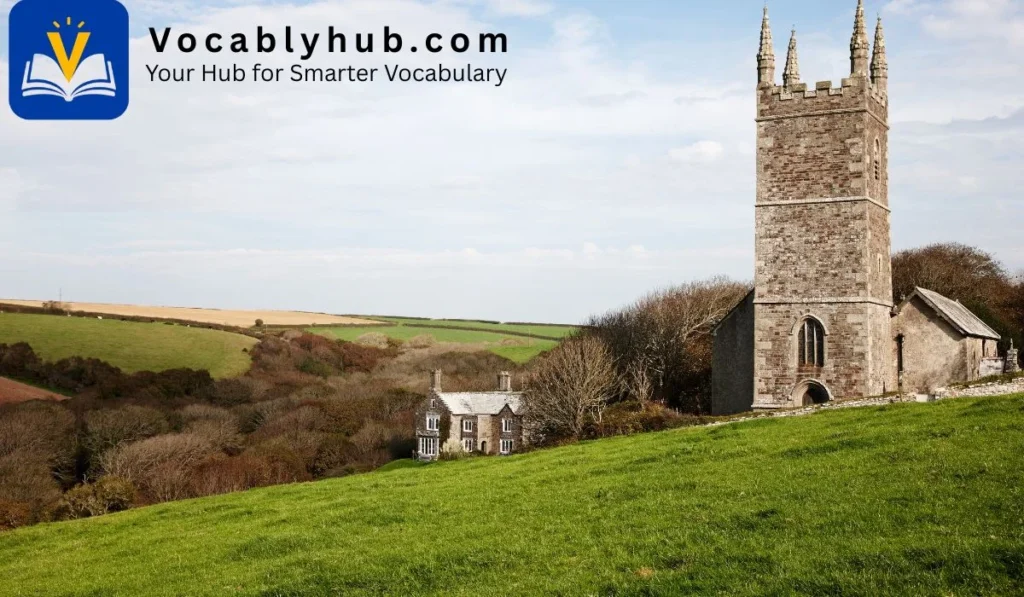
In simple English, a hillside is the sloping side of a hill. It is the land that connects the flat ground below to the peak above.
Native speakers understand it as a broad and friendly word. It describes any sloping green space, pasture, or rocky incline. You will see it in travel blogs, novels, and geography textbooks.
- Part of Speech: Noun
- Definition: The sloping side of a hill.

Connotative Meaning
(Connotation is the emotional feeling or cultural association a word carries beyond its literal definition.)
- Positive Tone: Associated with green pastures, peaceful picnics, and beautiful nature.
- Negative Tone: Can imply a difficult climb, slippery ground, or landslide danger.
- Neutral Tone: Used to describe basic geography, farming, or building locations.
Etymology
The word “hillside” combines two simple Germanic roots to describe a landscape feature.
- Old English (450–1100): The root words hyll (hill) and sīde (side) were used separately to describe high ground and borders.
- Middle English (1100–1500): The words began to merge as speakers described rural landscapes and farming boundaries.
- Modern English (1500–Present): The compound word became a standard term for any sloping geographical surface.
Pronunciation (US & UK – IPA)
- US: /ˈhɪl.saɪd/
- UK: /ˈhɪl.saɪd/
Syllables
- Syllable Breakdown: hill-side (2 syllables)
Affixation Pattern
- Root: Hill, Side
- Prefix: None
- Suffix: None
Synonyms List
Slope (Noun) — US: /sloʊp/ | UK: /sləʊp/
Meaning: A surface that lies at an angle to the horizontal plane.
Examples:
- We walked slowly up the grassy slope of the park.
- The skiers zoomed down the snowy slope of the mountain.
Incline (Noun) — US: /ˈln.klaɪn/ | UK: /ˈɪn.klaɪn/
Meaning: An upward or downward slant on a road or path.
Examples:
- She felt her calf muscles burning as she walked up the steep incline.
- The truck struggled to carry the heavy load up the highway incline.
Declivity (Noun) — US: /dɪˈklɪv.ə.t̬i/ | UK: /dɪˈklɪv.ə.ti/
Meaning: A downward slope of a hill or piece of land.
Examples:
- The hikers carefully navigated the rocky declivity in the dark.
- Rainwater gathered rapidly at the bottom of the grassy declivity.
Acclivity (Noun) — US: /əˈklɪv.ə.t̬i/ | UK: /əˈklɪv.ə.ti/
Meaning: An upward slope of a hill or terrain.
Examples:
- The runners faced a challenging acclivity near the end of the race.
- A winding gravel path leads up the gentle acclivity to the cabin.
Bank (Noun) — US: /bæŋk/ | UK: /bæŋk/
Meaning: A steep slope of earth alongside a river, road, or field.
Examples:
- Wildflowers grew in abundance along the muddy bank of the stream.
- We sat on the grassy bank and watched the cars drive past below.
Brae (Noun) — US: /breɪ/ | UK: /breɪ/
Meaning: A steep hillside or bank, commonly used in Scottish English.
Examples:
- The sheep grazed peacefully on the green brae overlooking the village.
- He walked up the misty brae to reach his family cottage.
Flank (Noun) — US: /flæŋk/ | UK: /flæŋk/
Meaning: The side of a mountain or hill.
Examples:
- The search party explored the eastern flank of the high peak.
- Thick pine forests cover the snowy flank of the mountain range.
Rise (Noun) — US: /raɪz/ | UK: /raɪz/
Meaning: A small hill or a gentle upward slope.
Examples:
- The historic farmhouse sits gracefully on a slight rise in the meadow.
- From the top of the rise, we could see the ocean in the distance.
Ascent (Noun) — US: /əˈsent/ | UK: /əˈsent/
Meaning: A climb or walk upward along a sloping path.
Examples:
- The final ascent to the summit took several hours of hard climbing.
- We began our steep ascent up the rocky trail at dawn.
Descent (Noun) — US: /dɪˈsent/ | UK: /dɪˈsent/
Meaning: A downward slope or the act of moving downward.
Examples:
- The descent from the peak was slippery due to the loose gravel.
- They enjoyed the fast descent down the smooth mountain path.
Sidehill (Noun) — US: /ˈsaɪd.hɪl/ | UK: /ˈsaɪd.hɪl/
Meaning: The side of a hill, often used in regional North American English.
Examples:
- The farmer planted rows of apple trees along the sunny sidehill.
- We pitched our tents on a flat patch of the windy sidehill.
Gradient (Noun) — US: /ˈɡreɪ.di.ənt/ | UK: /ˈɡreɪ.di.ənt/
Meaning: The degree of a slope or slant on a road or railway.
Examples:
- The mountain railway has to handle an incredibly steep gradient.
- Cyclists trained hard to prepare for the road’s challenging gradient.
Pitch (Noun) — US: /pɪtʃ/ | UK: /pɪtʃ/
Meaning: The steepness of a slope, roof, or hill.
Examples:
- The steep pitch of the mountain trail made it hard to carry heavy bags.
- He adjusted his walking sticks to match the sharp pitch of the hill.
Escarpment (Noun) — US: /ɪˈskɑːrp.mənt/ | UK: /ɪˈskɑːp.mənt/
Meaning: A long, steep slope, especially at the edge of a plateau.
Examples:
- The castle overlooks a dramatic escarpment that drops into the valley.
- Geologists studied the rock layers along the massive desert escarpment.
Bluff (Noun) — US: /blʌf/ | UK: /blʌf/
Meaning: A cliff or hill overlooking a river or ocean.
Examples:
- We watched the sunset from the grassy bluff above the beach.
- A lighthouse stands tall on the rocky bluff to guide passing ships.
Brow (Noun) — US: /braʊ/ | UK: /braʊ/
Meaning: The summit or top edge of a steep hill or slope.
Examples:
- The horse rider paused at the brow of the hill to look back.
- A small cottage rests on the windy brow of the grassy slope.
Crest (Noun) — US: /krest/ | UK: /krest/
Meaning: The very top or peak of a hill or mountain.
Examples:
- Snow covered the rocky crest of the highest hill in the range.
- We finally reached the crest and celebrated our long hike.
Ridge (Noun) — US: /rɪdʒ/ | UK: /rɪdʒ/
Meaning: A long, narrow hilltop or mountain range.
Examples:
- A narrow trail runs along the high ridge of the mountains.
- We could see the distant city lights from the windy forest ridge.
Down (Noun) — US: /daʊn/ | UK: /daʊn/
Meaning: A rolling, grassy hill or open sloping countryside, often plural.
Examples:
- They spent the weekend walking across the beautiful chalk downs.
- The sheep wandered freely across the wide green downs of England.
Fell (Noun) — US: /fel/ | UK: /fel/
Meaning: A high, barren hill or moorland, common in Northern England.
Examples:
- The hikers got lost in the thick fog on the high fell.
- Rain poured down on the rocky fell as we searched for shelter.
Cliffside (Noun) — US: /ˈklɪf.saɪd/ | UK: /ˈklɪf.saɪd/
Meaning: The steep, almost vertical side of a cliff.
Examples:
- Sea birds build their nests on the rocky cliffside above the waves.
- The scenic road hugs the edge of the dangerous ocean cliffside.
Foothill (Noun) — US: /ˈfʊt.hɪl/ | UK: /ˈfʊt.hɪl/
Meaning: A low hill at the base of a mountain range.
Examples:
- We live in a quiet town nestled in the green mountain foothills.
- The trail winds through the dusty foothills before climbing higher.
Steeps (Noun) — US: /stiːps/ | UK: /stiːps/
Meaning: Highly vertical or sheer slopes of land.
Examples:
- The climbers faced the dangerous steeps of the canyon wall.
- He looked down into the misty steeps of the mountain pass.
Hill (Noun) — US: /hɪl/ | UK: /hɪl/
Meaning: A naturally raised area of land, not as high as a mountain.
Examples:
- We ran up the grassy hill to fly our colorful kites.
- The small village is built on a gentle hill.
Mountain (Noun) — US: /ˈmaʊn.tən/ | UK: /ˈmaʊn.tɪn/
Meaning: A large natural elevation of the earth’s surface rising abruptly from the surrounding level.
Examples:
- Snow covers the peak of the mountain all year.
- We planned a difficult expedition to climb the dangerous mountain.
Mount (Noun) — US: /maʊnt/ | UK: /maʊnt/
Meaning: An archaic or poetic term for a mountain or hill.
Examples:
- The ancient temple sits atop the sacred mount.
- They walked slowly up the rocky path of the mount.
Elevation (Noun) — US: /ˌel.əˈveɪ.ʃən/ | UK: /ˌel.ɪˈveɪ.ʃən/
Meaning: A high place or position above sea level.
Examples:
- The cabin sits at a high elevation on the ridge.
- We enjoyed the panoramic views from this natural elevation.
Height (Noun) — US: /haɪt/ | UK: /haɪt/
Meaning: A high place or area of high ground.
Examples:
- We looked down at the valleys from the windy heights.
- The castle was built on a great height for defense.
Promontory (Noun) — US: /ˈprɑː.mən.tɔːr.i/ | UK: /ˈprɒm.ən.tər.i/
Meaning: A point of high land that juts out into a body of water or a valley.
Examples:
- A scenic overlook was built on the edge of the promontory.
- We could see miles of coastline from the high promontory.
Precipice (Noun) — US: /ˈpres.ə.pɪs/ | UK: /ˈpres.ɪ.pɪs/
Meaning: A very steep cliff or rock face, often tall.
Examples:
- He stood carefully near the edge of the steep precipice.
- The mountain road runs right alongside a sheer precipice.
Buttress (Noun) — US: /ˈbʌt.rəs/ | UK: /ˈbʌt.rəs/
Meaning: A projecting part of a mountain or hill acting as a support.
Examples:
- The climbers scaled the rocky western buttress of the peak.
- A massive stone buttress rises sharply above the forest floor.
Ramp (Noun) — US: /ræmp/ | UK: /ræmp/
Meaning: A sloping surface joining two different levels.
Examples:
- The natural ramp of rock allowed us to climb the cliff easily.
- A grassy ramp connects the lower meadow to the high terrace.
Grade (Noun) — US: /ɡreɪd/ | UK: /ɡreɪd/
Meaning: The slope of a road, path, or railway track.
Examples:
- The truck crawled slowly up the steep grade of the highway.
- We walked carefully down the slippery grade of the trail.
Slant (Noun) — US: /slænt/ | UK: /slɑːnt/
Meaning: A sloping position or a piece of sloping land.
Examples:
- The house was built on a noticeable slant on the ridge.
- Rain rolled quickly down the grassy slant of the field.
Tilt (Noun) — US: /tɪlt/ | UK: /tɪlt/
Meaning: A sloping position or angle of terrain.
Examples:
- The orchard was planted on the southern tilt of the valley.
- We adjusted our camp table to compensate for the ground’s tilt.
Glacis (Noun) — US: /ˈɡleɪ.sɪs/ | UK: /ˈɡleɪ.sɪs/
Meaning: A gentle slope, especially one leading up to a fort or castle.
Examples:
- The soldiers defended the smooth glacis of the ancient fort.
- A green glacis slopes down from the castle walls to the river.
Talus (Noun) — US: /ˈteɪ.ləs/ | UK: /ˈteɪ.ləs/
Meaning: A slope formed by an accumulation of rock debris at the base of a cliff.
Examples:
- We scrambled carefully over the loose talus at the mountain’s base.
- The geological map outlines the vast talus slopes of the canyon.
Scree (Noun) — US: /skriː/ | UK: /skriː/
Meaning: A mass of small loose stones that cover a mountain slope.
Examples:
- The hikers slipped slightly on the steep scree of the path.
- We had to cross a dangerous field of loose scree.
Hanging (Noun) — US: /ˈhæŋ.ɪŋ/ | UK: /ˈhæŋ.ɪŋ/
Meaning: A steep or overhanging slope of land.
Examples:
- A thick forest covers the steep overhang above the stream.
- The trail follows the narrow overhang of the canyon wall.
Overhang (Noun) — US: /ˈoʊ.vɚ.hæŋ/ | UK: /ˈəʊ.və.hæŋ/
Meaning: A part of a hill or cliff that projects over the land below.
Examples:
- We found shelter from the rain under a rocky overhang.
- The mountain trail climbs steeply beneath a massive stone overhang.
Bluffside (Noun) — US: /ˈblʌf.saɪd/ | UK: /ˈblʌf.saɪd/
Meaning: The steep face of a riverbank or coastal cliff.
Examples:
- An old wooden stairway leads down the sandy bluffside to the beach.
- We built our summer cottage on the windy bluffside.
High ground (Noun) — US: /haɪ ɡraʊnd/ | UK: /haɪ ɡraʊnd/
Meaning: Land that is elevated compared to the surrounding area.
Examples:
- The hikers moved to high ground when the heavy rain began.
- The old fortress was built on high ground to spot incoming threats.
Uplands (Noun) — US: /ˈʌp.ləndz/ | UK: /ˈʌp.ləndz/
Meaning: An area of high or hilly land.
Examples:
- The cattle graze in the misty uplands during the summer months.
- A scenic road winds through the quiet agricultural uplands.
Highlands (Noun) — US: /ˈhaɪ.ləndz/ | UK: /ˈhaɪ.ləndz/
Meaning: An area of high, mountainous land.
Examples:
- They spent their vacation exploring the rugged beauty of the highlands.
- Deer wander freely across the windy heather of the highlands.
Cliffs (Noun) — US: /klɪfs/ | UK: /klɪfs/
Meaning: Steep rock faces, especially at the edge of the sea.
Examples:
- The waves crashed violently against the tall white cliffs.
- We walked along the path that runs along the top of the cliffs.
Synonyms for “Hillside” by Tone
Choosing the right word depends entirely on the vibe or tone you want to convey.
Positive Tone
These words suggest beauty, peace, or gentle nature.
- Brae: Sounds cozy, rustic, and poetic.
- Rise: Implies a gentle, easy, and pleasant slope.
- Down: Evokes peaceful, rolling green pastures.
- Highlands: Suggests romantic, grand, and beautiful outdoor spaces.
Neutral Tone
These are geographical, objective words without emotional weight.
- Slope: The most common, direct, and factual term.
- Incline: Focuses on the physical angle of the land.
- Gradient: A technical term used for roads and railways.
- Flank: Used objectively in military or scientific contexts.
Negative Tone
These words suggest difficulty, danger, or harsh conditions.
- Declivity: Sounds technical, steep, and potentially slippery.
- Steeps: Implies a difficult, exhausting, or hazardous climb.
- Cliffside: Suggests extreme heights and danger.
- Precipice: Represents an extremely dangerous sheer drop.
Playful / Informal Tone
- Sidehill: A relaxed, regional word that sounds casual.
“Hillside” vs. Close Alternatives
| Word | Meaning Difference | Tone Difference | When to Use It |
| Hillside | The broad, general side of a hill. | Warm, natural, and common. | Standard landscape descriptions. |
| Slope | Any surface that slants upward or downward. | Neutral and geometrical. | Science, skiing, or basic terrain details. |
| Escarpment | A very long, steep, cliff-like ridge. | Dramatic and geographical. | Describing grand geological formations. |
How “Hillside” Changes by Context
Daily Conversation
In casual talk, people rarely say “declivity” or “acclivity.” You will hear friends say, “Let’s walk up this slope,” or “Watch out, this incline is pretty steep!”
Writing or Blogging
Travel bloggers love to paint pictures with words. Instead of repeating “hillside,” they might write about the “misty braes of Scotland” or the “sunny foothills of California.”
Professional or Academic Tone
Civil engineers and geologists use precise terms. They write about “measuring the road’s gradient” or “analyzing soil erosion on the mountain flank.”
Creative or Informal Use
Novelists use dramatic words to build tension. A fantasy character might climb the “dangerous rocky steeps” or peer over the “windy brow of the ridge.”
Common Mistakes Learners Make
Overusing “Hillside” in Technical Reports
- Mistake: “The train track was built on a 10% hillside.”
- Correction: “The train track was built on a 10% gradient.”
- Why: “Gradient” is the mathematically correct term for slopes in engineering.
Confusing “Descent” and “Ascent”
- Mistake: “We began our hard descent to reach the high summit.”
- Correction: “We began our hard ascent to reach the high summit.”
- Why: “Ascent” means going up, while “descent” means going down.
Misusing “Brae” Outside of British or Scottish Contexts
- Mistake: “The desert brae was covered in dry cactus plants.”
- Correction: “The desert slope was covered in dry cactus plants.”
- Why: “Brae” is highly specific to green, northern European landscapes.
Real-Life Mini Scenarios
Workplace
A civil engineer is describing a new highway project to the city council. Instead of saying “the road goes up the hillside,” she says, “The road climbs a moderate gradient to ensure safety during winter.”

Social Situations
You are planning a casual hike with your friends over the weekend. You send a text saying, “Let’s meet at the bottom of the grassy rise near the park entrance.”
Media / Pop Culture
A nature documentary narrator describes a pack of wild wolves hunting. The narrator says, “The wolves scan the valley from the high mountain ridge.”
Practice Exercise
- Which word is best for a gentle, easy-to-climb slope?
- A) Steeps
- B) Rise
- C) Escarpment
- D) Declivity
- What is the correct term for the very top edge of a hill?
- A) Flank
- B) Incline
- C) Brow
- D) Gradient
- If you are writing a technical report about a railway slant, which word should you use?
- A) Brae
- B) Gradient
- C) Sidehill
- D) Down
- Complete the sentence: “The skiers raced down the snowy __________.”
- A) Crest
- B) Ascent
- C) Slope
- D) Ridge
- Which word has a distinct Scottish cultural association?
- A) Acclivity
- B) Brae
- C) Bluff
- D) Bank
- Choose the correct word for a downward slope:
- A) Acclivity
- B) Ascent
- C) Declivity
- D) Crest
- What is the meaning of “connotation”?
- A) The spelling of a word
- B) The grammatical function of a noun
- C) The emotional association a word carries
- D) The origin of a landscape term
- Which word describes the side of a mountain or hill?
- A) Flank
- B) Gradient
- C) Pitch
- D) Ascent
- Which term is most appropriate for rolling, open grassy hills in England?
- A) Fells
- B) Downs
- C) Escarpments
- D) Bluffs
- Complete the sentence: “We sat on the river __________ and dipped our feet in the water.”
- A) Pitch
- B) Bank
- C) Crest
- D) Declivity
Practice Task
Write a short three-sentence paragraph describing a fictional hike. Use the words ascent, crest, and slope correctly in your description.
Answer Key
1: B | 2: C | 3: B | 4: C | 5: B | 6: C | 7: C | 8: A | 9: B | 10: B
Conclusion
Mastering the art of descriptive writing often comes down to the subtle choices you make throughout your piece. By keeping a strong list of synonyms for hillside handy, you ensure that every landscape you paint in the reader’s mind feels distinct, vivid, and engaging from start to finish.
Whether you are crafting a cozy travel blog, a real estate listing, or a creative nature essay, the right vocabulary makes all the difference. Taking the time to integrate different synonyms for hillside thoughtfully will instantly elevate your writing style and keep your audience captivated.
Ultimately, expanding your descriptive toolkit prevents your content from feeling repetitive and boring. Continue exploring and utilizing various synonyms for hillside in your future writing projects to bring your outdoor scenes to life with clarity and precision.
FAQs
1. What is a synonym for hillside?
Common synonyms for hillside include slope, hillside slope, incline, mountainside, hill slope, and terrain. The best choice depends on the landscape and context.
2. What is another word for a steep hillside?
Words such as steep slope, incline, escarpment, slope, and mountainside can describe a steep hillside, depending on the exact landform.
3. Is “slope” the same as “hillside”?
Not exactly. A hillside is the side or sloping surface of a hill, while slope more generally refers to an inclined surface or the degree of its inclination.
4. What is a formal word for hillside?
Slope, incline, mountainside, and terrain can work in more formal writing. However, the most accurate option depends on whether you mean a hill, mountain, or general inclined land.
5. What is the opposite of hillside?
There is no exact opposite of hillside. Depending on the context, terms such as valley floor, lowland, plain, or flatland may describe contrasting terrain.

Shahzeena Shazadi is the founder and lead writer at VocablyHub.com, where she creates accurate, reader-focused English language content designed to help people communicate with clarity and confidence. She specializes in synonyms, antonyms, word meanings, idioms, and practical vocabulary guides that simplify complex language concepts for everyday use. Every article is carefully researched, fact-checked, and written in clear, accessible language using reliable references and real-world examples. Her goal is to provide helpful, trustworthy content that supports learners at every stage of their English language journey.
Her editorial approach focuses on accuracy, transparency, and user value while following modern content quality standards. She regularly reviews and updates content to keep information relevant, useful, and easy to understand. Through VocablyHub.com, Shahzeena Shazadi is committed to publishing reliable language resources that help students, writers, educators, professionals, and English learners expand their vocabulary, improve their writing skills, and communicate with confidence in academic, professional, and everyday situations.