
Synonyms for imprint can help when you want to describe a mark left on paper, skin, a surface, or even someone’s memory. For example, muddy shoes may leave an imprint on a clean floor.
However, the word can carry several meanings. An imprint can be a physical mark, a printed impression, or a strong, lasting effect. Therefore, choosing the right synonym depends on the context.
Learning these alternatives helps students, bloggers, and content writers express ideas more precisely. It also gives daily English users more natural options when speaking, writing, or describing lasting effects.
This guide explains the meaning of the synonym for imprint and explores useful alternatives with tone, pronunciation, and examples. As a result, you can choose words that match your exact message.
What Does “Imprint” Really Mean?
Imprint can be used as a noun or a verb.
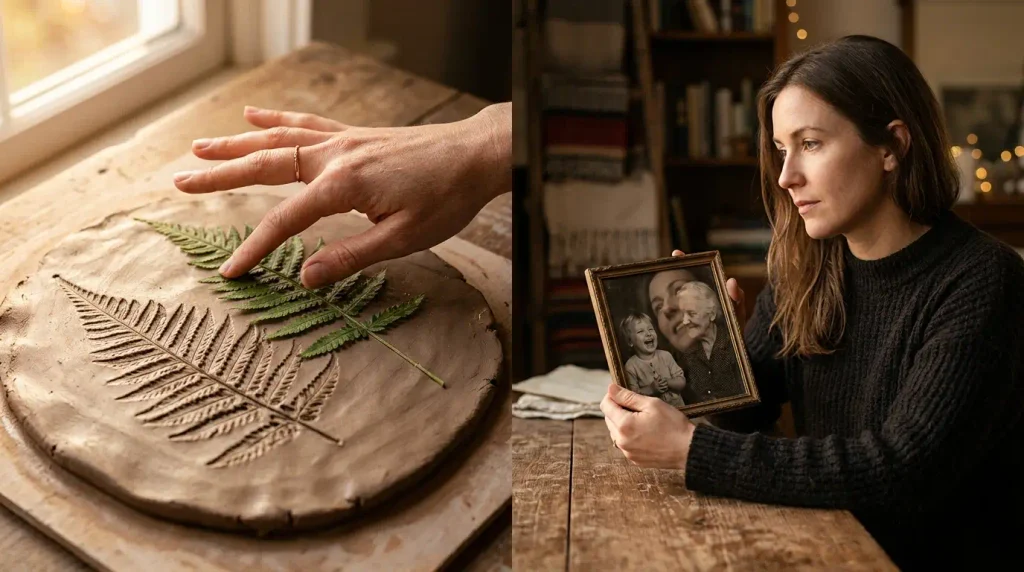
As a noun, it usually means a mark, shape, or impression left when something presses against a surface. A footprint in wet sand is a simple example of an imprint.
It can also mean a strong effect that remains in someone’s mind. For example, a powerful childhood experience may leave a lasting imprint on a person’s personality.
As a verb, imprint means to press, stamp, print, or leave a strong mark on something. It can describe a physical action or the process of making an idea stay strongly in someone’s memory.
Native speakers often understand imprint as something that is left behind and remains noticeable. The word commonly appears in printing, biology, psychology, publishing, memory, and everyday descriptions.
Part of Speech: Noun and verb.
Simple definition: An imprint is a mark or effect left by something, especially one that remains after contact or influence.
Connotative Meaning
Connotation (the emotional or suggested meaning connected with a word beyond its basic definition) can change how imprint feels in a sentence.
Positive tone: It can describe a meaningful or valuable influence, such as a teacher leaving a positive imprint on students.
Negative tone: It can describe a painful experience that leaves a lasting emotional effect.
Neutral tone: It commonly refers to a simple physical mark, such as an imprint left in clay or snow.
Etymology
The word imprint entered English through forms connected to pressing something into or onto a surface.
It developed from the prefix im-, meaning “in” or “into,” combined with a root connected with pressing or marking. The central idea has remained fairly stable: to press a mark onto something.
Old English (450–1100)
The exact modern word imprint was not commonly used in Old English. However, English already had words for pressing, marking, stamping, and making signs.
Middle English (1100–1500)
During Middle English, French and Latin influence introduced vocabulary connected with printing, pressing, and marking. These influences helped shape later forms of imprint.
Modern English (1500–Present)
The word became strongly connected with printing and publishing. Over time, its meaning expanded to include physical marks and lasting mental or emotional effects.
Pronunciation (US & UK – IPA)
US: /ɪmˈprɪnt/
UK: /ɪmˈprɪnt/
Syllables
im-print
Affixation Pattern of Imprint
Root: print
Prefix: im-
Suffix: None
Synonyms List:
The best synonym for imprint depends on whether you mean a physical mark, a printed mark, an identifying sign, or a lasting mental effect. The alternatives below cover these closely related meanings.
Impression (Noun) — US: /ɪmˈpreʃən/ | UK: /ɪmˈpreʃən/
Meaning: A mark, shape, or effect made when something presses against another surface or influences the mind.
Tone/Register: Neutral, formal, everyday.
Example: Her ring left a small impression in the soft wax.
The speech made a deep impression on the audience.
Mark (Noun) — US: /mɑːrk/ | UK: /mɑːk/
Meaning: A visible sign or spot left on a surface.
Tone/Register: Neutral, everyday.
Example: There was a dark mark on the wall.
The chair legs left marks on the wooden floor.
Trace (Noun) — US: /treɪs/ | UK: /treɪs/
Meaning: A small sign or remaining evidence that something was present or happened.
Tone/Register: Neutral, formal, everyday.
Example: We found a trace of paint on his sleeve.
The old house showed traces of its original design.
Indentation (Noun) — US: /ˌɪndenˈteɪʃən/ | UK: /ˌɪndenˈteɪʃən/
Meaning: A hollow or sunken mark made by pressure.
Tone/Register: Technical, neutral.
Example: The heavy box left an indentation in the carpet.
There was a small indentation in the soft foam.
Dent (Noun) — US: /dent/ | UK: /dent/
Meaning: A hollow mark caused when a hard surface is pushed inward.
Tone/Register: Everyday, neutral.
Example: The ball left a dent in the car door.
I noticed a small dent on the metal case.
Stamp (Noun) — US: /stæmp/ | UK: /stæmp/
Meaning: A mark made by pressing a shaped object or design onto a surface.
Tone/Register: Neutral, everyday.
Example: The official stamp confirmed the document.
The artist added a leaf stamp to the card.
Seal (Noun) — US: /siːl/ | UK: /siːl/
Meaning: An official or identifying mark used to show approval, authority, or authenticity.
Tone/Register: Formal, official.
Example: The certificate carried the university seal.
The package had a security seal on the front.
Embossing (Noun) — US: /ɪmˈbɔːsɪŋ/ | UK: /ɪmˈbɒsɪŋ/
Meaning: A raised design or mark created by pressing a pattern into a material.
Tone/Register: Technical, design.
Example: The invitation had elegant gold embossing.
You could feel the embossing on the cover.
Engraving (Noun) — US: /ɪnˈɡreɪvɪŋ/ | UK: /ɪnˈɡreɪvɪŋ/
Meaning: A design, word, or mark cut permanently into a hard surface.
Tone/Register: Formal, descriptive.
Example: The watch had an engraving on the back.
His name appeared in the metal engraving.
Inscription (Noun) — US: /ɪnˈskrɪpʃən/ | UK: /ɪnˈskrɪpʃən/
Meaning: Words or symbols written, carved, or printed on an object.
Tone/Register: Formal, literary.
Example: The ring carried a short inscription.
We read the inscription near the entrance.
Impression Mark (Noun Phrase) — US: /ɪmˈpreʃən mɑːrk/ | UK: /ɪmˈpreʃən mɑːk/
Meaning: A mark created directly by pressure or contact.
Tone/Register: Technical, descriptive.
Example: The tool left an impression mark in the clay.
The investigator examined the impression mark closely.
Footprint (Noun) — US: /ˈfʊtprɪnt/ | UK: /ˈfʊtprɪnt/
Meaning: A mark left by a foot or shoe on a surface.
Tone/Register: Neutral, everyday.
Example: Fresh footprints covered the wet sand.
I could see muddy footprints near the door.
Handprint (Noun) — US: /ˈhændprɪnt/ | UK: /ˈhændprɪnt/
Meaning: A visible mark showing the shape of a person’s hand.
Tone/Register: Neutral, descriptive.
Example: The child left a blue handprint on the paper.
We found handprints on the dusty window.
Thumbprint (Noun) — US: /ˈθʌmprɪnt/ | UK: /ˈθʌmprɪnt/
Meaning: A mark made by a thumb, often used for identification.
Tone/Register: Neutral, technical.
Example: He placed his thumbprint on the scanner.
The officer found a clear thumbprint on the glass.
Fingerprint (Noun) — US: /ˈfɪŋɡərprɪnt/ | UK: /ˈfɪŋɡəprɪnt/
Meaning: The unique pattern left by a person’s finger or an identifying sign associated with something.
Tone/Register: Technical, everyday.
Example: The device unlocks with your fingerprint.
Every artist leaves a unique fingerprint on their work.
Print (Noun) — US: /prɪnt/ | UK: /prɪnt/
Meaning: A mark, image, or text produced by pressing, printing, or transferring.
Tone/Register: Neutral, everyday.
Example: The newspaper left a print on the wet surface.
I noticed a clear shoe print near the stairs.
Impressionistic Mark (Noun Phrase) — US: /ɪmˌpreʃəˈnɪstɪk mɑːrk/ | UK: /ɪmˌpreʃəˈnɪstɪk mɑːk/
Meaning: A visible mark that suggests the shape or effect of something rather than showing every detail.
Tone/Register: Artistic, descriptive.
Example: The painter used soft impressionistic marks.
Those marks gave the image a dreamy feeling.
Signature (Noun) — US: /ˈsɪɡnətʃər/ | UK: /ˈsɪɡnətʃə/
Meaning: A distinctive sign, style, or feature that identifies a person or thing.
Tone/Register: Neutral, professional.
Example: That color has become her signature style.
The building carries the architect’s signature design.
Hallmark (Noun) — US: /ˈhɔːlmɑːrk/ | UK: /ˈhɔːlmɑːk/
Meaning: A distinctive feature or mark that strongly identifies something.
Tone/Register: Formal, descriptive.
Example: Attention to detail is a hallmark of his work.
Warm humor became the show’s hallmark.
Trademark (Noun) — US: /ˈtreɪdmɑːrk/ | UK: /ˈtreɪdmɑːk/
Meaning: A legally protected or strongly recognizable name, symbol, or feature.
Tone/Register: Business, legal.
Example: The logo is a registered trademark.
That confident voice became her trademark.
Sign (Noun) — US: /saɪn/ | UK: /saɪn/
Meaning: Something that shows evidence, presence, or identity.
Tone/Register: Neutral, everyday.
Example: There was no sign of damage.
His accent was a clear sign of his background.
Symbol (Noun) — US: /ˈsɪmbəl/ | UK: /ˈsɪmbəl/
Meaning: A sign or image that represents an idea, group, or meaning.
Tone/Register: Neutral, academic.
Example: The dove is a symbol of peace.
The small icon became a symbol of the campaign.
Badge (Noun) — US: /bædʒ/ | UK: /bædʒ/
Meaning: A visible sign that identifies membership, role, or achievement.
Tone/Register: Neutral, professional.
Example: She wore her staff badge at the event.
The badge identified him as a volunteer.

Label (Noun) — US: /ˈleɪbəl/ | UK: /ˈleɪbəl/
Meaning: A word, tag, or identifying mark attached to something.
Tone/Register: Neutral, everyday.
Example: Please check the label before opening the box.
The bottle had a handwritten label.
Brand (Noun) — US: /brænd/ | UK: /brænd/
Meaning: A distinctive identity or image connected with a company, product, or style.
Tone/Register: Business, marketing.
Example: The company built a strong brand over time.
Its simple design became part of the brand identity.
Influence (Noun) — US: /ˈɪnfluəns/ | UK: /ˈɪnfluəns/
Meaning: A lasting effect that changes the way someone thinks or behaves.
Tone/Register: Neutral, formal.
Example: Her teacher had a strong influence on her career.
Music from childhood still influences his writing.
Impact (Noun) — US: /ˈɪmpækt/ | UK: /ˈɪmpækt/
Meaning: A strong effect or influence produced by an event, person, or action.
Tone/Register: Neutral, professional.
Example: The documentary had a powerful impact on me.
His decision had an immediate impact on the team.
Legacy (Noun) — US: /ˈleɡəsi/ | UK: /ˈleɡəsi/
Meaning: Something lasting that a person, event, or organization leaves behind.
Tone/Register: Formal, positive or neutral.
Example: Her kindness became part of her legacy.
The writer left a lasting legacy through his books.
Memory (Noun) — US: /ˈmeməri/ | UK: /ˈmeməri/
Meaning: Something remembered from the past that remains in the mind.
Tone/Register: Neutral, emotional.
Example: That trip remains a happy memory.
The song brought back a powerful memory.
Remnant (Noun) — US: /ˈremnənt/ | UK: /ˈremnənt/
Meaning: A small part or sign that remains after the rest has disappeared.
Tone/Register: Formal, descriptive.
Example: A remnant of the old wall still stands.
We found remnants of paint beneath the newer layer.
Residue (Noun) — US: /ˈrezɪduː/ | UK: /ˈrezɪdjuː/
Meaning: A small amount or trace left behind after something has been removed or finished.
Tone/Register: Technical, neutral.
Example: The cleaner removed most of the residue.
A sticky residue remained on the table.
Scar (Noun) — US: /skɑːr/ | UK: /skɑː/
Meaning: A lasting mark caused by damage or a painful experience.
Tone/Register: Negative, emotional.
Example: The cut left a small scar.
The experience left an emotional scar for years.
Mold (Noun) — US: /moʊld/ | UK: /məʊld/
Meaning: A shaped form or mark produced when something takes the form of another object.
Tone/Register: Neutral, technical.
Example: The clay took the mold of the original object.
The artist created a mold from the detailed sculpture.
Cast (Noun) — US: /kæst/ | UK: /kɑːst/
Meaning: A copy or impression made by pouring material into a mold or reproducing a shape.
Tone/Register: Technical, artistic.
Example: The museum displayed a cast of the ancient statue.
The cast preserved every small detail of the original.
Imprintation (Noun) — US: /ɪmˌprɪnˈteɪʃən/ | UK: /ɪmˌprɪnˈteɪʃən/
Meaning: The process of making a lasting physical or psychological impression.
Tone/Register: Academic, technical.
Example: Early imprinting can influence later behavior.
Researchers studied the process in young animals.
Marking (Noun) — US: /ˈmɑːrkɪŋ/ | UK: /ˈmɑːkɪŋ/
Meaning: A visible sign, pattern, or indication placed on a surface.
Tone/Register: Neutral, everyday.
Example: The marking showed where the package belonged.
The animal had unusual markings on its coat.
Impressionation (Noun) — US: /ɪmˌpreʃəˈneɪʃən/ | UK: /ɪmˌpreʃəˈneɪʃən/
Meaning: The act or process of creating an impression or leaving an effect.
Tone/Register: Formal, uncommon.
Example: The study examined early impressionation in animals.
The process creates a strong behavioral association.
Pressmark (Noun) — US: /ˈpresmɑːrk/ | UK: /ˈpresmɑːk/
Meaning: A mark produced by pressing one object against another surface.
Tone/Register: Technical, specialized.
Example: The machine left a clear pressmark on the material.
The technician inspected the pressmark for defects.
Punch Mark (Noun Phrase) — US: /ˈpʌntʃ mɑːrk/ | UK: /ˈpʌntʃ mɑːk/
Meaning: A visible mark made by a punching tool or pointed instrument.
Tone/Register: Technical, neutral.
Example: The metal showed a small punch mark.
Each piece had a matching punch mark.
Seal Impression (Noun Phrase) — US: /ˈsiːl ɪmˈpreʃən/ | UK: /ˈsiːl ɪmˈpreʃən/
Meaning: A mark left by an official or decorative seal pressed onto a surface.
Tone/Register: Formal, historical.
Example: The document carried a clear seal impression.
Experts examined the seal impression for authenticity.
Overprint (Noun) — US: /ˈoʊvərprɪnt/ | UK: /ˈəʊvəprɪnt/
Meaning: Additional printing placed over an existing image, text, or printed surface.
Tone/Register: Technical, publishing.
Example: The designer added an overprint to the poster.
The overprint created a darker area of text.
Marking-Out (Noun) — US: /ˌmɑːrkɪŋ ˈaʊt/ | UK: /ˌmɑːkɪŋ ˈaʊt/
Meaning: Lines or signs used to indicate a position, shape, or boundary.
Tone/Register: Technical, professional.
Example: The marking-out showed where the cut should be made.
The builder checked the marking-out before drilling.
Reproduction (Noun) — US: /ˌriːprəˈdʌkʃən/ | UK: /ˌriːprəˈdʌkʃən/
Meaning: A copy or representation that reproduces the appearance or features of an original.
Tone/Register: Formal, academic.
Example: The gallery displayed a reproduction of the famous artwork.
The reproduction captured the original’s fine details.
Facsimile (Noun) — US: /fækˈsɪməli/ | UK: /fækˈsɪmɪli/
Meaning: A highly accurate copy that closely reproduces an original object or document.
Tone/Register: Formal, academic.
Example: The archive provided a facsimile of the manuscript.
The facsimile preserved the document’s original appearance.
Replica (Noun) — US: /ˈreplɪkə/ | UK: /ˈreplɪkə/
Meaning: A copy made to closely resemble an original object.
Tone/Register: Neutral, formal.
Example: The museum displayed a replica of the ancient seal.
Visitors could examine the replica safely.
Likeness (Noun) — US: /ˈlaɪknəs/ | UK: /ˈlaɪknəs/
Meaning: A representation that closely resembles a person, object, or appearance.
Tone/Register: Neutral, artistic.
Example: The portrait captured her likeness perfectly.
The sculpture bears a striking likeness to the original.
Representation (Noun) — US: /ˌreprɪzenˈteɪʃən/ | UK: /ˌreprɪzenˈteɪʃən/
Meaning: Something that presents or depicts another person, object, idea, or experience.
Tone/Register: Academic, formal.
Example: The image is a representation of the artist’s childhood.
The design provides a visual representation of the idea.
Echo (Noun) — US: /ˈekoʊ/ | UK: /ˈekəʊ/
Meaning: A continuing sign, influence, or reminder of something that happened earlier.
Tone/Register: Literary, figurative.
Example: Her writing contains echoes of her childhood.
The building still carries echoes of its past.
Aftereffect (Noun) — US: /ˈæftərɪfekt/ | UK: /ˈɑːftərɪfekt/
Meaning: An effect that continues after an event or experience has ended.
Tone/Register: Neutral, formal.
Example: The experience had lasting aftereffects.
Some emotional aftereffects remained for months.
Vestige (Noun) — US: /ˈvestɪdʒ/ | UK: /ˈvestɪdʒ/
Meaning: A small remaining sign or part of something that once existed.
Tone/Register: Formal, literary.
Example: Only a vestige of the original design remained.
The ruins are a vestige of an earlier civilization.
Marked Influence (Noun Phrase) — US: /mɑːrkt ˈɪnfluəns/ | UK: /mɑːkt ˈɪnfluəns/
Meaning: A noticeable and lasting effect that someone or something has on another person or situation.
Tone/Register: Formal, academic.
Example: The author had a marked influence on modern literature.
Her ideas left a marked influence on the movement.
Lasting Effect (Noun Phrase) — US: /ˈlæstɪŋ ɪˈfekt/ | UK: /ˈlɑːstɪŋ ɪˈfekt/
Meaning: An effect that continues to be felt or noticed over time.
Tone/Register: Neutral, professional.
Example: The speech had a lasting effect on the students.
The decision created a lasting effect on the community.

Synonyms for “Imprint” by Tone
Tone matters because imprint can describe something physical, emotional, creative, or identifying. Therefore, one alternative may sound perfect in one situation but unnatural in another.
Positive
Influence, impact, legacy, hallmark, signature, symbol
These words often suggest a valuable, meaningful, or recognizable effect.
Neutral
Impression, mark, trace, indentation, stamp, print, sign, label, footprint, handprint, residue
These choices work well when simply describing a mark, sign, or evidence.
Negative
Scar, residue, remnant
These can suggest damage, something unwanted, or an effect that remains after an unpleasant experience.
Playful or Informal
Mark, print, stamp, dent
These words are simple and natural in casual descriptions of everyday physical objects.
Imprint vs Close Alternatives
| Word | Meaning Difference | Tone | Best Use |
|---|---|---|---|
| Imprint | A mark or lasting effect left behind | Neutral to meaningful | Physical marks or lasting influence |
| Impression | A mark or mental effect created by contact or experience | Neutral | Physical pressure or someone’s mental reaction |
| Mark | Any visible sign on a surface | Everyday | General and simple descriptions |
| Trace | Small remaining evidence of something | Neutral to formal | Evidence or a small sign |
| Impact | A strong effect on a person or situation | Professional | Emotional, social, or practical influence |
Use imprint when the idea of something being clearly left behind is important.
Choose impression when discussing pressure or the effect someone creates in another person’s mind.
Use mark when you simply need a broad and everyday word.
Pick trace when only a small amount of evidence remains.
Select impact when the effect is strong rather than physically visible.
How “Imprint” Changes by Context
Daily Conversation
In daily speech, mark, print, dent, and trace often sound more natural than imprint.
You might say, “Your shoes left a mark,” rather than using the more specific word imprint.
Writing or Blogging
Bloggers often use imprint, impact, influence, and legacy when discussing ideas, experiences, people, or cultural changes.
For instance, “The event left a lasting imprint on the community” sounds thoughtful and descriptive.
Professional or Academic Tone
In formal writing, imprint can appear in psychology, biology, publishing, design, and research.
Meanwhile, influence, impact, impression, and trace may provide more precise choices depending on the subject.
Creative or Informal Use
Creative writers often use imprint figuratively. A memory may leave an imprint on the heart, while a person may leave an imprint on a city.
In informal speech, however, shorter words such as mark or stamp usually feel more natural.
Common Mistakes Learners Make
One common mistake is using imprint for every kind of mark. A small stain on a shirt is usually a mark or stain, not necessarily an imprint.
Another mistake is confusing imprint with impact. An impact is usually an effect or influence. An imprint suggests that something remains or is left behind.
Learners may also use imprint where impression is better. You make a good impression on a new manager. You do not normally say that you make a good imprint on them.
Avoid overusing figurative expressions such as “leave an imprint on my heart.” They can sound powerful in creative writing. However, repeated use may make ordinary writing sound overly dramatic.
Register Notes
Imprint works well in both spoken and written English. Nevertheless, it appears more often in descriptive, academic, creative, and formal contexts than in casual conversation.
For simple spoken English, mark, print, or sign may be easier and more natural.
For formal writing, impression, influence, impact, or legacy can provide better precision.
You may also explore related vocabulary in a future article about synonyms for identifier to understand how English words express identity and distinguishing features.
Real-Life Examples Using “Imprint”
Workplace
A thoughtful manager may leave a lasting imprint on a team’s culture by encouraging trust and clear communication.
A company’s visual imprint can also appear in its documents, packaging, and public identity.
Social Situations
A kind conversation can leave a positive imprint on someone who needed support.
Similarly, a rude comment may leave an emotional imprint that lasts longer than expected.
Media and Pop Culture
A successful actor can leave a strong imprint on popular culture through a memorable role.
Likewise, a famous song may leave its imprint on an entire generation.
Writing and Storytelling
Writers use imprint to describe memories that remain deeply connected to a character.
A childhood home, for example, may leave an imprint that shapes the character’s choices later in life.

Interactive Practice Quiz
1. Which word best describes a hollow mark left by a heavy chair on a carpet?
A. Legacy
B. Indentation
C. Influence
D. Symbol
2. Which synonym best describes a strong emotional effect left by a teacher?
A. Dent
B. Residue
C. Influence
D. Footprint
3. You want to describe a small sign that shows something was once present. Which word fits best?
A. Trace
B. Trademark
C. Embossing
D. Badge
4. Which word is most natural for a unique feature strongly connected with a famous artist?
A. Signature
B. Dent
C. Residue
D. Handprint
5. Which word best describes a mark created by pressing a design into paper?
A. Impression
B. Legacy
C. Memory
D. Influence
6. Which word usually describes a lasting mark after an injury?
A. Stamp
B. Scar
C. Symbol
D. Label
7. Which sentence uses imprint most naturally?
A. Please imprint me a glass of water.
B. He imprinted very quickly to the office.
C. The concert left a lasting imprint on her memory.
D. We imprinted dinner after work.
8. Which synonym is best for a legally recognized business symbol or name?
A. Trace
B. Trademark
C. Remnant
D. Dent
9. Which word best describes something meaningful left behind by a person after many years?
A. Residue
B. Legacy
C. Indentation
D. Print
10. Which word is usually the simplest choice for a visible sign on a wall?
A. Mark
B. Influence
C. Legacy
D. Impact
11. Which word best describes a small amount left behind after cleaning?
A. Hallmark
B. Residue
C. Footprint
D. Symbol
12. Which alternative is best when discussing a strong effect on society?
A. Impact
B. Dent
C. Stamp
D. Handprint
13. Which word best fits a raised design on a book cover?
A. Embossing
B. Trace
C. Memory
D. Influence
Reflection Task
Write your own sentence using imprint, trace, impact, legacy, or another synonym from this article. Then ask yourself whether the word describes a physical mark, an identifying feature, or a lasting effect.
Answer Key: 1. B, 2. C, 3. A, 4. A, 5. A, 6. B, 7. C, 8. B, 9. B, 10. A, 11. B, 12. A, 13. A
FAQs
1. What is the best synonym for imprint in everyday English?
The best everyday synonym for imprint is often mark. It is broad, simple, and works for many physical signs left on surfaces. However, impression is better for a shape created by pressure, while trace works when only small evidence remains. Your choice should depend on the exact situation.
2. What is a synonym for imprint as a lasting effect?
For a lasting effect, useful alternatives include influence, impact, and legacy. Influence focuses on changing thoughts or behavior. Impact suggests a strong effect. Legacy describes something lasting that remains after a person, event, or organization. Imprint often emphasizes that the effect stays behind.
3. Is impression the same as imprint?
Impression and imprint are closely related, but they are not always identical. An impression can be a physical shape caused by pressure or the opinion someone forms about another person. An imprint usually focuses more strongly on a mark or effect that has been left behind and remains noticeable.
4. What is the difference between imprint and mark?
A mark is a broad word for any visible sign, spot, or line. An imprint is more specific. It often suggests that contact, pressure, printing, or influence created the mark. Therefore, every imprint can be considered a type of mark, but not every mark is necessarily an imprint.
5. Can imprint be used for memories and emotions?
Yes. Imprint can be used figuratively for memories and emotions that remain strongly in someone’s mind. For example, a difficult childhood event may leave a lasting imprint on a person. This usage suggests a strong and continuing effect rather than a temporary feeling or ordinary memory.
6. What is a synonym for imprint in printing?
In printing, possible alternatives include print, stamp, impression, inscription, and sometimes embossing. The best choice depends on how the mark is made. A stamp is pressed onto a surface, while embossing creates a raised design. An inscription usually contains written words or symbols.
7. What is the opposite of imprint?
There is no single exact opposite because imprint has several meanings. Depending on context, possible opposites include erase, remove, wipe away, or obliterate. These verbs describe removing a mark or sign. For a lasting emotional effect, words such as forget or fade may express the opposite idea.
8. How can I use a synonym for imprint correctly in writing?
First, identify what imprint means in your sentence. If it means a physical mark, consider mark, print, or indentation. If it means evidence, use trace. For a lasting effect, choose influence, impact, or legacy. Reading the sentence aloud can help you select the most natural option.
Conclusion
A strong vocabulary helps you express small differences that one general word cannot always show. Imprint can describe a physical mark, an identifying sign, or an experience that stays with someone.
Learning the right alternative makes writing clearer and more natural. Whether you choose mark, impression, trace, impact, or legacy, each word adds a slightly different meaning to your message.
These choices can improve essays, blog posts, emails, conversations, and creative writing. Moreover, understanding tone helps you avoid words that sound too formal, too dramatic, or too vague for the situation.
Try using a few of these synonyms in your next email, essay, or daily conversation. The more you practice synonyms for imprint in real contexts, the easier it becomes to choose the perfect word naturally.

Shahzeena Shazadi is the founder and lead writer at VocablyHub.com, where she creates accurate, reader-focused English language content designed to help people communicate with clarity and confidence. She specializes in synonyms, antonyms, word meanings, idioms, and practical vocabulary guides that simplify complex language concepts for everyday use. Every article is carefully researched, fact-checked, and written in clear, accessible language using reliable references and real-world examples. Her goal is to provide helpful, trustworthy content that supports learners at every stage of their English language journey.
Her editorial approach focuses on accuracy, transparency, and user value while following modern content quality standards. She regularly reviews and updates content to keep information relevant, useful, and easy to understand. Through VocablyHub.com, Shahzeena Shazadi is committed to publishing reliable language resources that help students, writers, educators, professionals, and English learners expand their vocabulary, improve their writing skills, and communicate with confidence in academic, professional, and everyday situations.