
Synonyms for naivety can help you describe innocence, inexperience, or excessive trust with greater accuracy. Imagine trusting a stranger without questioning their promises.
A student may show naivety when they believe every online claim. However, the same quality can sometimes suggest innocence rather than poor judgment.
Learning synonyms for naivety helps you choose words that match the exact situation. Some alternatives sound gentle, while others suggest vulnerability or limited experience.
For students, bloggers, content writers, and everyday English users, these words add variety and precision. They can improve essays, stories, emails, blogs, and conversations.
What Does “Naivety” Really Mean?
Naivety means a lack of experience, worldly knowledge, or sophisticated understanding. It often describes someone who trusts people or situations too easily.
Simple definition: Naivety is the quality of being inexperienced, innocent, or overly trusting.
The word is a noun. Its related adjective is naive or naïve.
Native speakers usually understand naivety as limited worldly experience. The word can sound positive, neutral, or negative depending on context.
For example, “Her naivety was charming” sounds sympathetic. In contrast, “His naivety caused problems” sounds critical.
Connotative Meaning
Connotation (the emotional feeling or association connected with a word beyond its basic meaning) depends on context.
Positive tone: Naivety may suggest innocence, openness, sincerity, or youthful optimism.
Negative tone: It may suggest gullibility, poor judgment, ignorance, or vulnerability.
Neutral tone: It can simply describe someone who lacks experience in a particular area.
Therefore, context matters. Innocence usually sounds softer than gullibility, while inexperience sounds more objective.
Etymology of “Naivety”
The word naivety comes from French naïveté, which developed from naïf, meaning natural, innocent, or simple. The deeper origin traces to Latin nativus, meaning “natural” or “native.”
Old English (450–1100)
The modern word did not exist in Old English. However, Old English had words describing innocence, simplicity, ignorance, and lack of worldly experience.
Middle English (1100–1500)
French influence expanded English vocabulary after the Norman Conquest. English gradually adopted words connected with character, behavior, and personal qualities.
Modern English (1500–Present)
English adopted naive and naivety through French influence. Today, naivety commonly describes innocent or inexperienced thinking.
Pronunciation of “Naivety”
US: /naɪˈiːvəti/
UK: /naɪˈiːvəti/
Syllables
na-i-ve-ty
Affixation Pattern of “Naivety”
Root: naive
Prefix: None
Suffix: -ty
The suffix -ty forms an abstract noun that describes a quality or state.
Synonyms List:
Gullible (Adjective) — US: /ˈɡʌləbəl/ | UK: /ˈɡʌləbəl/
Meaning: Easily persuaded to believe something that may not be true.
Tone/Register: Neutral to negative
Example: He was too gullible to question the offer.
Her gullible nature made the trick believable.

Unsuspectingness (Noun) — US: /ˌʌnsəˈspektɪŋnəs/ | UK: /ˌʌnsəˈspektɪŋnəs/
Meaning: A state of not expecting deception, danger, or hidden intentions.
Tone/Register: Formal, descriptive
Example: His unsuspectingness made him easy to surprise.
The story highlights her unsuspectingness.
Innocence (Noun) — US: /ˈɪnəsəns/ | UK: /ˈɪnəsəns/
Meaning: Innocence describes a lack of harmful knowledge, suspicion, or worldly experience.
Tone/Register: Positive, neutral
Example: Her innocence made everyone feel comfortable.
The child’s innocence was obvious.
Inexperience (Noun) — US: /ˌɪnɪkˈspɪriəns/ | UK: /ˌɪnɪkˈspɪəriəns/
Meaning: Inexperience means having limited practical knowledge because of little exposure.
Tone/Register: Neutral, professional
Example: His inexperience showed during the first week.
Practice helped her overcome her inexperience.
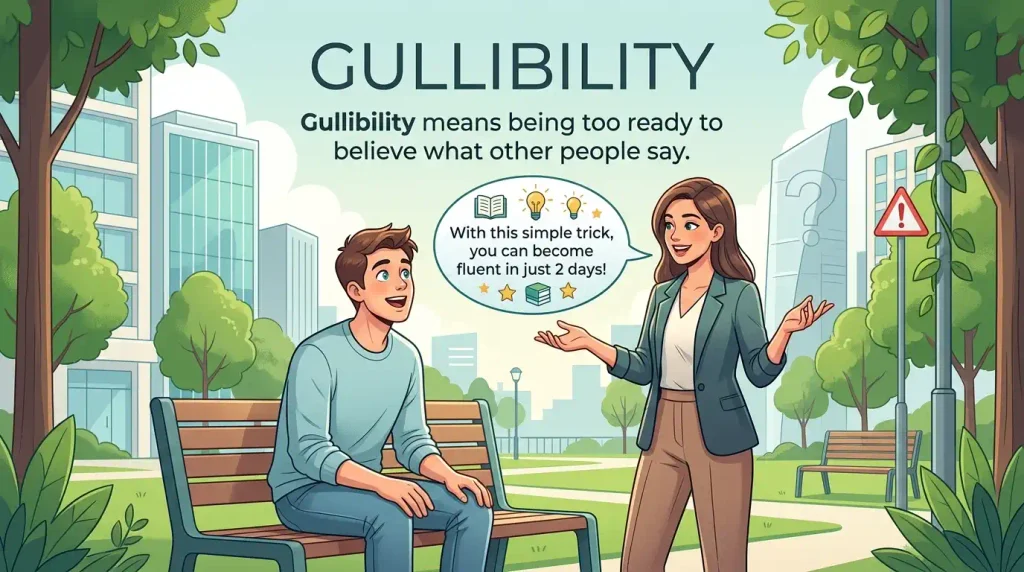
Gullibility (Noun) — US: /ˌɡʌləˈbɪləti/ | UK: /ˌɡʌləˈbɪləti/
Meaning: Gullibility means being too ready to believe what other people say.
Tone/Register: Negative
Example: His gullibility made him easy to deceive.
The scam depended on her gullibility.
Credulity (Noun) — US: /krəˈduːləti/ | UK: /krəˈdjuːləti/
Meaning: Credulity describes a strong tendency to believe claims without enough evidence.
Tone/Register: Formal, critical
Example: The story tested the audience’s credulity.
His credulity surprised his skeptical colleagues.
Trustfulness (Noun) — US: /ˈtrʌstfəlnəs/ | UK: /ˈtrʌstfəlnəs/
Meaning: Trustfulness describes a natural tendency to trust other people.
Tone/Register: Positive, neutral
Example: Her trustfulness made new friendships easy.
His trustfulness sometimes required caution.
Trustingness (Noun) — US: /ˈtrʌstɪŋnəs/ | UK: /ˈtrʌstɪŋnəs/
Meaning: Trustingness refers to a tendency to believe or rely on others easily.
Tone/Register: Informal, descriptive
Example: His trustingness worried his parents.
Her trustingness came from a kind nature.
Guilelessness (Noun) — US: /ˈɡaɪlləsnəs/ | UK: /ˈɡaɪlləsnəs/
Meaning: Guilelessness means having no intention to deceive or manipulate others.
Tone/Register: Formal, literary
Example: His guilelessness made him easy to trust.
Her guilelessness impressed the audience.
Artlessness (Noun) — US: /ˈɑːrtləsnəs/ | UK: /ˈɑːtləsnəs/
Meaning: Artlessness describes natural behavior without calculation, manipulation, or deception.
Tone/Register: Literary, positive
Example: Her artlessness made the interview feel genuine.
His artlessness charmed everyone.
Unworldliness (Noun) — US: /ʌnˈwɝːldlinəs/ | UK: /ʌnˈwɜːldlinəs/
Meaning: Unworldliness means having little knowledge of practical or social realities.
Tone/Register: Formal, literary
Example: His unworldliness made city life difficult.
Her unworldliness gave the character a gentle quality.
Unsophistication (Noun) — US: /ˌʌnsəfɪstɪˈkeɪʃən/ | UK: /ˌʌnsəfɪstɪˈkeɪʃən/
Meaning: Unsophistication describes a limited understanding of complex social or cultural situations.
Tone/Register: Formal
Example: His unsophistication became clear at the event.
Her early unsophistication gradually faded.
Shelteredness (Noun) — US: /ˈʃeltərdnəs/ | UK: /ˈʃeltədnəs/
Meaning: Shelteredness describes limited exposure to difficult or unfamiliar experiences.
Tone/Register: Neutral
Example: Her shelteredness made the new environment surprising.
Travel helped him move beyond his shelteredness.
Simplicity (Noun) — US: /sɪmˈplɪsəti/ | UK: /sɪmˈplɪsəti/
Meaning: Simplicity can describe an uncomplicated outlook that sometimes results from limited experience.
Tone/Register: Neutral, positive
Example: I admired the simplicity of his outlook.
Her simplicity made the conversation refreshing.
Innocuousness (Noun) — US: /ɪˈnɒkjuəsnəs/ | UK: /ɪˈnɒkjuəsnəs/
Meaning: Innocuousness means harmlessness and only overlaps with naivety in limited contexts.
Tone/Register: Formal
Example: The comment seemed harmless at first.
Its apparent innocuousness hid a deeper problem.
Simpleheartedness (Noun) — US: /ˌsɪmpəlˈhɑːrtɪdnəs/ | UK: /ˌsɪmpəlˈhɑːtɪdnəs/
Meaning: Simpleheartedness describes sincere and uncomplicated feelings or intentions.
Tone/Register: Literary, positive
Example: Her simpleheartedness made people trust her.
His simpleheartedness gave the story warmth.
Freshness (Noun) — US: /ˈfreʃnəs/ | UK: /ˈfreʃnəs/
Meaning: Freshness can describe a new, innocent, or uncomplicated perspective.
Tone/Register: Positive, literary
Example: Her freshness impressed the creative team.
The character brings freshness to the story.
Openheartedness (Noun) — US: /ˌoʊpənˈhɑːrtɪdnəs/ | UK: /ˌəʊpənˈhɑːtɪdnəs/
Meaning: Openheartedness describes a sincere willingness to trust, accept, or connect with others.
Tone/Register: Positive
Example: Her openheartedness attracted new friends.
His openheartedness made the discussion easier.
Innocent Trust (Noun Phrase) — US: /ˈɪnəsənt trʌst/ | UK: /ˈɪnəsənt trʌst/
Meaning: Innocent trust describes sincere belief without suspicion.
Tone/Register: Positive, emotional
Example: Her innocent trust touched everyone.
The child’s innocent trust was easy to understand.
Blind Trust (Noun Phrase) — US: /blaɪnd trʌst/ | UK: /blaɪnd trʌst/
Meaning: Blind trust means believing someone without checking whether that trust is deserved.
Tone/Register: Negative
Example: Blind trust can create serious problems.
He learned to question blind trust.
Overtrust (Noun) — US: /ˌoʊvərˈtrʌst/ | UK: /ˌəʊvəˈtrʌst/
Meaning: Overtrust means trusting someone more than the situation reasonably allows.
Tone/Register: Informal, critical
Example: Her overtrust caused unnecessary problems.
He recognized his tendency toward overtrust.
Unsuspecting Nature (Noun Phrase) — US: /ˌʌnsəˈspektɪŋ ˈneɪtʃər/ | UK: /ˌʌnsəˈspektɪŋ ˈneɪtʃə/
Meaning: An unsuspecting nature describes someone who does not expect deception or danger.
Tone/Register: Neutral
Example: His unsuspecting nature made the trick easy.
Her unsuspecting nature made the surprise successful.
Lack of Experience (Noun Phrase) — US: /læk əv ɪkˈspɪriəns/ | UK: /læk əv ɪkˈspɪəriəns/
Meaning: This phrase directly describes limited exposure to a situation.
Tone/Register: Neutral, professional
Example: The mistake came from a lack of experience.
A lack of experience can improve with practice.
Lack of Worldliness (Noun Phrase) — US: /læk əv ˈwɝːldlinəs/ | UK: /læk əv ˈwɜːldlinəs/
Meaning: Lack of worldliness means limited knowledge of people, society, or practical life.
Tone/Register: Formal
Example: His lack of worldliness was noticeable.
Travel reduced her lack of worldliness.
Lack of Worldly Wisdom (Noun Phrase) — US: /læk əv ˈwɝːldli ˈwɪzdəm/ | UK: /læk əv ˈwɜːldli ˈwɪzdəm/
Meaning: This phrase describes limited practical understanding of people and life.
Tone/Register: Neutral, descriptive
Example: His lack of worldly wisdom led to mistakes.
Experience gradually changed that lack of worldly wisdom.
Limited Awareness (Noun Phrase) — US: /ˈlɪmɪtɪd əˈwernəs/ | UK: /ˈlɪmɪtɪd əˈweənəs/
Meaning: Limited awareness describes incomplete understanding of a situation or reality.
Tone/Register: Formal, neutral
Example: Her limited awareness was confusing.
Training improved his limited awareness of the risks.
Limited Understanding (Noun Phrase) — US: /ˈlɪmɪtɪd ˌʌndərˈstændɪŋ/ | UK: /ˈlɪmɪtɪd ˌʌndəˈstændɪŋ/
Meaning: Limited understanding means having only partial knowledge of a subject or situation.
Tone/Register: Neutral, academic
Example: His limited understanding affected the decision.
The lesson corrected her limited understanding.
Lack of Foresight (Noun Phrase) — US: /læk əv ˈfɔːrsaɪt/ | UK: /læk əv ˈfɔːsaɪt/
Meaning: Lack of foresight means failing to anticipate possible future problems or consequences.
Tone/Register: Formal, critical
Example: His lack of foresight caused delays.
The decision showed a lack of foresight.
Poor Judgment (Noun Phrase) — US: /pʊr ˈdʒʌdʒmənt/ | UK: /pʊə ˈdʒʌdʒmənt/
Meaning: Poor judgment describes the inability to make sensible decisions in a situation.
Tone/Register: Neutral to negative
Example: The mistake reflected poor judgment.
She admitted that the choice showed poor judgment.
Lack of Discernment (Noun Phrase) — US: /læk əv dɪˈsɝːnmənt/ | UK: /læk əv dɪˈsɜːnmənt/
Meaning: Lack of discernment means difficulty recognizing important differences or hidden problems.
Tone/Register: Formal
Example: His lack of discernment made the offer seem attractive.
Experience improved her discernment.
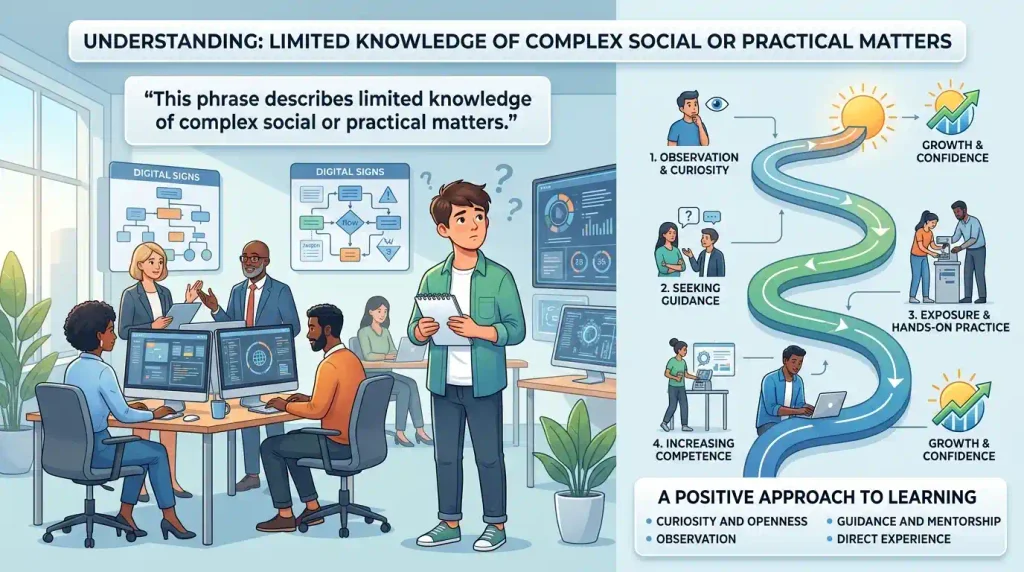
Lack of Sophistication (Noun Phrase) — US: /læk əv ˌsɑːfɪstɪˈkeɪʃən/ | UK: /læk əv ˌsɒfɪstɪˈkeɪʃən/
Meaning: This phrase describes limited knowledge of complex social or practical matters.
Tone/Register: Formal
Example: His lack of sophistication was understandable.
The experience challenged her lack of sophistication.
Greenhorn Attitude (Noun Phrase) — US: /ˈɡriːnhɔːrn ˈætətuːd/ | UK: /ˈɡriːnhɔːn ˈætɪtjuːd/
Meaning: A greenhorn attitude reflects the behavior of someone very inexperienced.
Tone/Register: Informal
Example: His greenhorn attitude was obvious on day one.
Training quickly changed that attitude.
Greenhornism (Noun) — US: /ˈɡriːnhɔːrnɪzəm/ | UK: /ˈɡriːnhɔːnɪzəm/
Meaning: Greenhornism refers to behavior associated with being inexperienced or new to something.
Tone/Register: Informal
Example: His early greenhornism was understandable.
The experience helped him move beyond greenhornism.
Amateurishness (Noun) — US: /ˈæmətərɪʃnəs/ | UK: /ˈæmətərɪʃnəs/
Meaning: Amateurishness describes a lack of skill or experience, sometimes overlapping with naive behavior.
Tone/Register: Critical
Example: The mistake reflected amateurishness.
Better preparation reduced the team’s amateurishness.
Ignorance (Noun) — US: /ˈɪɡnərəns/ | UK: /ˈɪɡnərəns/
Meaning: Ignorance means a lack of knowledge, although it sounds stronger than naivety.
Tone/Register: Neutral to negative
Example: Ignorance of the rules caused problems.
Education can reduce ignorance.
Unfamiliarity (Noun) — US: /ˌʌnfəˌmɪliˈærəti/ | UK: /ˌʌnfəˌmɪliˈærəti/
Meaning: Unfamiliarity describes a lack of knowledge or experience with something.
Tone/Register: Neutral, formal
Example: Her unfamiliarity with the system was obvious.
The training reduced his unfamiliarity.
Sheltered Innocence (Noun Phrase) — US: /ˈʃeltərd ˈɪnəsəns/ | UK: /ˈʃeltəd ˈɪnəsəns/
Meaning: Sheltered innocence describes purity or trust shaped by limited exposure to difficult realities.
Tone/Register: Literary, emotional
Example: The novel portrays her sheltered innocence beautifully.
His sheltered innocence slowly disappeared.
Youthful Innocence (Noun Phrase) — US: /ˈjuːθfəl ˈɪnəsəns/ | UK: /ˈjuːθfəl ˈɪnəsəns/
Meaning: Youthful innocence describes the openness and limited worldly experience associated with youth.
Tone/Register: Positive, literary
Example: The story captures her youthful innocence.
He remembered his youthful innocence fondly.
Childlike Trust (Noun Phrase) — US: /ˈtʃaɪldlaɪk trʌst/ | UK: /ˈtʃaɪldlaɪk trʌst/
Meaning: Childlike trust describes sincere belief without much suspicion or caution.
Tone/Register: Positive, emotional
Example: Her childlike trust made the scene touching.
His childlike trust surprised the adults.
Simple-Mindedness (Noun) — US: /ˌsɪmpəlˈmaɪndɪdnəs/ | UK: /ˌsɪmpəlˈmaɪndɪdnəs/
Meaning: Simple-mindedness describes an uncomplicated way of thinking and can imply limited judgment.
Tone/Register: Negative, critical
Example: His simple-mindedness made the issue seem easy.
The character’s simple-mindedness caused trouble.
Unsophisticated Outlook (Noun Phrase) — US: /ˌʌnsəˈfɪstɪkeɪtɪd ˈaʊtlʊk/ | UK: /ˌʌnsəˈfɪstɪkeɪtɪd ˈaʊtlʊk/
Meaning: An unsophisticated outlook reflects limited understanding of complex realities.
Tone/Register: Formal
Example: His unsophisticated outlook shaped his decision.
Travel broadened her outlook.
Innocent Outlook (Noun Phrase) — US: /ˈɪnəsənt ˈaʊtlʊk/ | UK: /ˈɪnəsənt ˈaʊtlʊk/
Meaning: An innocent outlook reflects a sincere and trusting view of the world.
Tone/Register: Positive
Example: Her innocent outlook made her optimistic.
The character has an innocent outlook on life.
Trusting Nature (Noun Phrase) — US: /ˈtrʌstɪŋ ˈneɪtʃər/ | UK: /ˈtrʌstɪŋ ˈneɪtʃə/
Meaning: A trusting nature describes someone who naturally believes and relies on others.
Tone/Register: Neutral, positive
Example: Her trusting nature helped her make friends.
His trusting nature sometimes created risks.
Uncritical Trust (Noun Phrase) — US: /ʌnˈkrɪtɪkəl trʌst/ | UK: /ʌnˈkrɪtɪkəl trʌst/
Meaning: Uncritical trust means accepting someone or something without careful evaluation.
Tone/Register: Formal, negative
Example: Uncritical trust can lead to poor decisions.
The report warns against uncritical trust.
Overconfidence in Others (Noun Phrase) — US: /ˌoʊvərˈkɑːnfɪdəns ɪn ˈʌðərz/ | UK: /ˌəʊvəˈkɒnfɪdəns ɪn ˈʌðəz/
Meaning: Overconfidence in others describes excessive belief in people’s honesty or ability.
Tone/Register: Neutral to negative
Example: Her overconfidence in others caused disappointment.
He learned to balance trust with caution.
Lack of Skepticism (Noun Phrase) — US: /læk əv ˈskeptɪsɪzəm/ | UK: /læk əv ˈskeptɪsɪzəm/
Meaning: Lack of skepticism means failing to question claims or information carefully.
Tone/Register: Academic, formal
Example: His lack of skepticism made the rumor convincing.
The lesson addressed her lack of skepticism.
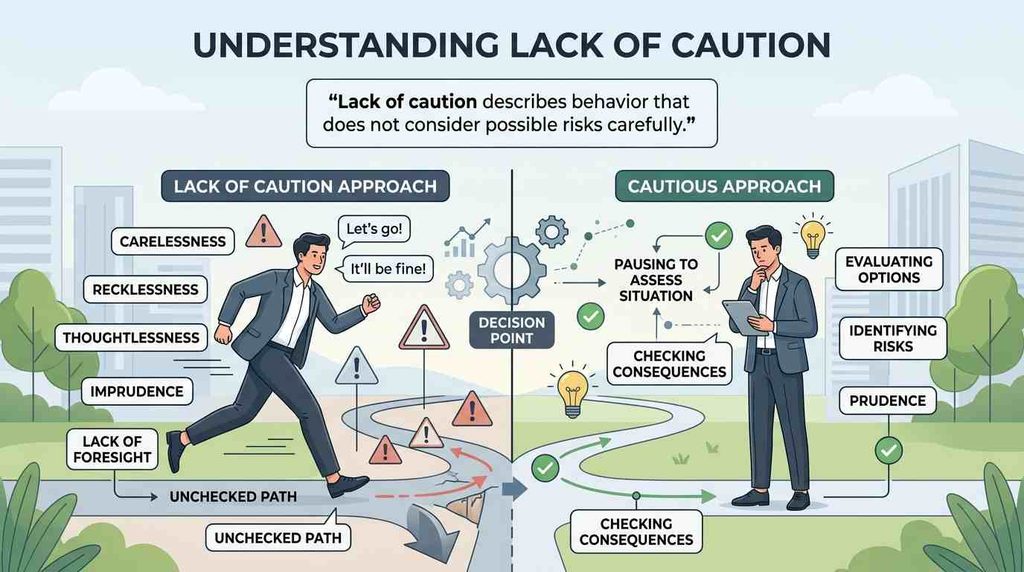
Lack of Caution (Noun Phrase) — US: /læk əv ˈkɔːʃən/ | UK: /læk əv ˈkɔːʃən/
Meaning: Lack of caution describes behavior that does not consider possible risks carefully.
Tone/Register: Neutral to negative
Example: His lack of caution created a problem.
The mistake showed a lack of caution.
Synonyms by Tone
Positive
Use innocence, trustfulness, guilelessness, artlessness, simpleheartedness, openheartedness, youthful innocence, childlike trust, and innocent outlook when you want a warm or sympathetic tone.
These words can describe someone as sincere rather than foolish. Therefore, they work well in personal writing and storytelling.
Neutral
Choose inexperience, unfamiliarity, limited awareness, limited understanding, shelteredness, simplicity, and lack of experience when you want an objective description.
These alternatives work especially well in educational, workplace, and academic contexts.
Negative
Words such as gullibility, credulity, blind trust, poor judgment, lack of discernment, uncritical trust, lack of skepticism, and lack of caution emphasize weaknesses.
As a result, they can sound more critical than naive.
Formal
Unworldliness, unsophistication, lack of worldliness, lack of worldly wisdom, lack of sophistication, and lack of discernment fit formal or analytical writing.
However, use them only when their exact meaning matches your context.
Informal
Greenhorn attitude and greenhornism can describe inexperienced behavior more lightly. Still, these expressions may sound old-fashioned in some situations.
“Naivety” vs Close Alternatives
Naivety often suggests limited worldly experience or judgment. Innocence usually emphasizes purity, sincerity, or freedom from harmful knowledge.
Use naivety when someone misunderstands a situation because of limited experience. Choose innocence when you want a gentler description.
Naivety vs Gullibility
Gullibility has a narrower meaning. It specifically focuses on believing information too easily.
By contrast, naivety can involve broader inexperience, unrealistic expectations, or limited social awareness.
Naivety vs Inexperience
Inexperience simply means limited practice or exposure. It does not necessarily suggest poor judgment.
For example, a new employee can have inexperience without showing naivety.
How “Naivety” Changes by Context
Daily Conversation
In everyday English, naivety can describe someone who trusts people too quickly or expects everyone to behave honestly.
For example, “I was naive to believe that promise” sounds natural and conversational.
Writing and Blogging
Bloggers can use naivety when discussing relationships, mistakes, personal growth, social expectations, or online behavior.
However, alternatives such as inexperience, innocence, and gullibility can make the intended meaning clearer.
Professional or Academic Writing
Professional writers often prefer objective expressions such as inexperience, limited awareness, or lack of practical knowledge.
These terms describe a limitation without unnecessarily judging a person.
Creative Writing
Creative writers can choose guilelessness, artlessness, childlike trust, or youthful innocence to create emotional depth.
These words help readers understand a character’s personality without directly calling the character foolish.
Common Mistakes and Native Usage
Mistake: Treating Every Alternative as an Exact Synonym
Not every word above can replace naivety in every sentence. Some describe specific parts of its meaning.
For example, gullibility focuses on believing others, while inexperience focuses on limited exposure.
Mistake: Confusing Naivety With Ignorance
Naivety does not always mean that someone lacks knowledge. A person may know many facts but still misunderstand people’s intentions.
Therefore, use ignorance when the problem specifically involves missing knowledge.
Mistake: Assuming Naivety Is Always Negative
Naivety can sound affectionate or sympathetic. “Her youthful naivety was charming” gives the word a positive feeling.
On the other hand, “His naivety caused financial problems” gives it a negative meaning.
Mistake: Using Gullibility Too Broadly
Gullibility specifically describes a tendency to believe things too easily. It does not simply mean being inexperienced.
So, a new employee may be inexperienced without being gullible.
Mistake: Using Formal Words in Casual Conversation
Expressions such as lack of discernment and lack of worldly wisdom may sound formal.
In casual conversation, inexperience, innocence, or being too trusting usually sounds more natural.
Mistake: Forcing Synonyms Into Simple Sentences
Sometimes naivety remains the best word. You do not need to replace it simply to avoid repetition.
Good writing focuses on accurate meaning, natural flow, and appropriate tone.
Register Notes
Everyday English: innocence, inexperience, trusting nature, too trusting
Academic English: credulity, limited awareness, lack of skepticism, inexperience
Professional English: limited understanding, lack of experience, lack of caution
Literary English: artlessness, guilelessness, unworldliness, youthful innocence
Informal English: greenhorn attitude, greenhornism
Furthermore, writers should match the synonym to the audience. A simple word often communicates more effectively than an unnecessarily sophisticated one.
Real-Life Mini Scenarios
Workplace
A new employee may show inexperience when handling an unfamiliar task. That does not automatically mean the employee lacks intelligence.
Social Situations
Someone who believes every promise from a new acquaintance may show gullibility or blind trust.
Media and Pop Culture
A fictional character may begin with youthful innocence and gradually develop greater worldly awareness.
Writing and Storytelling
A novelist might describe a character’s guilelessness to show sincerity. This choice sounds softer than directly calling the character naive.
How to Choose the Best Synonym
When you want to emphasize purity or sincerity, innocence is usually the best choice.
For situations involving limited practice or exposure, inexperience gives a more neutral and objective meaning.
If someone believes claims too easily, gullibility is more precise because it highlights excessive trust.
In formal writing, credulity works well when you want to describe an unusual readiness to believe something.
Someone who behaves naturally without deception may show guilelessness or artlessness.
When a person lacks practical knowledge of society or everyday life, unworldliness is a stronger fit.
For an unwise decision or poor choice, poor judgment communicates the problem more directly.
When someone accepts information without questioning it, lack of skepticism provides the clearest meaning.
Ultimately, the best synonym depends on the exact situation, tone, and message you want to communicate.
Finally, use naivety when you want a broad term covering innocent expectations, limited worldly experience, or excessive trust.
Interactive Practice Quiz
1. Which word best describes someone who trusts strangers too easily?
A. Gullibility
B. Expertise
C. Skepticism
D. Wisdom
2. Which alternative usually sounds the gentlest?
A. Ignorance
B. Innocence
C. Credulity
D. Poor judgment
3. Which word best describes limited workplace experience?
A. Inexperience
B. Credulity
C. Blind trust
D. Innocence
4. Which alternative has a formal tone?
A. Credulity
B. Greenhorn attitude
C. Too trusting
D. Childlike trust
5. Which phrase describes limited knowledge of practical life?
A. Lack of worldly wisdom
B. Strong expertise
C. Deep experience
D. Sharp discernment
6. Which word focuses specifically on believing others too easily?
A. Gullibility
B. Freshness
C. Simplicity
D. Unworldliness
7. Which word sounds literary and positive?
A. Guilelessness
B. Ignorance
C. Amateurishness
D. Poor judgment
8. A new worker has never handled a task before. Which word fits best?
A. Inexperience
B. Credulity
C. Blind trust
D. Gullibility
9. Which phrase emphasizes sincere trust?
A. Innocent trust
B. Poor judgment
C. Lack of caution
D. Ignorance
10. Which expression sounds critical?
A. Gullibility
B. Youthful innocence
C. Openheartedness
D. Artlessness
Reflection Task
Write one sentence using naivety, innocence, inexperience, gullibility, or credulity. Then explain why your chosen word fits the situation.
Answer Key: 1-A, 2-B, 3-A, 4-A, 5-A, 6-A, 7-A, 8-A, 9-A, 10-A
FAQs
1. What is the closest synonym for naivety?
The closest synonym depends on the intended meaning. Inexperience works when someone lacks practical exposure, while innocence emphasizes purity or sincerity. Gullibility works when someone believes others too easily. Therefore, no single synonym replaces naivety perfectly in every sentence.
2. What is a positive synonym for naivety?
Innocence is one of the strongest positive alternatives. It emphasizes purity, sincerity, and a lack of harmful intentions. Guilelessness, artlessness, openheartedness, and youthful innocence can also create a warm impression. These words work especially well when describing a person sympathetically.
3. What is a negative synonym for naivety?
Gullibility is a strong negative alternative because it suggests that someone believes information too easily. Credulity, blind trust, poor judgment, and lack of skepticism can also sound critical. Choose these words carefully because they may suggest weakness rather than simple inexperience.
4. Is naivety the same as inexperience?
No. Inexperience means having limited practice or exposure. Naivety can suggest something broader, such as limited worldly understanding or unrealistic expectations. A new employee may be inexperienced but still make sensible decisions. Therefore, inexperience does not automatically mean naivety.
5. What is the difference between naivety and gullibility?
Naivety has a broader meaning. It can involve limited experience, innocent expectations, or weak social awareness. Gullibility specifically describes a tendency to believe claims too easily. As a result, a gullible person may be naive, but a naive person is not necessarily gullible.
6. Can naivety have a positive meaning?
Yes. Naivety can suggest openness, innocence, sincerity, or youthful optimism. For example, describing someone’s “youthful naivety” may sound affectionate. However, the same word can sound negative when it leads to poor decisions. Context and surrounding vocabulary determine the emotional effect.
Conclusion
Learning synonyms for naivety helps you describe innocence, inexperience, trust, and limited worldly knowledge more precisely. Each alternative carries a different shade of meaning.
Words such as innocence and guilelessness create warmth, while gullibility and credulity highlight excessive trust. Therefore, context should guide your choice.
For students, bloggers, and writers, these distinctions improve essays, articles, stories, emails, and everyday communication. Precise vocabulary also makes your ideas easier to understand.
Keep practicing these alternatives in real sentences. Try using them in an email, essay, story, or daily conversation, and notice how each word changes the tone.

Shahzeena Shazadi is the founder and lead writer at VocablyHub.com, where she creates accurate, reader-focused English language content designed to help people communicate with clarity and confidence. She specializes in synonyms, antonyms, word meanings, idioms, and practical vocabulary guides that simplify complex language concepts for everyday use. Every article is carefully researched, fact-checked, and written in clear, accessible language using reliable references and real-world examples. Her goal is to provide helpful, trustworthy content that supports learners at every stage of their English language journey.
Her editorial approach focuses on accuracy, transparency, and user value while following modern content quality standards. She regularly reviews and updates content to keep information relevant, useful, and easy to understand. Through VocablyHub.com, Shahzeena Shazadi is committed to publishing reliable language resources that help students, writers, educators, professionals, and English learners expand their vocabulary, improve their writing skills, and communicate with confidence in academic, professional, and everyday situations.