
A synonym for dying can change the feeling of a sentence. For example, “passing away” sounds gentle, while “perishing” feels more serious or dramatic.
Imagine telling a friend that someone “passed away” instead of saying they are “dying.” The meaning remains connected, but the emotional effect becomes much softer.
Learning a synonym for dying helps you choose words that match the situation. This is useful when writing essays, stories, blogs, messages, or everyday English.
For students, bloggers, content writers, and daily English users, these alternatives make communication clearer. Therefore, learning them can improve both vocabulary and tone.
What Does “Dying” Really Mean?
Dying generally means being in the process of losing life or approaching death. It is the present participle of the verb die.
In simple English, dying means that a living person, animal, plant, or organism is coming to the end of life.
However, the word can also have figurative meanings. For example, “the fire is dying” means the fire is becoming weaker. Similarly, “the tradition is dying” means it is gradually disappearing.
Native speakers understand dying differently depending on context. When discussing a person, it is usually serious and emotionally sensitive. When discussing plants, fires, trends, or traditions, it can be more neutral.
Part of Speech
Dying is primarily a verb form and can also function as a participial adjective.
Simple definition: The process of losing life or gradually coming to an end.
Connotative Meaning
Connotation (the feeling or emotional association connected with a word beyond its basic meaning) matters greatly when discussing death.
Positive tone: Expressions such as passing away or departing this life can sound gentle, respectful, or comforting.
Negative tone: Words such as perishing or succumbing can sound serious, tragic, or dramatic.
Neutral tone: Dying, approaching death, and losing one’s life can describe the situation directly without adding much emotional coloring.
Therefore, choosing the right alternative depends on your audience, purpose, and relationship with the subject.
Etymology of “Dying”
The modern word die has a complex Germanic history. It is generally connected to Old Norse deyja, meaning “to die,” and related Germanic forms.
Interestingly, Old English commonly used steorfan, which is related to the modern word starve. Over time, die became the standard English verb.
Old English: 450–1100
During the Old English period, steorfan was an important word for dying. The modern form die was not yet the dominant English expression.
Middle English: 1100–1500
During Middle English, forms related to die became increasingly established. Contact with Scandinavian languages likely influenced the development and spread of the word.
Modern English: 1500–Present
In Modern English, die became the standard everyday verb. From it came forms such as dying, died, and many related expressions.
Pronunciation of “Dying”
US: /ˈdaɪ.ɪŋ/
UK: /ˈdaɪ.ɪŋ/
Syllables
dy-ing
Affixation Pattern of “Dying”
Root: die
Prefix: none
Suffix: -ing
The -ing ending shows an ongoing action or process. Thus, dying describes the process of coming to the end of life rather than simply stating that death has already occurred.
Synonyms List:
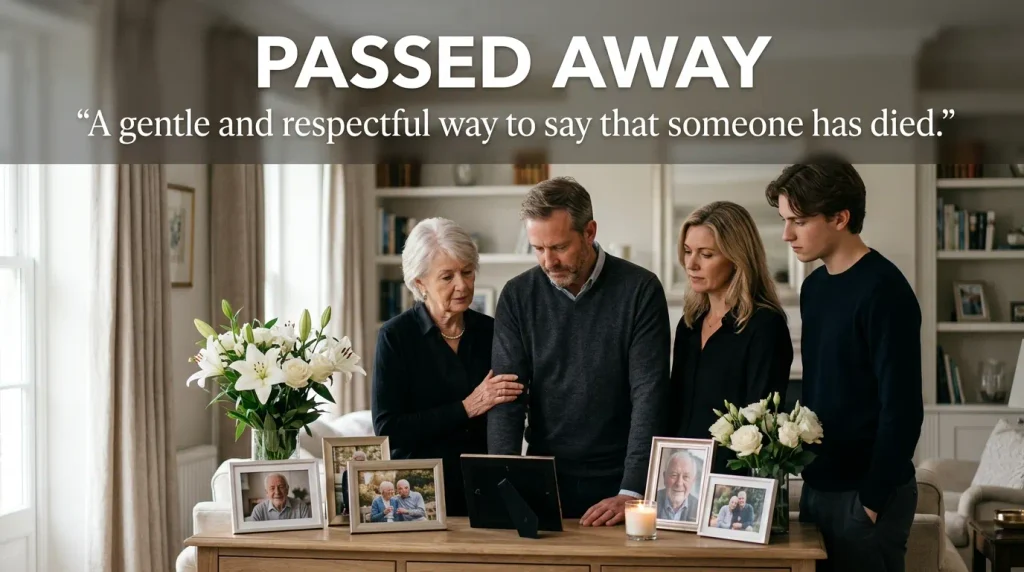
Passing Away (Verb Phrase) — US /ˌpæsɪŋ əˈweɪ/ | UK /ˌpɑːsɪŋ əˈweɪ/
Meaning: A gentle and respectful way to say that someone has died.
Tone/Register: Polite, respectful, euphemistic.
Example:
Her grandfather passed away peacefully last night.
The family announced his passing this morning.
Perishing (Verb) — US /ˈperɪʃɪŋ/ | UK /ˈperɪʃɪŋ/
Meaning: Dying, especially in a painful, dangerous, or tragic situation.
Tone/Register: Formal, literary, dramatic.
Example:
Many travelers were perishing in the extreme cold.
The story describes soldiers perishing during the battle.
Expiring (Verb) — US /ɪkˈspaɪərɪŋ/ | UK /ɪkˈspaɪərɪŋ/
Meaning: Dying or coming to the end of life, often in formal language.
Tone/Register: Formal, medical, literary.
Example:
The patient was expiring after a long illness.
The old expression is rarely used in everyday conversation.
Succumbing (Verb) — US /səˈkʌmɪŋ/ | UK /səˈkʌmɪŋ/
Meaning: Dying because someone or something is overcome by illness, injury, or another powerful force.
Tone/Register: Formal, serious.
Example:
He eventually succumbed to his injuries.
Several victims succumbed after the disaster.
Losing One’s Life (Verb Phrase) — US /ˈluːzɪŋ wʌnz laɪf/ | UK /ˈluːzɪŋ wʌnz laɪf/
Meaning: Dying, particularly because of an accident, conflict, or dangerous event.
Tone/Register: Neutral, respectful, news-style.
Example:
Three people lost their lives in the accident.
Nobody expected so many workers to lose their lives.
Approaching Death (Verb Phrase) — US /əˈproʊtʃɪŋ deθ/ | UK /əˈprəʊtʃɪŋ deθ/
Meaning: Being close to the point of death.
Tone/Register: Neutral, formal, medical.
Example:
The doctor knew that the patient was approaching death.
The novel follows a man approaching death.
Nearing Death (Verb Phrase) — US /ˈnɪrɪŋ deθ/ | UK /ˈnɪərɪŋ deθ/
Meaning: Coming increasingly close to death.
Tone/Register: Neutral, serious.
Example:
The older people were nearing death.
She stayed beside her mother as she was nearing death.
Fading Away (Verb Phrase) — US /ˈfeɪdɪŋ əˈweɪ/ | UK /ˈfeɪdɪŋ əˈweɪ/
Meaning: Gradually becoming weaker or dying, often in a gentle or poetic sense.
Tone/Register: Literary, emotional, gentle.
Example:
The old man seemed to be fading away peacefully.
His strength was fading away with each passing day.
Breathing One’s Last (Verb Phrase) — US /ˈbriːðɪŋ wʌnz læst/ | UK /ˈbriːðɪŋ wʌnz lɑːst/
Meaning: Dying or taking one’s final breath.
Tone/Register: Literary, dramatic, traditional.
Example:
The hero breathed his last before sunrise.
The story ends with the king breathing his last.
Drawing One’s Last Breath (Verb Phrase) — US /ˈdrɔːɪŋ wʌnz læst breθ/ | UK /ˈdrɔːɪŋ wʌnz lɑːst breθ/
Meaning: Dying and taking the final breath of life.
Tone/Register: Literary, dramatic.
Example:
The old sailor drew his last breath at home.
She remained beside him as he drew his last breath.
Departing This Life (Verb Phrase) — US /dɪˈpɑːrtɪŋ ðɪs laɪf/ | UK /dɪˈpɑːtɪŋ ðɪs laɪf/
Meaning: Dying, expressed formally or spiritually.
Tone/Register: Formal, spiritual, euphemistic.
Example:
He departed this life surrounded by family.
The inscription remembers those who departed this life.
Deceasing (Verb) — US /dɪˈsiːsɪŋ/ | UK /dɪˈsiːsɪŋ/
Meaning: Dying or coming to the end of life.
Tone/Register: Very formal, legal, uncommon.
Example:
The document refers to the rights of the deceasing owner.
The term appears mainly in specialized language.
Demising (Verb) — US /dɪˈmaɪzɪŋ/ | UK /dɪˈmaɪzɪŋ/
Meaning: Dying, especially in historical, legal, or literary language.
Tone/Register: Formal, archaic, legal.
Example:
The estate passed to his heirs after his demise.
The historical text describes the ruler as demising peacefully.
Going to a Better Place (Verb Phrase) — US /ˈɡoʊɪŋ tə ə ˈbetər pleɪs/ | UK /ˈɡəʊɪŋ tə ə ˈbetə pleɪs/
Meaning: A comforting expression suggesting that a deceased person has moved to a peaceful existence.
Tone/Register: Gentle, comforting, informal.
Example:
Her family believes she is going to a better place.
He told the children that their pet had gone to a better place.
Giving Up the Ghost (Verb Phrase) — US /ˈɡɪvɪŋ ʌp ðə ɡoʊst/ | UK /ˈɡɪvɪŋ ʌp ðə ɡəʊst/
Meaning: Dying or, figuratively, stopping completely.
Tone/Register: Idiomatic, informal, sometimes humorous.
Example:
The old machine finally gave up the ghost.
In the story, the injured soldier gives up the ghost.
Going the Way of All Flesh (Verb Phrase) — US /ˈɡoʊɪŋ ðə weɪ əv ɔːl fleʃ/ | UK /ˈɡəʊɪŋ ðə weɪ əv ɔːl fleʃ/
Meaning: Dying, expressed through an old literary idiom.
Tone/Register: Literary, archaic.
Example:
The novel says the aging king was going the way of all flesh.
The phrase gives the passage an old-fashioned tone.
Kicking the Bucket (Verb Phrase) — US /ˈkɪkɪŋ ðə ˈbʌkɪt/ | UK /ˈkɪkɪŋ ðə ˈbʌkɪt/
Meaning: A slang expression meaning to die.
Tone/Register: Informal, humorous, potentially insensitive.
Example:
The character jokes that he will kick the bucket someday.
The expression is too casual for a funeral announcement.
Checking Out (Verb Phrase) — US /ˈtʃekɪŋ aʊt/ | UK /ˈtʃekɪŋ aʊt/
Meaning: An informal expression that can mean dying or leaving life.
Tone/Register: Slang, informal.
Example:
The movie uses “checking out” as a dark joke about death.
That expression would sound inappropriate in a sympathy message.
Going to Glory (Verb Phrase) — US /ˈɡoʊɪŋ tə ˈɡlɔːri/ | UK /ˈɡəʊɪŋ tə ˈɡlɔːri/
Meaning: Dying and entering a heavenly or spiritual existence.
Tone/Register: Religious, poetic, euphemistic.
Example:
The preacher spoke warmly about those who had gone to glory.
The phrase appears mainly in religious contexts.
Meeting One’s End (Verb Phrase) — US /ˈmiːtɪŋ wʌnz end/ | UK /ˈmiːtɪŋ wʌnz end/
Meaning: Dying, especially as a result of danger or violence.
Tone/Register: Literary, dramatic.
Example:
The villain finally met his end in the final chapter.
The explorer met his end during the expedition.
Meeting One’s Maker (Verb Phrase) — US /ˈmiːtɪŋ wʌnz ˈmeɪkər/ | UK /ˈmiːtɪŋ wʌnz ˈmeɪkə/
Meaning: Dying, with a reference to God or a creator.
Tone/Register: Idiomatic, informal, sometimes humorous.
Example:
The old pirate feared meeting his maker.
The phrase can sound dramatic in storytelling.
Passing On (Verb Phrase) — US /ˈpæsɪŋ ɑːn/ | UK /ˈpɑːsɪŋ ɒn/
Meaning: Dying, especially when used as a softer alternative to direct language.
Tone/Register: Gentle, euphemistic.
Example:
She passed on peacefully after a long life.
The family spoke quietly about his passing on.
Departing (Verb) — US /dɪˈpɑːrtɪŋ/ | UK /dɪˈpɑːtɪŋ/
Meaning: Leaving life or dying, usually in literary or formal language.
Tone/Register: Literary, formal.
Example:
The poem reflects on departing from the world.
His final words describe the fear of departing.
Perishing Away (Verb Phrase) — US /ˈperɪʃɪŋ əˈweɪ/ | UK /ˈperɪʃɪŋ əˈweɪ/
Meaning: Gradually dying or disappearing, although this expression is less common than simply “perishing.”
Tone/Register: Literary, dramatic.
Example:
The story describes a village perishing away after the famine.
The phrase creates a bleak image of decline.
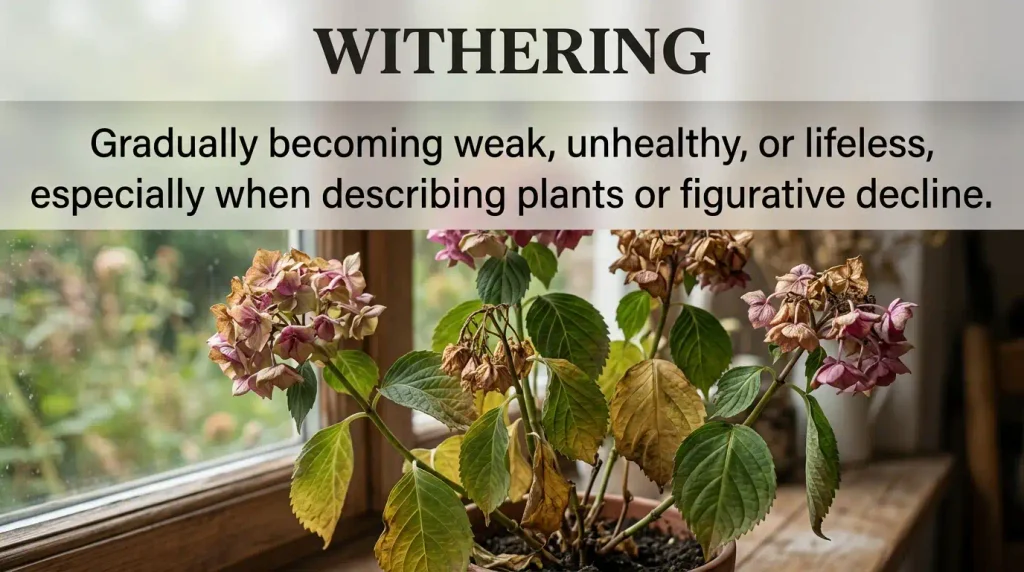
Withering Away (Verb Phrase) — US /ˈwɪðərɪŋ əˈweɪ/ | UK /ˈwɪðərɪŋ əˈweɪ/
Meaning: Gradually becoming weak, unhealthy, or lifeless, especially when describing plants or figurative decline.
Tone/Register: Literary, descriptive.
Example:
The neglected flowers were withering away.
His hope seemed to be withering away after repeated failures.
Failing (Verb) — US /ˈfeɪlɪŋ/ | UK /ˈfeɪlɪŋ/
Meaning: Losing strength or functioning, sometimes as part of the process before death.
Tone/Register: Neutral, medical, contextual.
Example:
The patient’s heart was failing.
The doctors worked quickly as his organs were failing.
Deteriorating (Verb) — US /dɪˈtɪriəreɪtɪŋ/ | UK /dɪˈtɪəriəreɪtɪŋ/
Meaning: Becoming progressively worse, sometimes describing a condition that may lead toward death.
Tone/Register: Formal, medical, academic.
Example:
Her condition was deteriorating rapidly.
The medical team monitored his deteriorating health.
Fading (Verb) — US /ˈfeɪdɪŋ/ | UK /ˈfeɪdɪŋ/
Meaning: Gradually becoming weaker, less active, or less alive.
Tone/Register: Neutral, poetic, descriptive.
Example:
The patient’s breathing was fading.
The candle flame was fading in the cold room.
Going Out (Verb Phrase) — US /ˈɡoʊɪŋ aʊt/ | UK /ˈɡəʊɪŋ aʊt/
Meaning: Gradually stopping or losing life, especially for a flame, light, or figurative subject.
Tone/Register: Informal, descriptive.
Example:
The fire was slowly going out.
The writer compared the dying star to a light going out.
Losing Vitality (Verb Phrase) — US /ˈluːzɪŋ vaɪˈtælɪti/ | UK /ˈluːzɪŋ vaɪˈtæləti/
Meaning: Gradually losing strength, energy, or signs of life.
Tone/Register: Formal, descriptive.
Example:
The plant was losing vitality after weeks without water.
The old tradition seemed to be losing vitality among younger people.
Flatlining (Verb) — US /ˈflætˌlaɪnɪŋ/ | UK /ˈflætˌlaɪnɪŋ/
Meaning: Experiencing a complete loss of detectable heart activity, often indicating death or a critical medical emergency.
Tone/Register: Medical, informal, dramatic.
Example:
The patient’s heart was flatlining during the emergency.
The medical team immediately began resuscitation efforts.
Collapsing (Verb) — US /kəˈlæpsɪŋ/ | UK /kəˈlæpsɪŋ/
Meaning: Suddenly losing physical strength or consciousness, sometimes preceding death.
Tone/Register: Neutral, descriptive.
Example:
The injured man was collapsing from severe blood loss.
He collapsed shortly after reaching the hospital.
Failing Away (Verb Phrase) — US /ˈfeɪlɪŋ əˈweɪ/ | UK /ˈfeɪlɪŋ əˈweɪ/
Meaning: Gradually losing strength or vitality until becoming extremely weak.
Tone/Register: Literary, emotional.
Example:
Her strength was failing away after the long illness.
The character seemed to be failing away with each passing day.
Wasting Away (Verb Phrase) — US /ˈweɪstɪŋ əˈweɪ/ | UK /ˈweɪstɪŋ əˈweɪ/
Meaning: Becoming increasingly weak, thin, or unhealthy because of prolonged illness or another serious condition.
Tone/Register: Descriptive, serious.
Example:
The patient was wasting away because of the illness.
His family noticed that he was rapidly wasting away.
Declining (Verb) — US /dɪˈklaɪnɪŋ/ | UK /dɪˈklaɪnɪŋ/
Meaning: Gradually becoming weaker or less healthy, sometimes as part of the final stage of life.
Tone/Register: Neutral, formal.
Example:
His health had been declining for several months.
The doctor explained that her condition was declining.
Failing Health (Noun Phrase) — US /ˈfeɪlɪŋ helθ/ | UK /ˈfeɪlɪŋ helθ/
Meaning: A condition in which someone’s health is becoming progressively weaker.
Tone/Register: Neutral, formal.
Example:
His failing health required constant care.
The family gathered because of her failing health.
Losing Strength (Verb Phrase) — US /ˈluːzɪŋ streŋθ/ | UK /ˈluːzɪŋ streŋθ/
Meaning: Gradually becoming physically weaker, especially during severe illness or near the end of life.
Tone/Register: Neutral, conversational.
Example:
He was losing strength after weeks of illness.
She could feel herself losing strength.
Losing Consciousness (Verb Phrase) — US /ˈluːzɪŋ ˈkɑːnʃəsnəs/ | UK /ˈluːzɪŋ ˈkɒnʃəsnəs/
Meaning: Becoming unconscious, which may occur during a life-threatening medical condition.
Tone/Register: Medical, formal.
Example:
The injured passenger was losing consciousness.
He began losing consciousness before help arrived.
Going Into Decline (Verb Phrase) — US /ˈɡoʊɪŋ ˈɪntuː dɪˈklaɪn/ | UK /ˈɡəʊɪŋ ˈɪntuː dɪˈklaɪn/
Meaning: Gradually becoming weaker, less active, or less healthy.
Tone/Register: Formal, descriptive.
Example:
The patient’s health was going into decline.
The old man went into decline after his illness.
Slipping Away (Verb Phrase) — US /ˈslɪpɪŋ əˈweɪ/ | UK /ˈslɪpɪŋ əˈweɪ/
Meaning: Gradually dying or becoming lost beyond recovery, often expressed emotionally.
Tone/Register: Gentle, literary, emotional.
Example:
The family knew that their loved one was slipping away.
She held his hand as his life seemed to be slipping away.
Fading Into Nothingness (Verb Phrase) — US /ˈfeɪdɪŋ ˈɪntuː ˈnʌθɪŋnəs/ | UK /ˈfeɪdɪŋ ˈɪntuː ˈnʌθɪŋnəs/
Meaning: Gradually disappearing from existence, especially in poetic or philosophical descriptions of death.
Tone/Register: Poetic, philosophical, dramatic.
Example:
The poem portrays the character as fading into nothingness.
His final thoughts describe life fading into nothingness.
Going Beyond (Verb Phrase) — US /ˈɡoʊɪŋ bɪˈjɑːnd/ | UK /ˈɡəʊɪŋ bɪˈjɒnd/
Meaning: A poetic or spiritual expression suggesting that someone is moving beyond earthly life.
Tone/Register: Spiritual, poetic, euphemistic.
Example:
The poem describes the old woman as going beyond.
Her family viewed her passing as a journey of going beyond.
Crossing Over (Verb Phrase) — US /ˈkrɔːsɪŋ ˈoʊvər/ | UK /ˈkrɒsɪŋ ˈəʊvə/
Meaning: A euphemistic expression for dying or moving from life into an imagined afterlife.
Tone/Register: Spiritual, informal, euphemistic.
Example:
The novel describes the hero as crossing over peacefully.
Her family spoke of him as having crossed over.
Returning to Dust (Verb Phrase) — US /rɪˈtɜːrnɪŋ tə dʌst/ | UK /rɪˈtɜːnɪŋ tə dʌst/
Meaning: A poetic expression referring to death and the body’s eventual return to the earth.
Tone/Register: Poetic, religious, philosophical.
Example:
The poem reflects on humans eventually returning to dust.
The writer uses “returning to dust” as a symbol of mortality.
Reaching the End of Life (Verb Phrase) — US /ˈriːtʃɪŋ ði end əv laɪf/ | UK /ˈriːtʃɪŋ ði end əv laɪf/
Meaning: Coming to the final stage of one’s natural life.
Tone/Register: Neutral, respectful, formal.
Example:
The patient was reaching the end of life.
The family discussed how to support him at the end of life.
Entering the Final Stage (Verb Phrase) — US /ˈentərɪŋ ðə ˈfaɪnəl steɪdʒ/ | UK /ˈentərɪŋ ðə ˈfaɪnəl steɪdʒ/
Meaning: Moving into the last phase of life or a terminal condition.
Tone/Register: Medical, formal.
Example:
The doctor explained that she was entering the final stage of her illness.
The family prepared for the final stage with care.
Becoming Terminal (Verb Phrase) — US /bɪˈkʌmɪŋ ˈtɜːrmɪnəl/ | UK /bɪˈkʌmɪŋ ˈtɜːmɪnəl/
Meaning: Developing into a condition from which recovery is not expected, and death may follow.
Tone/Register: Medical, formal.
Example:
The disease was becoming terminal despite treatment.
Doctors explained that his condition had become terminal.
Succumbing to Illness (Verb Phrase) — US /səˈkʌmɪŋ tə ˈɪlnəs/ | UK /səˈkʌmɪŋ tə ˈɪlnəs/
Meaning: Dying because a serious illness has overcome the person’s body.
Tone/Register: Formal, serious.
Example:
He eventually succumbed to a severe illness.
The author died after succumbing to a long illness.
Succumbing to Injury (Verb Phrase) — US /səˈkʌmɪŋ tə ˈɪndʒəri/ | UK /səˈkʌmɪŋ tə ˈɪndʒəri/
Meaning: Dying because serious physical injuries prove fatal.
Tone/Register: Formal, serious, news-style.
Example:
The victim succumbed to his injuries overnight.
He later succumbed to injuries sustained in the crash.

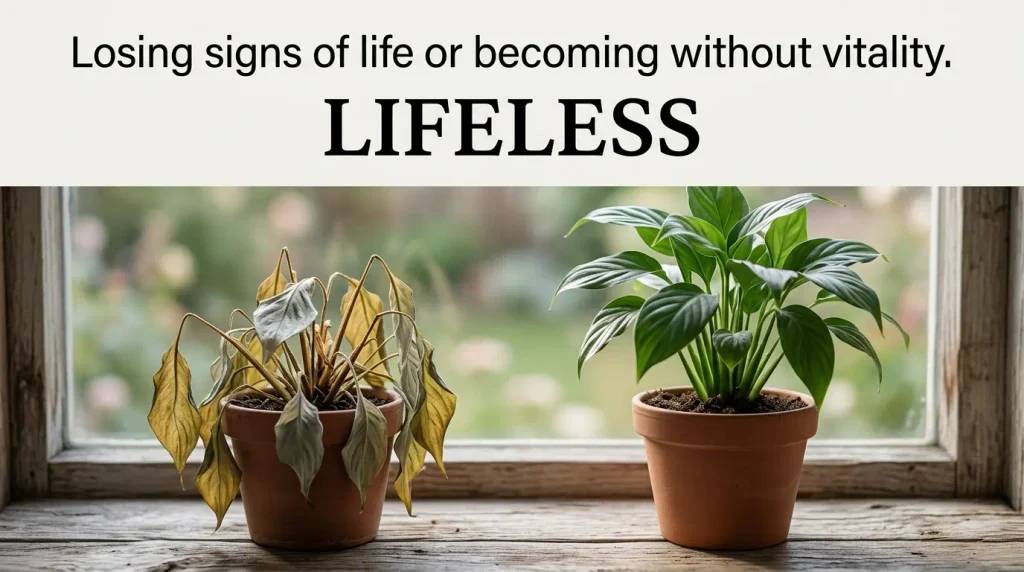
Becoming Lifeless (Verb Phrase) — US /bɪˈkʌmɪŋ ˈlaɪfləs/ | UK /bɪˈkʌmɪŋ ˈlaɪfləs/
Meaning: Losing signs of life or becoming without vitality.
Tone/Register: Descriptive, literary.
Example:
The animal became lifeless after the severe injury.
The scene grew silent as the body became lifeless.
Synonyms for Dying by Tone
Positive or Gentle
When discussing a person’s death sensitively, choose softer expressions.
- Passing away
- Passing on
- Departing this life
- Going to a better place
- Going to glory
These expressions are especially useful in sympathy messages, obituaries, family conversations, and sensitive writing.
Neutral
For factual or educational writing, direct language is often better.
- Dying
- Losing one’s life
- Approaching death
- Nearing death
- Expiring
- Failing
- Deteriorating
These choices work well in journalism, medical discussions, essays, and factual explanations.
Negative or Dramatic
Some expressions emphasize tragedy, danger, or suffering.
- Perishing
- Succumbing
- Meeting one’s end
- Breathing one’s last
- Drawing one’s last breath
These are particularly effective in historical writing, dramatic storytelling, and descriptions of disasters.
Playful or Informal
Informal expressions should be used carefully.
- Kicking the bucket
- Checking out
- Giving up the ghost
- Meeting one’s maker
Although these phrases can sound humorous, they may seem disrespectful when someone has recently died.
“Dying” vs Close Alternatives
Dying vs Passing Away
The term Dying is direct and describes the process of losing life.
Passing away is softer and usually refers to someone who has already died.
Therefore, say “The patient is dying” when discussing an ongoing process. Use “Her father passed away” when reporting a death respectfully.
Dying vs Perishing
Dying is broad and neutral.
Perishing is more dramatic and often suggests danger, suffering, or tragic circumstances.
For example, “The plants are dying” is ordinary. However, “The travelers were perishing in the storm” sounds much more serious.
Dying vs Succumbing
Dying simply describes the process.
Succumbing highlights the cause or force that overcame someone.
For instance, “He was dying” gives basic information. In contrast, “He succumbed to his injuries” emphasizes the injuries as the cause.
How “Dying” Changes by Context
Daily Conversation
In everyday speech, people often avoid direct expressions when discussing someone’s death.
For example, passed away sounds more considerate than died. However, the direct word is still perfectly normal in factual conversations.
The relationship between speakers also matters. Close friends may use direct language, while a sympathy message usually benefits from a gentler expression.
Writing and Blogging
Bloggers should consider their audience before selecting a synonym.
For example, a health article may use dying, approaching death, or succumbing. Meanwhile, a personal story may use passing away to create a warmer emotional tone.
Consequently, vocabulary choice can make an article feel more professional and sensitive.
Professional or Academic Tone
Formal writing usually favors precise expressions.
Words such as expiring, succumbing, deteriorating, and losing one’s life may work in appropriate contexts. However, accuracy should come before stylistic variety.
For example, medical writing should not replace a precise medical description with a poetic expression merely to sound sophisticated.
Creative or Informal Use
Stories, novels, films, and informal conversations allow more expressive alternatives.
A novelist might write that a character breathed his last. Similarly, a comedy script might use kicking the bucket for deliberate humor.
The key is context. A dramatic phrase can strengthen storytelling, while the same phrase can sound inappropriate in a serious announcement.
Common Mistakes Learners Make
One common mistake is treating every synonym as interchangeable. Although two words may share a basic meaning, their tone can differ greatly.
For example, kicking the bucket should not normally appear in a condolence message. It is casual and can sound insensitive.
Another mistake is using deteriorating as a direct replacement for dying. Deterioration means becoming worse, but it does not always mean death.
Similarly, fading can describe weakening or disappearance without referring to literal death. Therefore, context is essential.
Learners should also avoid using highly formal words in ordinary conversations. Deceasing and demising, for instance, are uncommon and can sound unnatural in everyday English.
Register Notes
Formal: expiring, succumbing, deceasing, demising, losing one’s life
Neutral: dying, nearing death, approaching death, failing
Gentle: passing away, passing on, departing this life
Literary: breathing one’s last, drawing one’s last breath, meeting one’s end
Informal: kicking the bucket, checking out, giving up the ghost
For more vocabulary practice, you can connect this topic with other synonym lessons and compare how different words change tone.
Real-Life Examples Using “Dying”
Workplace
A manager might say, “The company is facing serious problems,” rather than saying the business is dying. The softer wording may sound more professional.
Social Situations
When offering sympathy, “I’m sorry to hear that she passed away” is usually more considerate than using a blunt expression.
Media and Pop Culture
News reports often say that people lost their lives in accidents. This phrasing can sound respectful and factual.
Writing and Storytelling
A novelist might write, “His final breath came before dawn.” This creates a stronger emotional image than simply saying, “He died.”
Why Word Choice Matters
The best synonym for dying depends on three main factors: meaning, tone, and context.
First, consider the exact meaning. Next, think about how the word will make the reader or listener feel. Finally, check whether the expression suits the situation.
For example, a student writing an academic essay may choose succumbed to illness. A person writing a condolence message may choose passed away instead.
Moreover, learning these distinctions improves vocabulary without forcing unnatural words into your writing.
Interactive Practice Quiz
Choose the best answer for each situation.
1. Which expression is most respectful in a condolence message?
A. Kicking the bucket
B. Passing away
C. Checking out
D. Giving up the ghost
2. Which word best fits a formal medical context?
A. Kicking the bucket
B. Expiring
C. Checking out
D. Going to glory
3. Which expression is strongly associated with danger or tragedy?
A. Perishing
B. Passing on
C. Going to a better place
D. Passing away
4. Which phrase is most informal and humorous?
A. Succumbing
B. Approaching death
C. Kicking the bucket
D. Expiring
5. Which word means dying after being overcome by an illness or injury?
A. Succumbing
B. Fading
C. Departing
D. Withering
6. Which expression is especially literary?
A. Checking out
B. Breathing one’s last
C. Passing away
D. Losing one’s life
7. Which phrase can describe a flame becoming weaker?
A. Passing away
B. Fading
C. Deceasing
D. Succumbing
8. Which phrase is appropriate for a factual accident report?
A. Kicking the bucket
B. Going to glory
C. Losing their lives
D. Meeting their maker
9. Which word means becoming progressively worse?
A. Deteriorating
B. Passing on
C. Perishing
D. Expiring
10. Which expression may sound insensitive after someone’s recent death?
A. Passing away
B. Kicking the bucket
C. Losing their life
D. Passing on
11. Which phrase has a spiritual or religious tone?
A. Going to glory
B. Deteriorating
C. Failing
D. Perishing
12. Which expression means being close to death?
A. Nearing death
B. Kicking the bucket
C. Giving up the ghost
D. Checking out
13. Which phrase is best suited to dramatic storytelling?
A. Drawing one’s last breath
B. Failing
C. Deteriorating
D. Losing vitality
14. Which word is relatively uncommon and highly formal?
A. Dying
B. Passing away
C. Deceasing
D. Fading
15. Which expression is best for a gentle conversation about someone’s death?
A. Passing away
B. Perishing
C. Kicking the bucket
D. Meeting one’s maker
Reflection Task
Write one sentence using a synonym for dying. Then ask yourself: Does my chosen word sound neutral, respectful, formal, dramatic, or informal?
Answer Key: 1-B, 2-B, 3-A, 4-C, 5-A, 6-B, 7-B, 8-C, 9-A, 10-B, 11-A, 12-A, 13-A, 14-C, 15-A
FAQs
1. What is the most polite synonym for dying?
Passing away is generally one of the most polite and widely accepted alternatives to dying when referring to a person’s death. It has a gentle and respectful tone, so it is commonly used in condolences, family conversations, obituaries, and public announcements. However, the best choice can vary depending on cultural, religious, and personal preferences.
2. What is a formal synonym for dying in academic writing?
Succumbing, expiring, and losing one’s life can work in formal writing, depending on the context. However, academic writers should prioritize accuracy rather than simply choosing a more sophisticated word. For example, “succumbed to the disease” emphasizes the cause, while “lost his life” is more general and respectful.
3. What is a synonym for dying that sounds less harsh?
Expressions such as passing away, passing on, and departing this life sound less direct than the word dying. Among these, passing away is especially common in modern English. It is appropriate when you want to discuss someone’s death with compassion without sounding overly dramatic or clinical.
4. What is the difference between dying and passing away?
Dying usually describes the process of losing life, while passing away is a euphemistic expression that normally refers to someone’s death. For example, “The patient is dying” describes an ongoing process. “Her grandmother passed away” usually announces that the death has already happened.
5. What is a slang synonym for dying?
Kicking the bucket is a well-known slang expression meaning to die. Checking out can also be used informally with the same idea. However, these expressions can sound humorous, casual, or insensitive. Therefore, they should generally be avoided in condolences, formal announcements, professional writing, and serious conversations about someone’s death.
6. What is a literary synonym for dying?
Literary alternatives include breathing one’s last, drawing one’s last breath, meeting one’s end, and departing this life. These expressions create stronger imagery and emotional impact than the simple word dying. As a result, they are particularly useful in novels, poetry, historical writing, speeches, and dramatic storytelling.
7. Which synonym for dying is best for an essay?
The best choice depends on the subject and sentence. Dying is often the clearest option, while succumbing may be appropriate when a cause such as disease or injury is important. Losing one’s life can work in discussions of accidents or violence. Always choose precision and clarity over unnecessary vocabulary complexity.
8. Can dying have a meaning other than death?
Yes. Dying can have figurative meanings when something is gradually weakening, disappearing, or ending. For example, “The fire is dying” means the fire is becoming weaker. Likewise, “The tradition is dying” means the tradition is gradually disappearing. Context determines whether dying refers to literal death or figurative decline.
Conclusion
Learning a synonym for dying gives you more control over tone. You can sound respectful, factual, formal, dramatic, or informal without changing the basic idea.
For example, passing away feels gentle, succumbing sounds serious, and kicking the bucket is casual. Therefore, context should always guide your vocabulary choice.
These alternatives can strengthen essays, blogs, stories, emails, and everyday conversations. More importantly, they help you communicate sensitive ideas with greater clarity and confidence.
Keep practicing these words in short sentences and real situations. Try using one synonym in an essay, another in a story, and another in daily conversation to build natural vocabulary.

Shahzeena Shazadi is the founder and lead writer at VocablyHub.com, where she creates accurate, reader-focused English language content designed to help people communicate with clarity and confidence. She specializes in synonyms, antonyms, word meanings, idioms, and practical vocabulary guides that simplify complex language concepts for everyday use. Every article is carefully researched, fact-checked, and written in clear, accessible language using reliable references and real-world examples. Her goal is to provide helpful, trustworthy content that supports learners at every stage of their English language journey.
Her editorial approach focuses on accuracy, transparency, and user value while following modern content quality standards. She regularly reviews and updates content to keep information relevant, useful, and easy to understand. Through VocablyHub.com, Shahzeena Shazadi is committed to publishing reliable language resources that help students, writers, educators, professionals, and English learners expand their vocabulary, improve their writing skills, and communicate with confidence in academic, professional, and everyday situations.