
There is a sentence every story writer and every student eventually writes: “He was very sad.” It is true, and it tells us almost nothing. Was he sad the way you are sad when a holiday ends? Or sad the way you are sad at a graveside? English keeps those two feelings far apart, in different words, and reaching for the honest one is the whole craft. That is why synonyms for sad is one of the most searched phrases in English learning.
Sadness has causes, and the causes choose the words. Disappointment has its own shelf (downcast, crestfallen, dejected). Grief has another (sorrowful, heartbroken, grief-stricken). A grey, directionless mood has a third (gloomy, blue, down in the dumps). When a writer uses a grief word for a disappointment, the sentence overacts. When she uses a disappointment word for a grief, it underplays, and readers feel the insult even if they cannot name it.
This guide gives you 50 synonyms for sad with meanings, pronunciations, and examples, arranged by cause and strength. You will also learn where the word sad itself came from (a stranger story than you expect), how to keep medical words like depressed honest, and which choices belong in a condolence message and which belong in a novel.
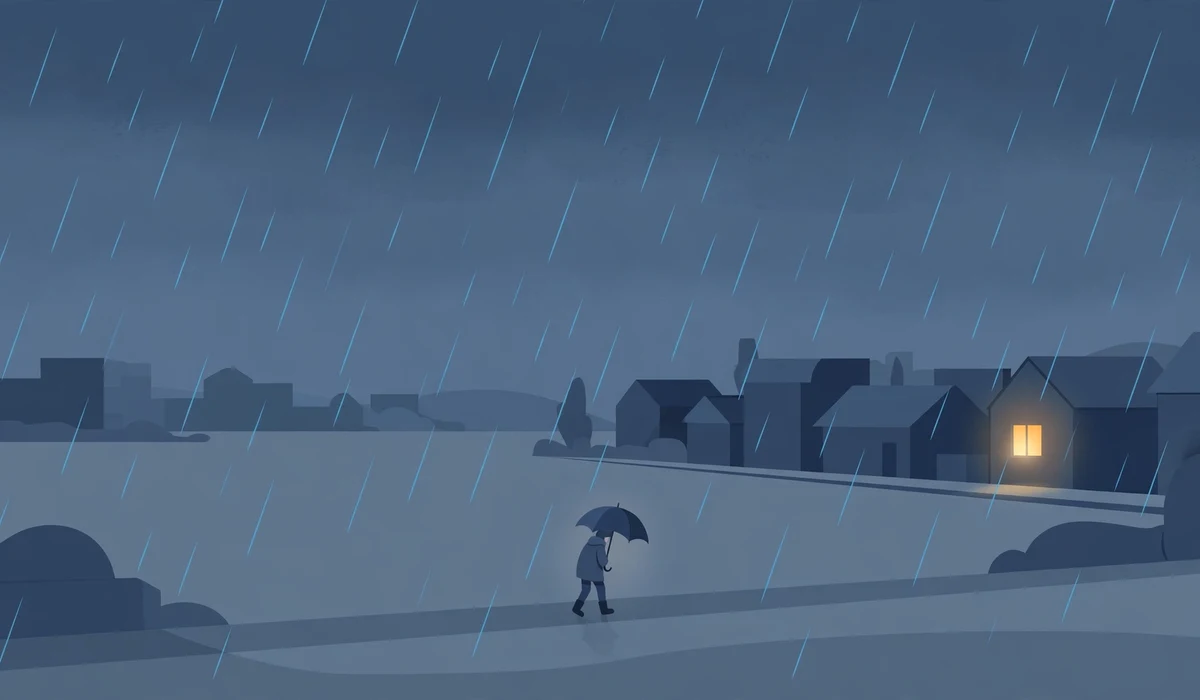
What “Sad” Covers: Disappointment, Grief, and the Grey Weather Between
At its centre, sad means feeling sorrow or unhappiness. Around that centre, the word does quiet extra work. It describes faces (a sad smile), situations (a sad state of affairs), and even quality, in the informal judgment “that is just sad,” meaning pathetic. The feeling itself, though, is the main road, and it runs from a passing cloud to a life-changing loss.
Duration matters as much as depth. Upset and down are weather: they pass. Grief-stricken and inconsolable are climate: they settle in. Good writers choose sad words the way they choose coats, by how long the cold will last. A character who is bereft for an afternoon is melodrama; a character who is merely upset at a funeral is a puzzle.
One more distinction, the kindest one: some of these words are for describing, and some are for addressing. In a condolence message you do not write “your miserable loss” or “your wretched year.” You write sorrowful, sorry, and sad itself, the plain word, which at a graveside is not plain at all but respectful.
Sad Once Meant “Full”: The Word’s Strange Journey
Here is the surprise. Sad comes from Old English sæd, which meant sated, satisfied, full, the feeling after a good meal. It shares a root with Latin satis, enough, the ancestor of satisfy. From “full” the meaning moved to “heavy,” then to “firm and serious,” and only in the Middle Ages did it settle into sorrow. A sad song in Chaucer’s time could simply be a solemn one.
The journey leaves fossils. “Sad” bread in old cookbooks is heavy, dense bread. A “sad” colour in old tailoring is a dark, sober one. And the modern slang use, “a sad excuse,” keeps a cousin of that old weight: something heavy with its own inadequacy. The happy words climbed from luck to joy; the sad word sank from fullness to grief. English feelings have long memories.
Saying It: One Short Syllable, Carefully Weighed
Sad: US /sæd/ | UK /sæd/. One syllable, with the flat “a” of cat. The comparative is sadder /ˈsæd.ɚ/, the superlative saddest. In the list below, watch the stress in the longer words: it falls early in SOR-row-ful and MEL-an-choly (British speakers often say MEL-an-co-lee), and late in des-POND-ent and in-con-SOL-able. Said aloud correctly, these words already sound like their meanings.
50 Synonyms for Sad, From a Bad Afternoon to a Broken Heart
The ladder here climbs by weight. The first words handle ordinary days. The middle belongs to grief and loss. The end holds the extremes, which honest writing spends rarely. For the shelf facing this one, see the companion guide to synonyms for happy, which climbs the other direction.
1. Unhappy (Adjective) — US: /ʌnˈhæp.i/ | UK: /ʌnˈhæp.i/
Meaning: Not happy; sad or dissatisfied.
Tone/Register: The everyday opposite of happy; safe everywhere.
Examples:
She was unhappy with the decision.
An unhappy child sat by the window, watching the rain.
2. Sorrowful (Adjective) — US: /ˈsɔːr.oʊ.fəl/ | UK: /ˈsɒr.əʊ.fəl/
Meaning: Full of sorrow; deeply sad, especially at a loss.
Tone/Register: Formal and gentle; the classic word of condolence letters.
Examples:
He gave a sorrowful nod at the funeral.
Her sorrowful eyes told the story before she spoke.
3. Gloomy (Adjective) — US: /ˈɡluː.mi/ | UK: /ˈɡluː.mi/
Meaning: Sad and without much hope; dark in mood or outlook.
Tone/Register: Everyday; describes people, rooms, weather, and forecasts.
Examples:
Do not be so gloomy; the results may surprise us.
A gloomy silence followed the announcement.
4. Melancholy (Adjective / Noun) — US: /ˈmel.ənˌkɑː.li/ | UK: /ˈmel.ən.kɒl.i/
Meaning: A quiet, lasting sadness, often mixed with thoughtfulness.
Tone/Register: Literary and beautiful; sadness without a sharp cause.
Examples:
A melancholy tune drifted from the old piano.
Autumn always brings her a gentle melancholy.
5. Heartbroken (Adjective) — US: /ˈhɑːrtˌbroʊ.kən/ | UK: /ˈhɑːtˌbrəʊ.kən/
Meaning: Overwhelmed by grief or disappointment, as if the heart cracked.
Tone/Register: Strong and emotional; for love lost and dreams broken.
Examples:
She was heartbroken when the engagement ended.
The fans were heartbroken by the final defeat.
6. Miserable (Adjective) — US: /ˈmɪz.rə.bəl/ | UK: /ˈmɪz.rə.bəl/
Meaning: Very unhappy and uncomfortable; wretched.
Tone/Register: Strong everyday word; also for weather and conditions.
Examples:
He felt miserable with fever and no one home.
They spent a miserable night in the leaking tent.
7. Depressed (Adjective) — US: /dɪˈprest/ | UK: /dɪˈprest/
Meaning: Very low in spirits for a long period; also a medical condition.
Tone/Register: Use carefully: it names an illness, not just a bad day.
Examples:
She felt depressed for weeks after losing her job.
Doctors treated his depressed state seriously, and so should writers.
8. Downhearted (Adjective) — US: /ˌdaʊnˈhɑːr.t̬ɪd/ | UK: /ˌdaʊnˈhɑː.tɪd/
Meaning: Sad and discouraged; having lost heart.
Tone/Register: Warm and old-fashioned; kind rather than clinical.
Examples:
Do not be downhearted; your turn will come.
The team walked home downhearted but proud.
9. Blue (Adjective) — US: /bluː/ | UK: /bluː/
Meaning: Sad or low in spirits, in the idiom of the blues.
Tone/Register: Informal; lives in the phrases ‘feel blue’ and ‘the blues’.
Examples:
I have been feeling blue since the holidays ended.
Monday mornings give everyone a touch of the blues.
10. Down (Adjective) — US: /daʊn/ | UK: /daʊn/
Meaning: Low in spirits; discouraged for a while.
Tone/Register: Informal and temporary; pairs with ‘feel’ and ‘be’.
Examples:
He has been down since the interview went badly.
Whenever she is down, she calls her sister.
11. Upset (Adjective) — US: /ʌpˈset/ | UK: /ʌpˈset/
Meaning: Unhappy, worried, or slightly angry about something specific.
Tone/Register: Everyday and mild; the first word of consolation.
Examples:
She was upset about the cancelled trip.
The baby gets upset when the house is noisy.
12. Distressed (Adjective) — US: /dɪˈstrest/ | UK: /dɪˈstrest/
Meaning: Deeply troubled, anxious, or suffering.
Tone/Register: Stronger than upset; common in news and formal reports.
Examples:
The distressed family waited outside the hospital.
He was distressed to learn the library would close.
13. Grieved (Adjective) — US: /ɡriːvd/ | UK: /ɡriːvd/
Meaning: Deeply sad because of a loss or a wrong.
Tone/Register: Formal; close to mourning in weight.
Examples:
She was grieved by the news of his passing.
The whole village grieved the old teacher.
14. Mourning (Adjective / Noun) — US: /ˈmɔːr.nɪŋ/ | UK: /ˈmɔː.nɪŋ/
Meaning: In the period of grief after a death.
Tone/Register: Specific and factual; also the customs that surround grief.
Examples:
The family is still in mourning.
She wore black, as mourning custom required.
15. Somber (Adjective) — US: /ˈsɑːm.bɚ/ | UK: /ˈsɒm.bə/
Meaning: Dark, serious, and sad in tone. (British spelling: sombre.)
Tone/Register: Formal; describes moods, music, clothes, and skies.
Examples:
The ceremony ended on a somber note.
His somber expression matched the news.
16. Dismal (Adjective) — US: /ˈdɪz.məl/ | UK: /ˈdɪz.məl/
Meaning: Gloomy and depressing; also very bad in quality.
Tone/Register: Everyday; strong for results, weather, and prospects.
Examples:
The team’s dismal start worried the coach.
It was a dismal, rainy afternoon.
17. Dreary (Adjective) — US: /ˈdrɪr.i/ | UK: /ˈdrɪə.ri/
Meaning: Dull, bleak, and depressing.
Tone/Register: Descriptive; made for landscapes and routines.
Examples:
The dreary office had no windows at all.
Another dreary Monday stretched ahead of him.
18. Woeful (Adjective) — US: /ˈwoʊ.fəl/ | UK: /ˈwəʊ.fəl/
Meaning: Full of woe; sorrowful, or lamentably bad.
Tone/Register: Literary for feelings, journalistic for failures.
Examples:
She told a woeful tale of lost luggage and missed trains.
His woeful singing cleared the room in minutes.
19. Wretched (Adjective) — US: /ˈretʃ.ɪd/ | UK: /ˈretʃ.ɪd/
Meaning: Extremely unhappy or unfortunate; miserable.
Tone/Register: Strong and pitying; an older, heavier miserable.
Examples:
The refugees spent a wretched winter in tents.
He felt wretched about forgetting her birthday.
20. Despondent (Adjective) — US: /dɪˈspɑːn.dənt/ | UK: /dɪˈspɒn.dənt/
Meaning: Having lost hope and confidence; in low spirits.
Tone/Register: Formal and precise; common in serious writing.
Examples:
After the third rejection, he grew despondent.
Investors were despondent about the coming year.
21. Despairing (Adjective) — US: /dɪˈsper.ɪŋ/ | UK: /dɪˈspeə.rɪŋ/
Meaning: Feeling or showing the loss of all hope.
Tone/Register: Strong; the active form of despair.
Examples:
She cast a despairing glance at the empty road.
His despairing letter asked for one more chance.
22. Hopeless (Adjective) — US: /ˈhoʊp.ləs/ | UK: /ˈhəʊp.ləs/
Meaning: Without hope; also, in informal use, very bad at something.
Tone/Register: Strong for situations; playful for skills.
Examples:
The situation is serious, but not hopeless.
I am hopeless at remembering names.
23. Dejected (Adjective) — US: /dɪˈdʒek.t̬ɪd/ | UK: /dɪˈdʒek.tɪd/
Meaning: Sad and depressed in spirit because of disappointment.
Tone/Register: Slightly formal; perfect after failures and defeats.
Examples:
The dejected players sat in silence after the match.
He gave a dejected shrug and walked away.
24. Crestfallen (Adjective) — US: /ˈkrestˌfɔː.lən/ | UK: /ˈkrestˌfɔː.lən/
Meaning: Disappointed and ashamed, with the head hanging low.
Tone/Register: Vivid and slightly literary; a face word.
Examples:
The crestfallen boy admitted he had lost the money.
She looked crestfallen when her name was not called.
25. Downcast (Adjective) — US: /ˈdaʊn.kæst/ | UK: /ˈdaʊn.kɑːst/
Meaning: Sad, with eyes or spirits lowered.
Tone/Register: Gentle and visual; describes glances and moods.
Examples:
He sat with downcast eyes through the whole meeting.
A downcast mood settled over the house.
26. Glum (Adjective) — US: /ɡlʌm/ | UK: /ɡlʌm/
Meaning: Quietly sad and gloomy, without talking much.
Tone/Register: Informal and visual; a silent kind of sad.
Examples:
Why the glum face? The day is not over yet.
The passengers sat glum in the delayed train.
27. Morose (Adjective) — US: /məˈroʊs/ | UK: /məˈrəʊs/
Meaning: Sullenly gloomy and bad-tempered in sadness.
Tone/Register: Formal; sad with an edge others must walk around.
Examples:
The morose old man answered in single words.
He grew morose after his friend moved away.
28. Sullen (Adjective) — US: /ˈsʌl.ən/ | UK: /ˈsʌl.ən/
Meaning: Silent, resentful, and gloomy in mood.
Tone/Register: Everyday; sadness mixed with quiet anger.
Examples:
The sullen teenager slammed the door without a word.
A sullen sky threatened rain all afternoon.
29. Tearful (Adjective) — US: /ˈtɪr.fəl/ | UK: /ˈtɪə.fəl/
Meaning: Full of tears or about to cry.
Tone/Register: Gentle and exact; for farewells and reunions.
Examples:
She gave a tearful goodbye at the gate.
His tearful apology moved everyone in the room.
30. Weepy (Adjective) — US: /ˈwiː.pi/ | UK: /ˈwiː.pi/
Meaning: Crying easily or feeling like crying.
Tone/Register: Informal and tender; often about films and late nights.
Examples:
I always get weepy at wedding speeches.
It is a weepy old film; keep tissues nearby.
31. Heavy-hearted (Adjective) — US: /ˌhev.iˈhɑːr.t̬ɪd/ | UK: /ˌhev.iˈhɑː.tɪd/
Meaning: Sad, as if carrying a weight in the chest.
Tone/Register: Warm and literary; grief you carry through the day.
Examples:
Heavy-hearted, she packed the last of his things.
The soldiers marched home heavy-hearted.
32. Troubled (Adjective) — US: /ˈtrʌb.əld/ | UK: /ˈtrʌb.əld/
Meaning: Anxious, worried, and unhappy in mind.
Tone/Register: Everyday; sad with worry inside it.
Examples:
He had a troubled night after the phone call.
Hers was a troubled childhood, but a brave one.
33. Distraught (Adjective) — US: /dɪˈstrɔːt/ | UK: /dɪˈstrɔːt/
Meaning: Deeply upset and unable to think clearly.
Tone/Register: Very strong; for shock and emergencies.
Examples:
The distraught mother searched the fair for her son.
He was distraught when the house caught fire.
34. Devastated (Adjective) — US: /ˈdev.ə.steɪ.t̬ɪd/ | UK: /ˈdev.ə.steɪ.tɪd/
Meaning: Completely shocked and saddened; destroyed by grief.
Tone/Register: The top of the everyday scale; use for real catastrophes.
Examples:
She was devastated by the sudden loss of her father.
The town was devastated by the flood, in heart and in fact.
35. Shattered (Adjective) — US: /ˈʃæt̬.ɚd/ | UK: /ˈʃæt.əd/
Meaning: Broken by shock or grief; in British use, also exhausted.
Tone/Register: Strong; handle the two meanings by context.
Examples:
He felt shattered when the verdict was read.
After the marathon she was not sad, just shattered, and asleep by eight.
36. Crushed (Adjective) — US: /krʌʃt/ | UK: /krʌʃt/
Meaning: Completely defeated in spirit by disappointment.
Tone/Register: Strong and physical; dreams and hopes get crushed.
Examples:
He was crushed when the university rejected him.
Her crushed expression said everything.
37. Inconsolable (Adjective) — US: /ˌɪn.kənˈsoʊ.lə.bəl/ | UK: /ˌɪn.kənˈsəʊ.lə.bəl/
Meaning: So sad that no comfort can reach it.
Tone/Register: Formal and extreme; the grief of young children and great losses.
Examples:
The little girl was inconsolable when her cat died.
He sat inconsolable beside the empty chair.
38. Disconsolate (Adjective) — US: /dɪsˈkɑːn.səl.ət/ | UK: /dɪsˈkɒn.səl.ət/
Meaning: Unable to be comforted; deeply dejected.
Tone/Register: Formal cousin of inconsolable; a touch more literary.
Examples:
The disconsolate widow walked the garden alone.
Fans drifted home disconsolate after the final.
39. Forlorn (Adjective) — US: /fɚˈlɔːrn/ | UK: /fəˈlɔːn/
Meaning: Lonely, abandoned, and pitifully sad.
Tone/Register: Poetic; for figures in landscapes and last hopes.
Examples:
A forlorn figure waited on the empty platform.
His forlorn hope of her return faded with the years.
40. Wistful (Adjective) — US: /ˈwɪst.fəl/ | UK: /ˈwɪst.fəl/
Meaning: Sadly longing for something past or far away.
Tone/Register: Gentle and beautiful; sadness with a smile inside.
Examples:
She gave a wistful look at her childhood home.
His wistful tone made the old song sadder.
41. Regretful (Adjective) — US: /rɪˈɡret.fəl/ | UK: /rɪˈɡret.fəl/
Meaning: Full of regret; sad about what one did or failed to do.
Tone/Register: Everyday; sadness pointed at the past.
Examples:
He sent a regretful apology the next morning.
She felt regretful about the words she could not take back.
42. Homesick (Adjective) — US: /ˈhoʊm.sɪk/ | UK: /ˈhəʊm.sɪk/
Meaning: Sad from missing home and the people in it.
Tone/Register: Specific and universal among students abroad.
Examples:
In her first month in Canada, she was terribly homesick.
A homesick letter arrived from the camp.
43. Lonely (Adjective) — US: /ˈloʊn.li/ | UK: /ˈləʊn.li/
Meaning: Sad because of having no company or friends.
Tone/Register: Everyday; sadness with an empty chair in it.
Examples:
The long evenings felt lonely after his wife’s death.
She was lonely in the crowded new city.
44. Pining (Adjective) — US: /ˈpaɪ.nɪŋ/ | UK: /ˈpaɪ.nɪŋ/
Meaning: Longing and wasting in sadness for someone absent.
Tone/Register: Literary; love and homesickness in one word.
Examples:
The dog sat pining by the door all week.
He spent the winter pining for the coast.
45. Grief-stricken (Adjective) — US: /ˈɡriːfˌstrɪk.ən/ | UK: /ˈɡriːfˌstrɪk.ən/
Meaning: Struck down by intense grief.
Tone/Register: Formal and journalistic; for death and disaster.
Examples:
The grief-stricken family thanked the rescuers.
Grief-stricken fans left flowers at the stadium gate.
46. Bereft (Adjective) — US: /bɪˈreft/ | UK: /bɪˈreft/
Meaning: Deprived of something loved; desolate with loss.
Tone/Register: Formal and deep; often followed by ‘of’.
Examples:
Bereft of hope, the town still rebuilt its school.
She felt utterly bereft when the letters stopped coming.
47. Low-spirited (Adjective) — US: /ˌloʊˈspɪr.ɪ.t̬ɪd/ | UK: /ˌləʊˈspɪr.ɪ.tɪd/
Meaning: Having low spirits; mildly depressed in mood.
Tone/Register: Gentle and slightly old-fashioned.
Examples:
He has been low-spirited since the operation.
The low-spirited crew sailed home in silence.
48. Joyless (Adjective) — US: /ˈdʒɔɪ.ləs/ | UK: /ˈdʒɔɪ.ləs/
Meaning: Without joy; gloomy and cheerless.
Tone/Register: Critical; describes lives, places, and routines.
Examples:
It was a joyless job, but it paid the rent.
The joyless meal ended in silence.
49. In Tears (Phrase)
Meaning: Crying with sadness.
Tone/Register: Everyday phrase; the visible end of sad.
Examples:
She was in tears by the end of the letter.
Half the cinema was in tears at the farewell scene.
50. Down in the Dumps (Phrase)
Meaning: Feeling depressed and without energy for a while.
Tone/Register: Informal idiom; temporary and familiar.
Examples:
He has been down in the dumps since the team lost.
A call from an old friend pulled her out of the dumps.
The Same 50, Sorted by Cause
Everyday and Mild
upset, down, blue, unhappy, glum, low-spirited, troubled. Passing weather; the words of Mondays and minor setbacks.
Disappointment and Defeat
dejected, crestfallen, downcast, crushed, shattered, disappointed at heart if not in name. The words after results, rejections, and lost matches.
Grief and Loss
sorrowful, grieved, mourning, heartbroken, grief-stricken, bereft, inconsolable, disconsolate, heavy-hearted. Handle with respect; these belong to real losses.
Quiet and Reflective
melancholy, wistful, forlorn, pining, regretful, homesick, lonely. Sadness that thinks; the vocabulary of letters, poems, and old photographs.
Heavy and Hopeless
despondent, despairing, hopeless, miserable, wretched, devastated, distraught. The deep end. True sentences live here, but not many of them.
Sad vs. Depressed vs. Miserable: Handle With Care
Sad is the honest general word, usable for an hour or a season. Miserable adds discomfort to sadness: the miserable person is also cold, ill, stuck, or badly treated, and the word pities them a little. Depressed is the careful one. In medicine it names an illness that deserves treatment, not a mood that deserves a song. Using it for a rainy afternoon (“the weather is so depressing”) is idiomatic and harmless about weather; using it for people, including yourself in writing, ask whether you mean the illness. If you do not, low, down, and downhearted are waiting, and they are kinder and more accurate.
And one small mercy of English: sorry is not a synonym for sad, it is its social partner. We are sad about a loss; we say sorry to the person who bears it.
Choosing the Right Word in Stories, Messages, and Real Life
In Stories and Essays
Fiction lives or dies on the ladder. Give small sadnesses small words (downcast, glum) so the big scene can afford the big ones. When the letter arrives, when the chair stays empty, then heartbroken, bereft, and devastated earn their place. Examiners notice inflation; so do readers of novels.
In Condolence Messages
Here, plain is a virtue. “I was so sad to hear” and “I am deeply sorry for your loss” remain the strongest sentences available, because in this setting warmth is said simply or not at all. Sorrowful is the one dressed-up word that belongs; save miserable, gloomy, and every idiom for other rooms.
In Everyday Talk
Speech uses the idioms: feeling blue, down, down in the dumps. They invite a question (“what happened?”) rather than closing the subject, which is what friends are for.
When the Story Turns
Grief in a story is usually a door, not a room; characters pass through it toward something. When your character comes out the other side, the vocabulary of the return trip lives in the guide to synonyms for happy, from content and at peace up to joyful.
Mistakes Learners Make With This Word Family
1. Making everything “very sad”
Very sad is a thermometer with one mark. The ladder exists so you never need it: upset for the small, sorrowful for the deep, devastated for the catastrophic. Replace very sad nine times out of ten and the tenth will finally mean something.
2. Using depressed as a casual mood word for people
Covered above, and worth repeating in the mistakes list because it is the one error that can wound. Depressed names an illness. For moods, English offers down, blue, low, and gloomy, all accurate and none clinical.
3. Saying “more sad”
The forms are sadder and saddest. As with happy and happier, the short word takes the short ending, and the long form marks the learner at once.
4. Confusing sad with sorry
“I am sad to inform you” is correct in announcements, but between people, sorry carries the apology and sad carries your own feeling. “I am sad about your loss” talks about you at the exact moment the sentence should be about them; “I am sorry for your loss” fixes it.
5. Choosing weather words for people at funerals
Gloomy, dismal, and dreary describe atmospheres first and people second. Tell a mourner he looks gloomy and you have commented on his expression; tell him you share his sorrow and you have done the human thing.
How Formal Are These Words?
Formal shelf: sorrowful, grieved, despondent, inconsolable, disconsolate, bereft, grief-stricken. Middle shelf: sad, unhappy, upset, distressed, heartbroken, miserable, lonely. Speech shelf: blue, down, glum, weepy, down in the dumps. Condolence writing sits deliberately on the formal shelf; a text to a friend sits just as deliberately on the speech shelf.
Four Small Scenes
The Empty Chair
Every evening, out of forty years of habit, she still sets two cups on the tray. Then she remembers. The word for her is not upset, and it is not depressed. She is grieving, and the cup stays in her hand a moment before it goes back.
The Results Page
Bilal refreshes the page. One mark short. Not devastated, he tells himself, just… crushed is too big and down is too small. Dejected, he decides, and goes to tell his father, who will understand the word before Bilal finishes it.
The Station Farewell
The train takes her brother to a job in another country. On the platform she laughs and waves until the last coach clears the bend. Then, walking home, she is simply and completely in tears, and the word sorrowful, when she writes it in her diary that night, is exactly the right size.
The Card
He buys the plainest card in the shop, the one with no poem printed inside. He writes: “I was so sad to hear about your mother. She was kind to me when I was nobody. I am sorry.” Two short sentences, and better than anything on the shelf behind him.
Practice Quiz: How Sad Is It?
1. Your flight home is cancelled and you will miss dinner. Mild word?
A. Devastated
B. Upset
C. Inconsolable
D. Bereft
2. Which word belongs at a funeral for a beloved teacher?
A. Glum
B. Weepy
C. Sorrowful
D. Blue
3. Sadness mixed with quiet longing for the past is ___.
A. Wistful
B. Sullen
C. Distraught
D. Jubilant
4. Which sentence uses the medical word carelessly?
A. The climate made the crops fail
B. He was depressed because his ice cream fell
C. She felt depressed for months and saw a doctor
D. Doctors treat depressed patients seriously
5. The natural comparative of sad is ___.
A. More sad
B. Sadder
C. Saddest one
D. More sadder
6. In a condolence card, the best sentence is ___.
A. Your gloomy loss upset the office
B. I am sorry for your loss
C. What a miserable funeral
D. We are down in the dumps for you
7. A student abroad, missing home terribly, is ___.
A. Homesick
B. Forlorn
C. Exuberant
D. Crestfallen
8. So sad that nothing can comfort describes ___.
A. Downcast
B. Troubled
C. Inconsolable
D. Regretful
9. Which idiom means feeling low for a while?
A. On cloud nine
B. Down in the dumps
C. In seventh heaven
D. Walking on air
10. After the third rejection letter, he lost hope. He grew ___.
A. Despondent
B. Peppy
C. Radiant
D. Festive
Reflection Task
Write three sentences about a sad scene you know from a book, a film, or your own town. Use one mild word (upset, down, gloomy), one grief word (sorrowful, heartbroken), and one quiet word (wistful, melancholy). Notice how each changes what the reader expects next.
Answer key: 1-B, 2-C, 3-A, 4-B, 5-B, 6-B, 7-A, 8-C, 9-B, 10-A
External Learning Sources
Cambridge Dictionary: sad, meaning and pronunciation
Merriam-Webster Thesaurus: sad, synonyms and antonyms
Online Etymology Dictionary: the history of sad
The Short Version
Sad words are instruments, and the ladder is the tuning. Mild words for passing weather, grief words only for grief, quiet words for the sadness that thinks. Choose by cause and by duration, keep depressed honest, and plain sad, plainly used, will never fail you.
Frequently Asked Questions
1. What is the strongest synonym for sad?
Devastated and inconsolable mark the top of the scale, with grief-stricken close behind. They belong to real catastrophes: deaths, disasters, and life-changing losses.
2. What is another word for very sad?
Sorrowful, heartbroken, miserable, and downhearted all carry ‘very sad’ without the word very. For the deepest grief, grief-stricken and bereft are stronger still.
3. What is the difference between sad and depressed?
Sad is a general feeling that comes and goes. Depressed can mean a long low state and is also the name of a medical illness, so careful writers use it for people only when that weight is really meant.
4. Which synonym for sad is best in formal writing?
Sorrowful, distressed, and grief-stricken are the formal standbys. In condolence writing, plain constructions win: ‘I was sad to hear’ and ‘I am sorry for your loss.’
5. Is there a word for sad but beautiful?
Yes: melancholy, and its gentler cousin wistful. Both describe a thoughtful sadness people sometimes seek out, in music, in autumn, and in old photographs.
