
Synonyms for orange color can make simple descriptions much more vivid. Imagine describing a sunset, dress, flower, or wall with a more precise and colorful word.
A plain orange shade can look bright, soft, earthy, golden, or reddish. Therefore, words like tangerine, amber, apricot, and rust help readers picture the exact shade.
Learning synonyms for the color is useful for students, bloggers, content writers, designers, and everyday English users. It makes vocabulary richer and descriptions clearer.
Whether you are writing an essay, blog, caption, or story, synonyms for orange color give you more expressive choices. Moreover, they help you avoid repeating the same color word.
What Does “Orange Color” Really Mean?
Orange is a warm color positioned between red and yellow on the traditional color spectrum. It can appear in many forms, from pale and delicate shades to deep and highly saturated tones.
In English, orange works as both a noun and an adjective.
As a noun: Orange is a color between red and yellow.
As an adjective: It describes something that has the color orange.
For example, “She bought an orange bag” uses orange as an adjective, while “Orange is a warm color” uses it as a noun.
Native speakers understand orange as a broad color category. However, specific shade names provide greater precision.
Connotative Meaning
Connotation (the emotional feeling or idea associated with a word) can influence how orange is perceived.
Positive tone: Orange can suggest warmth, enthusiasm, creativity, friendliness, energy, and confidence.
Negative tone: Very intense orange can sometimes suggest danger, warning, aggression, or excessive brightness.
Neutral tone: Orange can simply describe a visual color without emotional meaning.
Therefore, the best alternative depends on the shade and context.
Etymology of Orange
The word orange has a fascinating linguistic history. It originally referred to the fruit rather than the color.
The word can ultimately be traced to Sanskrit nāraṅga, meaning the orange fruit. It passed through languages including Persian and Arabic before reaching European languages.
Old English: 450–1100
Old English did not use the modern word orange as a standard color name. Speakers described orange-like colors through other visual terms.
Middle English: 1100–1500
During Middle English, forms related to the fruit name entered European languages through French and other linguistic influences. The connection between the fruit and its distinctive color gradually became stronger.
Modern English: 1500–Present
By the Modern English period, orange became established as both a fruit term and a color term. Today, it is one of the most familiar color words in English.
Pronunciation
US: /ˈɔːrɪndʒ/
UK: /ˈɒrɪndʒ/
Syllables
or-ange
Affixation Pattern of Orange
Root: orange
Prefix: None
Suffix: None
The word is a basic lexical color term rather than a word formed through a modern prefix or suffix.
Synonyms List:
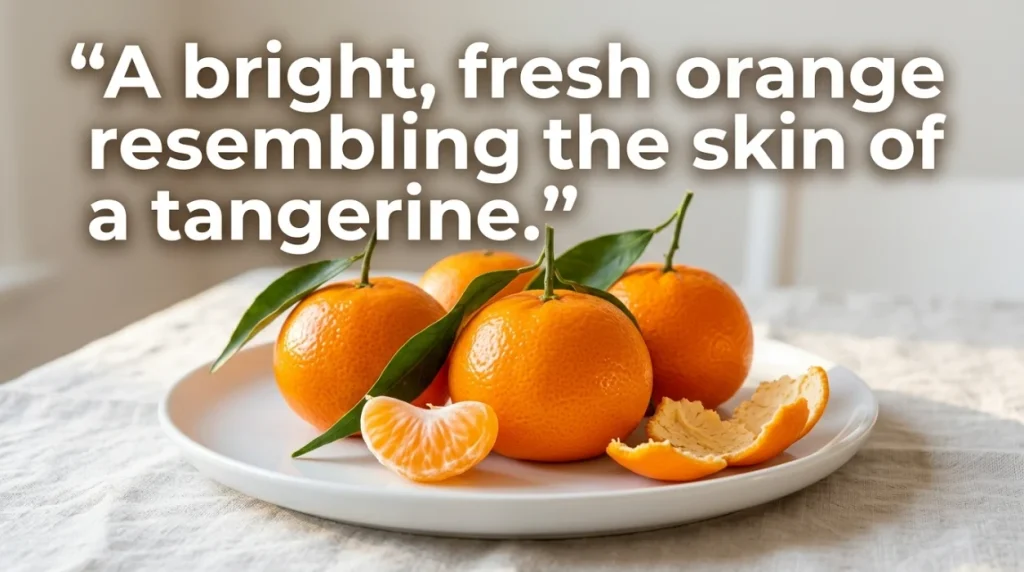
Tangerine (Noun/Adjective) — US /ˈtændʒəriːn/ | UK /ˌtændʒəˈriːn/
Meaning: A bright, fresh orange resembling the skin of a tangerine.
Tone/Register: Casual, descriptive, fashion-oriented.
Example:
She wore a bright tangerine dress to the party.
The website uses tangerine accents for an energetic feel.
Pumpkin (Noun/Adjective) — US /ˈpʌmpkɪn/ | UK /ˈpʌmpkɪn/
Meaning: A warm medium-to-deep orange associated with pumpkins.
Tone/Register: Everyday, seasonal, descriptive.
Example:
He painted the door pumpkin orange.
Pumpkin shades are popular during autumn.
Burnt Orange (Noun/Adjective) — US /bɜːrnt ˈɔːrɪndʒ/ | UK /bɜːnt ˈɒrɪndʒ/
Meaning: A darker, muted orange with brown or reddish undertones.
Tone/Register: Fashion, interior design, descriptive.
Example:
She bought a burnt orange sweater.
Burnt orange curtains made the room feel warmer.
Apricot (Noun/Adjective) — US /ˈeɪprɪkɑːt/ | UK /ˈeɪprɪkɒt/
Meaning: A soft light orange with peachy and yellow undertones.
Tone/Register: Soft, decorative, descriptive.
Example:
The walls have an apricot finish.
She chose an apricot scarf for spring.
Peach (Noun/Adjective) — US /piːtʃ/ | UK /piːtʃ/
Meaning: A pale orange shade with pink or creamy undertones.
Tone/Register: Everyday, soft, decorative.
Example:
She wore a peach blouse.
The invitation has a soft peach background.
Amber (Noun/Adjective) — US /ˈæmbər/ | UK /ˈæmbə/
Meaning: A golden orange-yellow shade resembling natural amber.
Tone/Register: Neutral, descriptive, formal.
Example:
The lamp created an amber glow.
His eyes looked amber in the sunlight.
Vermilion (Noun/Adjective) — US /vərˈmɪljən/ | UK /vəˈmɪliən/
Meaning: A brilliant orange-red color with strong red influence.
Tone/Register: Artistic, formal.
Example:
The painter used vermilion pigment.
Vermilion details made the artwork more dramatic.
Persimmon (Noun/Adjective) — US /pərˈsɪmən/ | UK /pəˈsɪmən/
Meaning: A rich orange shade inspired by ripe persimmon fruit.
Tone/Register: Fashion, design, descriptive.
Example:
She chose a persimmon handbag.
The room featured a rich persimmon accent wall.
Marigold (Noun/Adjective) — US /ˈmærɪɡoʊld/ | UK /ˈmærɪɡəʊld/
Meaning: A bright golden-orange shade associated with marigold flowers.
Tone/Register: Cheerful, decorative.
Example:
Marigold curtains brightened the room.
The artist used marigold petals in the illustration.
Golden Orange (Noun/Adjective) — US /ˈɡoʊldən ˈɔːrɪndʒ/ | UK /ˈɡəʊldən ˈɒrɪndʒ/
Meaning: A warm orange containing noticeable golden-yellow tones.
Tone/Register: Descriptive, design-oriented.
Example:
The sky became golden orange at sunset.
Golden orange details gave the poster warmth.
Copper (Noun/Adjective) — US /ˈkɑːpər/ | UK /ˈkɒpə/
Meaning: A metallic orange-brown shade resembling copper metal.
Tone/Register: Decorative, artistic, professional.
Example:
The designer added copper accents.
Her copper earrings reflected the light.
Rust (Noun/Adjective) — US /rʌst/ | UK /rʌst/
Meaning: A deep earthy orange-brown shade associated with rusted metal.
Tone/Register: Casual, earthy, descriptive.
Example:
He wore a rust-colored jacket.
Rust tones gave the painting an autumn feel.
Terracotta (Noun/Adjective) — US /ˌterəˈkɑːtə/ | UK /ˌterəˈkɒtə/
Meaning: An earthy orange-red shade resembling fired clay.
Tone/Register: Artistic, interior design.
Example:
The kitchen has terracotta tiles.
She selected terracotta for the feature wall.
Saffron (Noun/Adjective) — US /ˈsæfrən/ | UK /ˈsæfrən/
Meaning: A warm golden yellow-orange shade inspired by saffron.
Tone/Register: Cultural, descriptive, decorative.
Example:
The fabric has a saffron tone.
Saffron accents warmed the room.
Carrot Orange (Noun/Adjective) — US /ˈkærət ˈɔːrɪndʒ/ | UK /ˈkærət ˈɒrɪndʒ/
Meaning:
A bright natural orange resembling a carrot.
Tone/Register: Casual, descriptive.
Example:
The poster uses carrot orange lettering.
She painted the cabinet carrot orange.
Squash (Noun/Adjective) — US /skwɑːʃ/ | UK /skwɒʃ/
Meaning: A warm orange shade associated with orange-colored squash.
Tone/Register: Casual, seasonal.
Example:
The blanket has a squash shade.
She used squash orange in her autumn design.
Mango (Noun/Adjective) — US /ˈmæŋɡoʊ/ | UK /ˈmæŋɡəʊ/
Meaning: A warm yellow-orange shade resembling ripe mango.
Tone/Register: Casual, playful, creative.
Example:
The website uses a bright mango color.
Her summer bag was mango orange.
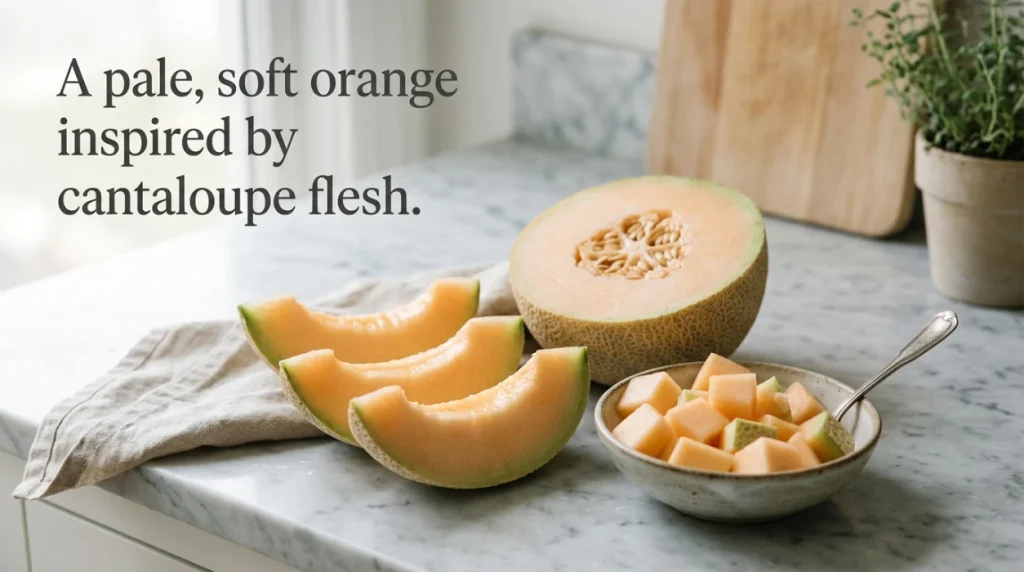
Cantaloupe (Noun/Adjective) — US /ˈkæntəloʊp/ | UK /ˈkæntəˌləʊp/
Meaning: A pale, soft orange inspired by cantaloupe flesh.
Tone/Register: Casual, decorative.
Example:
The bedroom has cantaloupe walls.
She selected cantaloupe for the invitation.
Papaya (Noun/Adjective) — US /pəˈpaɪə/ | UK /pəˈpaɪə/
Meaning: A warm light orange inspired by ripe papaya.
Tone/Register: Casual, creative.
Example:
The brand uses a fresh papaya shade.
Her dress was a soft papaya orange.
Coral Orange (Noun/Adjective) — US /ˈkɔːrəl ˈɔːrɪndʒ/ | UK /ˈkɒrəl ˈɒrɪndʒ/
Meaning: A lively orange with pinkish coral undertones.
Tone/Register: Fashion, beauty, creative.
Example:
She chose coral orange nail polish.
The coral orange pattern looked modern.
Salmon Orange (Noun/Adjective) — US /ˈsæmən ˈɔːrɪndʒ/ | UK /ˈsæmən ˈɒrɪndʒ/
Meaning: A muted orange with pinkish salmon undertones.
Tone/Register: Decorative, descriptive.
Example:
The walls were salmon orange.
She paired the shirt with neutral trousers.
Orange-Red (Noun/Adjective) — US /ˈɔːrɪndʒ red/ | UK /ˈɒrɪndʒ red/
Meaning: Orange that leans noticeably toward red.
Tone/Register: Neutral, technical.
Example:
The artist selected an orange-red pigment.
The sunset became orange-red near the horizon.
Red-Orange (Noun/Adjective) — US /red ˈɔːrɪndʒ/ | UK /red ˈɒrɪndʒ/
Meaning: A reddish orange with stronger red influence.
Tone/Register: Neutral, artistic.
Example:
The flowers had red-orange petals.
Red-orange lettering made the title stand out.
Yellow-Orange (Noun/Adjective) — US /ˈjeloʊ ˈɔːrɪndʒ/ | UK /ˈjeləʊ ˈɒrɪndʒ/
Meaning: A lighter orange that leans toward yellow.
Tone/Register: Neutral, descriptive.
Example:
The sunset contained yellow-orange tones.
The artist added yellow-orange highlights.
International Orange (Noun/Adjective) — US /ˌɪntərˈnæʃənəl ˈɔːrɪndʒ/ | UK /ˌɪntəˈnæʃənəl ˈɒrɪndʒ/
Meaning: A vivid standardized orange associated with high visibility.
Tone/Register: Technical, professional.
Example:
The equipment was painted international orange.
The color helps objects remain highly visible.
Safety Orange (Noun/Adjective) — US /ˈseɪfti ˈɔːrɪndʒ/ | UK /ˈseɪfti ˈɒrɪndʒ/
Meaning: A bright orange used to increase visibility and attract attention.
Tone/Register: Technical, professional.
Example:
Workers wore safety orange vests.
The signs used safety orange backgrounds.
Neon Orange (Noun/Adjective) — US /ˈniːɑːn ˈɔːrɪndʒ/ | UK /ˈniːɒn ˈɒrɪndʒ/
Meaning: An extremely bright and intense orange.
Tone/Register: Informal, fashion, design.
Example:
Her neon orange shoes stood out.
The poster used neon orange lettering.
Bright Orange (Noun/Adjective) — US /braɪt ˈɔːrɪndʒ/ | UK /braɪt ˈɒrɪndʒ/
Meaning: A vivid orange with strong visual intensity.
Tone/Register: Everyday, neutral.
Example:
He bought a bright orange backpack.
Bright orange flowers filled the garden.
Pale Orange (Noun/Adjective) — US /peɪl ˈɔːrɪndʒ/ | UK /peɪl ˈɒrɪndʒ/
Meaning: A light and softened version of orange.
Tone/Register: Neutral, descriptive.
Example:
The walls were pale orange.
She chose pale orange stationery.
Deep Orange (Noun/Adjective) — US /diːp ˈɔːrɪndʒ/ | UK /diːp ˈɒrɪndʒ/
Meaning: A dark and strongly saturated orange.
Tone/Register: Neutral, descriptive.
Example:
The artist used deep orange shadows.
Her deep orange coat looked striking.
Soft Orange (Noun/Adjective) — US /sɔːft ˈɔːrɪndʒ/ | UK /sɒft ˈɒrɪndʒ/
Meaning: A gentle orange with reduced intensity.
Tone/Register: Casual, decorative.
Example:
The nursery uses soft orange accents.
She chose a soft orange sweater.
Muted Orange (Noun/Adjective) — US /ˈmjuːtɪd ˈɔːrɪndʒ/ | UK /ˈmjuːtɪd ˈɒrɪndʒ/
Meaning: An orange shade with lowered brightness or saturation.
Tone/Register: Professional, design-oriented.
Example:
The designer selected muted orange.
Muted orange works well with neutral colors.
Fiery Orange (Noun/Adjective) — US /ˈfaɪəri ˈɔːrɪndʒ/ | UK /ˈfaɪəri ˈɒrɪndʒ/
Meaning: An intense orange that suggests flames or heat.
Tone/Register: Creative, dramatic.
Example:
The sky turned fiery orange.
The painting contains fiery orange strokes.
Earthy Orange (Noun/Adjective) — US /ˈɜːrθi ˈɔːrɪndʒ/ | UK /ˈɜːθi ˈɒrɪndʒ/
Meaning: A natural-looking orange with brown or muted undertones.
Tone/Register: Interior design, descriptive.
Example:
Earthy orange made the room cozy.
The artist used earthy orange throughout the landscape.
Sunset Orange (Noun/Adjective) — US /ˈsʌnset ˈɔːrɪndʒ/ | UK /ˈsʌnset ˈɒrɪndʒ/
Meaning: A warm orange associated with the appearance of a sunset.
Tone/Register: Creative, descriptive.
Example:
The sky looked sunset orange.
She chose sunset orange for the artwork.
Flame Orange (Noun/Adjective) — US /fleɪm ˈɔːrɪndʒ/ | UK /fleɪm ˈɒrɪndʒ/
Meaning: A vivid orange resembling the bright color of a flame.
Tone/Register: Creative, dramatic.
Example:
The logo uses flame orange.
The bright flame orange caught everyone’s attention.
Tangerine Orange (Noun/Adjective) — US /ˌtændʒəriːn ˈɔːrɪndʒ/ | UK /ˌtændʒəriːn ˈɒrɪndʒ/
Meaning: A vivid orange with a fresh citrus-like appearance.
Tone/Register: Casual, creative.
Example:
She selected tangerine orange fabric.
The shoes came in a lively tangerine orange.
Pumpkin Orange (Noun/Adjective) — US /ˈpʌmpkɪn ˈɔːrɪndʒ/ | UK /ˈpʌmpkɪn ˈɒrɪndʒ/
Meaning: A rich, warm orange resembling a ripe pumpkin.
Tone/Register: Seasonal, casual.
Example:
The room features pumpkin orange cushions.
She used pumpkin orange in her autumn artwork.
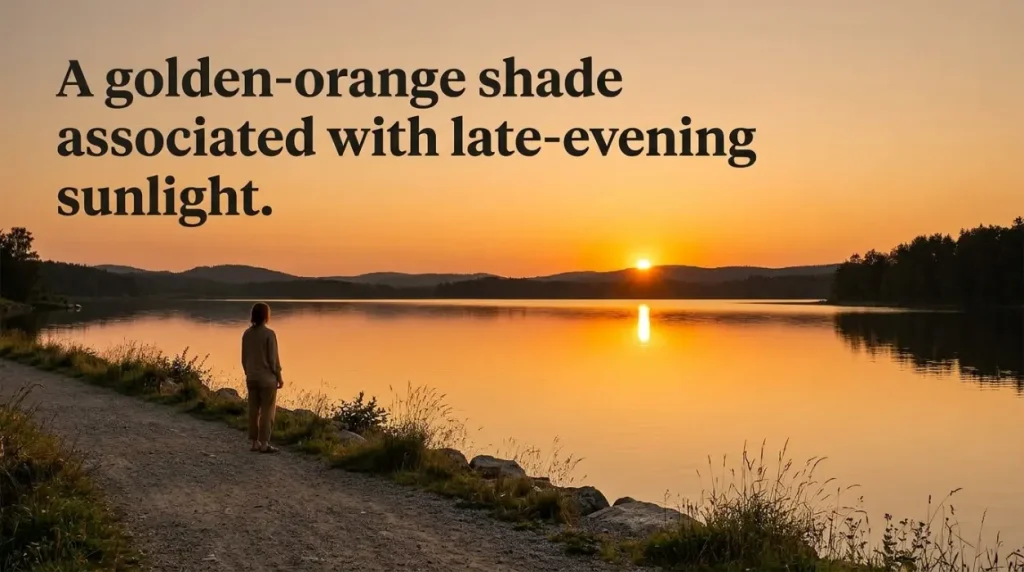
Sunset Gold (Noun/Adjective) — US /ˈsʌnset ɡoʊld/ | UK /ˈsʌnset ɡəʊld/
Meaning: A golden-orange shade associated with late-evening sunlight.
Tone/Register: Creative, poetic.
Example:
The clouds glowed with sunset gold.
The painter used sunset gold across the horizon.
Flame-Colored (Adjective) — US /fleɪm ˈkʌlərd/ | UK /fleɪm ˈkʌləd/
Meaning: Having a bright orange or orange-red appearance similar to fire.
Tone/Register: Creative, descriptive.
Example:
She wore a flame-colored scarf.
The bird had flame-colored feathers.
Citrus Orange (Noun/Adjective) — US /ˈsɪtrəs ˈɔːrɪndʒ/ | UK /ˈsɪtrəs ˈɒrɪndʒ/
Meaning: A fresh, lively orange associated with citrus fruit.
Tone/Register: Casual, creative.
Example:
The packaging uses citrus orange.
Her room has bright citrus orange accents.
Honey Orange (Noun/Adjective) — US /ˈhʌni ˈɔːrɪndʒ/ | UK /ˈhʌni ˈɒrɪndʒ/
Meaning: A warm golden orange with honey-like richness.
Tone/Register: Creative, decorative.
Example:
The curtains have a honey orange tone.
Honey orange added warmth to the design.
Sunset Amber (Noun/Adjective) — US /ˈsʌnset ˈæmbər/ | UK /ˈsʌnset ˈæmbə/
Meaning: A warm amber-orange shade associated with evening light.
Tone/Register: Creative, descriptive.
Example:
The glass had a sunset amber appearance.
The photographer captured sunset amber tones.
Tangerine Red (Noun/Adjective) — US /ˈtændʒəriːn red/ | UK /ˈtændʒəriːn red/
Meaning: A vivid orange leaning toward red.
Tone/Register: Fashion, creative.
Example:
Her jacket was tangerine red.
The artist used tangerine red for the flowers.
Coral (Noun/Adjective) — US /ˈkɔːrəl/ | UK /ˈkɒrəl/
Meaning: A pinkish-orange shade inspired by coral.
Tone/Register: Everyday, fashion, decorative.
Example:
She chose a coral dress.
The room has coral-colored cushions.
Salmon (Noun/Adjective) — US /ˈsæmən/ | UK /ˈsæmən/
Meaning: A soft pink-orange shade associated with salmon flesh.
Tone/Register: Everyday, decorative.
Example:
The shirt is a soft salmon shade.
The designer used salmon for the background.
Paprika (Noun/Adjective) — US /pəˈpriːkə/ | UK /pəˈpriːkə/
Meaning: A warm reddish-orange shade inspired by paprika spice.
Tone/Register: Descriptive, culinary, creative.
Example: The walls have a paprika tone.
She added paprika-colored details to the artwork.
Pumpkin Spice (Noun/Adjective) — US /ˈpʌmpkɪn spaɪs/ | UK /ˈpʌmpkɪn spaɪs/
Meaning: A warm, muted orange associated with autumn and pumpkin spice.
Tone/Register: Informal, seasonal, creative.
Example:
She decorated the room with pumpkin spice tones.
The autumn poster uses pumpkin spice orange.
Bronze Orange (Noun/Adjective) — US /brɑːnz ˈɔːrɪndʒ/ | UK /brɒnz ˈɒrɪndʒ/
Meaning: A deep orange with metallic brown-gold qualities.
Tone/Register: Decorative, artistic.
Example:
The frame has a bronze orange finish.
Bronze orange details made the artwork richer.
Tangerine Gold (Noun/Adjective) — US /ˈtændʒəriːn ɡoʊld/ | UK /ˈtændʒəriːn ɡəʊld/
Meaning: A bright orange with noticeable golden warmth.
Tone/Register: Creative, decorative.
Example:
The fabric has a tangerine gold sheen.
She selected tangerine gold for the artwork.
Orange-Yellow (Noun/Adjective) — US /ˈɔːrɪndʒ ˈjeloʊ/ | UK /ˈɒrɪndʒ ˈjeləʊ/
Meaning: A warm color positioned between orange and yellow.
Tone/Register: Neutral, technical.
Example:
The flower petals were orange-yellow.
The chart contains several orange-yellow sections.
Orange-Brown (Noun/Adjective) — US /ˈɔːrɪndʒ braʊn/ | UK /ˈɒrɪndʒ braʊn/
Meaning: A darker orange mixed visually with brown.
Tone/Register: Neutral, descriptive.
Example:
The leaves turned orange-brown.
She selected an orange-brown leather bag.
Reddened Orange (Adjective/Noun) — US /ˈredənd ˈɔːrɪndʒ/ | UK /ˈredənd ˈɒrɪndʒ/
Meaning: Orange that appears deeper because of stronger red influence.
Tone/Register: Descriptive, artistic.
Example:
The sunset had a reddened orange glow.
The painter used reddened orange near the horizon.
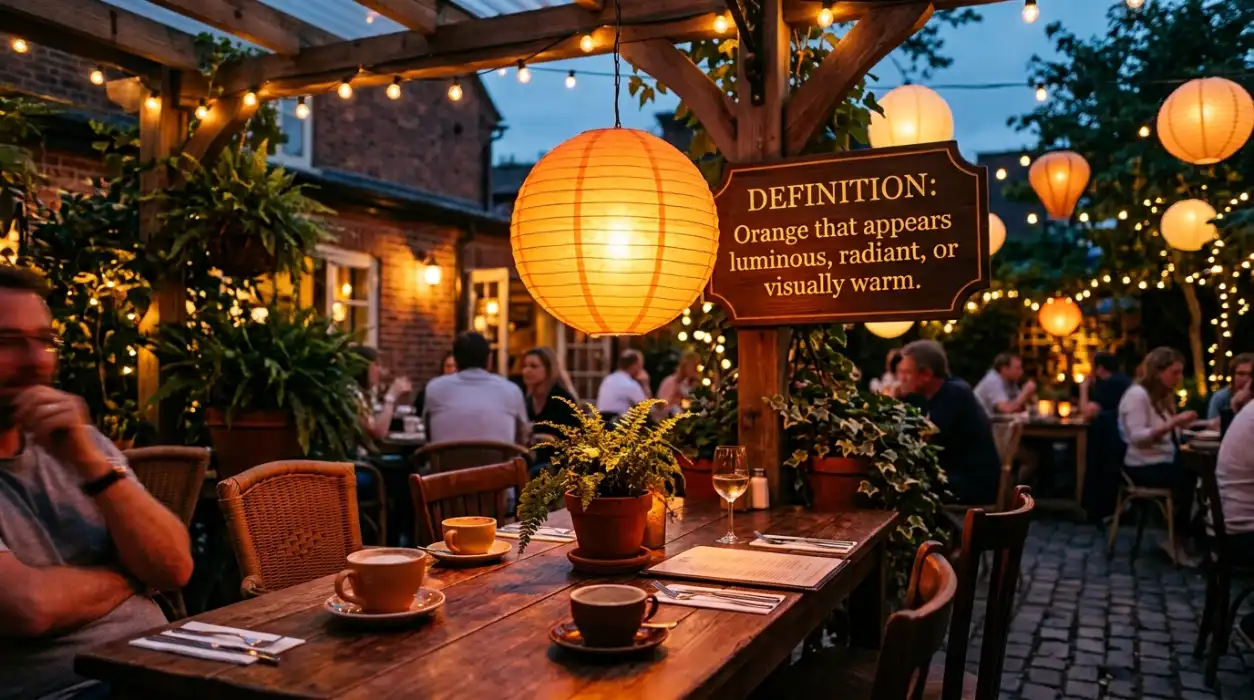
Glowing Orange (Adjective/Noun) — US /ˈɡloʊɪŋ ˈɔːrɪndʒ/ | UK /ˈɡləʊɪŋ ˈɒrɪndʒ/
Meaning: Orange that appears luminous, radiant, or visually warm.
Tone/Register: Creative, descriptive.
Example:
The lantern gave off a glowing orange light.
The horizon looked glowing orange after sunset.
Synonyms by Tone
Positive and Energetic
These choices create a cheerful or lively impression:
- Tangerine
- Mango
- Marigold
- Neon orange
- Bright orange
- Fiery orange
- Citrus orange
- Flame orange
They work especially well for energetic writing, fashion descriptions, branding language, and creative content.
Neutral and Precise
For straightforward descriptions, consider:
- Orange-red
- Red-orange
- Yellow-orange
- Orange-yellow
- Pale orange
- Deep orange
- Orange-brown
- Muted orange
These terms focus mainly on visual characteristics.
Warm and Earthy
For mature, cozy, or natural descriptions, use:
- Burnt orange
- Rust
- Terracotta
- Copper
- Bronze orange
- Pumpkin
- Saffron
- Paprika
These shades often create a warm autumnal or natural feeling.
Soft and Gentle
For lighter colors, useful choices include:
- Apricot
- Peach
- Cantaloupe
- Papaya
- Salmon
- Coral
- Soft orange
- Pale orange
Therefore, tone matters because the same basic color can communicate completely different moods.
Orange Color vs Close Alternatives
Orange vs Tangerine: Orange is the broad category. Tangerine normally suggests a brighter, fresher orange.
Amber vs Orange: Orange is more obviously orange, while amber moves toward golden yellow.
Burnt Orange vs Orange: Burnt orange is darker, earthier, and more muted than standard orange.
Orange vs Apricot: Apricot is lighter and softer, often with peach or yellow undertones.
Orange vs Rust: Rust is deeper and browner, making it a more earthy alternative.
How Orange Color Changes by Context
Daily Conversation
In ordinary conversation, simple terms work best. Orange, bright orange, dark orange, peach, and tangerine are easy for most people to understand.
For example, “I bought a tangerine shirt” sounds natural when the speaker wants to identify a particular shade.
Writing and Blogging
Bloggers can use shade names to make descriptions less repetitive. Instead of repeatedly saying “orange flowers,” you can use marigold, coral, or tangerine when they accurately describe the flowers.
Professional or Academic Writing
Professional writing benefits from precision. Terms such as orange-red, yellow-orange, muted orange, and international orange can communicate visual information more clearly.
Creative Writing
Creative writing gives you more freedom. Fiery orange, glowing orange, sunset orange, and flame-colored can create stronger imagery and emotional atmosphere.
Common Mistakes and Native Usage
A major learner mistake is treating every orange shade as an exact synonym. Amber, peach, rust, and tangerine are related to orange, but they describe specific visual variations.
Another mistake is choosing a shade name simply because it sounds attractive. The actual color should match the word.
Also, do not use specialized terms when a simple word is clearer. In everyday conversation, orange is often better than a highly specific shade name.
Finally, remember that color boundaries can be subjective. One person may call a shade burnt orange, while another may describe it as rust or reddish orange.
Register Notes
Orange, peach, bright orange, and pumpkin are familiar in everyday English.
Tangerine, mango, coral, and apricot are common in fashion, beauty, food, and creative descriptions.
Vermilion, international orange, and orange-yellow are more specialized or technical.
As a result, choose the term according to your audience and purpose.
Real-Life Mini Scenarios
Workplace
A designer may describe a brand shade as muted orange to communicate that the color should not look overly bright.
Social Situations
While shopping, someone might ask for a burnt orange sweater instead of simply asking for an orange one.
Media and Pop Culture
A movie poster may use neon orange to create an energetic and attention-grabbing visual effect.
Writing and Storytelling
A writer describing sunset might choose fiery orange or glowing orange to create a stronger mental image.
Interactive Practice Quiz
1. Which word describes a bright citrus-like orange?
A) Rust
B) Tangerine
C) Copper
D) Terracotta
2. Which shade is darker and earthier?
A) Burnt orange
B) Peach
C) Cantaloupe
D) Apricot
3. Which word suggests a soft light orange?
A) Vermilion
B) Neon orange
C) Apricot
D) Deep orange
4. Which shade is strongly connected with pumpkins?
A) Pumpkin
B) Amber
C) Coral
D) Salmon
5. Which term describes highly visible orange?
A) Peach
B) Safety orange
C) Mango
D) Apricot
6. Which shade leans toward red?
A) Yellow-orange
B) Orange-red
C) Cantaloupe
D) Marigold
7. Which color resembles fired clay?
A) Terracotta
B) Tangerine
C) Peach
D) Mango
8. Which shade has golden warmth?
A) Rust
B) Golden orange
C) Neon orange
D) Salmon
9. Which color resembles metal?
A) Copper
B) Pumpkin
C) Papaya
D) Cantaloupe
10. Which term describes extremely bright orange?
A) Pale orange
B) Neon orange
C) Soft orange
D) Apricot
11. Which shade is associated with rusted metal?
A) Rust
B) Peach
C) Mango
D) Marigold
12. Which shade is soft and pinkish?
A) Peach
B) Deep orange
C) Safety orange
D) Vermilion
13. Which word suggests a warm autumn shade?
A) Pumpkin
B) Pale orange
C) Cantaloupe
D) Salmon
14. Which shade has reduced brightness?
A) Neon orange
B) Muted orange
C) Fiery orange
D) Bright orange
15. Which term suggests flames or heat?
A) Fiery orange
B) Apricot
C) Peach
D) Pale orange
Answer Key: 1-B, 2-A, 3-C, 4-A, 5-B, 6-B, 7-A, 8-B, 9-A, 10-B, 11-A, 12-A, 13-A, 14-B, 15-A
Reflection Task
Choose three orange shades from this article. Write one sentence for each and use them with real objects, places, clothing, or scenes.
FAQs
1. What are the most common synonyms for orange color?
Common alternatives include tangerine, pumpkin, amber, apricot, peach, burnt orange, rust, terracotta, coral, marigold, mango, and persimmon. However, these are better understood as related shade names rather than perfect synonyms. Each term describes a particular variation of orange and may contain different red, yellow, brown, or pink undertones.
2. What is another word for bright orange?
Tangerine, neon orange, vivid orange, bright orange, citrus orange, and flame orange can describe strong orange shades. Tangerine usually feels fresh and fruit-like, while neon orange is much more intense. Flame orange is more expressive and is often used in creative descriptions.
3. What are good names for dark orange?
Useful dark-orange alternatives include burnt orange, rust, terracotta, deep orange, copper, bronze orange, and orange-brown. Burnt orange usually has warm brown undertones, while rust appears more earthy. Copper and bronze orange can add a metallic impression to the description.
4. What are some soft orange color names?
Soft orange shades include apricot, peach, cantaloupe, papaya, salmon, coral, pale orange, and soft orange. These names are useful when describing gentle colors in fashion, interior design, artwork, invitations, and illustrations. They generally sound lighter and less intense than standard orange.
5. Which orange color words are best for creative writing?
Creative writing can benefit from expressive terms such as fiery orange, glowing orange, sunset orange, flame-colored, golden orange, and burnt orange. These alternatives create visual imagery and can also suggest heat, warmth, energy, or emotion. Choose the term that best matches the scene.
6. What is the difference between orange and tangerine?
Orange is the broad color category, while tangerine usually describes a brighter and fresher orange. For example, “an orange shirt” gives a general color description, whereas “a tangerine shirt” suggests a more vivid citrus-like shade.
7. What is the difference between orange and amber?
Orange is generally a stronger, more obvious orange, while amber has golden-yellow qualities. Amber can also suggest a warm, glowing appearance. Therefore, use orange for the general color and amber when the shade has a distinctly golden or yellowish quality.
8. Which orange shades are useful for fashion descriptions?
Fashion writing commonly uses burnt orange, tangerine, terracotta, rust, coral, apricot, peach, copper, and marigold. These terms allow writers to describe clothing more precisely. Moreover, specific shade names can make product or outfit descriptions more visually appealing without repeatedly using the word orange.
Conclusion
Learning synonyms for orange color gives you more precise ways to describe clothing, flowers, sunsets, artwork, interiors, and everyday objects.
From bright tangerine and marigold to earthy rust and terracotta, each shade creates a different visual impression. Therefore, context should guide your choice.
For students, bloggers, and writers, synonyms for orange color can make essays, articles, stories, and captions more expressive. They also help you avoid repetitive descriptions.
Keep practicing synonyms for orange color by using new shade names in emails, essays, captions, and conversations. Start with five favorites, then gradually expand your vocabulary.
Shahzeena Shazadi is the founder and lead writer at VocablyHub.com, where she creates accurate, reader-focused English language content designed to help people communicate with clarity and confidence. She specializes in synonyms, antonyms, word meanings, idioms, and practical vocabulary guides that simplify complex language concepts for everyday use. Every article is carefully researched, fact-checked, and written in clear, accessible language using reliable references and real-world examples. Her goal is to provide helpful, trustworthy content that supports learners at every stage of their English language journey.
Her editorial approach focuses on accuracy, transparency, and user value while following modern content quality standards. She regularly reviews and updates content to keep information relevant, useful, and easy to understand. Through VocablyHub.com, Shahzeena Shazadi is committed to publishing reliable language resources that help students, writers, educators, professionals, and English learners expand their vocabulary, improve their writing skills, and communicate with confidence in academic, professional, and everyday situations.