
Synonyms for bummer become useful when a disappointing event leaves you searching for a more precise way to express frustration, regret, or bad luck.
Imagine your weekend plans are canceled at the last minute. You might say, “What a bummer!” However, disappointment or letdown may fit better.
The phrase synonym for bummer is useful for students, bloggers, content writers, and daily English users who want more expressive vocabulary.
Because “bummer” is common in casual English, learning its alternatives helps you sound natural in conversations while choosing a better word for formal writing.
What Does “Bummer” Really Mean?
Bummer is an informal noun that describes something disappointing, unfortunate, annoying, or unpleasant.
In simple English, a bummer is an event or situation that makes you feel disappointed or unhappy.
For example:
Missing the concert was a real bummer.
This means that missing the concert was disappointing.
Native speakers commonly use bummer in casual conversations. It often refers to relatively ordinary disappointments, such as canceled plans, bad weather, missed opportunities, delays, or disappointing results.
The expression can also show sympathy:
“I heard you missed your flight.”
“Yeah, what a bummer.”
Here, the speaker acknowledges that the situation is unfortunate.
Part of Speech: Noun
Simple definition: An unpleasant or disappointing experience.
Connotative Meaning
Connotation (the emotional feeling or association connected with a word beyond its basic meaning) matters when choosing an alternative.
Positive tone: Bummer itself is negative, but its casual style can make a minor disappointment sound less serious.
Negative tone: It communicates disappointment, frustration, annoyance, regret, or bad luck.
Neutral tone: In some situations, it simply identifies an unfortunate event without expressing strong emotion.
Therefore, the best synonym depends on both the situation and the emotional intensity.
Etymology
Bummer developed from bum, a word associated with unpleasant experiences and misfortune in American slang.
The noun became established in nineteenth-century American English. Over time, its meaning developed toward an unpleasant, disappointing, or unfortunate experience.
Today, bummer remains strongly associated with informal conversational English.
Old English: 450–1100
The modern word bummer did not exist in Old English. The vocabulary of this period was primarily Germanic, and the modern slang form developed much later.
Middle English: 1100–1500
The word bummer was still not part of Middle English. English was changing through contact with French, Latin, and Norse during this period.
Modern English: 1500–Present
The modern expression developed in later English, particularly American slang. By the nineteenth century, bummer was used for an unpleasant or disappointing experience.
It later became a familiar informal expression in everyday speech.
Pronunciation
US: /ˈbʌmər/
UK: /ˈbʌmə/
Syllables
bum-mer
Affixation Pattern of Bummer
Root: bum
Prefix: None
Suffix: -er
The -er ending forms the noun bummer from the base word bum.
Synonyms List:
The alternatives below cover different shades of disappointment, inconvenience, frustration, bad luck, failure, and unpleasant experiences. Not every word is interchangeable in every sentence, so context matters.
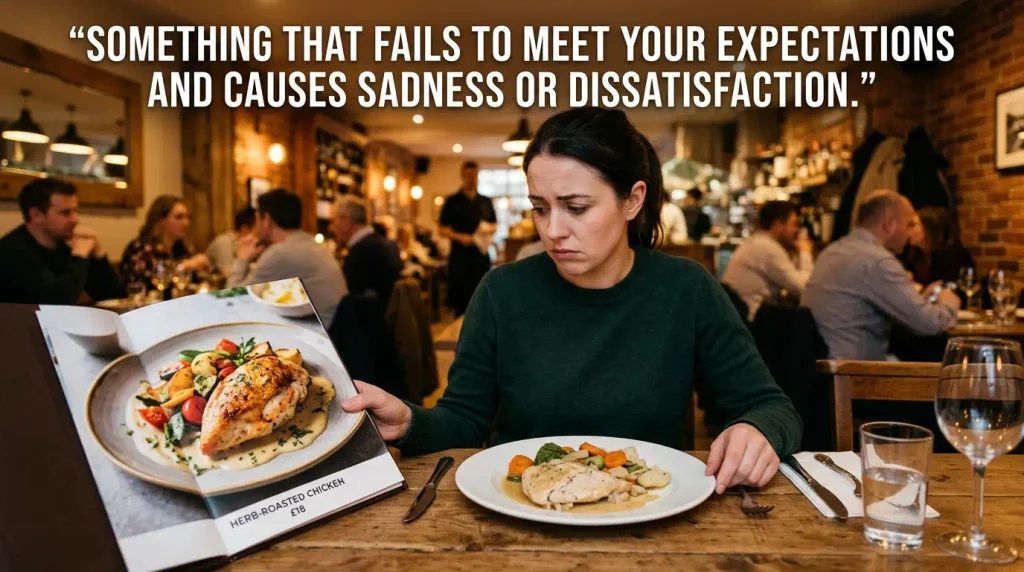
Disappointment (Noun) — US /ˌdɪsəˈpɔɪntmənt/ | UK /ˌdɪsəˈpɔɪntmənt/
Meaning: Something that fails to meet your expectations and causes sadness or dissatisfaction.
Tone/Register: Neutral, everyday, formal.
Example:
The canceled vacation was a huge disappointment.
She felt genuine disappointment after hearing the news.
Letdown (Noun) — US /ˈletdaʊn/ | UK /ˈletdaʊn/
Meaning: Something that is less satisfying or successful than you expected.
Tone/Register: Informal, conversational.
Example:
The final episode was a real letdown.
After months of preparation, the event felt like a letdown.
Setback (Noun) — US /ˈsetbæk/ | UK /ˈsetbæk/
Meaning: A problem that delays progress toward a goal.
Tone/Register: Neutral, professional.
Example:
The failed launch was a serious setback.
The injury created a setback in his training.
Misfortune (Noun) — US /mɪsˈfɔːrtʃuːn/ | UK /mɪsˈfɔːtʃuːn/
Meaning: Bad luck or an unfortunate event.
Tone/Register: Formal, literary.
Example:
Losing her passport was a stroke of misfortune.
The family experienced considerable misfortune that year.
Frustration (Noun) — US /frʌˈstreɪʃən/ | UK /frʌˈstreɪʃən/
Meaning: Annoyance caused by difficulty, delay, or inability to achieve something.
Tone/Register: Neutral, professional.
Example:
The repeated delays caused frustration.
He expressed his frustration about the slow service.
Annoyance (Noun) — US /əˈnɔɪəns/ | UK /əˈnɔɪəns/
Meaning: Something that causes mild irritation or anger.
Tone/Register: Neutral, everyday.
Example:
The constant notifications became an annoyance.
The broken elevator was a minor annoyance.
Inconvenience (Noun) — US /ˌɪnkənˈviːnjəns/ | UK /ˌɪnkənˈviːniəns/
Meaning: A situation that causes difficulty or disruption without usually being serious.
Tone/Register: Neutral, professional.
Example:
The road closure was an inconvenience.
The delay caused some inconvenience for passengers.
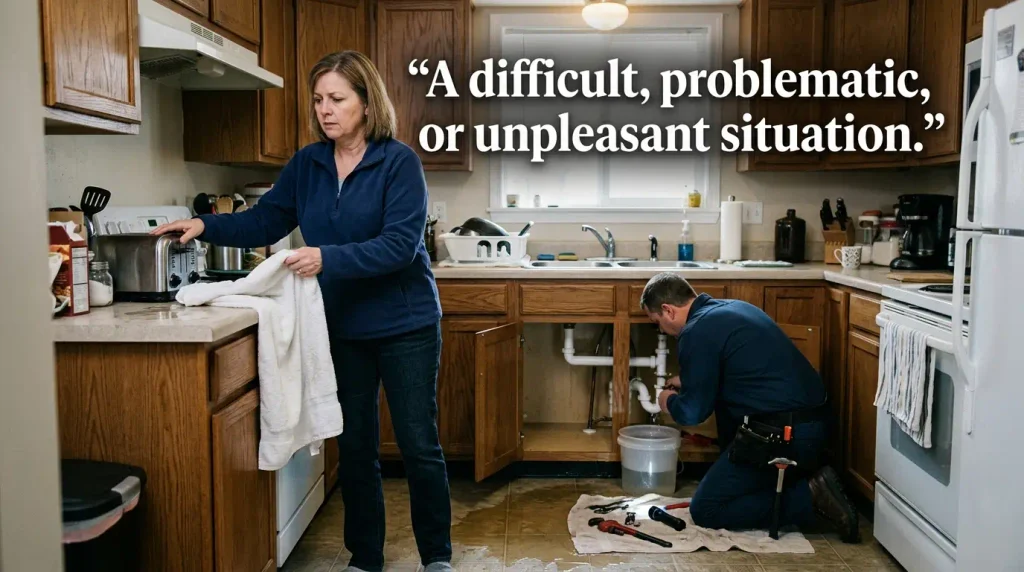
Trouble (Noun) — US /ˈtrʌbəl/ | UK /ˈtrʌbəl/
Meaning: A difficult, problematic, or unpleasant situation.
Tone/Register: Informal, everyday.
Example:
The canceled flight caused a lot of trouble.
We had trouble finding another route home.
Hassle (Noun) — US /ˈhæsəl/ | UK /ˈhæsəl/
Meaning: An irritating situation that requires unnecessary effort.
Tone/Register: Informal.
Example:
Changing the booking was a huge hassle.
Getting a refund turned into a hassle.
Downer (Noun) — US /ˈdaʊnər/ | UK /ˈdaʊnə/
Meaning: Something that makes a person feel sad or less cheerful.
Tone/Register: Informal.
Example:
The bad news was a real downer.
The gloomy ending was a bit of a downer.
Drag (Noun) — US /dræɡ/ | UK /dræɡ/
Meaning: Something boring, unpleasant, or disappointing.
Tone/Register: Informal.
Example:
Missing the party was such a drag.
The long wait was a drag.
Pain (Noun) — US /peɪn/ | UK /peɪn/
Meaning: Something irritating, difficult, or troublesome.
Tone/Register: Informal.
Example:
Filling out all those forms was a pain.
The broken printer was a real pain.
Nuisance (Noun) — US /ˈnuːsəns/ | UK /ˈnjuːsəns/
Meaning: Something that causes repeated irritation or inconvenience.
Tone/Register: Neutral, formal.
Example:
The construction noise became a nuisance.
The repeated messages were a nuisance.
Irritation (Noun) — US /ˌɪrəˈteɪʃən/ | UK /ˌɪrɪˈteɪʃən/
Meaning: Something that causes mild anger or annoyance.
Tone/Register: Neutral.
Example:
The constant buzzing was an irritation.
The delay became another irritation during the trip.
Regret (Noun) — US /rɪˈɡret/ | UK /rɪˈɡret/
Meaning: Sadness about something that happened or failed to happen.
Tone/Register: Neutral, emotional.
Example:
Missing the ceremony was a source of regret.
She expressed regret over the missed opportunity.
Loss (Noun) — US /lɔːs/ | UK /lɒs/
Meaning: The experience of no longer having something important or valuable.
Tone/Register: Neutral, serious.
Example:
Losing the contract was a major loss.
The defeat felt like a painful loss.
Failure (Noun) — US /ˈfeɪljər/ | UK /ˈfeɪljə/
Meaning: A lack of success in achieving a desired result.
Tone/Register: Neutral, direct.
Example:
The first attempt was a failure.
The failed experiment was disappointing.
Defeat (Noun) — US /dɪˈfiːt/ | UK /dɪˈfiːt/
Meaning: The experience of losing a competition or struggle.
Tone/Register: Neutral, formal.
Example:
The unexpected defeat shocked the players.
The team accepted the defeat gracefully.
Discouragement (Noun) — US /dɪsˈkɜːrɪdʒmənt/ | UK /dɪsˈkɜːrɪdʒmənt/
Meaning: A feeling of reduced confidence or hope.
Tone/Register: Neutral, formal.
Example:
The rejection caused some discouragement.
She overcame her initial discouragement.
Difficulty (Noun) — US /ˈdɪfɪkəlti/ | UK /ˈdɪfɪkəlti/
Meaning: A problem or condition that makes something hard to accomplish.
Tone/Register: Neutral, formal.
Example:
We experienced some difficulty during the journey.
The technical issue created unexpected difficulty.
Obstacle (Noun) — US /ˈɑːbstəkəl/ | UK /ˈɒbstəkəl/
Meaning: Something that blocks or makes progress difficult.
Tone/Register: Neutral, professional.
Example:
The delay became an obstacle to progress.
Lack of funding was another obstacle.
Hindrance (Noun) — US /ˈhɪndrəns/ | UK /ˈhɪndrəns/
Meaning: Something that interferes with progress or success.
Tone/Register: Formal.
Example:
Poor communication became a hindrance.
The outdated system was a major hindrance.
Disruption (Noun) — US /dɪsˈrʌpʃən/ | UK /dɪsˈrʌpʃən/
Meaning: An event that interrupts normal activity or plans.
Tone/Register: Formal, professional.
Example:
The power failure caused major disruption.
The storm disrupted the city.
Disturbance (Noun) — US /dɪˈstɜːrbəns/ | UK /dɪˈstɜːbəns/
Meaning: Something that interrupts peace, order, or normal activity.
Tone/Register: Neutral, formal.
Example:
The noise was a serious disturbance.
The unexpected announcement caused a disturbance.
Aggravation (Noun) — US /ˌæɡrəˈveɪʃən/ | UK /ˌæɡrəˈveɪʃən/
Meaning: Annoyance or frustration caused by a difficult situation.
Tone/Register: Informal, conversational.
Example:
The paperwork was a lot of aggravation.
The repeated delays caused unnecessary aggravation.
Vexation (Noun) — US /vekˈseɪʃən/ | UK /vekˈseɪʃən/
Meaning: A feeling of irritation or frustration.
Tone/Register: Formal, literary.
Example:
The delay caused considerable vexation.
She showed clear vexation at the mistake.
Exasperation (Noun) — US /ɪɡˌzæspəˈreɪʃən/ | UK /ɪɡˌzæspəˈreɪʃən/
Meaning: Strong irritation caused by repeated problems.
Tone/Register: Formal, expressive.
Example:
He sighed in exasperation after another error.
The repeated cancellations led to exasperation.
Displeasure (Noun) — US /dɪsˈpleʒər/ | UK /dɪsˈpleʒə/
Meaning: A feeling of dissatisfaction or annoyance.
Tone/Register: Formal.
Example:
The customer expressed displeasure with the service.
Her displeasure was obvious.
Dissatisfaction (Noun) — US /ˌdɪssætɪsˈfækʃən/ | UK /ˌdɪssætɪsˈfækʃən/
Meaning: A feeling that something is not good enough or satisfactory.
Tone/Register: Formal, professional.
Example:
Customers reported dissatisfaction with the changes.
His dissatisfaction was clear during the meeting.
Discontent (Noun) — US /ˌdɪskənˈtent/ | UK /ˌdɪskənˈtent/
Meaning: A feeling of unhappiness or lack of satisfaction.
Tone/Register: Formal.
Example:
The decision created discontent among employees.
Public discontent continued to grow.
Adversity (Noun) — US /ədˈvɜːrsəti/ | UK /ədˈvɜːsəti/
Meaning: A difficult or challenging condition.
Tone/Register: Formal, academic.
Example:
She remained strong during adversity.
The team learned valuable lessons through adversity.
Hardship (Noun) — US /ˈhɑːrdʃɪp/ | UK /ˈhɑːdʃɪp/
Meaning: A difficult condition that causes serious trouble or suffering.
Tone/Register: Formal, serious.
Example:
The family faced financial hardship.
The crisis created hardship for many residents.
Calamity (Noun) — US /kəˈlæməti/ | UK /kəˈlæməti/
Meaning: A serious disaster or event causing major distress or damage.
Tone/Register: Formal, dramatic.
Example:
The earthquake was a devastating calamity.
The community worked together after the calamity.
Misadventure (Noun) — US /ˌmɪsədˈventʃər/ | UK /ˌmɪsədˈventʃə/
Meaning: An unfortunate experience, often involving bad luck or mistakes.
Tone/Register: Literary, humorous.
Example:
Our camping trip became a funny misadventure.
The journey turned into one misadventure after another.
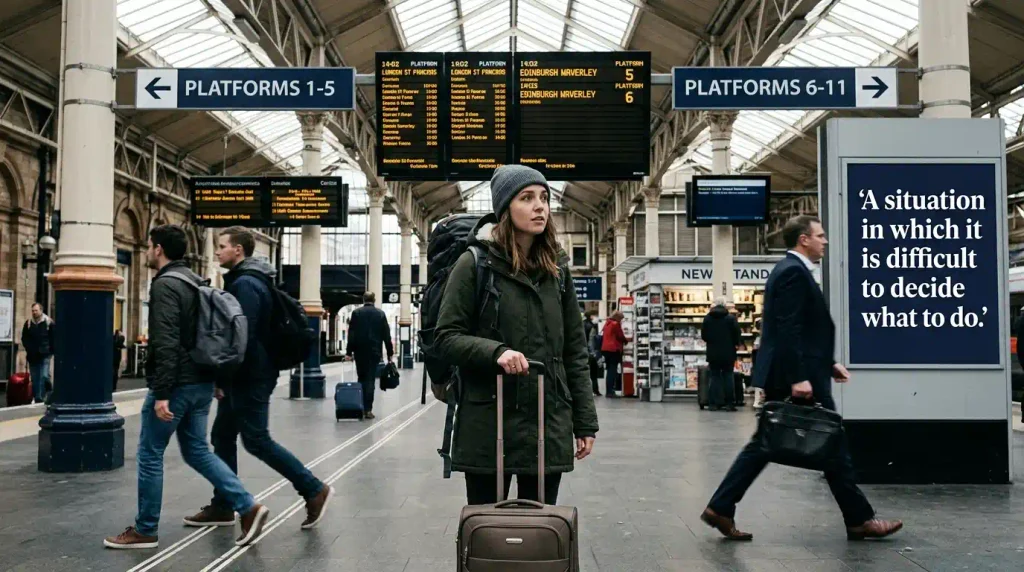
Predicament (Noun) — US /prɪˈdɪkəmənt/ | UK /prɪˈdɪkəm(ə)nt/
Meaning: A difficult or unpleasant situation that is hard to escape.
Tone/Register: Formal, neutral.
Example:
Missing the last train left us in a predicament.
She found herself in an awkward predicament.
Quandary (Noun) — US /ˈkwɑːndəri/ | UK /ˈkwɒndəri/
Meaning: A situation in which it is difficult to decide what to do.
Tone/Register: Formal.
Example:
The unexpected change left him in a quandary.
She was in a quandary about whether to continue.
Plight (Noun) — US /plaɪt/ | UK /plaɪt/
Meaning: A difficult or unpleasant situation that causes serious concern.
Tone/Register: Formal, literary.
Example:
The report described the plight of displaced families.
Everyone was concerned about their difficult plight.
Woe (Noun) — US /woʊ/ | UK /woʊ/
Meaning: Great trouble, sadness, or difficulty.
Tone/Register: Literary, dramatic.
Example:
The character faced one woe after another.
Financial woes affected the small business.
Sorrow (Noun) — US /ˈsɑːroʊ/ | UK /ˈsɒrəʊ/
Meaning: A deep feeling of sadness caused by loss or disappointment.
Tone/Register: Emotional, literary.
Example:
She felt deep sorrow after the loss.
His voice reflected genuine sorrow.
Sadness (Noun) — US /ˈsædnəs/ | UK /ˈsædnəs/
Meaning: An unhappy emotional state caused by disappointment or loss.
Tone/Register: Neutral, everyday.
Example:
The news brought sadness to the family.
He could not hide his sadness.
Displeasure (Noun) — US /dɪsˈpleʒər/ | UK /dɪsˈpleʒə/
Meaning: A feeling of being unhappy or dissatisfied with something.
Tone/Register: Formal.
Example:
She showed displeasure at the decision.
His displeasure was easy to notice.
Dissatisfaction (Noun) — US /ˌdɪssætɪsˈfækʃən/ | UK /ˌdɪssætɪsˈfækʃən/
Meaning: Lack of satisfaction with a situation, result, or experience.
Tone/Register: Formal, professional.
Example:
The survey revealed dissatisfaction among customers.
Employee dissatisfaction increased after the policy change.
Unpleasantness (Noun) — US /ʌnˈplezəntnəs/ | UK /ʌnˈplezəntnəs/
Meaning: The quality or experience of being unpleasant or uncomfortable.
Tone/Register: Neutral, formal.
Example:
The argument created unnecessary unpleasantness.
They tried to avoid further unpleasantness.
Annoyance (Noun) — US /əˈnɔɪəns/ | UK /əˈnɔɪəns/
Meaning: A minor problem or feeling that irritates.
Tone/Register: Everyday, neutral.
Example:
The unexpected fee was an annoyance.
The slow internet became an annoyance.
Irritation (Noun) — US /ˌɪrəˈteɪʃən/ | UK /ˌɪrɪˈteɪʃən/
Meaning: A feeling of mild anger caused by something troublesome.
Tone/Register: Neutral.
Example:
The repeated calls were irritating.
She tried not to show her irritation.
Frustrating Experience (Noun Phrase) — US /ˈfrʌstreɪtɪŋ ɪkˈspɪriəns/ | UK /ˈfrʌstreɪtɪŋ ɪkˈspɪəriəns/
Meaning: An experience that causes frustration because events do not go as expected.
Tone/Register: Neutral, conversational.
Example:
Waiting for hours was a frustrating experience.
The failed booking was a frustrating experience.
Unfortunate Event (Noun Phrase) — US /ʌnˈfɔːrtʃənət ɪˈvent/ | UK /ʌnˈfɔːtʃənət ɪˈvent/
Meaning: An event that produces an undesirable or disappointing result.
Tone/Register: Neutral, formal.
Example:
The cancellation was an unfortunate event.
The incident was an unfortunate event for everyone involved.
Bad Break (Noun Phrase) — US /bæd breɪk/ | UK /bæd breɪk/
Meaning: An instance of bad luck that causes disappointment.
Tone/Register: Informal.
Example:
Missing the final bus was a bad break.
That injury was a bad break for the player.
Tough Break (Noun Phrase) — US /tʌf breɪk/ | UK /tʌf breɪk/
Meaning: An unfortunate situation, usually caused by circumstances beyond someone’s control.
Tone/Register: Informal, sympathetic.
Example:
“You lost your wallet? Tough break.”
Missing the opportunity was a tough break.
Bad Luck (Noun Phrase) — US /bæd lʌk/ | UK /bæd lʌk/
Meaning: Unfortunate circumstances that prevent a desired result.
Tone/Register: Informal, everyday.
Example:
Missing the flight was just bad luck.
It was bad luck that the weather changed.
Rotten Luck (Noun Phrase) — US /ˈrɑːtən lʌk/ | UK /ˈrɒtən lʌk/
Meaning: Very unfortunate circumstances or repeated bad luck.
Tone/Register: Informal.
Example:
Getting sick before the trip was rotten luck.
That was rotten luck after all your preparation.
Shame (Noun) — US /ʃeɪm/ | UK /ʃeɪm/
Meaning: An unfortunate or disappointing situation.
Tone/Register: Informal, everyday.
Example:
It’s a shame you could not come.
What a shame the match was canceled.
Pity (Noun) — US /ˈpɪti/ | UK /ˈpɪti/
Meaning: A feeling of sadness about an unfortunate situation.
Tone/Register: Neutral, conversational.
Example:
It was a pity that the event was canceled.
It’s a pity we missed the last train.
Shameful Situation (Noun Phrase) — US /ˈʃeɪmfəl ˌsɪtʃuˈeɪʃən/ | UK /ˈʃeɪmfəl ˌsɪtʃuˈeɪʃən/
Meaning: A situation considered disappointing, embarrassing, or morally unacceptable.
Tone/Register: Strong, critical.
Example:
The treatment of the workers was a shameful situation.
The incident created a shameful situation for the organization.
Awkward Situation (Noun Phrase) — US /ˈɔːkwərd ˌsɪtʃuˈeɪʃən/ | UK /ˈɔːkwəd ˌsɪtʃuˈeɪʃən/
Meaning: An uncomfortable situation that can cause embarrassment or difficulty.
Tone/Register: Informal, neutral.
Example:
Forgetting her name created an awkward situation.
The misunderstanding led to an awkward situation.
Bad Situation (Noun Phrase) — US /bæd ˌsɪtʃuˈeɪʃən/ | UK /bæd ˌsɪtʃuˈeɪʃən/
Meaning: A circumstance that is unpleasant, difficult, or undesirable.
Tone/Register: Everyday, neutral.
Example:
Losing the documents was a bad situation.
They worked quickly to fix the bad situation.
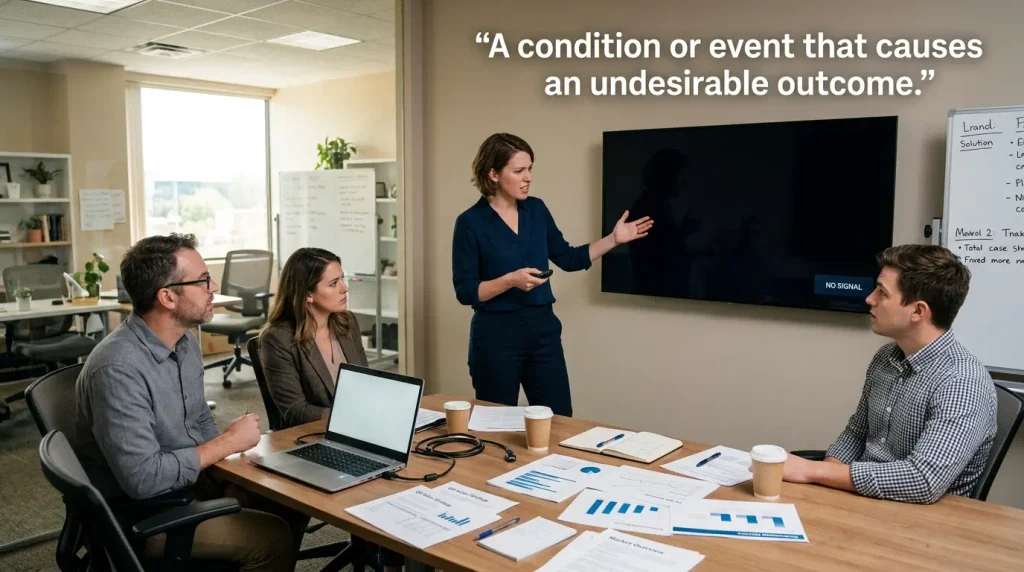
Unfortunate Circumstance (Noun Phrase) — US /ʌnˈfɔːrtʃənət ˈsɜːrkəmstæns/ | UK /ʌnˈfɔːtʃənət ˈsɜːkəmstæns/
Meaning: A condition or event that causes an undesirable outcome.
Tone/Register: Formal, professional.
Example:
The delay resulted from an unfortunate circumstance.
She missed the interview because of an unfortunate circumstance.
Synonyms by Tone
Casual and Informal
These are closest to the relaxed conversational feeling of bummer:
- Letdown
- Downer
- Drag
- Hassle
- Pain
- Tough break
- Bad break
- Bad luck
- Rotten luck
- Shame
- Pity
These choices are useful with friends, family, social media, and casual dialogue.
Neutral
These words work across many everyday and professional contexts:
- Disappointment
- Setback
- Frustration
- Annoyance
- Inconvenience
- Trouble
- Problem
- Difficulty
- Disruption
- Regret
- Loss
- Failure
They are generally safer when you are unsure about the appropriate register.
Formal or Serious
For academic, professional, or serious writing, consider:
- Misfortune
- Adversity
- Hardship
- Hindrance
- Predicament
- Plight
- Calamity
- Vexation
- Exasperation
- Dissatisfaction
- Displeasure
These words should be selected carefully because some describe much stronger situations than bummer.
Playful or Expressive
For humorous or expressive writing, these can work particularly well:
- Misadventure
- Downer
- Drag
- Tough break
- Rotten luck
- Woe
However, woe is much more dramatic and literary than ordinary bummer.
“Bummer” vs Close Alternatives
Disappointment vs Bummer
Bummer is informal and conversational. It often describes a relatively small disappointment.
Disappointment is neutral and can work in casual, professional, and academic writing.
Say:
“Missing the show was a bummer.”
For formal writing:
“Missing the show was a disappointment.”
Bummer vs Letdown
A letdown usually means that something did not meet your expectations.
A bummer has a broader meaning. It can describe bad luck, inconvenience, disappointment, or an unpleasant event.
Therefore, “The movie was a letdown” focuses on expectations, while “The canceled movie was a bummer” focuses on the unfortunate event.
Bummer vs Setback
A setback usually interferes with progress.
A bummer can be any disappointing experience.
For example, a canceled picnic is a bummer. A failed project milestone is a setback.
How “Bummer” Changes by Context
Daily Conversation
Bummer is highly natural in casual conversation.
If your friend says, “My flight was canceled,” you can respond, “That’s a bummer.”
Likewise, tough break, bad luck, and what a shame can sound natural in friendly conversations.
Writing and Blogging
Bloggers can use bummer when they want a relaxed, conversational voice.
For example:
The rainy weather was a bummer, but we still explored the city.
However, disappointment, setback, or inconvenience may be better when the article has a formal or informative tone.
Professional or Academic Writing
Avoid bummer in most formal documents.
Instead, use setback, inconvenience, disappointment, difficulty, disruption, or unfortunate circumstance.
For example:
The unexpected delay created a significant setback for the project.
This sounds more professional than:
The delay was a real bummer.
Creative or Informal Writing
In stories and dialogue, bummer can make characters sound natural and relatable.
“The concert is canceled.”
“Seriously? What a bummer!”
A writer can also use misadventure or woe when a more humorous or dramatic style is desired.
Common Mistakes and Native Usage
One common mistake is treating every alternative as a perfect replacement. They are not.
For example, calamity describes a much more serious event than bummer. Similarly, hardship usually describes prolonged difficulty rather than one minor disappointment.
Another mistake is using bummer in formal academic writing. Native speakers usually choose a more neutral word in that setting.
Also, avoid saying “a bummer” when you mean a disappointing person. In that case, the meaning may change depending on context.
Natural Examples
Casual: The canceled picnic was a bummer.
Neutral: The canceled picnic was disappointing.
Professional: The cancellation caused a significant inconvenience.
Serious: The disaster created considerable hardship.
Therefore, choose the word according to both meaning and register.
Register Notes
Bummer is informal and conversational. It is especially natural in relaxed spoken English.
Letdown, downer, drag, hassle, tough break, and bad luck are also informal.
Meanwhile, disappointment, setback, inconvenience, misfortune, and difficulty are more neutral.
Finally, adversity, hardship, calamity, predicament, and plight are more formal or serious.
As a result, choosing the right synonym can make your English sound much more natural.
Real-Life Mini Scenarios
Workplace
A project missing an important deadline is usually a setback rather than simply a bummer.
Social Situation
A friend canceling dinner at the last minute is naturally a bummer, letdown, or shame.
Travel
A canceled flight can be an inconvenience, hassle, or bad break, depending on the speaker’s tone.
School
A student receiving a lower grade than expected may describe it as a disappointment or letdown.
Media and Pop Culture
A disappointing movie can be called a letdown, downer, or disappointment.
Storytelling
A character facing a series of unlucky events might describe the experience as a misadventure.
Interactive Practice Quiz
1. Your friend’s concert is canceled at the last minute. Which response sounds most natural?
A) That’s a bummer.
B) That’s an adversity.
C) That’s a calamity.
D) That’s a hindrance.
2. Which word is best for a problem that delays project progress?
A) Downer
B) Setback
C) Drag
D) Pity
3. Which word is most appropriate in an academic essay?
A) Bummer
B) Drag
C) Setback
D) Downer
4. A movie fails to meet your expectations. Which word fits best?
A) Letdown
B) Hardship
C) Calamity
D) Plight
5. Which expression focuses on bad luck?
A) Bad break
B) Discontent
C) Frustration
D) Difficulty
6. Which word means an irritating situation requiring extra effort?
A) Hassle
B) Loss
C) Defeat
D) Adversity
7. Which alternative is most informal?
A) Vexation
B) Downer
C) Misfortune
D) Adversity
8. Which word describes a serious, difficult condition?
A) Hardship
B) Drag
C) Bummer
D) Letdown
9. Which word best describes losing a competition?
A) Defeat
B) Nuisance
C) Hassle
D) Pity
10. Which phrase is sympathetic and casual?
A) Tough break
B) Adversity
C) Hindrance
D) Dissatisfaction
11. Which word describes an unfortunate journey involving mistakes or bad luck?
A) Misadventure
B) Displeasure
C) Disturbance
D) Difficulty
12. Which word means something that blocks progress?
A) Obstacle
B) Sorrow
C) Downer
D) Letdown
13. Which word describes a difficult situation that is hard to escape?
A) Predicament
B) Annoyance
C) Drag
D) Hassle
14. Which alternative is closest to mild irritation?
A) Annoyance
B) Calamity
C) Plight
D) Hardship
15. Which phrase describes repeated bad luck?
A) Rotten luck
B) Professional setback
C) Academic difficulty
D) Formal inconvenience
Answer Key: 1-A, 2-B, 3-C, 4-A, 5-A, 6-A, 7-B, 8-A, 9-A, 10-A, 11-A, 12-A, 13-A, 14-A, 15-A
Reflection Task
Choose one synonym from this article and write your own sentence about a real disappointment, unlucky event, frustrating experience, or unexpected problem.
FAQs
1. What is the best synonym for bummer in casual English?
Letdown, downer, tough break, bad luck, and drag are useful casual alternatives. However, the best choice depends on the situation. “That’s a bummer” is especially natural when reacting sympathetically to disappointing news. If the problem is caused by bad luck, “tough break” or “bad luck” may communicate the meaning more precisely.
2. What is a formal word for bummer?
There is no single formal replacement for every use of bummer. Strong choices include disappointment, setback, inconvenience, misfortune, and unfortunate circumstance. Use setback when progress has been affected, disappointment when expectations were not met, and inconvenience when the problem mainly causes disruption.
3. Is bummer appropriate in professional writing?
Usually, bummer is too informal for professional reports, academic essays, and official documents. Instead, choose a word that describes the problem precisely. Setback, disappointment, inconvenience, disruption, difficulty, or unfortunate circumstance can sound more professional and objective.
4. What can I say instead of “That’s a bummer”?
You can say “That’s disappointing,” “That’s unfortunate,” “What a shame,” “That’s tough,” or “That’s a letdown.” For a very casual conversation, “Tough break” or “What a drag” can also work. The best expression depends on how serious the situation is and how informal you want to sound.
5. Is bummer a negative word?
Yes, bummer normally has a negative meaning because it describes something disappointing or unpleasant. However, its informal tone can make a minor problem sound lighter. Saying “The rain was a bummer” sounds much less serious than describing a major personal loss as a tragedy or hardship.
6. What is the difference between bummer and setback?
A bummer is a general disappointing or unpleasant experience. A setback specifically suggests that something has delayed or harmed progress toward a goal. Therefore, a canceled dinner may be a bummer, while a failed project deadline is more naturally described as a setback.
7. What is the difference between bummer and letdown?
A bummer can describe almost any disappointing event, including bad luck or inconvenience. A letdown usually focuses on something that failed to meet expectations. For example, a canceled trip is a bummer, while a movie that seemed promising but disappointed you is a letdown.
8. Can bummer be used in formal academic English?
It is generally better to avoid bummer in formal academic English. The word is conversational and informal. Depending on the meaning, use disappointment, setback, difficulty, inconvenience, adverse outcome, or unfortunate circumstance instead. These alternatives make academic writing clearer and more appropriately formal.
Conclusion
Learning a synonym for bummer gives you more precise ways to express disappointment, frustration, inconvenience, bad luck, and unpleasant experiences.
Words such as disappointment, letdown, setback, misfortune, hassle, downer, and tough break each carry a different shade of meaning.
For students, bloggers, and content writers, these alternatives improve vocabulary and reduce repetition. They also make everyday speaking more expressive and natural.
Start practicing these words in your emails, essays, stories, and daily conversations. Choose one new synonym today and create a sentence that fits your own experience.

Shahzeena Shazadi is the founder and lead writer at VocablyHub.com, where she creates accurate, reader-focused English language content designed to help people communicate with clarity and confidence. She specializes in synonyms, antonyms, word meanings, idioms, and practical vocabulary guides that simplify complex language concepts for everyday use. Every article is carefully researched, fact-checked, and written in clear, accessible language using reliable references and real-world examples. Her goal is to provide helpful, trustworthy content that supports learners at every stage of their English language journey.
Her editorial approach focuses on accuracy, transparency, and user value while following modern content quality standards. She regularly reviews and updates content to keep information relevant, useful, and easy to understand. Through VocablyHub.com, Shahzeena Shazadi is committed to publishing reliable language resources that help students, writers, educators, professionals, and English learners expand their vocabulary, improve their writing skills, and communicate with confidence in academic, professional, and everyday situations.