
Finding the right synonyms for kindergarten can help you describe early childhood education, learning environments, and preschool settings more clearly. The best alternative depends on the age group, educational system, and context in which the word is used.
Learning synonyms for kindergarten also expands your vocabulary and helps you choose more precise terms. Words such as preschool, nursery school, pre-primary, and early learning center may fit different situations, but they are not always exact replacements.
In this guide, you’ll discover useful synonyms for kindergarten with clear meanings and practical examples. You’ll learn how each alternative is used and when it may be a better choice for your writing.
Whether you’re a student, teacher, parent, or English learner, understanding these alternatives can make your communication more natural and accurate. By exploring these words, you can describe early education settings with greater confidence and clarity.
What Does “Kindergarten” Really Mean?
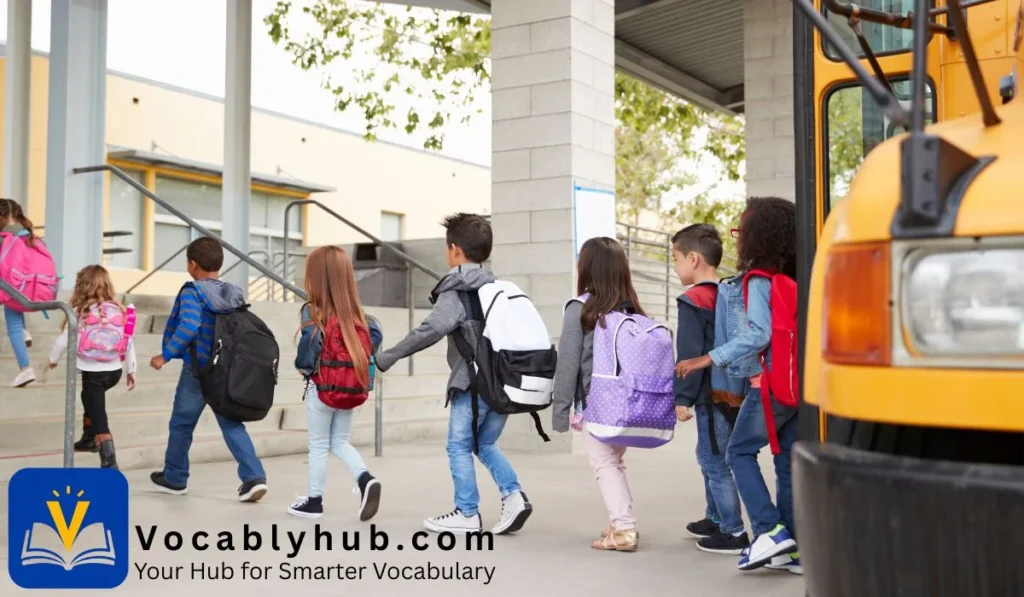
Kindergarten describes a school or class for young children, usually four to six years old, before entering primary school. The emotional tone is typically warm, nurturing, and playful. Native speakers use it when talking about early childhood education, preschool programs, or foundational learning spaces.
It functions as a noun. A simple definition is a school for young children focusing on play-based learning.
Connotative Meaning
The emotional tone of this word is predominantly positive, cheerful, and nostalgic.
(Connotation refers to the emotional or cultural associations surrounding a word, apart from its literal dictionary definition.)
Etymology
The term originates from German, literally translating to “children’s garden,” coined by Friedrich Fröbel in the 19th century.
- Old English (450–1100): The concept did not exist as formal schooling; education occurred purely at home within families.
- Middle English (1100–1500): Child care was informal, without dedicated institutional terminology for early education.
- Modern English (1500–Present): Adopted from German into English during the 19th century to describe progressive early childhood learning structures.
Pronunciation (US & UK – IPA)
- US: /ˈkɪn.dɚˌɡɑːr.tən/
- UK: /ˈkɪn.dəˌɡɑː.tən/
Syllables
kin-der-gar-ten
Affixation Pattern
- Root: Kind (German for child) + Garten (German for garden)
- Prefix: None
- Suffix: None (compound noun structure)
Synonyms List
Preschool (Noun) — US / UK: /ˈpriː.skuːl/ / /ˈpriː.skuːl/
- Meaning: A school for children aged roughly three to five before they enter elementary school.
- Tone/Register: Standard / Common
- Examples:
- Her young son started attending a local community preschool this autumn.
- Teachers at the preschool focus heavily on social sharing skills.
Nursery (Noun) — US / UK: /ˈnɜːr.sər.i/ / /ˈnɜː.sər.i/
- Meaning: A place where young children are cared for while their parents work.
- Tone/Register: British / Traditional
- Examples:
- The neighborhood nursery welcomed toddlers for morning activity sessions.
- Parents dropped off their children at the bright orange nursery.
Pre-K (Noun) — US / UK: /ˈpriː.keɪ/ / /ˈpriː.keɪ/
- Meaning: An educational class for children the year before kindergarten.
- Tone/Register: American / Casual
- Examples:
- Registration for the upcoming pre-k class opens next Monday morning.
- He learned basic alphabet tracing during his pre-k program.
Childcare Center (Noun Phrase) — US / UK: /ˈtʃaɪld.kɛr ˈsɛn.tər/ / /ˈtʃaɪld.keə ˈsɛn.tə/
- Meaning: A facility providing care and supervision for children during the day.
- Tone/Register: Professional / Administrative
- Examples:
- Working parents rely heavily on dependable local childcare centers.
- The modern childcare center featured secure outdoor playground equipment.
Daycare (Noun) — US / UK: /ˈdeɪ.kɛr/ / /ˈdeɪ.keə/
- Meaning: Care for children during the day, especially while parents work.
- Tone/Register: Everyday / Common
- Examples:
- She picked up her toddler from daycare before rush hour traffic.
- The daycare provided healthy snacks and afternoon nap times.
Early Learning Center (Noun Phrase) — US / UK: /ˈɜːr.li ˈlɜːr.nɪŋ ˈsɛn.tər/ / /ˈɜː.li ˈlɜː.nɪŋ ˈsɛn.tə/
- Meaning: An institution dedicated to the cognitive growth of young children.
- Tone/Register: Formal / Educational
- Examples:
- The new early learning center opened with state-of-the-art facilities.
- Educators designed the early learning center curriculum around creative play.
Montessori School (Noun Phrase) — US / UK: /ˌmɑːn.təˈsɔːr.i skuːl/ / /ˌmɒn.tɪˈsɔː.ri skuːl/
- Meaning: A school utilizing child-centered educational methods promoting self-directed activity.
- Tone/Register: Specialized / Formal
- Examples:
- They enrolled their daughter in a certified Montessori school downtown.
- Montessori school classrooms encourage independent learning choices.
Playgroup (Noun) — US / UK: /ˈpleɪ.ɡruːp/ / /ˈpleɪ.ɡruːp/
- Meaning: A regular gathering of young children and their supervisors for play.
- Tone/Register: Casual / Community
- Examples:
- Local parents organized a weekly playgroup at the community park.
- The toddlers enjoyed socializing during the neighborhood playgroup.
Infant School (Noun) — US / UK: /ˈɪn.فənt skuːl/ / /ˈɪn.fənt skuːl/
- Meaning: A school for children aged five to seven, common in British systems.
- Tone/Register: British / Educational
- Examples:
- He walked to the local infant school with his older sister.
- The infant school held a cheerful spring musical performance.
Preparatory School (Noun Phrase) — US / UK: /prɪˈpɛr.ə.tɔːr.i skuːl/ / /prɪˈpə.rə.tɔː.ri skuːl/
- Meaning: A school preparing students for entry into primary education.
- Tone/Register: Formal / Traditional
- Examples:
- The private preparatory school offered small class sizes.
- Parents toured the preparatory school campus on Saturday.
Foundation Stage (Noun Phrase) — US / UK: /ˈfaʊn.deɪ.ʃən steɪdʒ/ / /ˈfaʊn.deɪ.ʃən steɪdʒ/
- Meaning: The first stage of education in England for children aged three to five.
- Tone/Register: Academic / British
- Examples:
- Teachers assessed student progress across the early foundation stage.
- The curriculum guidelines outline goals for the foundation stage.
Tot School (Noun Phrase) — US / UK: /tɑːt skuːl/ / /tɒt skuːl/
- Meaning: An informal home-based or casual group learning setting for toddlers.
- Tone/Register: Informal / Casual
- Examples:
- She hosted a fun tot school session in her living room.
- Toddlers explored sensory bins during the morning tot school hour.
Nursery School (Noun Phrase) — US / UK: /ˈnɜːr.sər.i skuːl/ / /ˈnɜː.sər.i skuːl/
- Meaning: A school for children too young for primary education.
- Tone/Register: Standard / Common
- Examples:
- The nursery school featured a large sandbox in the yard.
- Children painted colorful pictures at nursery school today.
Head Start Program (Noun Phrase) — US / UK: /hɛd stɑːrt ˈproʊ.ɡræm/ / /hɛd stɑːːt ˈprəʊ.ɡræm/
- Meaning: A US federal program providing comprehensive early childhood education.
- Tone/Register: Official / Governmental
- Examples:
- The local Head Start program supports low-income families effectively.
- Children enrolled in the Head Start program received free books.
Reception Class (Noun Phrase) — US / UK: /rɪˈsɛp.ʃən klæs/ / /rɪˈsɛp.ʃən klɑːs/
- Meaning: The first year of primary school in England for four-year-olds.
- Tone/Register: British / Educational
- Examples:
- His younger brother just started his first term in reception class.
- Reception class teachers introduced basic reading skills gently.
Wee School (Noun Phrase) — US / UK: /wiː skuːl/ / /wiː skuːl/
- Meaning: An affectionate regional term for a small children’s school.
- Tone/Register: Informal / Regional
- Examples:
- She fondly remembered attending the church wee school as a child.
- The community wee school welcomed new enrollments for autumn.
Early Childhood Program (Noun Phrase) — US / UK: /ˈɜːr.li ˈtʃaɪld.hʊd ˈproʊ.ɡræm/ / /ˈɜː.li ˈtʃaɪld.hʊd ˈprəʊ.ɡræm/
- Meaning: An educational program structured for children under eight years old.
- Tone/Register: Academic / Professional
- Examples:
- University researchers evaluated the early childhood program success rates.
- The grant funded new supplies for the regional early childhood program.
Lower School (Noun) — US / UK: /ˈloʊ.ər skuːl/ / /ˈləʊ.ə skuːl/
- Meaning: The youngest grades within an elementary or independent school.
- Tone/Register: Formal / Institutional
- Examples:
- The lower school students gathered in the gymnasium for story time.
- He taught music classes across the entire lower school division.
Transition Class (Noun Phrase) — US / UK: /trænˈzɪʃ.ən klæs/ / /trænˈzɪʃ.ən klɑːs/
- Meaning: A class bridging preschool and formal primary education.
- Tone/Register: Educational / Formal
- Examples:
- The transition class helped nervous children adjust to big school.
- She enrolled her son in a transition class before first grade.
Play School (Noun Phrase) — US / UK: /pleɪ skuːl/ / /pleɪ skuːl/
- Meaning: A nursery school emphasizing play rather than formal lessons.
- Tone/Register: Casual / Friendly
- Examples:
- The neighborhood play school kept children entertained all morning.
- Educational toys filled the colorful rooms of the play school.
Learning Hive (Noun) — US / UK: /ˈlɜːr.nɪŋ haɪv/ / /ˈlɜː.nɪŋ haɪv/
- Meaning: A creative, interactive modern space for child education.
- Tone/Register: Modern / Creative
- Examples:
- They called their community education hub the local learning hive.
- Kids built wooden structures together inside the learning hive.
Discovery Club (Noun Phrase) — US / UK: /dɪˈskʌv.ər.i klʌb/ / /dɪˈskʌv.ər.i klʌb/
- Meaning: An interactive after-school or early education activity group.
- Tone/Register: Casual / Engaging
- Examples:
- Science experiments fascinated kids at the weekend discovery club.
- The discovery club encouraged hands-on exploration of nature.
Junior Academy (Noun Phrase) — US / UK: /ˈdʒuːn.jər əˈkæd.ə.mi/ / /ˈdʒuːn.jər əˈkæd.ə.mi/
- Meaning: A private school division for young children.
- Tone/Register: Formal / Private
- Examples:
- The junior academy hosted an open house for prospective parents.
- Uniforms are required for students attending the junior academy.
Toddler Group (Noun Phrase) — US / UK: /ˈtɑːd.lər ɡruːp/ / /ˈtɒd.lə ɡruːp/
- Meaning: A weekly social meeting for very young children and parents.
- Tone/Register: Community / Informal
- Examples:
- New mothers met weekly at the local library toddler group.
- Songs and fingerplays kept toddlers engaged at the group.
Tyke School (Noun Phrase) — US / UK: /taɪk skuːl/ / /taɪk skuːl/
- Meaning: A playful colloquial term for a very young children’s class.
- Tone/Register: Informal / Colloquial
- Examples:
- The friendly local tyke school emphasized outdoor nature play.
- Parents chatted outside the gates of the community tyke school.
Little Learners (Noun Phrase) — US / UK: /ˈlɪt.əl ˈlɜːr.nərz/ / /ˈlɪt.əl ˈlɜː.nəz/
- Meaning: A descriptive name for a class of young students.
- Tone/Register: Warm / Educational
- Examples:
- The classroom door bore a sign reading Little Learners Welcome.
- Bright artwork decorated the walls of the little learners’ room.
Bambini Class (Noun Phrase) — US / UK: /bæmˈbiː.ni klæs/ / /bæmˈbiː.ni klɑːs/
- Meaning: An Italian-inspired term for young children’s learning groups.
- Tone/Register: Specialized / Cultural
- Examples:
- The language studio offered a Saturday bambini class for toddlers.
- Children sang Italian songs during the lively bambini class.
Early Years Unit (Noun Phrase) — US / UK: /ˈɜːr.li jɪərz ˈjuː.nɪt/ / /ˈɜː.li jɪəz ˈjuː.nɪt/
- Meaning: A dedicated department for early childhood education within schools.
- Tone/Register: Academic / Official
- Examples:
- The primary school expanded its early years unit this year.
- New outdoor turf was installed in the early years unit yard.
First School (Noun) — US / UK: /fɜːrst skuːl/ / /fɜːst skuːl/
- Meaning: An elementary school for children up to age eight or nine.
- Tone/Register: Traditional / British
- Examples:
- Children in rural villages attended the local first school.
- The historic first school building celebrated its anniversary.
Primary Foundation (Noun Phrase) — US / UK: /ˈpraɪ.mɛr.i ˈfaʊn.deɪ.ʃən/ / /ˈpraɪ.mər.i ˈfaʊn.deɪ.ʃən/
- Meaning: The foundational entry tier of primary education.
- Tone/Register: Formal / Educational
- Examples:
- Primary foundation teachers received specialized training certificates.
- The program builds strong literacy skills in primary foundation years.
Kinder Class (Noun Phrase) — US / UK: /ˈkɪn.dər klæs/ / /ˈkɪn.də klɑːs/
- Meaning: A shortened, friendly conversational term for kindergarten.
- Tone/Register: Casual / Shortened
- Examples:
- She packed extra snacks for her daughter’s kinder class party.
- The kinder class made handprint art for Mother’s Day.
Foundation Class (Noun Phrase) — US / UK: /ˈfaʊn.deɪ.ʃən klæs/ / /ˈfaʊn.deɪ.ʃən klɑːs/
- Meaning: A class for children beginning their formal school journey.
- Tone/Register: Formal / British
- Examples:
- The foundation class enjoyed a trip to the local farm.
- Registration forms for foundation class are due next week.
Prep Class (Noun Phrase) — US / UK: /prɛp klæs/ / /prɛp klɑːs/
- Meaning: Preparatory class for young students entering primary school.
- Tone/Register: Common / Australian
- Examples:
- Australian children often start prep class around age five.
- The prep class practiced counting colorful plastic beads.
Kindergarten Pod (Noun Phrase) — US / UK: /ˈkɪn.dərˌɡɑːr.tən pɑːd/ / /ˈkɪn.dəˌɡɑː.tən pɒd/
- Meaning: A small group learning pod structured like kindergarten.
- Tone/Register: Modern / Pandemic-era
- Examples:
- Families formed a small kindergarten pod for shared home tutoring.
- The kindergarten pod met in a converted sunroom.
Early Explorers (Noun Phrase) — US / UK: /ˈɜːr.li ɪkˈsplɔː.rərz/ / /ˈɜː.li ɪkˈsplɔː.rəz/
- Meaning: A creative name for an early childhood education group.
- Tone/Register: Engaging / Creative
- Examples:
- The museum hosted a special workshop for early explorers.
- Early explorers investigated plant leaves using magnifying glasses.
Tiny Tots Academy (Noun Phrase) — US / UK: /ˈtaɪ.ni tɑts əˈkæd.ə.mi/ / /ˈtaɪ.ni tɒts əˈkæd.ə.mi/
- Meaning: A friendly private facility focused on very young learners.
- Tone/Register: Playful / Descriptive
- Examples:
- Bright murals lined the hallways of the tiny tots academy.
- Parents enrolled their toddlers in the tiny tots academy early.
Bambino Club (Noun Phrase) — US / UK: /bæmˈbiː.noʊ klʌb/ / /bæmˈbiː.nəʊ klʌb/
- Meaning: An engaging community group for infant and toddler development.
- Tone/Register: Casual / Warm
- Examples:
- The neighborhood bambino club met every Tuesday morning.
- Infants enjoyed sensory games at the local bambino club.
Seedling School (Noun Phrase) — US / UK: /ˈsiːd.lɪŋ skuːl/ / /ˈsiːd.lɪŋ skuːl/
- Meaning: A metaphorical name for a school nurturing young minds.
- Tone/Register: Literary / Creative
- Examples:
- The seedling school emphasized nature-based outdoor education.
- Children planted flowers in the garden at Seedling School.
Sprout Center (Noun Phrase) — US / UK: /spraʊt ˈsɛn.tər/ / /spraʊt ˈsɛn.tə/
- Meaning: An educational center designed for early child development.
- Tone/Register: Modern / Professional
- Examples:
- The Sprout Center offered flexible morning and afternoon schedules.
- Educators at the Sprout Center used interactive storytelling daily.
Child Growth Hub (Noun Phrase) — US / UK: /tʃaɪld ɡroʊθ hʌb/ / /tʃaɪld ɡrəʊθ hʌb/
- Meaning: A community center supporting early childhood growth and learning.
- Tone/Register: Institutional / Formal
- Examples:
- The child growth hub hosted developmental workshops for parents.
- Specialists offered speech therapy at the regional child growth hub.
Little Scholars (Noun Phrase) — US / UK: /ˈlɪt.əl ˈskɑː.lɚz/ / /ˈlɪt.əl ˈskɒ.ləz/
- Meaning: An affectionate title for young children engaged in learning.
- Tone/Register: Warm / Encouraging
- Examples:
- Proud teachers displayed artwork made by our little scholars.
- The little scholars practiced writing their names on chalkboards.
Playful Academy (Noun Phrase) — US / UK: /ˈpleɪ.fəl əˈkæd.ə.mi/ / /ˈpleɪ.fəl əˈkæd.ə.mi/
- Meaning: An academy prioritizing play-based learning methods for children.
- Tone/Register: Engaging / Friendly
- Examples:
- The playful academy filled every afternoon with creative games.
- Children developed teamwork skills naturally at the playful academy.
Bright Beginnings (Noun Phrase) — US / UK: /braɪt bɪˈɡɪn.ɪŋz/ / /braɪt bɪˈɡɪn.ɪŋz/
- Meaning: A popular name for early childhood education programs.
- Tone/Register: Uplifting / Common
- Examples:
- Bright Beginnings Preschool welcomed fifty new students this year.
- Families praised the supportive environment at Bright Beginnings.
Junior Discovery (Noun Phrase) — US / UK: /ˈdʒuːn.jər dɪˈskʌv.ər.i/ / /ˈdʒuːn.jər dɪˈskʌv.ər.i/
- Meaning: An exploratory learning program for early education students.
- Tone/Register: Interactive / Formal
- Examples:
- The junior discovery class explored dinosaur fossils using clay.
- Parents joined their kids for the junior discovery science fair.
Toddler Academy (Noun Phrase) — US / UK: /ˈtɑːd.lər əˈkæd.ə.mi/ / /ˈtɒd.lə əˈkæd.ə.mi/
- Meaning: A structured educational facility catering specifically to toddlers.
- Tone/Register: Formal / Educational
- Examples:
- The toddler academy focused on motor skill development exercises.
- Clean, safe toys filled each room at the toddler academy.
Synonyms for “Kindergarten” by Tone
Understanding tone helps writers choose the exact right word for their audience. Words carry emotional weight that shapes how readers perceive a message.
- Positive Tone: Little Learners, Early Explorers, Playgroup, Discovery Club, Learning Hive, Tiny Tots Academy, Bambino Club, Seedling School, Sprout Center, Little Scholars, Playful Academy, Bright Beginnings, Junior Discovery, Toddler Academy.
- Neutral Tone: Preschool, Nursery, Pre-K, Childcare Center, Daycare, Montessori School, Infant School, Preparatory School, Foundation Stage, Tot School, Nursery School, Head Start Program, Reception Class, Wee School, Early Childhood Program, Lower School, Transition Class, Play School, Junior Academy, Toddler Group, Tyke School, Bambini Class, Early Years Unit, First School, Primary Foundation, Kinder Class, Foundation Class, Prep Class, Kindergarten Pod, Child Growth Hub.
- Negative Tone: None, as these educational terms reflect nurturing child environments.
Mini Comparison
Kindergarten vs. Preschool vs. Daycare
- Kindergarten: Focuses on structured early education for children right before primary school entry (ages 5–6 in many regions). Use it for school-system settings.
- Preschool: Focuses on educational preparation for younger children (ages 3–5) before kindergarten. Use it for early learning centers.
- Daycare: Focuses primarily on supervised care and supervision while parents work, which may or may not include formal lessons. Use it for childcare facilities.
Context-Based Usage
In daily conversation, speakers often use simpler words like preschool or daycare. People prefer natural phrasing when talking to friends or family members about childcare routines.
In writing and blogging, content creators choose terms like early learning center or pre-K to add professional polish and precise clarity. This creates informative imagery for readers.
In professional or academic writing, authors rely on formal choices such as foundation stage or early childhood program. These words maintain an authoritative, educational tone.
Common Mistakes and Native Usage
Learners frequently misuse these terms by treating daycare and kindergarten as completely identical. Daycare emphasizes custodial care, whereas kindergarten emphasizes formal educational readiness.
Another common error is confusing regional terminology. Calling a British reception class a kindergarten can confuse international readers.
Native speakers reserve these specific nouns for settings matching the correct age group and educational mandate. Furthermore, they avoid overusing them in every single sentence.
Real-Life Mini Scenarios
- Workplace: Finding a reliable daytime childcare center near the office solved scheduling stress.
- Social Situations: Parents exchanged notes on local preschool programs at the weekend playground.
- Media / Pop Culture: The parenting documentary explored innovative teaching methods in modern kindergartens.
- Writing / Storytelling: The main character reminisced about painting finger-paints during her early nursery school days.
Conclusion
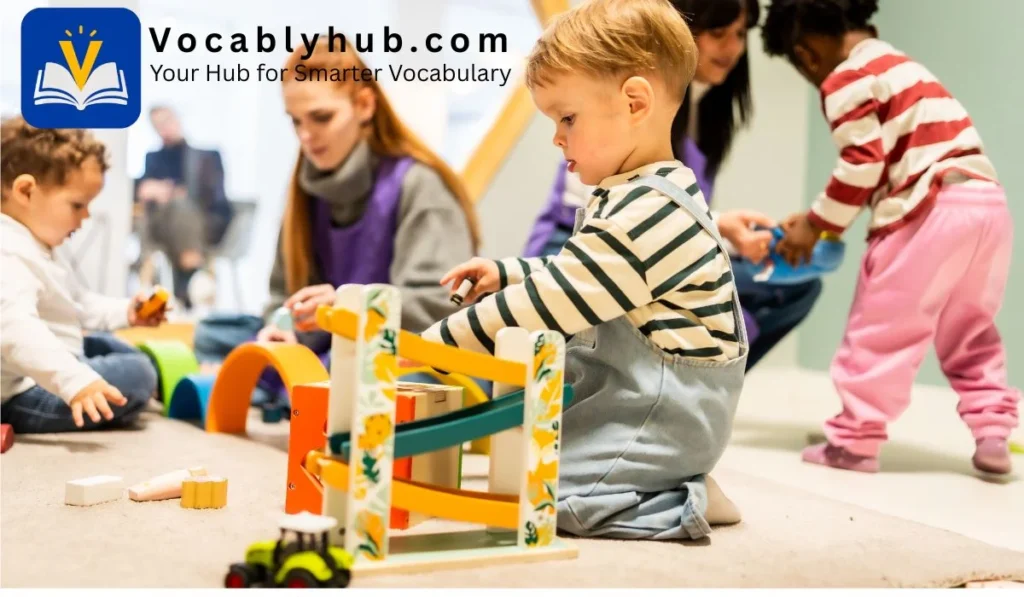
Choosing the right synonyms for kindergarten helps you describe early education settings with greater clarity and precision. Terms such as preschool, nursery school, pre-primary, and early learning center can be useful alternatives depending on the context.
By learning synonyms for kindergarten, you can better understand the differences between educational terms used in different regions and settings. Not every alternative has the same meaning, so selecting the right word helps keep your writing accurate.
Keep practicing synonyms for kindergarten in sentences, articles, and everyday conversations. Expanding your vocabulary will help you communicate more naturally and confidently when discussing early childhood education.
Practice Exercise:
- The children started ________ at the age of four.
- A. Preschool
- B. University
- C. College
- She works as a teacher at a local ________.
- A. Nursery school
- B. High school
- C. University
- The new center provides quality ________ education for young children.
- A. Early childhood
- B. Secondary
- C. Higher
- Parents enrolled their child in a nearby ________ before primary school.
- A. Preschool
- B. Graduate school
- C. College
- The government introduced new standards for ________ programs.
- A. Pre-primary
- B. Postgraduate
- C. Secondary
- The children enjoyed learning through play at the ________.
- A. Early learning center
- B. High school
- C. University
- Her daughter attends a ________ that prepares children for primary education.
- A. Nursery school
- B. Medical school
- C. Business school
- The school offers a structured ________ program for children aged four to five.
- A. Early education
- B. Adult education
- C. Higher education
- The teacher used games and stories to make the ________ classroom engaging.
- A. Preschool
- B. Graduate
- C. Professional
- Many children attend ________ before entering elementary school.
- A. Pre-primary education
- B. Secondary education
- C. University education
Reflection Task:
Write one original sentence using the synonym “preschool” to describe an early childhood setting.
Answer Key:
- A, 2. A, 3. A, 4. A, 5. A, 6. A, 7. A, 8. A, 9. A, 10. A
Frequently Asked Questions
1. Can “kindergarten” refer to home-schooling setups?
No, kindergarten specifically denotes an institutional class or school setting rather than isolated home instruction.
2. What is the main difference between kindergarten and preschool?
Preschool typically targets children ages three to four, whereas kindergarten serves older children aged five to six right before primary school.
3. Is kindergarten spelled the same in American and British English?
Yes, the spelling is identical across major dialects, though regional terms like reception class or preschool are often preferred locally.
4. Can this word be used in professional educational papers?
Yes, but academic papers frequently use broader terms such as early childhood education or the foundation stage for greater precision.
5. How can I practice using these synonyms daily?
You can substitute these words into your parenting articles, journal entries, or educational blogs whenever you discuss early childhood learning environments.

Shahzeena Shazadi is the founder and lead writer at VocablyHub.com, where she creates accurate, reader-focused English language content designed to help people communicate with clarity and confidence. She specializes in synonyms, antonyms, word meanings, idioms, and practical vocabulary guides that simplify complex language concepts for everyday use. Every article is carefully researched, fact-checked, and written in clear, accessible language using reliable references and real-world examples. Her goal is to provide helpful, trustworthy content that supports learners at every stage of their English language journey.
Her editorial approach focuses on accuracy, transparency, and user value while following modern content quality standards. She regularly reviews and updates content to keep information relevant, useful, and easy to understand. Through VocablyHub.com, Shahzeena Shazadi is committed to publishing reliable language resources that help students, writers, educators, professionals, and English learners expand their vocabulary, improve their writing skills, and communicate with confidence in academic, professional, and everyday situations.