
Finding the best synonyms for honey can make your writing sound more natural, expressive, and engaging. Whether you’re referring to the sweet food made by bees or using “honey” as a term of endearment, choosing the right alternative helps you match the tone and context of your sentence. This guide to synonyms for honey includes simple meanings, examples, and practical usage tips for everyday writing.
Many words can replace honey depending on what you want to express. Some alternatives emphasize sweetness, while others are affectionate nicknames used for loved ones. Learning these options expands your vocabulary and helps you avoid repeating the same word. By exploring synonyms for honey, you’ll discover which words work best in casual conversations, creative writing, and professional content.
In this article, you’ll find carefully selected synonyms for honey, their meanings, pronunciation, real-life examples, and a practice exercise to reinforce your learning. Whether you’re a student, writer, or English learner, this guide will help you choose the most suitable synonym with confidence and improve your communication skills.
What Does “Honey” Really Mean?
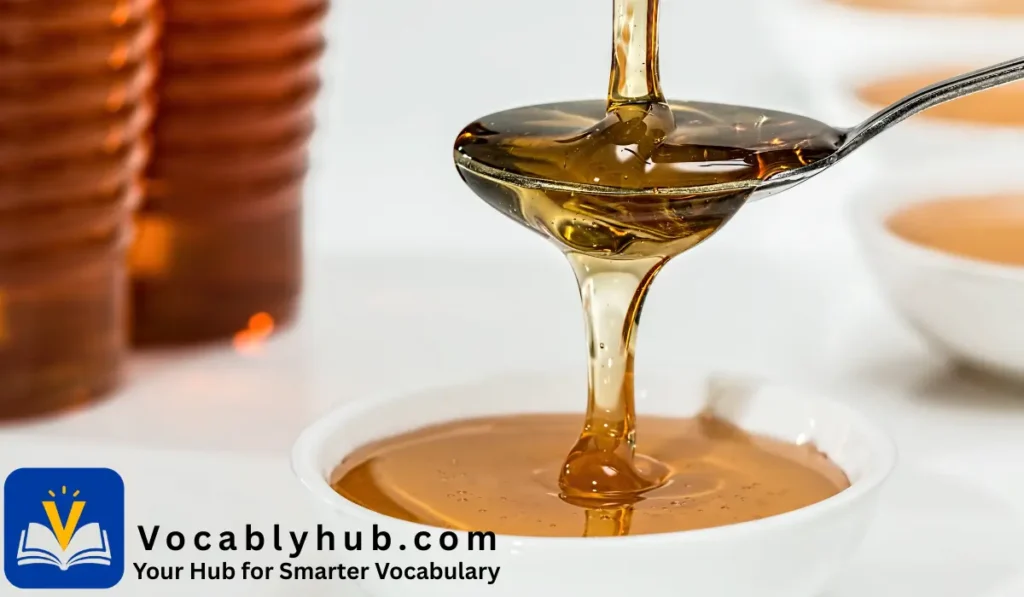
In simple English, honey is a sweet, sticky fluid made by bees from the nectar of flowers. It is also widely used as a loving nickname for someone you care about deeply.
The emotional tone of this word is incredibly warm, gentle, and positive. Native speakers understand it as a symbol of sweetness, comfort, and deep affection.
You will commonly find this word in baking recipes, love letters, daily morning greetings, and nature documentaries.
- Part of Speech: Noun (uncountable for the food, countable as a nickname)
- Definition: A sweet yellow liquid made by bees, or an affectionate term for a loved one.
Connotative Meaning
(Connotation is the emotional feeling or cultural association a word carries beyond its literal dictionary definition.)
- Positive Tone: Associated with natural sweetness, warmth, healing, and romantic love.
- Negative Tone: Can occasionally feel overly sweet, sticky, or patronizing if used by strangers.
- Neutral Tone: Used in biological contexts, farming, and food science reports.
Etymology
The word “honey” has ancient roots that highlight its long-standing value to humans.
- Old English (450–1100): The word hunig referred strictly to the golden fluid produced by bees.
- Middle English (1100–1500): Spelled as huni or hony, speakers began using it as a term of endearment.
- Modern English (1500–Present): The word stabilized into “honey” and remains a staple of sweet food and sweet talk.
Pronunciation (US & UK – IPA)
- US: /ˈhʌn.i/
- UK: /ˈhʌn.i/
Syllables
- Syllable Breakdown: hon-ey (2 syllables)
Affixation Pattern
- Root: honey
- Prefix: None
- Suffix: None
Synonyms List
Nectar (Noun) — US: /ˈnek.tɚ/ | UK: /ˈnek.tə/
Meaning: The sweet liquid secretion of plants that bees collect to make honey.
Examples:
- The bees buzzed happily from flower to flower to gather sweet nectar.
- This fresh fruit juice tastes like pure nectar on a hot day.
Syrup (Noun) — US: /ˈsɪr.əp/ | UK: /ˈsɪr.əp/
Meaning: A thick, sweet, sticky liquid made by dissolving sugar in water or reducing plant sap.
Examples:
- She poured a generous amount of maple syrup over her warm pancakes.
- The medicine was mixed with a sweet fruit syrup to make it taste better.
Sweetener (Noun) — US: /ˈswiːt.nɚ/ | UK: /ˈswiːt.nə/
Meaning: A substance used to give a sweet taste to food or drink.
Examples:
- He prefers to use organic honey as a natural sweetener in his tea.
- The bakery replaced white sugar with a healthy plant-based sweetener.
Molasses (Noun) — US: /məˈlæsɪz/ | UK: /məˈlæsɪz/
Meaning: A thick, dark brown syrup obtained from raw sugar during the refining process.
Examples:
- The dark gingerbread cookies require a spoonful of rich molasses.
- She added molasses to the baked beans to give them a deep, smoky flavor.
Sugar (Noun) — US: /ˈʃʊɡ.ɚ/ | UK: /ˈʃʊɡ.ə/
Meaning: A sweet crystalline substance obtained from various plants, or a sweet term of endearment.
Examples:
- She asked her husband to pass the sugar for her morning coffee.
- Please don’t worry about the mess, my sweet sugar.
Treacle (Noun) — US: /ˈtriː.kəl/ | UK: /ˈtriː.kəl/
Meaning: A thick, sticky sweet syrup, often used in British English.
Examples:
- The children enjoyed eating a warm tart made with golden treacle.
- His voice was thick and sweet like treacle.
Mel (Noun) — US: /mel/ | UK: /mel/
Meaning: The technical, Latin-derived term for honey used in pharmacy and science.
Examples:
- The herbal cough drop contains pure mel as a soothing ingredient.
- Scientists analyzed the chemical properties of mel in the lab.
Sap (Noun) — US: /sæp/ | UK: /sæp/
Meaning: The sweet watery fluid that circulates through a plant or tree.
Examples:
- Workers collect maple sap in the early spring to make syrup.
- Sticky sap dripped slowly down the rough bark of the pine tree.
Honeydew (Noun) — US: /ˈhʌn.i.duː/ | UK: /ˈhʌn.i.dʒuː/
Meaning: A sweet, sticky substance excreted by aphids on leaves, often collected by bees.
Examples:
- Bees sometimes gather honeydew from forest trees to make dark honey.
- The leaves of the rose bushes were coated in a shiny layer of honeydew.
Ambrosia (Noun) — US: /æmˈbroʊ.ʒə/ | UK: /æmˈbrəʊ.zi.ə/
Meaning: Something very pleasing to taste or smell, originally the food of the Greek gods.
Examples:
- This homemade chocolate mousse is absolute ambrosia.
- The sweet aroma of baking bread felt like ambrosia to the hungry traveler.
Caramel (Noun) — US: /ˈkɑːr.məl/ | UK: /ˈkær.ə.mel/
Meaning: A smooth, thick, golden-brown syrup made by heating sugar.
Examples:
- He drizzled warm caramel over the vanilla ice cream.
- The candy shop sells apples dipped in sticky sweet caramel.
Glaze (Noun) — US: /ɡleɪz/ | UK: /ɡleɪz/
Meaning: A thin, shiny, sweet coating brushed onto food.
Examples:
- She made a delicious honey glaze for the roasted carrots.
- The baker applied a sweet sugar glaze to the hot donuts.
Sweetheart (Noun) — US: /ˈswiːt.hɑːrt/ | UK: /ˈswiːt.hɑːt/
Meaning: A beloved person or a term of endearment used for a romantic partner.
Examples:
- He bought a beautiful bouquet of red roses for his high school sweetheart.
- Happy anniversary to my wonderful sweetheart.
Darling (Noun) — US: /ˈdɑːr.lɪŋ/ | UK: /ˈdɑː.lɪŋ/
Meaning: A term of affection used to address a beloved person.
Examples:
- Could you please help me carry these heavy grocery bags, darling?
- She is a darling girl who always helps her neighbors.
Sweetie (Noun) — US: /ˈswiː.t̬i/ | UK: /ˈswiː.ti/
Meaning: An informal and friendly term of endearment for a loved one or child.
Examples:
- Don’t forget your warm winter coat, sweetie.
- She is an absolute sweetie who always shares her toys.
Dear (Noun) — US: /dɪr/ | UK: /dɪə/
Meaning: A polite and warm term of affection for someone you care about.
Examples:
- Thank you for the lovely birthday card, my dear.
- He is a dear friend who has always supported my career.
Love (Noun) — US: /lʌv/ | UK: /lʌv/
Meaning: A strong feeling of affection, or a term used to address a partner.
Examples:
- Good morning, my love. I hope you slept well.
- She sent her love to the entire family in her letter.
Baby (Noun) — US: /ˈbeɪ.bi/ | UK: /ˈbeɪ.bi/
Meaning: A very common, informal term of endearment for a romantic partner.
Examples:
- You look absolutely beautiful tonight, baby.
- Come on, baby, let’s go out for a walk.
Sweet (Noun) — US: /swiːt/ | UK: /swiːt/
Meaning: A short, affectionate term used to address someone kindly.
Examples:
- Thank you for helping me wash the dishes, sweet.
- She left a little note that said, “I love you, my sweet.”
Treasure (Noun) — US: /ˈtreʒ.ɚ/ | UK: /ˈtreʒ.ə/
Meaning: A person who is valued highly and treated with great affection.
Examples:
- My grandmother is an absolute treasure to our family.
- You are my greatest treasure in this world.
Angel (Noun) — US: /ˈeɪn.dʒəl/ | UK: /ˈeɪn.dʒəl/
Meaning: A very kind, helpful, or beautiful person who is loved deeply.
Examples:
- Thank you for bringing me hot soup while I was sick; you are an angel.
- He looks like a little angel when he is fast asleep.
Babe (Noun) — US: /beɪb/ | UK: /beɪb/
Meaning: A highly casual and modern term of endearment for a romantic partner.
Examples:
- Are we still going out for dinner tonight, babe?
- She smiled warmly when he called her babe for the first time.
Beloved (Noun) — US: /bɪˈlʌv.ɪd/ | UK: /bɪˈlʌv.ɪd/
Meaning: A formal and deeply emotional term for a dearly loved person.
Examples:
- The young soldier wrote a long, poetic letter to his beloved.
- She was laid to rest beside her beloved husband of fifty years.
Pumpkin (Noun) — US: /ˈpʌmp.kɪn/ | UK: /ˈpʌmp.kɪn/
Meaning: A playful, affectionate nickname used for a child or romantic partner.
Examples:
- Time to wake up and get ready for school, pumpkin.
- He kissed his little pumpkin on the forehead before leaving.
Dearest (Noun) — US: /ˈdɪr.əst/ | UK: /ˈdɪə.rəst/
Meaning: A deeply affectionate and slightly old-fashioned term of endearment.
Examples:
- My dearest, I cannot wait to see you again next weekend.
- She started her letter with the words, “To my dearest.”
Pet (Noun) — US: /pet/ | UK: /pet/
Meaning: A term of endearment used especially in British English to address someone kindly.
Examples:
- Don’t worry about the spilled milk, pet; we can clean it up.
- Are you feeling any better today, pet?
Doll (Noun) — US: /dɑːl/ | UK: /dɒl/
Meaning: A sweet, attractive, or helpful person, often used informally.
Examples:
- You are an absolute doll for picking me up from the airport.
- She is a helpful doll who volunteered to organize the charity event.
Honeybun (Noun) — US: /ˈhʌn.i.bʌn/ | UK: /ˈhʌn.i.bʌn/
Meaning: A playful and sweet nickname for a romantic partner.
Examples:
- Could you hand me the TV remote, honeybun?
- She made a funny face when he called her honeybun in public.
Cutie (Noun) — US: /ˈkjuː.t̬i/ | UK: /ˈkjuː.ti/
Meaning: An informal and affectionate term for a cute or attractive person.
Examples:
- That little puppy is such a cutie.
- Hey there, cutie, do you want to grab a cup of coffee with me?
Sweetie-pie (Noun) — US: /ˈswiː.t̬i.paɪ/ | UK: /ˈswiː.ti.paɪ/
Meaning: A very sweet, affectionate nickname for a child or partner.
Examples:
- Sleep tight, sweetie-pie; see you in the morning.
- My sweetie-pie baked me a delicious batch of chocolate chip cookies.
Buttercup (Noun) — US: /ˈbʌt̬.ɚ.kʌp/ | UK: /ˈbʌt.ə.kʌp/
Meaning: A playful, cheerful nickname often used for children.
Examples:
- Keep your chin up, buttercup; everything will be fine.
- She combed the hair of her little buttercup before school.
Hon (Noun) — US: /hʌn/ | UK: /hʌn/
Meaning: A very short, highly casual spoken contraction of the word honey.
Examples:
- Can you check if the mail has arrived yet, hon?
- I’ll be home in about ten minutes, hon.
Lover (Noun) — US: /ˈlʌv.ɚ/ | UK: /ˈlʌv.ə/
Meaning: A partner in a romantic relationship, or a term of deep intimacy.
Examples:
- The young lovers walked hand in hand along the quiet beach.
- She looked into the eyes of her lover and smiled.
Toots (Noun) — US: /tʊts/ | UK: /tʊts/
Meaning: A highly informal, old-fashioned, and slangy term of endearment.
Examples:
- What’s the hurry, toots? Why don’t you stick around for a bit?
- He used to call his wife toots when they were teenagers in the fifties.
Precious (Noun) — US: /ˈpreʃ.əs/ | UK: /ˈpreʃ.əs/
Meaning: A term used to address someone who is highly valued and loved.
Examples:
- You are so precious to me, and I will always protect you.
- The mother held her precious baby close to her chest.
Truelove (Noun) — US: /ˈtruː.lʌv/ | UK: /ˈtruː.lʌv/
Meaning: A person’s beloved partner or the ultimate love of their life.
Examples:
- He vowed to remain faithful to his true love forever.
- She knew from the first moment that he was her true love.
Heartthrob (Noun) — US: /ˈhɑːrt.θrɑːb/ | UK: /ˈhɑːt.θrɒb/
Meaning: A famous or attractive person who inspires intense romantic feelings.
Examples:
- The young actor became a major Hollywood heartthrob overnight.
- Posters of the pop star heartthrob covered her bedroom walls.
Flame (Noun) — US: /fleɪm/ | UK: /fleɪm/
Meaning: An old or current romantic partner, often used in a casual context.
Examples:
- He ran into his old college flame at the local bookstore.
- She is currently dating an interesting new flame from her art class.
Inamorata (Noun) — US: /ɪˌnæm.əˈrɑː.t̬ə/ | UK: /ɪˌnæm.əˈrɑː.tə/
Meaning: A formal or literary term for a woman with whom someone is in love.
Examples:
- The poet dedicated his entire book of romantic sonnets to his beautiful inamorata.
- He painted a stunning portrait of his lovely inamorata.
Beau (Noun) — US: /boʊ/ | UK: /bəʊ/
Meaning: A male sweetheart, boyfriend, or romantic companion.
Examples:
- She introduced her new beau to her parents during Sunday lunch.
- Her handsome beau brought her a box of fine Swiss chocolates.
Valentine (Noun) — US: /ˈvæl.ən.taɪn/ | UK: /ˈvæl.ən.taɪn/
Meaning: A person singled out as a sweetheart on St. Valentine’s Day.
Examples:
- Will you be my Valentine and go out to dinner with me?
- He sent a beautiful card to his secret valentine.
Sweetlips (Noun) — US: /ˈswiːt.lɪps/ | UK: /ˈswiːt.lɪps/
Meaning: A rare, playful, and highly affectionate term of endearment.
Examples:
- Come over here and give me a kiss, sweetlips.
- He whispered a sweet greeting to his partner, calling her sweetlips.
Sugarplum (Noun) — US: /ˈʃʊɡ.ɚ.plʌm/ | UK: /ˈʃʊɡ.ə.plʌm/
Meaning: A playful, old-fashioned term of endearment similar to sweetheart.
Examples:
- Don’t cry, sugarplum, everything is going to be alright.
- She treated her little sister like her favorite sugarplum.
Jewel (Noun) — US: /ˈdʒuː.əl/ | UK: /ˈdʒuː.əl/
Meaning: A person who is highly valued, unique, and loved for their qualities.
Examples:
- Our new assistant is an absolute jewel who keeps the office organized.
- You are a rare jewel, and I am so lucky to have you.
Nectary (Noun) — US: /ˈnek.tə.ri/ | UK: /ˈnek.tə.ri/
Meaning: The gland in a plant or flower that produces sweet nectar.
Examples:
- The bee reached deep into the flower’s nectary to drink.
- Botanists studied the structure of the plant’s active nectary.
Synonyms for “Honey” by Tone
Choosing the right word depends entirely on the vibe or tone you want to convey in your writing.
Positive Tone
These words suggest deep warmth, value, and care.
- Beloved: Suggests a deep, sacred, and serious bond.
- Jewel: Implies that the person is rare, sparkling, and highly prized.
- Nectar: Evokes natural purity, health, and a delicious taste.
Neutral Tone
These are objective, direct, and factual words without emotional weight.
- Sweetener: Used in clinical, food science, or health contexts.
- Mel: Strictly technical and pharmaceutical.
- Syrup: A basic description of physical texture.
Negative Tone
These words can carry a slightly annoying or patronizing vibe if used incorrectly.
- Toots: Can sound outdated, disrespectful, or overly casual.
- Treacle: Often implies something is too sweet to the point of being fake.
Playful / Informal Tone
These terms are perfect for close friends, family, and lighthearted content.
- Pumpkin: Cheerful, cute, and ideal for kids.
- Honeybun: Light, silly, and sweet for couples.
- Hon: Quick, practical, and highly conversational.
“Honey” vs. Close Alternatives
| Word | Meaning Difference | Tone Difference | When to Use It |
| Honey | A natural bee product, or a standard sweet nickname. | Warm, friendly, very common. | In daily chats, baking blogs, or warm greetings. |
| Nectar | The raw sweet liquid inside flowers before bees process it. | Fresh, poetic, natural. | In gardening, botany, or descriptive food writing. |
| Sweetheart | A term of affection focused on romantic love or kindness. | Romantic, slightly traditional. | When addressing a long-term partner or a sweet person. |
How “Honey” Changes by Context
Daily Conversation
In casual talk, you will hear people say “hon” or “sweetie” to shorten things. Friends and family use these simple shortcuts to keep their speech relaxed. You might hear, “Can you hand me the keys, hon?” or “Thanks for the help, sweetie!”
Writing or Blogging
Food bloggers love to describe delicious textures. Instead of repeating “honey” in every sentence, they write about golden “syrup” or organic “sweetener.” It keeps the recipe sounding fresh and professional.
Professional or Academic Tone
In science and medicine, you must use precise terms. Doctors and biologists write about “mel” in pharmaceutical trials or the sugar content of flower “nectar.”
Creative or Informal Use
Novelists use sweet terms of endearment to develop characters. An old-fashioned character might call someone “sugarplum,” while a modern couple might casually say “babe.”
Common Mistakes Learners Make
Using Romantic Nicknames with Strangers
- Mistake: “Excuse me, babe, what time is the next bus?”
- Correction: “Excuse me, sir/ma’am, what time is the next bus?”
- Why: “Babe” is an intimate romantic nickname and can sound highly inappropriate when used with strangers.
Confusing “Mel” with General Syrup
- Mistake: “I poured sweet mel all over my pancakes.”
- Correction: “I poured sweet syrup all over my pancakes.”
- Why: “Mel” is a formal, scientific term and sounds very out of place in casual kitchen settings.
Overusing Sweet Terms in Business Emails
- Mistake: “Dear darling, please review the attached quarterly budget report.”
- Correction: “Dear team, please review the attached quarterly budget report.”
- Why: Terms of endearment like “darling” are completely unprofessional in a corporate workplace.

Real-Life Mini Scenarios
Workplace
A barista at a coffee shop is helping a customer choose a drink. Instead of saying, “Do you want honey in your latte?” the barista asks, “Would you like to add a natural sweetener to your coffee today?”
Social Situations
You are visiting your grandparents for a family dinner. Your grandmother smiles and says, “Come sit down, my treasure, I made your favorite dessert.” It immediately makes the room feel warm and loving.
Media / Pop Culture
A romantic comedy movie features a sweet scene where the main character proposes. Instead of using a generic name, he looks into her eyes and says, “You are my true love; will you marry me?”
Practice Exercise
- Which word is best for describing the fresh liquid inside a flower gland?
- A) Molasses
- B) Nectar
- C) Sugarplum
- D) Treacle
- What is the most appropriate term for a formal scientific report on bee honey?
- A) Toots
- B) Honeybun
- C) Mel
- D) Sugar
- If you want to address your boss in a professional email, which word should you use?
- A) Sweetie
- B) Dearest
- C) Pumpkin
- D) None of the above
- Complete the sentence: “The baker drizzled golden __________ over the warm cinnamon rolls.”
- A) nectary
- B) inamorata
- C) caramel
- D) heartthrob
- Which synonym carries an old-fashioned, highly informal, and slightly cheeky tone?
- A) Beloved
- B) Toots
- C) Jewel
- D) Sweetener
- Choose the correct term for a male sweetheart or boyfriend:
- A) Beau
- B) Inamorata
- C) Mel
- D) Sap
- What is the meaning of “connotation”?
- A) The spelling pattern of a plural noun
- B) The history of a word’s origin
- C) The emotional feeling or association a word carries
- D) The pronunciation guide in a dictionary
- Which word is a synonym for honey that refers to a dark, thick sugar byproduct?
- A) Caramel
- B) Molasses
- C) Glaze
- D) Nectar
- Complete the sentence: “Happy Valentine’s Day to my beautiful __________.”
- A) nectary
- B) sap
- C) sweetheart
- D) treacle
- Which nickname is most appropriate and cheerful to use for a little child?
- A) Inamorata
- B) Toots
- C) Buttercup
- D) Mel
Practice Task
Write a short three-sentence paragraph describing your favorite sweet dessert. Use the words sweetener, glaze, and syrup correctly in your paragraph.
Answer Key
1: B | 2: C | 3: D | 4: C | 5: B | 6: A | 7: C | 8: B | 9: C | 10: C
Conclusion
Learning synonyms for honey is a simple way to make your vocabulary richer and your writing more engaging. Whether you’re referring to the natural sweetener or using “honey” as a term of affection, the right synonym helps you express your ideas more clearly. Understanding synonyms for honey also allows you to choose words that fit different tones and situations.
By practicing these alternatives in everyday conversations and writing, you’ll become more confident in selecting the best word for every context. The meanings, examples, and exercises in this guide are designed to help you remember and apply these words naturally. Keep exploring synonyms for honey to improve your English vocabulary and communicate with greater accuracy.
Expanding your knowledge of synonyms is one of the easiest ways to become a stronger writer and speaker. Return to this guide whenever you need a quick reference, review the examples, and continue practicing regularly. The more you use synonyms for honey, the more natural and effective your communication will become.
FAQs
1. What is a synonym for honey?
Common synonyms and related words for honey include nectar, sweetener, syrup, bee honey, golden syrup, and natural sweetener, depending on the context.
2. What is another word for honey as a term of endearment?
When honey is used as a term of affection, alternatives include darling, sweetheart, dear, love, beloved, and sweetie.
3. Is “sweetheart” a synonym for honey?
Yes, when honey is used to address someone affectionately, sweetheart can be a close alternative. It does not have the same meaning when honey refers to the food produced by bees.
4. What is a formal word for honey?
There is no exact formal synonym for honey. In descriptions or academic writing, bee-produced sweetener or simply honey is usually more precise.
5. What is the opposite of honey?
There is no direct opposite of honey. If referring to taste, words such as bitterness, bitter substance, or unsweetened food can describe a contrasting quality.

Shahzeena Shazadi is the founder and lead writer at VocablyHub.com, where she creates accurate, reader-focused English language content designed to help people communicate with clarity and confidence. She specializes in synonyms, antonyms, word meanings, idioms, and practical vocabulary guides that simplify complex language concepts for everyday use. Every article is carefully researched, fact-checked, and written in clear, accessible language using reliable references and real-world examples. Her goal is to provide helpful, trustworthy content that supports learners at every stage of their English language journey.
Her editorial approach focuses on accuracy, transparency, and user value while following modern content quality standards. She regularly reviews and updates content to keep information relevant, useful, and easy to understand. Through VocablyHub.com, Shahzeena Shazadi is committed to publishing reliable language resources that help students, writers, educators, professionals, and English learners expand their vocabulary, improve their writing skills, and communicate with confidence in academic, professional, and everyday situations.