
Synonyms for orchestrated can make your writing more precise when describing events, plans, or actions carefully arranged to achieve a result.
Imagine a manager planning a successful event. Instead of saying everything was orchestrated, you can say it was coordinated, arranged, or organized.
The synonyms for orchestrated are useful for students, bloggers, writers, and daily English users who want stronger and more varied vocabulary.
Because “orchestrated” often appears in news, business, academic, and everyday writing, learning its alternatives helps you communicate ideas clearly and naturally.
What Does “Orchestrated” Really Mean?
Orchestrated is the past tense and past participle of orchestrate.
In simple English, orchestrated means carefully planned, organized, coordinated, or arranged several actions or people to produce a particular result.
The word can describe a positive achievement, such as a carefully organized event. However, it can also suggest manipulation when someone secretly arranges events for a specific outcome.
For example:
The team orchestrated a successful charity event.
Here, the word suggests deliberate planning and coordination.
Another example is:
The campaign was carefully orchestrated to influence public opinion.
Here, the word can suggest strategic control or manipulation.
Native speakers commonly encounter orchestrated in journalism, politics, business, entertainment, sports, academic writing, and professional communication.
Part of Speech: Verb, past tense and past participle.
Simple definition: Carefully planned, organized, or coordinated to produce a particular result.
Connotative Meaning
Connotation (the feeling or idea a word suggests beyond its basic meaning) changes depending on context.
Positive tone: When describing successful teamwork, events, campaigns, or projects, orchestrated can suggest skill, planning, and coordination.
Negative tone: In political or controversial contexts, it may suggest manipulation, control, or deliberate behind-the-scenes influence.
Neutral tone: It can simply mean that several elements were carefully arranged.
Therefore, context matters when selecting an alternative.
Etymology of “Orchestrated”
The word orchestrate comes from orchestra, a word connected with the idea of a space where performers work together.
The deeper history traces back to Greek orkhēstra, referring to the space in front of a stage where a chorus performed.
The musical sense developed because an orchestra requires different instruments to work together under careful direction. Later, English speakers began using orchestrate metaphorically for carefully coordinating people, events, or actions.
Old English: 450–1100
The modern word orchestrate was not part of Old English vocabulary. Its Greek and later European history developed much later.
Middle English: 1100–1500
During Middle English, English absorbed many French and Latin-derived terms, but orchestrate still had not developed its modern English use.
Modern English: 1500–Present
The musical meaning of orchestrate developed in later English. Eventually, its metaphorical meaning expanded to describe the careful coordination of events, people, plans, and actions.
Pronunciation
US: /ˈɔːrkəstreɪtɪd/
UK: /ˈɔːkɪstreɪtɪd/
Syllables
or-ches-trat-ed
Affixation Pattern of Orchestrated
Root: orchestrate
Prefix: None
Suffix: -ed
The -ed ending marks the past tense and past participle form.
Synonyms List:
The following alternatives cover the main meanings of orchestrated, including carefully planned, coordinated, arranged, managed, directed, engineered, and deliberately organized actions. Some are exact substitutes only in specific contexts.
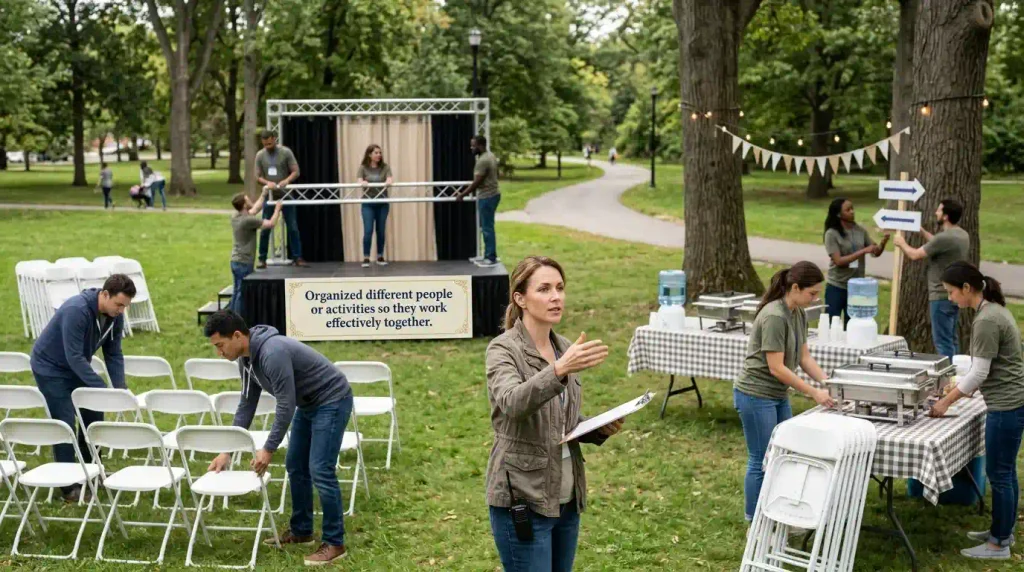
Coordinated (Verb) — US /koʊˈɔːrdəneɪtɪd/ | UK /kəʊˈɔːdɪneɪtɪd/
Meaning: Organized different people or activities so they work effectively together.
Tone/Register: Neutral, professional, business.
Example: She coordinated the volunteers for the event.
The departments coordinated their efforts successfully.
Organized (Verb) — US /ˈɔːrɡənaɪzd/ | UK /ˈɔːɡənaɪzd/
Meaning: Arranged people, activities, or resources in a structured way.
Tone/Register: Neutral, everyday, professional.
Example: They organized a community fundraiser.
The manager organized the project carefully.
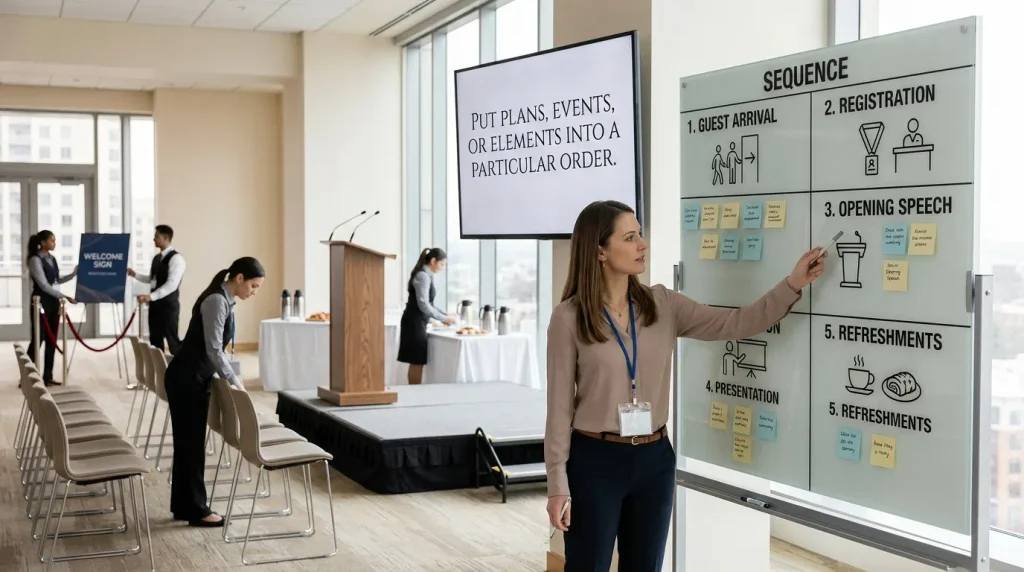
Arranged (Verb) — US /əˈreɪndʒd/ | UK /əˈreɪndʒd/
Meaning: Put plans, events, or elements into a particular order.
Tone/Register: Neutral, everyday.
Example: She arranged the meeting for Monday.
The team arranged everything before the guests arrived.
Planned (Verb) — US /plænd/ | UK /plænd/
Meaning: Decided in advance how something would happen.
Tone/Register: Neutral, common.
Example: We planned the trip months ago.
The company planned the launch carefully.
Managed (Verb) — US /ˈmænɪdʒd/ | UK /ˈmænɪdʒd/
Meaning: Controlled or handled an activity to achieve a desired result.
Tone/Register: Professional, neutral.
Example: She managed the entire event.
He managed the project from start to finish.
Directed (Verb) — US /dəˈrektɪd/ | UK /daɪˈrektɪd/
Meaning: Guided people or activities toward a particular goal.
Tone/Register: Professional, formal.
Example: The producer directed the production team.
She directed the volunteers during the event.
Engineered (Verb) — US /ˌendʒəˈnɪrd/ | UK /ˌendʒɪˈnɪəd/
Meaning: Deliberately designed or arranged something to produce a particular outcome.
Tone/Register: Formal, strategic.
Example: The company engineered a rapid recovery.
The situation appeared carefully engineered.
Arranged Deliberately (Phrase) — US /əˈreɪndʒd dɪˈlɪbərətli/ | UK /əˈreɪndʒd dɪˈlɪbərətli/
Meaning: Planned something intentionally rather than allowing it to happen naturally.
Tone/Register: Formal, neutral.
Example: The meeting was arranged deliberately.
The changes were arranged deliberately to improve efficiency.
Carefully Planned (Phrase) — US /ˈkerfəli plænd/ | UK /ˈkeəfəli plænd/
Meaning: Prepared with attention to detail and possible outcomes.
Tone/Register: Neutral, professional.
Example: It was a carefully planned campaign.
The surprise was carefully planned.
Carefully Arranged (Phrase) — US /ˈkerfəli əˈreɪndʒd/ | UK /ˈkeəfəli əˈreɪndʒd/
Meaning: Organized with deliberate attention to how different parts fit together.
Tone/Register: Neutral, formal.
Example: The schedule was carefully arranged.
The ceremony was carefully arranged for the guests.
Strategized (Verb) — US /ˈstrætədʒaɪzd/ | UK /ˈstrætədʒaɪzd/
Meaning: Developed a deliberate strategy for achieving a goal.
Tone/Register: Business, professional.
Example: The team strategized before the competition.
They strategized carefully before launching the campaign.
Executed (Verb) — US /ˈeksɪkjuːtɪd/ | UK /ˈeksɪkjuːtɪd/
Meaning: Put a plan into action effectively.
Tone/Register: Professional, business.
Example: The team executed the plan successfully.
She executed the campaign with precision.
Conducted (Verb) — US /kənˈdʌktɪd/ | UK /kənˈdʌktɪd/
Meaning: Organized or carried out an activity or operation.
Tone/Register: Formal, academic, professional.
Example: Researchers conducted the study carefully.
The organization conducted a public campaign.
Administered (Verb) — US /ədˈmɪnɪstərd/ | UK /ədˈmɪnɪstəd/
Meaning: Managed or supervised a process, program, or organization.
Tone/Register: Formal, administrative.
Example: The department administered the program.
She administered the project efficiently.
Supervised (Verb) — US /ˈsuːpərvaɪzd/ | UK /ˈsuːpəvaɪzd/
Meaning: Watched over and guided people or activities.
Tone/Register: Professional, formal.
Example: He supervised the construction work.
She supervised the event staff.
Guided (Verb) — US /ˈɡaɪdɪd/ | UK /ˈɡaɪdɪd/
Meaning: Directed someone or something toward a particular result.
Tone/Register: Neutral, professional.
Example: The coach guided the team toward victory.
She guided the discussion smoothly.
Led (Verb) — US /led/ | UK /led/
Meaning: Directed people or activities toward a goal.
Tone/Register: Neutral, everyday, professional.
Example: She led the fundraising campaign.
He led the team through the difficult project.
Directed Behind the Scenes (Phrase) — US /dəˈrektɪd bɪˈhaɪnd ðə siːnz/ | UK /daɪˈrektɪd bɪˈhaɪnd ðə siːnz/
Meaning: Quietly controlled or guided events without being publicly visible.
Tone/Register: Journalistic, potentially negative.
Example: Someone directed the negotiations behind the scenes.
The changes were directed behind the scenes.
Manipulated (Verb) — US /məˈnɪpjəleɪtɪd/ | UK /məˈnɪpjʊleɪtɪd/
Meaning: Controlled people or events, often unfairly, to achieve a desired outcome.
Tone/Register: Negative, critical.
Example: The story suggested that public opinion was manipulated.
He manipulated the situation for personal gain.
Engineered Behind the Scenes (Phrase) — US /ˌendʒəˈnɪrd bɪˈhaɪnd ðə siːnz/ | UK /ˌendʒɪˈnɪəd bɪˈhaɪnd ðə siːnz/
Meaning: Deliberately created or influenced an outcome secretly.
Tone/Register: Formal, journalistic.
Example: The agreement was engineered behind the scenes.
The result seemed engineered behind the scenes.
Arranged in Advance (Phrase) — US /əˈreɪndʒd ɪn ədˈvæns/ | UK /əˈreɪndʒd ɪn ədˈvɑːns/
Meaning: Organized before the event actually occurred.
Tone/Register: Neutral, everyday.
Example: Everything was arranged in advance.
The interviews were arranged in advance.
Preplanned (Adjective) — US /ˌpriːˈplænd/ | UK /ˌpriːˈplænd/
Meaning: Decided or designed before something happens.
Tone/Register: Neutral, professional.
Example: The route was preplanned.
The team followed a preplanned schedule.
Prepared (Verb/Adjective) — US /prɪˈperd/ | UK /prɪˈpeəd/
Meaning: Made ready in advance for a particular purpose.
Tone/Register: Neutral, everyday.
Example: The staff prepared the venue early.
The materials were prepared before the meeting.
Set Up (Phrasal Verb) — US /set ʌp/ | UK /set ʌp/
Meaning: Organized or arranged something so it could happen.
Tone/Register: Informal, everyday.
Example: They set up the meeting quickly.
She set up the event for Saturday.
Put Together (Phrasal Verb) — US /pʊt təˈɡeðər/ | UK /pʊt təˈɡeðə/
Meaning: Combined or arranged different parts into a complete plan or event.
Tone/Register: Informal, everyday.
Example: She put together a great presentation.
He put together the event in two weeks.
Structured (Verb/Adjective) — US /ˈstrʌktʃərd/ | UK /ˈstrʌktʃəd/
Meaning: Organized according to a clear system or pattern.
Tone/Register: Academic, professional.
Example: The discussion was carefully structured.
The course was structured around practical tasks.
Systematized (Verb) — US /ˈsɪstəmətaɪzd/ | UK /ˈsɪstəmətaɪzd/
Meaning: Organized something according to a consistent system.
Tone/Register: Formal, academic.
Example: The company systematized its procedures.
The process was systematized for greater efficiency.
Mobilized (Verb) — US /ˈmoʊbəlaɪzd/ | UK /ˈməʊbəlaɪzd/
Meaning: Organized people or resources for a particular purpose.
Tone/Register: Formal, professional.
Example: The charity mobilized volunteers quickly.
The organization mobilized resources after the disaster.
Rallying (Verb) — US /ˈræliɪŋ/ | UK /ˈræliɪŋ/
Meaning: Bringing people together to support a cause or goal.
Tone/Register: Political, social, energetic.
Example: She rallied supporters around the project.
The coach rallied the players before the final.
Arranging (Verb) — US /əˈreɪndʒɪŋ/ | UK /əˈreɪndʒɪŋ/
Meaning: Organizing different elements into a planned order.
Tone/Register: Neutral.
Example: He was arranging the final details.
She spent the morning arranging the schedule.
Coordinating (Verb) — US /koʊˈɔːrdəneɪtɪŋ/ | UK /kəʊˈɔːdɪneɪtɪŋ/
Meaning: Making different activities or people work together effectively.
Tone/Register: Professional, neutral.
Example: She is coordinating the conference.
He spent the day coordinating the teams.
Orchestrating (Verb) — US /ˈɔːrkəstreɪtɪŋ/ | UK /ˈɔːkɪstreɪtɪŋ/
Meaning: Carefully coordinating several elements to create a particular outcome.
Tone/Register: Formal, professional.
Example: She is orchestrating the entire campaign.
He spent weeks orchestrating the event.
Managing (Verb) — US /ˈmænɪdʒɪŋ/ | UK /ˈmænɪdʒɪŋ/
Meaning: Controlling or handling an activity, process, or group.
Tone/Register: Professional, neutral.
Example: She is managing the project.
He is managing several teams.
Directing (Verb) — US /dəˈrektɪŋ/ | UK /daɪˈrektɪŋ/
Meaning: Guiding people or activities toward a specific purpose.
Tone/Register: Formal, professional.
Example: She is directing the production.
He is directing the team during rehearsals.
Arranging Strategically (Phrase) — US /əˈreɪndʒɪŋ strəˈtiːdʒɪkli/ | UK /əˈreɪndʒɪŋ strəˈtiːdʒɪkli/
Meaning: Organizing something deliberately to gain a particular advantage.
Tone/Register: Business, strategic.
Example: The company arranged the negotiations strategically.
They were arranging the schedule strategically.
Planning Strategically (Phrase) — US /ˈplænɪŋ strəˈtiːdʒɪkli/ | UK /ˈplænɪŋ strəˈtiːdʒɪkli/
Meaning: Creating a plan with a specific long-term goal in mind.
Tone/Register: Business, professional.
Example: The team is planning strategically for growth.
She planned strategically before making changes.
Deliberately Organized (Phrase) — US /dɪˈlɪbərətli ˈɔːrɡənaɪzd/ | UK /dɪˈlɪbərətli ˈɔːɡənaɪzd/
Meaning: Intentionally arranged rather than happening by chance.
Tone/Register: Formal, neutral.
Example: The activities were deliberately organized.
The information was deliberately organized for clarity.
Carefully Coordinated (Phrase) — US /ˈkerfəli koʊˈɔːrdəneɪtɪd/ | UK /ˈkeəfəli kəʊˈɔːdɪneɪtɪd/
Meaning: Organized with close attention to how different parts work together.
Tone/Register: Professional, formal.
Example: The response was carefully coordinated.
The teams delivered a carefully coordinated performance.
Professionally Managed (Phrase) — US /prəˈfeʃənəli ˈmænɪdʒd/ | UK /prəˈfeʃənəli ˈmænɪdʒd/
Meaning: Controlled or organized competently by skilled people.
Tone/Register: Professional, business.
Example:
The conference received professional management.
The project received professional management from the beginning.
Methodically Planned (Phrase) — US /məˈθɑːdɪkli plænd/ | UK /məˈθɒdɪkli plænd/
Meaning: Planned carefully according to a systematic process.
Tone/Register: Formal, academic.
Example: The experiment was methodically planned.
She methodically planned every stage.
Systematically Arranged (Phrase) — US /ˌsɪstəˈmætɪkli əˈreɪndʒd/ | UK /ˌsɪstəˈmætɪkli əˈreɪndʒd/
Meaning: Organized according to a clear and consistent system.
Tone/Register: Academic, professional.
Example: The files were systematically arranged.
The information was systematically arranged by topic.
Deliberately Directed (Phrase) — US /dɪˈlɪbərətli dəˈrektɪd/ | UK /dɪˈlɪbərətli daɪˈrektɪd/
Meaning: Intentionally guided toward a particular result.
Tone/Register: Formal, strategic.
Example: The campaign was deliberately directed at young voters.
The discussion was deliberately directed toward solutions.
Purposefully Managed (Phrase) — US /ˈpɜːrpəsfəli ˈmænɪdʒd/ | UK /ˈpɜːpəsfəli ˈmænɪdʒd/
Meaning: Managed intentionally with a clear objective.
Tone/Register: Professional, formal.
Example: The project was purposefully managed.
The meeting was purposefully managed to save time.
Carefully Controlled (Phrase) — US /ˈkerfəli kənˈtroʊld/ | UK /ˈkeəfəli kənˈtrəʊld/
Meaning: Kept under deliberate control to produce a desired result.
Tone/Register: Formal, neutral, or negative.
Example: The experiment was carefully controlled.
The situation was carefully controlled by the organizers.
Deliberately Engineered (Phrase) — US /dɪˈlɪbərətli ˌendʒəˈnɪrd/ | UK /dɪˈlɪbərətli ˌendʒɪˈnɪəd/
Meaning: Intentionally designed to create a particular outcome.
Tone/Register: Formal, strategic, sometimes negative.
Example: The outcome appeared deliberately engineered.
The system was deliberately engineered for efficiency.
Purposefully Arranged (Phrase) — US /ˈpɜːrpəsfəli əˈreɪndʒd/ | UK /ˈpɜːpəsfəli əˈreɪndʒd/
Meaning: Organized intentionally for a particular purpose.
Tone/Register: Neutral, formal.
Example: The seating was purposefully arranged.
The presentation was purposefully arranged for beginners.
Deliberately Planned (Phrase) — US /dɪˈlɪbərətli plænd/ | UK /dɪˈlɪbərətli plænd/
Meaning: Thought about and designed intentionally before happening.
Tone/Register: Neutral, formal.
Example: The response was deliberately planned.
The event was deliberately planned around the audience.

Prearranged (Adjective) — US /ˌpriːəˈreɪndʒd/ | UK /ˌpriːəˈreɪndʒd/
Meaning: Agreed upon or organized before an event takes place.
Tone/Register: Neutral, formal.
Example: They met at a prearranged location.
The interview followed a prearranged schedule.
Planned in Advance (Phrase) — US /plænd ɪn ədˈvæns/ | UK /plænd ɪn ədˈvɑːns/
Meaning: Decided and prepared before the event happens.
Tone/Register: Everyday, neutral.
Example: The activity was planned.
Everything had been planned.
Purposefully Coordinated (Phrase) — US /ˈpɜːrpəsfəli koʊˈɔːrdəneɪtɪd/ | UK /ˈpɜːpəsfəli kəʊˈɔːdɪneɪtɪd/
Meaning: Intentionally brought different elements together to achieve a goal.
Tone/Register: Professional, formal.
Example: The response was purposefully coordinated.
The campaign was purposefully coordinated across several teams.
Carefully Managed (Phrase) — US /ˈkerfəli ˈmænɪdʒd/ | UK /ˈkeəfəli ˈmænɪdʒd/
Meaning: Controlled or handled with deliberate attention.
Tone/Register: Neutral, professional.
Example: The situation was carefully managed.
The project was carefully managed throughout the year.
Strategically Coordinated (Phrase) — US /strəˈtiːdʒɪkli koʊˈɔːrdəneɪtɪd/ | UK /strəˈtiːdʒɪkli kəʊˈɔːdɪneɪtɪd/
Meaning: Coordinated with a specific strategy or advantage in mind.
Tone/Register: Business, formal.
Example: The teams were strategically coordinated.
The campaign was strategically coordinated across regions.
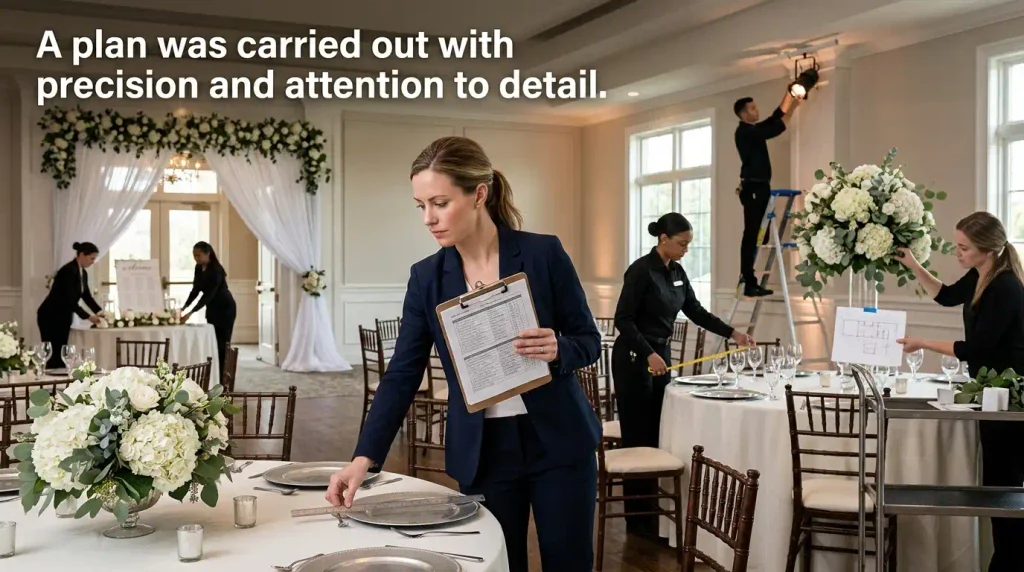
Carefully Executed (Phrase) — US /ˈkerfəli ˈeksɪkjuːtɪd/ | UK /ˈkeəfəli ˈeksɪkjuːtɪd/
Meaning: A plan was carried out with precision and attention to detail.
Tone/Register: Professional, formal.
Example: The plan was carefully executed.
The performance was carefully executed from start to finish.
Synonyms for Orchestrated by Tone
Positive
Use these when orchestrated describes skillful planning or successful teamwork:
- Coordinated
- Organized
- Planned
- Managed
- Directed
- Guided
- Executed
- Carefully coordinated
- Professionally managed
- Carefully executed
These words emphasize competence, preparation, and successful results.
Neutral
These alternatives simply describe deliberate organization:
- Arranged
- Conducted
- Structured
- Prearranged
- Prepared
- Planned in advance
- Systematically arranged
- Carefully arranged
- Deliberately organized
They work well in academic, professional, and everyday contexts.
Negative or Critical
These choices can suggest hidden influence or manipulation:
- Manipulated
- Engineered
- Deliberately engineered
- Engineered behind the scenes
- Directed behind the scenes
- Carefully controlled
Therefore, use them carefully. They can imply that someone influenced events in a secretive or unfair way.
Playful or Informal
For casual conversation, these are more natural:
- Set up
- Put together
- Planned
- Arranged
- Rallied
They sound less formal than orchestrated.
Orchestrated vs Close Alternatives
Coordinated vs Orchestrated
Orchestrated suggests detailed control over multiple elements and often implies a carefully designed outcome.
Coordinated focuses more on making people or activities work together effectively.
Use orchestrated when the planning is complex. Use coordinated when teamwork is the main idea.
Orchestrated vs Organized
Organized is broader and more common. It can describe putting things into order.
Orchestrated suggests more deliberate involvement and control.
For example, “She organized the meeting” is ordinary. “She orchestrated the meeting” suggests that she carefully controlled how it unfolded.
Orchestrated vs Engineered
Engineered strongly suggests that something was deliberately designed to create a particular outcome.
Orchestrated can sound more neutral and may describe successful coordination.
However, both can carry a negative meaning when used in controversial situations.
How “Orchestrated” Changes by Context
Daily Conversation
In casual conversation, planned, organized, arranged, and set up are usually more natural.
For example, instead of saying, “I orchestrated a dinner,” a native speaker would normally say, “I organized a dinner.”
Writing and Blogging
In blogs and articles, orchestrated can create a stronger sense of deliberate action.
For instance, “The campaign was carefully orchestrated” sounds more strategic than “The campaign was organized.”
Professional or Academic Writing
Professional writing often benefits from coordinated, structured, strategically planned, conducted, or systematically arranged.
These alternatives can make the exact type of organization clearer.
Creative or Informal Use
Creative writing can use orchestrated, engineered, directed, or manipulated to create a sense of hidden planning.
For example, “Every detail seemed orchestrated” can suggest that nothing happened by chance.
Common Mistakes and Native Usage
A common mistake is assuming orchestrated always means “organized.” Although the words overlap, orchestrated often suggests complex coordination or deliberate control.
Another mistake is using manipulated as a neutral substitute. Manipulated usually carries a negative meaning, while orchestrated can be positive, neutral, or negative.
Also, avoid using orchestrated for very simple tasks. Native speakers are more likely to say “arranged” or “organized” for ordinary activities.
For example:
Natural: She organized a birthday party.
More dramatic: She orchestrated a successful fundraising campaign.
The second sentence works because it suggests several coordinated elements.
Register Notes
Orchestrated is relatively formal and appears frequently in journalism, business writing, politics, entertainment, and analytical writing.
Organized, planned, arranged, and set up are more common in everyday speech.
Engineered, strategically coordinated, methodically planned, and systematically arranged are more specialized.
Therefore, choose the synonym based on audience, context, and intended tone.
Real-Life Mini Scenarios
Workplace
A project manager may have orchestrated a complicated product launch by coordinating designers, developers, marketers, and executives.
Social Situation
For a simple dinner with friends, organized or arranged sounds more natural than orchestrated.
Media and Pop Culture
A journalist might say that a public appearance was carefully orchestrated if every detail appeared planned.
Writing and Storytelling
A novelist might describe a character as having engineered events to make an outcome seem accidental.
Interactive Practice Quiz
1. Which word is most natural for organizing a team project?
A) Coordinated
B) Manipulated
C) Engineered
D) Controlled
2. Which alternative usually has a negative meaning?
A) Organized
B) Guided
C) Manipulated
D) Arranged
3. Which word best describes a plan carried out successfully?
A) Executed
B) Prepared
C) Arranged
D) Led
4. Which option sounds most informal?
A) Systematized
B) Administered
C) Set up
D) Strategically coordinated
5. Which word suggests secret influence?
A) Directed behind the scenes
B) Organized
C) Prepared
D) Guided
6. Which word is best for academic writing about a structured process?
A) Put together
B) Systematically arranged
C) Set up
D) Rallied
7. Which word means planned before an event?
A) Prearranged
B) Manipulated
C) Guided
D) Led
8. Which word focuses on bringing people together for a cause?
A) Rallied
B) Structured
C) Administered
D) Conducted
9. Which word best fits a business strategy?
A) Strategized
B) Set up
C) Put together
D) Arranged
10. Which alternative is closest to “carefully planned”?
A) Carefully coordinated
B) Manipulated
C) Rallied
D) Led
11. Which word means managed or supervised a program?
A) Administered
B) Arranged
C) Planned
D) Prepared
12. Which word can suggest deliberate design for a specific result?
A) Engineered
B) Organized
C) Guided
D) Conducted
13. Which phrase is best for something agreed upon beforehand?
A) Prearranged
B) Manipulated
C) Rallied
D) Directed
14. Which alternative is most suitable for everyday speech?
A) Set up
B) Systematized
C) Methodically planned
D) Deliberately engineered
15. Which word best emphasizes making different activities work together?
A) Coordinated
B) Manipulated
C) Engineered
D) Prepared
Answer Key: 1-A, 2-C, 3-A, 4-C, 5-A, 6-B, 7-A, 8-A, 9-A, 10-A, 11-A, 12-A, 13-A, 14-A, 15-A
Reflection Task
Choose one synonym from the article and write a sentence about a real event, workplace task, school project, or personal experience.
FAQs
1. What is the best synonym for orchestrated in professional writing?
Coordinated is often the best professional alternative because it clearly suggests that different people, tasks, or resources were brought together. However, managed, directed, strategically planned, or carefully executed may be better depending on the exact context. If the action involved complex planning and deliberate control, orchestrated may be the strongest choice.
2. What is a simple word for orchestrated?
The simplest alternatives are planned, organized, arranged, coordinated, and managed. The best choice depends on the sentence. For everyday English, “organized” is usually the easiest replacement. However, “coordinated” works better when several people or activities need to work together toward one result.
3. Does orchestrated have a negative meaning?
Not always. Orchestrated can be positive, neutral, or negative. A successful event can be described as carefully orchestrated, which sounds complimentary. However, when discussing politics, controversy, or deception, it may suggest hidden planning or manipulation. Therefore, the surrounding context determines whether the word feels positive or suspicious.
4. What is the difference between orchestrated and coordinated?
Orchestrated usually suggests more deliberate control and detailed planning, while coordinated mainly emphasizes cooperation between different people or activities. For example, a manager may coordinate several teams, while people may describe a complex campaign as orchestrated because its many carefully controlled elements work together toward one outcome.
5. What is a synonym for orchestrated that sounds less formal?
For casual English, use planned, organized, arranged, set up, or put together. These expressions are more natural in everyday conversation. For example, “She organized the party” sounds casual and straightforward, while “She orchestrated the party” sounds more formal and may imply that she carefully controlled many details.
6. What word can replace orchestrated when manipulation is intended?
When the meaning is deliberately controlling someone or events unfairly, manipulated is often appropriate. Engineered can also work when an outcome was deliberately designed. However, these words are stronger than neutral alternatives such as organized or coordinated because they can suggest secrecy, influence, or questionable intentions.
7. Is orchestrated suitable for academic writing?
Yes. Orchestrated can work well in academic writing when discussing complex coordination, deliberate processes, or organized actions. However, academic writers should choose the word carefully. Alternatives such as coordinated, structured, systematically arranged, conducted, or strategically planned may provide greater precision when the specific type of organization matters.
8. How can learning synonyms for orchestrated improve English?
Learning alternatives helps you distinguish between planning, coordination, management, direction, and manipulation. As a result, your writing becomes more precise and natural. Students can use these words in essays, while bloggers and professionals can avoid repetition. Regular practice in sentences, emails, and conversations also strengthens active vocabulary.
Conclusion
Learning synonyms for orchestrated helps you describe planning, coordination, leadership, and deliberate action with greater precision and confidence.
Words such as coordinated, organized, arranged, managed, engineered, and directed each add a different shade of meaning. Therefore, context should guide your choice.
For students, bloggers, and professionals, synonyms for orchestrated make essays, articles, reports, and conversations more varied. They also help avoid repetitive vocabulary.
Keep practicing synonyms for orchestrated in emails, essays, stories, and daily conversations. Start with a few useful alternatives, then build your vocabulary through regular sentence practice.

Shahzeena Shazadi is the founder and lead writer at VocablyHub.com, where she creates accurate, reader-focused English language content designed to help people communicate with clarity and confidence. She specializes in synonyms, antonyms, word meanings, idioms, and practical vocabulary guides that simplify complex language concepts for everyday use. Every article is carefully researched, fact-checked, and written in clear, accessible language using reliable references and real-world examples. Her goal is to provide helpful, trustworthy content that supports learners at every stage of their English language journey.
Her editorial approach focuses on accuracy, transparency, and user value while following modern content quality standards. She regularly reviews and updates content to keep information relevant, useful, and easy to understand. Through VocablyHub.com, Shahzeena Shazadi is committed to publishing reliable language resources that help students, writers, educators, professionals, and English learners expand their vocabulary, improve their writing skills, and communicate with confidence in academic, professional, and everyday situations.