
Synonyms for once in a lifetime can help you describe a rare and unforgettable experience with more variety. Imagine meeting your favorite celebrity by chance and sharing a special moment.
A once-in-a-lifetime opportunity can change how you see the world. Learning different expressions helps you explain such moments clearly without repeating the same phrase again and again.
For students, synonyms for once in a lifetime can make essays, assignments, and presentations more engaging. Bloggers and content writers can also use varied vocabulary to keep their content fresh.
For everyday English users, synonyms for once in a lifetime make conversations and stories more expressive. Choosing the right alternative helps you show whether a moment is rare, extraordinary, unforgettable, or truly special.
What Does “Once in a Lifetime” Really Mean?
Once in a lifetime describes something extremely rare that a person may experience only once during their entire life.
It can describe an opportunity, experience, event, achievement, journey, meeting, moment, or chance.
Simple Definition
Once in a lifetime (Phrase) — something so rare, special, or memorable that it may happen only one time during a person’s life.
Example: Winning the international competition was a once-in-a-lifetime achievement.
Native speakers commonly use the phrase when they want to emphasize rarity and emotional importance.
The phrase is usually positive, but its meaning can become neutral or negative depending on context.
Part of Speech
“Once in a lifetime” is an idiomatic phrase.
Before a noun, it is normally hyphenated:
a once-in-a-lifetime opportunity
When it is used as a normal phrase, hyphens are generally unnecessary:
It happens once in a lifetime.
Connotative Meaning
Connotation (the emotional or implied feeling associated with a word beyond its basic dictionary meaning) affects how a synonym sounds.
Positive Tone
The phrase can suggest something beautiful, exciting, valuable, unforgettable, or deeply meaningful.
Example: Watching the solar eclipse was a once-in-a-lifetime experience.
Negative Tone
It may describe a rare but unpleasant situation.
Example: The town experienced a once-in-a-lifetime flood.
Neutral Tone
It can simply emphasize that something is highly unusual.
Example: Scientists recorded a once-in-a-lifetime astronomical event.
Etymology
The phrase once in a lifetime contains several words with very old English roots.
Old English: 450–1100
Once developed from Old English forms related to ān, meaning “one.”
Life comes from Old English līf, meaning life or existence.
Time developed from Old English tīma, referring to a period or span.
The complete modern phrase did not exist in Old English in its present form.
Middle English: 1100–1500
During Middle English, the forms of once, life, and time continued to change as English developed.
Expressions referring to the duration of human life became increasingly common.
Modern English: 1500–Present
Modern English developed lifetime as a compound noun meaning the entire duration of a person’s life.
The phrase once in a lifetime became established as a way to describe something exceptionally rare, significant, or memorable.
Pronunciation
US: /wʌns ɪn ə ˈlaɪfˌtaɪm/
UK: /wʌns ɪn ə ˈlaɪfˌtaɪm/
Syllables
once-in-a-life-time
Affixation Pattern
Root: life + time
Prefix: None
Suffix: None
Formation: Compound noun
Synonyms List:
The alternatives below cover different shades of rarity, uniqueness, emotional importance, historical significance, and memorability.
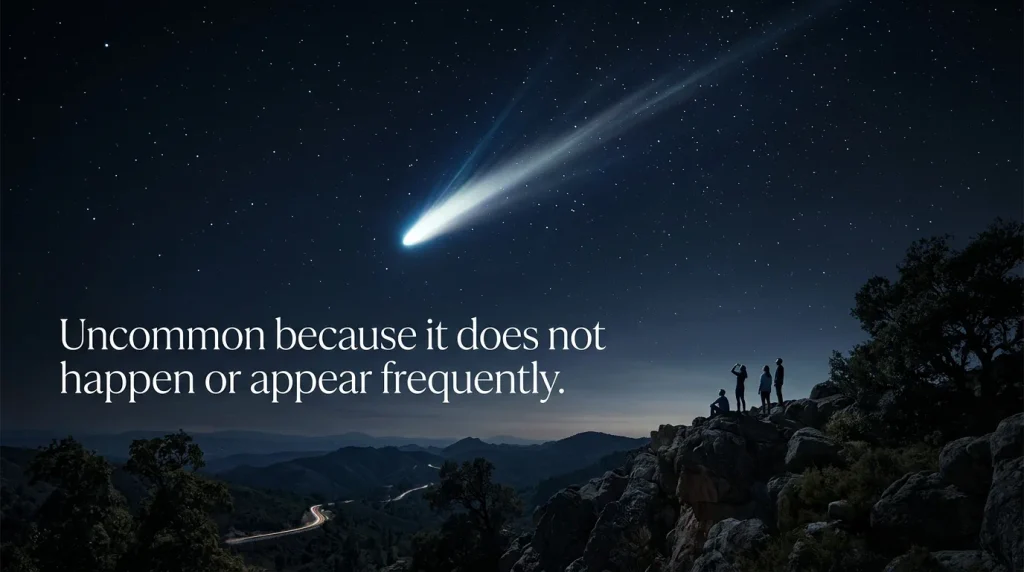
Rare (Adjective) — US: /rer/ | UK: /reə/
Meaning: Uncommon because it does not happen or appear frequently.
Tone/Register: Neutral, everyday.
Example: Meeting the famous author was a rare opportunity.
Chances like that are rare in everyday life.
Unique (Adjective) — US: /juˈniːk/ | UK: /juˈniːk/
Meaning: Extremely different from anything else.
Tone/Register: Neutral, formal.
Example: The journey gave her a unique experience.
The festival offered a unique cultural perspective.
Extraordinary (Adjective) — US: /ɪkˈstrɔːrdəneri/ | UK: /ɪkˈstrɔːdənəri/
Meaning: Remarkably unusual, impressive, or special.
Tone/Register: Formal, expressive.
Example: He received an extraordinary opportunity to perform.
The expedition became an extraordinary chapter in her life.
Exceptional (Adjective) — US: /ɪkˈsepʃənəl/ | UK: /ɪkˈsepʃənəl/
Meaning: Much better, rarer, or more unusual than normal.
Tone/Register: Formal, professional.
Example: She received an exceptional opportunity to study abroad.
His achievement was exceptional for his age.
Unforgettable (Adjective) — US: /ˌʌnfərˈɡetəbəl/ | UK: /ˌʌnfəˈɡetəbəl/
Meaning: So memorable that it is difficult to forget.
Tone/Register: Emotional, conversational.
Example: Our family trip was unforgettable.
The evening became an unforgettable memory.
Unrepeatable (Adjective) — US: /ˌʌnrɪˈpiːtəbəl/ | UK: /ˌʌnrɪˈpiːtəbəl/
Meaning: Impossible or extremely unlikely to happen again.
Tone/Register: Formal, literary.
Example: The performance created an unrepeatable moment.
She knew the experience could never be recreated.
Unparalleled (Adjective) — US: /ʌnˈpærəleld/ | UK: /ʌnˈpærəleld/
Meaning: Having no equal or comparable example.
Tone/Register: Formal, sophisticated.
Example: The discovery created an unparalleled opportunity.
Her contribution had an unparalleled impact.
Unprecedented (Adjective) — US: /ʌnˈpresɪdentɪd/ | UK: /ʌnˈpresɪdentɪd/
Meaning: Never having happened or existed before.
Tone/Register: Academic, formal.
Example: Scientists recorded an unprecedented event.
The discovery created unprecedented possibilities.
Singular (Adjective) — US: /ˈsɪŋɡjələr/ | UK: /ˈsɪŋɡjʊlə/
Meaning: Exceptionally distinctive or remarkable.
Tone/Register: Formal, literary.
Example: Her performance was a singular achievement.
The meeting became a singular moment in his career.
One-Off (Noun/Adjective) — US: /ˈwʌn ˌɔf/ | UK: /ˈwʌn ˌɒf/
Meaning: Something that happens or exists only once.
Tone/Register: Informal, especially British.
Example: The exhibition was a one-off event.
Everyone knew it was a one-off opportunity.
Once-Only (Adjective) — US: /ˌwʌns ˈoʊnli/ | UK: /ˌwʌns ˈəʊnli/
Meaning: Happening only one time.
Tone/Register: Neutral.
Example: Visitors received a once-only chance to enter.
The museum arranged a once-only viewing.
One-Time (Adjective) — US: /ˌwʌn ˈtaɪm/ | UK: /ˌwʌn ˈtaɪm/
Meaning: Happening on a single occasion rather than repeatedly.
Tone/Register: Neutral, conversational.
Example: She accepted a one-time invitation.
It was a one-time opportunity for the team.
Momentous (Adjective) — US: /moʊˈmentəs/ | UK: /məʊˈmentəs/
Meaning: Very important and likely to have a lasting effect.
Tone/Register: Formal, literary.
Example: Graduation was a momentous day for her.
The decision became a momentous turning point.
Historic (Adjective) — US: /hɪˈstɔːrɪk/ | UK: /hɪˈstɒrɪk/
Meaning: Important enough to be remembered as part of history.
Tone/Register: Formal, journalistic.
Example: The team achieved a historic victory.
It was a historic moment for the nation.
Remarkable (Adjective) — US: /rɪˈmɑːrkəbəl/ | UK: /rɪˈmɑːkəbəl/
Meaning: Unusually impressive, notable, or surprising.
Tone/Register: Neutral, formal.
Example: She had a remarkable opportunity to travel.
His recovery was remarkable.
Phenomenal (Adjective) — US: /fəˈnɑːmənəl/ | UK: /fəˈnɒmɪnəl/
Meaning: Exceptionally impressive or extraordinary.
Tone/Register: Informal, enthusiastic.
Example: Winning the final was a phenomenal achievement.
The crowd created a phenomenal atmosphere.
Rare Opportunity (Noun Phrase) — US: /rer ˌɑːpərˈtuːnəti/ | UK: /reə ˌɒpəˈtjuːnəti/
Meaning: An uncommon chance that is difficult to obtain.
Tone/Register: Neutral, professional.
Example: The program gave students a rare opportunity.
She understood how valuable the invitation was.
Extraordinary Chance (Noun Phrase) — US: /ɪkˈstrɔːrdəneri tʃæns/ | UK: /ɪkˈstrɔːdənəri tʃɑːns/
Meaning: A highly unusual opportunity that may not appear again.
Tone/Register: Neutral, expressive.
Example: He received an extraordinary chance to travel.
She knew the chance could change her future.

Special Occasion (Noun Phrase) — US: /ˈspeʃəl əˈkeɪʒən/ | UK: /ˈspeʃəl əˈkeɪʒən/
Meaning: An event that is more meaningful than an ordinary occasion.
Tone/Register: Neutral, conversational.
Example: They saved the restaurant for a special occasion.
Her graduation was a special occasion for the family.
Priceless (Adjective) — US: /ˈpraɪsləs/ | UK: /ˈpraɪsləs/
Meaning: Emotionally valuable beyond ordinary measurement.
Tone/Register: Emotional, conversational.
Example: Her father’s advice was priceless.
That quiet moment became priceless to him.
Precious (Adjective) — US: /ˈpreʃəs/ | UK: /ˈpreʃəs/
Meaning: Extremely valuable or meaningful emotionally.
Tone/Register: Emotional, literary.
Example: Their final conversation was precious.
She treasured that precious memory.
Incomparable (Adjective) — US: /ɪnˈkɑːmpərəbəl/ | UK: /ɪnˈkɒmpərəbəl/
Meaning: So distinctive that it cannot easily be compared with anything else.
Tone/Register: Formal, expressive.
Example: The view from the summit was incomparable.
Her performance created an incomparable atmosphere.
Defining Moment (Noun Phrase) — US: /dɪˈfaɪnɪŋ ˈmoʊmənt/ | UK: /dɪˈfaɪnɪŋ ˈməʊmənt/
Meaning: An important moment that strongly shapes someone’s life or identity.
Tone/Register: Neutral, professional.
Example: Winning the scholarship was a defining moment.
The experience became a defining moment in her career.
Landmark (Adjective/Noun) — US: /ˈlændmɑːrk/ | UK: /ˈlændmɑːk/
Meaning: Extremely important because it represents major progress or achievement.
Tone/Register: Formal, professional.
Example: Researchers announced a landmark discovery.
The agreement became a landmark moment.
Once-in-a-Generation (Adjective) — US: /ˌwʌns ɪn ə ˌdʒenəˈreɪʃən/ | UK: /ˌwʌns ɪn ə ˌdʒenəˈreɪʃən/
Meaning: So unusual that it may occur only once within a generation.
Tone/Register: Journalistic, expressive.
Example: She delivered a once-in-a-generation performance.
He was described as a once-in-a-generation talent.
Life-Changing (Adjective) — US: /ˈlaɪfˌtʃeɪndʒɪŋ/ | UK: /ˈlaɪfˌtʃeɪndʒɪŋ/
Meaning: Having a major and lasting effect on someone’s life.
Tone/Register: Conversational, emotional.
Example: The scholarship was a life-changing opportunity.
Meeting her mentor became life-changing.
Awe-Inspiring (Adjective) — US: /ˈɔː ɪnˌspaɪərɪŋ/ | UK: /ˈɔː ɪnˌspaɪərɪŋ/
Meaning: Creating a strong feeling of wonder or admiration.
Tone/Register: Expressive, literary.
Example: The mountain scenery was awe-inspiring.
Watching the launch was an awe-inspiring experience.
Unmatched (Adjective) — US: /ʌnˈmætʃt/ | UK: /ʌnˈmætʃt/
Meaning: Having no equal in quality, importance, or impact.
Tone/Register: Neutral, formal.
Example: The final performance was unmatched.
Her dedication produced an unmatched result.
One in a Million (Informal Phrase) — US: /wʌn ɪn ə ˈmɪljən/ | UK: /wʌn ɪn ə ˈmɪljən/
Meaning: Extremely rare, special, or unusual.
Tone/Register: Informal, conversational.
Example: Friends like her are one in a million.
Finding such a mentor felt like a one-in-a-million experience.
Fleeting (Adjective) — US: /ˈfliːtɪŋ/ | UK: /ˈfliːtɪŋ/
Meaning: Lasting for only a short time and therefore easily missed.
Tone/Register: Literary, expressive.
Example: She captured a fleeting moment at sunset.
The opportunity was fleeting, so he acted quickly.
Uncommon (Adjective) — US: /ʌnˈkɑːmən/ | UK: /ʌnˈkɒmən/
Meaning: Not often encountered, seen, or experienced.
Tone/Register: Neutral, everyday.
Example: Such an uncommon opportunity rarely appears.
The researchers observed an uncommon phenomenon.
Extraordinary Rarity (Noun Phrase) — US: /ɪkˈstrɔːrdəneri ˈrerəti/ | UK: /ɪkˈstrɔːdənəri ˈreərəti/
Meaning: Something exceptionally unusual or difficult to encounter.
Tone/Register: Formal, descriptive.
Example: The artifact was an extraordinary rarity.
The discovery represented an extraordinary rarity in the field.
Isolated (Adjective) — US: /ˈaɪsəleɪtɪd/ | UK: /ˈaɪsəleɪtɪd/
Meaning: Occurring separately as a single unusual instance.
Tone/Register: Formal, academic.
Example: Scientists described the result as an isolated occurrence.
The unusual behavior appeared to be an isolated event.
Exceptional Occurrence (Noun Phrase) — US: /ɪkˈsepʃənəl əˈkɜːrəns/ | UK: /ɪkˈsepʃənəl əˈkʌrəns/
Meaning: An unusually rare event that falls outside normal experience.
Tone/Register: Formal, academic.
Example: The phenomenon was an exceptional occurrence.
The unusual event attracted international attention.
Fleeting Opportunity (Noun Phrase) — US: /ˈfliːtɪŋ ˌɑːpərˈtuːnəti/ | UK: /ˈfliːtɪŋ ˌɒpəˈtjuːnəti/
Meaning: A valuable opportunity available for only a short period.
Tone/Register: Neutral, expressive.
Example: She recognized the fleeting opportunity immediately.
He did not want to let the chance disappear.
Singular Event (Noun Phrase) — US: /ˈsɪŋɡjələr ɪˈvent/ | UK: /ˈsɪŋɡjʊlə ɪˈvent/
Meaning: A highly unusual event that stands apart from ordinary events.
Tone/Register: Formal, literary.
Example: The eclipse became a singular event for the community.
Historians regarded the meeting as a singular event.
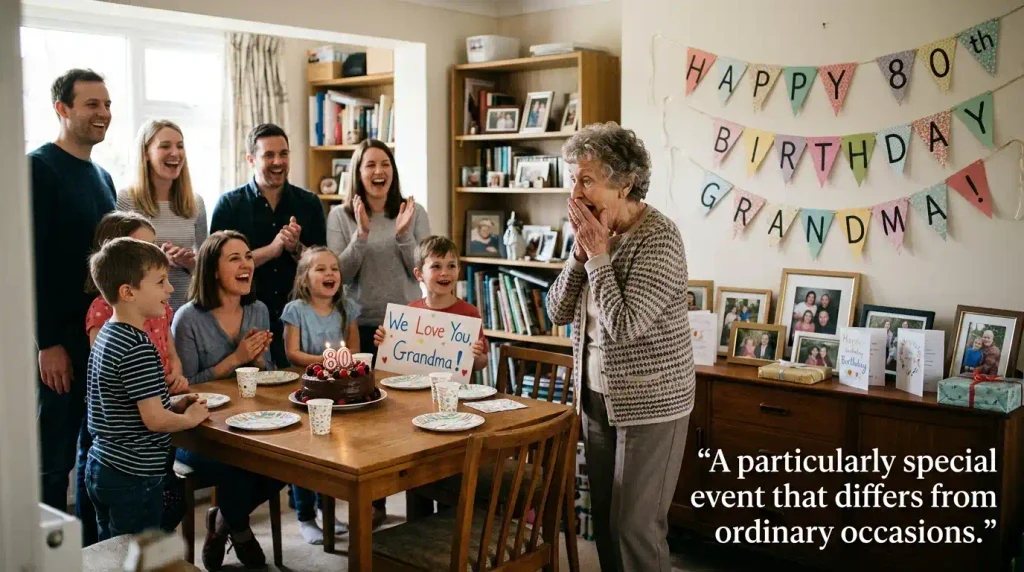
Extraordinary Occasion (Noun Phrase) — US: /ɪkˈstrɔːrdəneri əˈkeɪʒən/ | UK: /ɪkˈstrɔːdənəri əˈkeɪʒən/
Meaning: A particularly special event that differs from ordinary occasions.
Tone/Register: Formal, expressive.
Example: The award ceremony was an extraordinary occasion.
The family gathered for this extraordinary occasion.
Uncommon Opportunity (Noun Phrase) — US: /ʌnˈkɑːmən ˌɑːpərˈtuːnəti/ | UK: /ʌnˈkɒmən ˌɒpəˈtjuːnəti/
Meaning: A chance that is not frequently available.
Tone/Register: Neutral, professional.
Example: The program offered an uncommon opportunity for researchers.
He understood the value of the uncommon opportunity.
Once-Only Experience (Noun Phrase) — US: /ˌwʌns ˈoʊnli ɪkˈspɪriəns/ | UK: /ˌwʌns ˈəʊnli ɪkˈspɪəriəns/
Meaning: An experience that occurs or is intended to occur only once.
Tone/Register: Neutral, descriptive.
Example: The expedition was a once-only experience for the students.
She described the ceremony as a once-in-a-lifetime experience.

Synonyms by Tone
Positive
Use unforgettable, extraordinary, remarkable, phenomenal, precious, priceless, awe-inspiring, life-changing, and exceptional when the experience is wonderful or emotionally meaningful.
Neutral
Use rare, uncommon, one-time, once-only, unrepeatable, and one-off when the main idea is rarity or limited occurrence.
Formal
Use unprecedented, unparalleled, singular, momentous, historic, landmark, and exceptional in professional or academic contexts.
Informal
Use one-off, one in a million, one-time, and phenomenal in relaxed conversations.
Tone matters because the same basic idea can sound emotional, academic, professional, dramatic, or casual depending on the word you choose.
“Once in a Lifetime” vs Close Alternatives
Rare vs once in a Lifetime
Once in a lifetime emphasizes extreme rarity and often emotional importance.
Rare means uncommon.
Use once in a lifetime for a highly memorable experience and rare for something that does not happen often.
Once in a Lifetime vs Unique
Unique emphasizes distinctiveness.
Once in a lifetime emphasizes rarity.
Something can be unique without being a once-in-a-lifetime event.
Once in a Lifetime vs Unprecedented
Unprecedented means something has never happened before.
Once in a lifetime means something is extremely rare or memorable.
Therefore, these expressions are related but should not always be used interchangeably.
How “Once in a Lifetime” Changes by Context
Daily Conversation
In everyday speech, the phrase works well for memorable trips, celebrations, achievements, meetings, and unexpected opportunities.
Example: That concert was a once-in-a-lifetime experience.
Writing and Blogging
Bloggers can use the phrase to create emotional interest and emphasize a memorable event.
However, repeating it too frequently can make an article sound predictable.
Alternatives such as remarkable, unforgettable, extraordinary, and rare add variety.
Professional or Academic Tone
Formal writing often benefits from precise words such as unprecedented, exceptional, landmark, and momentous.
Choose the alternative that accurately communicates the intended idea.
Creative or Informal Use
Creative writing can use precious, singular, awe-inspiring, unforgettable, and incomparable to create emotional depth.
Common Mistakes and Native Usage
Mistake 1: Assuming Every Synonym Is Interchangeable
Synonyms can overlap without having the same meaning.
For example, historic emphasizes historical importance, while rare emphasizes frequency.
Mistake 2: Overusing “Unprecedented”
Use unprecedented when something genuinely has no previous example.
It should not simply replace “unusual.”
Mistake 3: Confusing “Unique” With “Rare”
Unique means distinctly different or one of a kind.
Rare means uncommon.
These concepts can overlap, but they are not identical.
Mistake 4: Using Casual Expressions in Formal Essays
One-off and one in a million may sound too informal in academic writing.
Use formal alternatives when the context requires them.
Native Usage Note
Native speakers usually choose the synonym based on the exact message they want to communicate.
Use unforgettable for memory, rare for scarcity, historic for historical importance, and life-changing for personal transformation.
Real-Life Mini Scenarios
Workplace
Receiving a chance to present your project to international executives could be a rare opportunity, an exceptional opportunity, or a defining moment.
Social Situation
Meeting an old friend after twenty years could be an unforgettable, precious, or once-in-a-lifetime moment.
Media and Pop Culture
A major concert could be described as phenomenal, historic, or once-in-a-generation.
Storytelling
A character’s final journey could be singular, unrepeatable, or life-changing, depending on the emotion being created.
Why Learning Synonyms Improves Your English
Learning alternatives for once in a lifetime helps you express ideas with greater precision.
Instead of repeating one phrase, you can choose a word that highlights rarity, emotion, importance, uniqueness, or personal impact.
For students, using varied vocabulary can strengthen essays, assignments, presentations, and exam answers. Bloggers and content writers can improve readability by choosing different words and avoiding unnecessary repetition. In everyday conversations, synonyms also make speech more expressive, natural, and engaging.
Most importantly, understanding word differences helps you communicate exactly what you mean.
Interactive Practice Quiz
1. Which word best describes an extremely uncommon opportunity?
A. Ordinary
B. Rare
C. Frequent
D. Routine
2. Which word emphasizes something unlikely to happen again?
A. Unrepeatable
B. Historic
C. Casual
D. Typical
3. Which word means something has never happened before?
A. Precious
B. Unprecedented
C. Familiar
D. Routine
4. Which synonym means difficult to forget?
A. Unforgettable
B. Ordinary
C. Repeated
D. Familiar
5. Which option is most suitable for formal writing?
A. One-off
B. One in a million
C. Unparalleled
D. Cool
6. Which word emphasizes historical importance?
A. Historic
B. Casual
C. Regular
D. Ordinary
7. Which expression is generally informal?
A. Momentous
B. Unprecedented
C. One-off
D. Unparalleled
8. Which word emphasizes major personal change?
A. Life-changing
B. Rare
C. One-time
D. Singular
9. Which word emphasizes emotional value?
A. Precious
B. Unprecedented
C. Historic
D. Landmark
10. Which word means having no equal?
A. Unparalleled
B. Ordinary
C. Repeated
D. Temporary
11. Which expression means happening only once?
A. Once-only
B. Frequent
C. Regular
D. Daily
12. Which word describes something exceptionally impressive?
A. Phenomenal
B. Typical
C. Common
D. Routine
13. Which phrase describes an important moment that shapes someone’s life?
A. Defining moment
B. One-time
C. Common moment
D. Routine event
14. Which word emphasizes being unlike anything else?
A. Unique
B. Frequent
C. Repeated
D. Ordinary
15. Which word describes an experience that creates wonder?
A. Awe-inspiring
B. Routine
C. Regular
D. Average
Reflection Task: Choose one synonym from this article and write your own sentence about a memorable experience, achievement, or opportunity.
Answer Key: 1-B, 2-A, 3-B, 4-A, 5-C, 6-A, 7-C, 8-A, 9-A, 10-A, 11-A, 12-A, 13-A, 14-A, 15-A
FAQs
1. What is the best synonym for once in a lifetime?
There is no single perfect synonym because the best choice depends on context. Rare emphasizes scarcity, while unforgettable focuses on memory. Extraordinary highlights unusual quality, and unrepeatable suggests that something may never happen again. In formal writing, unprecedented, exceptional, or unparalleled may be more appropriate.
2. What can I say instead of once-in-a-lifetime opportunity?
You can use rare opportunity, exceptional opportunity, extraordinary chance, unique opportunity, or unrepeatable opportunity. “Rare opportunity” sounds natural in everyday English. “Exceptional opportunity” works well in professional writing. If the opportunity has never existed before, unprecedented opportunity can be a more precise choice.
3. Is once in a lifetime formal or informal English?
“Once in a lifetime” is neutral English and works in conversations, articles, stories, speeches, and general writing. It is not strongly formal or informal. However, academic writing may favor alternatives such as exceptional, unprecedented, momentous, or landmark when a more precise or professional expression is needed.
4. What is the difference between once-in-a-lifetime and once-in-a-generation?
Once-in-a-lifetime focuses on something that one person may experience only once during their life. Once-in-a-generation describes something so unusual that it may happen only once within a generation. The second expression is often used for exceptional athletes, artists, leaders, discoveries, and cultural events.
5. Can unique replace once in a lifetime?
Sometimes, but they are not exact synonyms. Unique emphasizes being one of a kind or distinctly different. Once in a lifetime emphasizes rarity and personal significance. Therefore, an experience can be unique without being extremely rare. Use unique when distinctiveness is the main idea.
6. What is a good synonym for once in a lifetime in academic writing?
Useful formal alternatives include unprecedented, exceptional, unparalleled, singular, landmark, and momentous. The correct choice depends on context. “Unprecedented” works when something has not happened before, while “landmark” works well for a major discovery, achievement, or development.
7. What is a casual way to say once in a lifetime?
Casual alternatives include one-off, one-time, rare, unforgettable, and one in a million. “One-off” is particularly common in British English. “One in a million” sounds more expressive and is often used for unusually special people, opportunities, or experiences.
Conclusion
Learning synonyms for once in a lifetime gives you more ways to describe rare, memorable, and meaningful experiences without repeating the same expression.
Words such as rare, unforgettable, extraordinary, unique, exceptional, and unrepeatable each communicate a different shade of meaning.
Strong synonym knowledge also improves essays, emails, conversations, blogging, storytelling, and everyday communication by making your vocabulary more precise.
Now, choose three alternatives from this guide and use them in your own sentences. Practice them in emails, essays, and daily conversations to make your English more natural.

Shahzeena Shazadi is the founder and lead writer at VocablyHub.com, where she creates accurate, reader-focused English language content designed to help people communicate with clarity and confidence. She specializes in synonyms, antonyms, word meanings, idioms, and practical vocabulary guides that simplify complex language concepts for everyday use. Every article is carefully researched, fact-checked, and written in clear, accessible language using reliable references and real-world examples. Her goal is to provide helpful, trustworthy content that supports learners at every stage of their English language journey.
Her editorial approach focuses on accuracy, transparency, and user value while following modern content quality standards. She regularly reviews and updates content to keep information relevant, useful, and easy to understand. Through VocablyHub.com, Shahzeena Shazadi is committed to publishing reliable language resources that help students, writers, educators, professionals, and English learners expand their vocabulary, improve their writing skills, and communicate with confidence in academic, professional, and everyday situations.