
A synonym for hybrid can be useful when you want to describe something made from two different types. For example, a hybrid car combines fuel and electric power.
In everyday English, synonym choices for hybrid can change the exact meaning. Therefore, knowing several alternatives helps you sound more precise and natural.
Students, bloggers, and content writers often use hybrid in academic, technical, and creative contexts. However, repeating one word can make writing feel dull.
Likewise, daily English users can choose words such as blended, combined, or composite to express similar ideas. Learning these alternatives builds stronger vocabulary.
What Does “Hybrid” Really Mean?
Hybrid describes something that combines two or more different types, forms, origins, systems, or characteristics.
For example, a hybrid vehicle combines different power technologies. Similarly, a hybrid workplace combines remote work with office-based work.
As a noun, hybrid can refer to something produced by combining different elements. It can also describe an organism created from different varieties or species.
As an adjective, hybrid describes something formed by a combination of distinct elements.
Part of Speech
- Noun: hybrid
- Adjective: hybrid
- Simple definition: Something that combines two or more different types, forms, or characteristics.
Native speakers usually understand hybrid as a word of combination. The exact meaning depends on the context.
For instance, hybrid learning suggests a mixture of online and classroom learning. Meanwhile, a hybrid plant suggests a plant developed from different varieties.
Connotative Meaning
Connotation (the emotional or cultural feeling associated with a word beyond its basic dictionary meaning) can change how hybrid feels in different situations.
Positive tone: Hybrid can suggest innovation, flexibility, efficiency, and creative combination.
Negative tone: In some contexts, it may suggest something unusual, artificial, or lacking a clear identity.
Neutral tone: Most commonly, hybrid is neutral and simply describes a combination of different elements.
Therefore, the surrounding words are important. A phrase such as hybrid technology often sounds modern, while hybrid identity may carry a more personal or cultural meaning.
Etymology of “Hybrid”
The English word hybrid comes from Latin hybrida, referring to an animal produced from parents of different kinds or a mixed-breed offspring.
The deeper origin of the Latin word is uncertain. Some historical explanations have connected it with Greek and other ancient linguistic influences, but its exact etymology remains debated.
Old English: 450–1100
There was no commonly established Old English form of hybrid with the modern spelling and meaning. Instead, Old English used other vocabulary to describe mixed, unusual, or combined things.
Middle English: 1100–1500
The modern English word was not yet a regular part of everyday Middle English vocabulary. Latin terminology remained important in learned and scholarly writing.
Modern English: 1500–Present
The word entered English during the early modern period and gradually became established in scientific and biological contexts.
Later, its meaning expanded significantly. Today, hybrid can describe vehicles, workplaces, education, technology, language, culture, products, and many other combinations.
Pronunciation
- US: /ˈhaɪbrɪd/
- UK: /ˈhaɪbrɪd/
Syllables
hy-brid
Affixation Pattern of “Hybrid”
Root: hybrid
Prefix: None
Suffix: None
The word is primarily a borrowed lexical root rather than a modern English word created through ordinary prefix-and-suffix formation.
Synonyms List:
The best synonym depends on what is being combined. Some alternatives emphasize mixture, while others highlight crossbreeding, integration, or dual characteristics.
Composite (Noun/Adjective) — US: /kəmˈpoʊzɪt/ | UK: /ˈkɒmpəzɪt/
Meaning: Something made by combining several different parts into one whole.
Tone/Register: Formal, Academic, Technical

Example:
The bridge uses composite materials for added strength.
Her artwork is a composite of photographs and drawings.
Mixed (Adjective) — US: /mɪkst/ | UK: /mɪkst/
Meaning: Consisting of different types or elements brought together.
Tone/Register: Neutral, Everyday
Example:
The school offers mixed learning methods.
His background is mixed and culturally diverse.
Blended (Adjective) — US: /ˈblendɪd/ | UK: /ˈblendɪd/
Meaning: Created by smoothly combining different elements.
Tone/Register: Neutral, Professional
Example:
The course uses a blended learning model.
The designer created a blended style with classic and modern features.
Combined (Adjective) — US: /kəmˈbaɪnd/ | UK: /kəmˈbaɪnd/
Meaning: Formed by bringing separate things together.
Tone/Register: Neutral, Formal
Example:
The combined system works more efficiently.
They used combined methods to solve the problem.
Compound (Noun/Adjective) — US: /ˈkɑːmpaʊnd/ | UK: /ˈkɒmpaʊnd/
Meaning: Made from two or more distinct components joined together.
Tone/Register: Academic, Scientific, Technical
Example:
The material is a compound of several substances.
The researcher studied a compound structure.
Amalgam (Noun) — US: /əˈmæɡəm/ | UK: /əˈmæɡəm/
Meaning: A mixture or combination of different elements forming a unified whole.
Tone/Register: Formal, Literary
Example:
The city has become an amalgam of old and new traditions.
Her writing is an amalgam of history and personal experience.
Fusion (Noun) — US: /ˈfjuːʒən/ | UK: /ˈfjuːʒən/
Meaning: A combination in which separate elements come together to create something new.
Tone/Register: Neutral, Creative, Technical
Example:
The restaurant serves fusion cuisine.
The project represents a fusion of art and technology.
Mixture (Noun) — US: /ˈmɪkstʃər/ | UK: /ˈmɪkstʃə/
Meaning: A combination of different substances, ideas, or characteristics.
Tone/Register: Neutral, Everyday, Academic
Example:
The story contains a mixture of humor and drama.
The event attracted a mixture of cultures and traditions.
Crossbreed (Noun/Verb) — US: /ˈkrɔːsˌbriːd/ | UK: /ˈkrɒsˌbriːd/
Meaning: An organism produced by breeding different varieties or types.
Tone/Register: Scientific, Agricultural
Example:
The farmer raised a crossbreed of two cattle varieties.
Researchers developed a new crossbreed for agricultural use.
Cross (Noun/Adjective) — US: /krɔːs/ | UK: /krɒs/
Meaning: An organism or thing resulting from combining different varieties, types, or lines.
Tone/Register: Neutral, Scientific, Informal
Example:
The gardener created a cross between two rose varieties.
The plant is a cross with unusual characteristics.
Interbred (Adjective) — US: /ˌɪntərˈbred/ | UK: /ˌɪntəˈbred/
Meaning: Produced through breeding between different groups or varieties.
Tone/Register: Scientific, Formal
Example:
The population contains several interbred varieties.
The study examined interbred plant species.
Mixed-Breed (Adjective/Noun) — US: /ˌmɪkst ˈbriːd/ | UK: /ˌmɪkst ˈbriːd/
Meaning: Having parents from different breeds or types.
Tone/Register: Neutral, Everyday, Animal-Related
Example:
They adopted a friendly mixed-breed dog.
The shelter has several mixed-breed animals.
Mixed-Origin (Adjective) — US: /ˌmɪkst ˈɔːrɪdʒɪn/ | UK: /ˌmɪkst ˈɒrɪdʒɪn/
Meaning: Having elements or sources that come from different origins.
Tone/Register: Academic, Formal
Example:
The researcher studied mixed-origin communities.
The language contains several mixed-origin terms.
Mixed-Type (Adjective) — US: /ˌmɪkst ˈtaɪp/ | UK: /ˌmɪkst ˈtaɪp/
Meaning: Combining characteristics associated with different types.
Tone/Register: Technical, Academic
Example:
The experiment involved a mixed-type system.
The device uses a mixed-type design.
Dual (Adjective) — US: /ˈduːəl/ | UK: /ˈdjuːəl/
Meaning: Having two distinct functions, forms, or characteristics.
Tone/Register: Neutral, Formal
Example:
The machine has a dual operating system.
She has a dual role in the organization.
Dual-Form (Adjective) — US: /ˈduːəl fɔːrm/ | UK: /ˈdjuːəl fɔːm/
Meaning: Existing in or combining two different forms.
Tone/Register: Academic, Technical
Example:
The study examines a dual-form structure.
The product has a dual-form design.
Dual-Mode (Adjective) — US: /ˌduːəl ˈmoʊd/ | UK: /ˌdjuːəl ˈməʊd/
Meaning: Operating through two different modes or methods.
Tone/Register: Technical, Professional
Example:
The device supports dual-mode operation.
The class follows a dual-mode learning system.
Two-Part (Adjective) — US: /ˈtuː pɑːrt/ | UK: /ˈtuː pɑːt/
Meaning: Consisting of two separate but connected parts.
Tone/Register: Neutral, Everyday
Example:
The course follows a two-part structure.
The program uses a two-part approach.
Two-in-One (Adjective) — US: /ˌtuː ɪn ˈwʌn/ | UK: /ˌtuː ɪn ˈwʌn/
Meaning: Combining two functions, purposes, or features in one thing.
Tone/Register: Informal, Consumer, Everyday
Example:
This is a two-in-one learning setup.
The device offers a two-in-one solution for users.
Combination (Noun) — US: /ˌkɑːmbəˈneɪʃən/ | UK: /ˌkɒmbɪˈneɪʃən/
Meaning: A result created by putting different things together.
Tone/Register: Neutral, Academic
Example:
The design is a combination of traditional and modern elements.
That combination gives the product a distinctive character.
Blend (Noun/Verb) — US: /blend/ | UK: /blend/
Meaning: A combination in which different elements become part of a unified whole.
Tone/Register: Neutral, Everyday, Creative
Example:
The song is a blend of jazz and electronic music.
The writer blends humor with serious commentary.
Intermix (Verb) — US: /ˌɪntərˈmɪks/ | UK: /ˌɪntəˈmɪks/
Meaning: To mix different things so that they become interconnected.
Tone/Register: Formal, Academic
Example:
The designer intermixed modern and historical details.
Different cultural influences intermix throughout the novel.
Synthesis (Noun) — US: /ˈsɪnθəsɪs/ | UK: /ˈsɪnθəsɪs/
Meaning: The combination of different ideas or elements into a new whole.
Tone/Register: Academic, Formal
Example:
The article presents a synthesis of several theories.
Her research offers a synthesis of old and new approaches.
Integration (Noun) — US: /ˌɪntəˈɡreɪʃən/ | UK: /ˌɪntɪˈɡreɪʃən/
Meaning: The process of combining separate elements so they function together.
Tone/Register: Professional, Academic, Technical
Example:
The project requires integration of multiple systems.
The integration of online and classroom learning improved flexibility.
Integrated (Adjective) — US: /ˈɪntəɡreɪtɪd/ | UK: /ˈɪntɪɡreɪtɪd/
Meaning: Combining separate parts into a coordinated whole.
Tone/Register: Professional, Academic
Example:
The company uses an integrated work model.
The platform provides an integrated learning experience.
Multimodal (Adjective) — US: /ˌmʌltiˈmoʊdəl/ | UK: /ˌmʌltɪˈməʊdəl/
Meaning: Using or combining multiple modes, methods, or forms.
Tone/Register: Academic, Technical
Example:
The teacher uses a multimodal approach.
The campaign uses multimodal communication across several formats.
Bicultural (Adjective) — US: /baɪˈkʌltʃərəl/ | UK: /baɪˈkʌltʃərəl/
Meaning: Involving or reflecting two cultures.
Tone/Register: Academic, Cultural
Example:
She grew up in a bicultural household.
His writing reflects a bicultural perspective.
Cross-Cultural (Adjective) — US: /ˌkrɔːs ˈkʌltʃərəl/ | UK: /ˌkrɒs ˈkʌltʃərəl/
Meaning: Combining or involving ideas, practices, or influences from different cultures.
Tone/Register: Academic, Professional
Example:
The course encourages cross-cultural communication.
The novel explores a cross-cultural identity.
Creolized (Adjective) — US: /ˈkriːəlaɪzd/ | UK: /ˈkriːəlaɪzd/
Meaning: Formed through the blending and development of different cultural or linguistic influences.
Tone/Register: Academic, Linguistic
Example:
The region has a creolized linguistic tradition.
Researchers studied its creolized cultural practices.
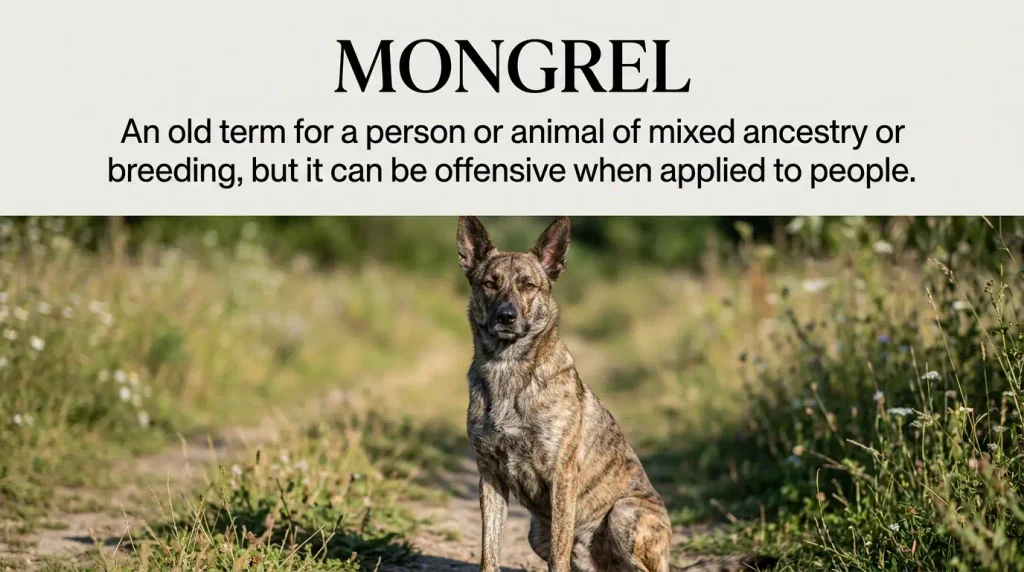
Mongrel (Noun/Adjective) — US: /ˈmʌŋɡrəl/ | UK: /ˈmʌŋɡrəl/
Meaning: Traditionally, an animal of mixed breeding, although the term can sound negative or insulting.
Tone/Register: Informal, Often Negative
Example:
The old story described the dog as a mongrel.
The word can sound dismissive, so careful speakers often choose mixed-breed instead.
Half-Breed (Noun/Adjective) — US: /ˈhæf briːd/ | UK: /ˈhɑːf briːd/
Meaning: An old term for a person or animal of mixed ancestry or breeding, but it can be offensive when applied to people.
Tone/Register: Outdated, Sensitive, Often Offensive
Example:
The historical novel contains the outdated term.
Modern writers should usually choose more respectful language such as mixed heritage when discussing people.
Heterogeneous (Adjective) — US: /ˌhetəroʊˈdʒiːniəs/ | UK: /ˌhetərəʊˈdʒiːniəs/
Meaning: Consisting of different kinds of people, elements, or components.
Tone/Register: Academic, Formal
Example:
The team has a heterogeneous mix of skills.
The material contains several heterogeneous components.
Varied (Adjective) — US: /ˈverid/ | UK: /ˈveərid/
Meaning: Containing different types, qualities, or characteristics.
Tone/Register: Neutral, Everyday
Example:
The program offers a varied learning experience.
Her work combines varied creative influences.
Diverse (Adjective) — US: /daɪˈvɜːrs/ | UK: /daɪˈvɜːs/
Meaning: Including different types, backgrounds, or characteristics.
Tone/Register: Neutral, Professional, Academic
Example:
The project brings together a diverse range of ideas.
The team has diverse cultural influences.
Multifaceted (Adjective) — US: /ˌmʌltiˈfæsətɪd/ | UK: /ˌmʌltɪˈfæsɪtɪd/
Meaning: Having several different aspects, features, or dimensions.
Tone/Register: Formal, Academic
Example:
The problem requires a multifaceted approach.
Her career has a multifaceted structure.
Multidimensional (Adjective) — US: /ˌmʌltiˌdaɪˈmenʃənəl/ | UK: /ˌmʌltɪdaɪˈmenʃənəl/
Meaning: Involving several different aspects or dimensions.
Tone/Register: Academic, Technical
Example:
The study presents a multidimensional model.
The character has a multidimensional personality.
Multipurpose (Adjective) — US: /ˌmʌltiˈpɜːrpəs/ | UK: /ˌmʌltɪˈpɜːpəs/
Meaning: Designed to serve several different purposes.
Tone/Register: Neutral, Professional
Example:
The building has a multipurpose design.
They created a multipurpose learning space.
Multifunctional (Adjective) — US: /ˌmʌltiˈfʌŋkʃənəl/ | UK: /ˌmʌltɪˈfʌŋkʃənəl/
Meaning: Having several different functions or uses.
Tone/Register: Technical, Professional
Example:
The device has a multifunctional design.
They installed a multifunctional workspace.
Hybridized (Adjective) — US: /ˈhaɪbrəˌdaɪzd/ | UK: /ˈhaɪbrɪdaɪzd/
Meaning: Modified or developed by combining different types, qualities, or influences.
Tone/Register: Academic, Scientific
Example:
The researchers studied hybridized plant varieties.
The artist developed a hybridized visual style.
Cross-Disciplinary (Adjective) — US: /ˌkrɔːs ˈdɪsəpləneri/ | UK: /ˌkrɒs ˈdɪsɪplɪnəri/
Meaning: Combining knowledge or methods from different academic or professional fields.
Tone/Register: Academic, Professional
Example:
The project uses a cross-disciplinary approach.
Her research is strongly cross-disciplinary.
Interdisciplinary (Adjective) — US: /ˌɪntərˈdɪsəpləneri/ | UK: /ˌɪntəˈdɪsɪplɪnəri/
Meaning: Combining ideas or methods from two or more academic disciplines.
Tone/Register: Academic, Formal
Example:
The university offers an interdisciplinary program.
The research takes an interdisciplinary approach.
Transdisciplinary (Adjective) — US: /ˌtrænzdɪsəˈplɪneri/ | UK: /ˌtrænzdɪsɪˈplɪnəri/
Meaning: Combining knowledge across disciplines to address broader or complex problems.
Tone/Register: Academic, Specialized
Example:
The project follows a transdisciplinary research model.
A transdisciplinary team examined the environmental issue.
Syncretic (Adjective) — US: /sɪnˈkretɪk/ | UK: /sɪnˈkretɪk/
Meaning: Combining different beliefs, traditions, or cultural systems into one form.
Tone/Register: Academic, Cultural, Formal
Example:
The festival reflects a syncretic cultural tradition.
The religion developed through syncretic influences.
Eclectic (Adjective) — US: /ɪˈklektɪk/ | UK: /ɪˈklektɪk/
Meaning: Drawing ideas, styles, or features from many different sources.
Tone/Register: Neutral, Creative, Academic
Example:
Her home has an eclectic interior style.
His writing reflects an eclectic range of influences.
Hybridic (Adjective) — US: /haɪˈbrɪdɪk/ | UK: /haɪˈbrɪdɪk/
Meaning: Relating to or characterized by a combination of different forms or types.
Tone/Register: Formal, Academic
Example:
The researcher examined hybridic cultural forms.
The artwork has a distinctly hybridic character.
Composite-Form (Noun/Adjective) — US: /kəmˈpɑːzɪt fɔːrm/ | UK: /ˈkɒmpəzɪt fɔːm/
Meaning: A form created from several distinct elements.
Tone/Register: Academic, Technical
Example:
The sculpture uses a composite-form structure.
The author created a composite form from several narratives.
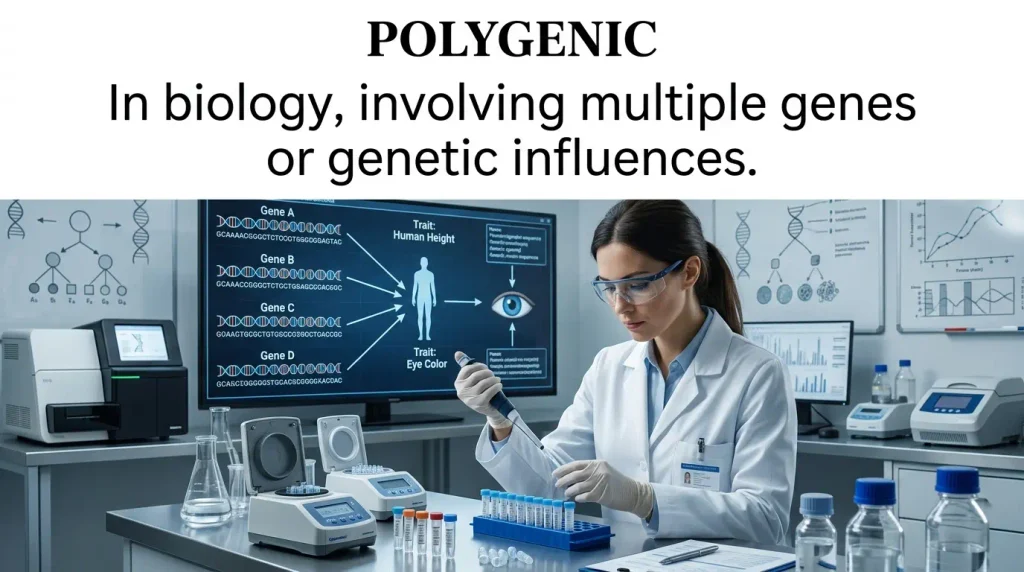
Polygenic (Adjective) — US: /ˌpɑːliˈdʒenɪk/ | UK: /ˌpɒlɪˈdʒenɪk/
Meaning: In biology, involving multiple genes or genetic influences.
Tone/Register: Scientific, Technical
Example:
The researchers investigated a polygenic trait.
Height is influenced by many polygenic factors.
Chimeric (Adjective) — US: /kaɪˈmɪrɪk/ | UK: /kaɪˈmɪərɪk/
Meaning: Combining parts or characteristics from different sources, especially in biology or figurative writing.
Tone/Register: Scientific, Literary
Example:
The study examined chimeric cells.
The novel presents a chimeric combination of genres.
Patchwork (Noun/Adjective) — US: /ˈpætʃwɜːrk/ | UK: /ˈpætʃwɜːk/
Meaning: A combination of different elements that remain visibly distinct within a whole.
Tone/Register: Neutral, Figurative
Example:
The city has a patchwork of architectural styles.
The essay feels like a patchwork of different perspectives.
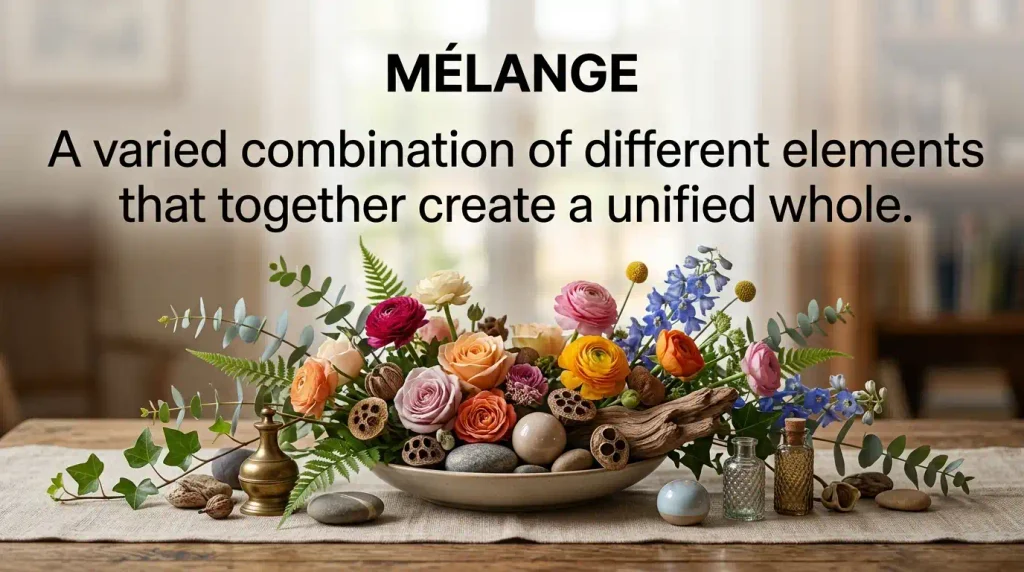
Mosaic (Noun/Adjective) — US: /moʊˈzeɪɪk/ | UK: /məʊˈzeɪɪk/
Meaning: A varied combination of different elements that together create a unified whole.
Tone/Register: Literary, Creative, Academic
Example:
The neighborhood is a mosaic of different cultures.
The novel creates a mosaic of personal stories.
Synonyms for Hybrid by Tone
Positive
Words such as blended, fusion, integrated, synthesis, combination, and composite can sound constructive.
They work especially well when the combination creates a useful or creative result.
For example, a fusion of traditional and modern design sounds innovative and intentional.
Neutral
Mixed, combined, compound, mixture, dual, two-part, and blend are generally neutral.
Therefore, they are useful in everyday conversations, essays, reports, and general descriptions.
Negative
Mongrel can carry a negative or dismissive tone. Half-breed is especially sensitive and can be offensive when used for people.
Consequently, learners should avoid these terms unless discussing historical language or quoting a specific source.
Playful or Informal
Two-in-one, cross, and sometimes blend can sound more relaxed.
For example, saying It’s basically a two-in-one setup sounds conversational rather than academic.
Why Tone Matters
The right synonym does more than replace a word. It also communicates attitude.
For example, integrated sounds professional, while mongrel can sound insulting. Therefore, context and audience should guide your choice.
“Hybrid” vs Close Alternatives
Hybrid vs Blended
The term Hybrid usually emphasizes the combination of distinct types or systems.
Blended emphasizes how smoothly those elements are mixed.
For example, hybrid work commonly means a combination of remote and office work. However, blended learning focuses on combining different learning methods.
Hybrid vs Composite
Composite emphasizes that something is constructed from separate parts.
Hybrid more strongly suggests different types, origins, or systems coming together.
Therefore, composite material is natural in engineering, while hybrid vehicle is natural for a vehicle using different technologies.
Hybrid vs Fusion
Fusion emphasizes the process or result of elements coming together.
Hybrid often emphasizes the resulting thing itself.
Thus, fusion cuisine highlights a creative combination, while hybrid technology highlights a system built from different technological approaches.
How “Hybrid” Changes by Context
Daily Conversation
In everyday speech, hybrid often appears in discussions about cars, work, education, and lifestyles.
For example, someone may say, “I have a hybrid work schedule.”
In this setting, simpler alternatives such as mixed or combined may sound more conversational.
Writing or Blogging
Bloggers often use hybrid when explaining trends, lifestyles, products, or systems.
However, repeating the word several times can make an article sound mechanical. Instead, carefully selected alternatives can improve flow.
For example, you could use blended in one paragraph and combined in another when the meanings genuinely match.
Professional or Academic Tone
In academic writing, composite, synthesis, integrated, multimodal, and mixed-type may be appropriate depending on the subject.
For instance, researchers might discuss a mixed-method approach rather than simply calling it a hybrid approach.
Nevertheless, the most precise term should always come first.
Creative or Informal Use
Creative writing gives you more flexibility.
Words such as fusion and blend can create a vivid sense of different influences coming together.
For example, a novelist might describe a character as having a blend of traditional values and modern ambitions.
Common Mistakes Learners Make
One common mistake is treating every combination word as a perfect replacement for hybrid.
That approach can change the intended meaning.
For example, mixture usually means different things are combined, but it does not necessarily imply that they form a distinct new type.
Another mistake is using crossbreed for technology or workplace systems.
Crossbreed is mainly associated with biological breeding, especially animals and plants. Therefore, it is not a natural replacement for hybrid work.
Learners should also be careful with half-breed and mongrel.
These terms can carry offensive, outdated, or insulting meanings, especially when referring to people.
Register Notes
Formal: composite, synthesis, integration, amalgam
Academic: multimodal, mixed-type, cross-cultural, bicultural
Professional: integrated, combined, dual-mode
Everyday: mixed, blend, blended, two-in-one
Informal or sensitive: mongrel, half-breed
For more vocabulary practice, you can connect this topic with other synonym and word-choice lessons in your internal content structure.
Real-Life Examples Using “Hybrid”
Workplace
A company introduces a hybrid work schedule, allowing employees to work from home on some days and from the office on others.
Here, blended or dual-mode may also work when the context supports them.
Social Situations
Someone may describe their upbringing as bicultural when two cultural traditions strongly influence their life.
In this case, bicultural is more precise than simply saying hybrid.
Media and Pop Culture
A television series may combine comedy, drama, and science fiction.
A writer could call it a genre blend or a fusion of genres.
Writing and Storytelling
A novelist may create a story that combines historical events with fictional characters.
The result could be described as a hybrid narrative or a composite story, depending on the exact structure.
How to Choose the Best Synonym
First, identify what you’re combining.
When discussing two systems, consider dual-mode or integrated to show that the systems work together.
For different materials, composite or compound may be more accurate because these words emphasize the components involved.
When the subject involves cultures, bicultural or cross-cultural can provide a more precise description.
For ideas or theories, synthesis or amalgam may work well because both words highlight the combination of different concepts.
In discussions about animals or plants, crossbreed, cross, or mixed-breed may be appropriate, depending on the biological context.
Finally, consider your audience. A simple word is often better for everyday readers, while a technical term may suit academic or professional writing.
Why Learning Synonyms for Hybrid Matters
Vocabulary becomes more powerful when you understand small differences between similar words.
Instead of repeating hybrid throughout an essay, you can choose a more exact alternative when appropriate.
Moreover, synonym knowledge helps students understand reading passages more easily.
It also helps bloggers and content writers create smoother articles without forcing unnecessary keyword repetition.
For daily speakers, these words make descriptions clearer and more flexible.
However, synonym variety should never replace accuracy. A different word is useful only when it preserves the intended meaning.
Interactive Practice Quiz
Choose the best word for each situation.
1. A car uses both an electric motor and a gasoline engine. What is the best term?
A. Hybrid
B. Mongrel
C. Bicultural
D. Two-part
2. A course combines online lessons with classroom teaching. Which term fits best?
A. Blended
B. Crossbreed
C. Amalgam
D. Mongrel
3. A scientific material is made from several distinct components. Which word is most precise?
A. Composite
B. Casual
C. Bicultural
D. Cross-cultural
4. A restaurant combines Japanese and Mexican cooking traditions. Which expression is most natural?
A. Fusion cuisine
B. Mixed-breed cuisine
C. Dual animal cuisine
D. Interbred cuisine
5. A person has strong connections to two cultures. Which word is most precise?
A. Bicultural
B. Compound
C. Crossbreed
D. Composite
6. A researcher combines several theories into one framework. Which noun works best?
A. Synthesis
B. Mongrel
C. Cross
D. Two-in-one
7. A workplace combines office work and remote work. Which phrase is most common?
A. Hybrid work
B. Crossbreed work
C. Mixed-breed work
D. Mongrel work
8. Which word can have a negative or dismissive tone when describing a mixed-breed animal?
A. Mongrel
B. Integrated
C. Composite
D. Synthesis
9. Which alternative is especially suitable for academic discussion involving several communication modes?
A. Multimodal
B. Two-in-one
C. Mongrel
D. Cross
10. Which word describes two different operating methods?
A. Dual-mode
B. Mixed-breed
C. Amalgam
D. Crossbreed
11. Which term emphasizes a smooth combination of different elements?
A. Blended
B. Half-breed
C. Interbred
D. Dual-form
12. Which word is most suitable for a historical discussion of an outdated term for mixed ancestry?
A. Half-breed
B. Integrated
C. Composite
D. Fusion
13. Which word means a combination of different elements into one whole?
A. Amalgam
B. Isolated
C. Separate
D. Singular
14. Which word is usually the safest everyday choice for different types brought together?
A. Mixed
B. Mongrel
C. Half-breed
D. Interbred
15. Which word best describes something combining two distinct functions?
A. Two-in-one
B. Crossbreed
C. Creolized
D. Amalgam
Answer Key: 1-A, 2-A, 3-A, 4-A, 5-A, 6-A, 7-A, 8-A, 9-A, 10-A, 11-A, 12-A, 13-A, 14-A, 15-A
Reflection Task
Write one sentence using hybrid, blended, composite, fusion, integrated, or bicultural. Then ask yourself whether your chosen word expresses the exact meaning and tone you want.
FAQs
1. What is the best synonym for hybrid in academic writing?
The best synonym depends on the subject. Composite, synthesis, integrated, and multimodal can work well in academic contexts. However, they are not interchangeable in every sentence. Use composite for something made from parts, synthesis for combined ideas, and multimodal when several modes or methods are involved.
2. What is a good synonym for hybrid when describing a car?
For a vehicle, dual-power or combined-power can explain the idea, but hybrid remains the most natural and widely understood term. A hybrid car generally combines two different power systems, such as an internal-combustion engine and an electric motor. Therefore, replacing hybrid is often unnecessary in technical or everyday automotive writing.
3. What is another word for hybrid work?
Blended work and dual-mode work can sometimes describe a workplace that combines remote and office-based arrangements. However, hybrid work is the clearest and most established expression. If you are writing for a general audience, keeping hybrid work is usually better than choosing an unusual substitute.
4. Which synonym for hybrid means a combination of cultures?
For cultural contexts, bicultural, cross-cultural, or mixed-origin may be more precise, depending on the meaning. Bicultural specifically emphasizes two cultures. Cross-cultural focuses on interaction between cultures. Meanwhile, mixed-origin highlights different sources rather than cultural interaction.
5. Is “blended” the same as “hybrid”?
Not always. Blended emphasizes the smooth mixing of elements, while hybrid often emphasizes the combination of distinct types, systems, or origins. For example, blended learning focuses on combining learning methods, whereas hybrid technology highlights a system built from different technologies.
6. Is “composite” a formal synonym for hybrid?
Composite is a close alternative in some contexts, particularly when something is constructed from multiple components. However, it does not always carry the same idea of different types or origins. In engineering, materials science, and academic writing, composite can be more precise than hybrid when the structure is the main focus.
7. Can I use “mongrel” as a synonym for hybrid?
Mongrel can describe a mixed-breed animal, but it often has a negative or dismissive tone. It should therefore not be treated as a neutral replacement for hybrid. When discussing animals in modern everyday English, mixed-breed is usually a safer and more respectful choice.
8. How can learning synonyms for hybrid improve my English?
Learning alternatives helps you recognize subtle differences in meaning, tone, and register. Instead of repeating hybrid, you can select blended, composite, fusion, or integrated when the context calls for it. As a result, your essays, blog posts, conversations, and professional communication can become more precise and varied.
Conclusion
Learning a synonym for hybrid is useful because different alternatives highlight different kinds of combination. The right word makes your meaning clearer and more natural.
For everyday English, mixed, blended, and combined are easy choices. Meanwhile, academic writing may benefit from composite, synthesis, or multimodal.
However, precision matters more than variety. Words such as mongrel and half-breed can carry negative or outdated meanings, so context should always guide your choice.
Now, practice using these alternatives in emails, essays, blog posts, and daily conversations. Choose one new word today and create a sentence with it.

Shahzeena Shazadi is the founder and lead writer at VocablyHub.com, where she creates accurate, reader-focused English language content designed to help people communicate with clarity and confidence. She specializes in synonyms, antonyms, word meanings, idioms, and practical vocabulary guides that simplify complex language concepts for everyday use. Every article is carefully researched, fact-checked, and written in clear, accessible language using reliable references and real-world examples. Her goal is to provide helpful, trustworthy content that supports learners at every stage of their English language journey.
Her editorial approach focuses on accuracy, transparency, and user value while following modern content quality standards. She regularly reviews and updates content to keep information relevant, useful, and easy to understand. Through VocablyHub.com, Shahzeena Shazadi is committed to publishing reliable language resources that help students, writers, educators, professionals, and English learners expand their vocabulary, improve their writing skills, and communicate with confidence in academic, professional, and everyday situations.