
A synonym for dungeon can be useful when a story describes a dark prison, underground chamber, or frightening place where people are held.
Imagine reading a fantasy novel where a hero is locked beneath a castle. The writer may call it a dungeon, cell, vault, or prison.
Learning a synonym for dungeon helps you choose words that match the setting, mood, and level of darkness you want to create.
For students, bloggers, content writers, and daily English users, synonyms make descriptions clearer. They also prevent the same word from appearing repeatedly.
What Does “Dungeon” Really Mean?
A dungeon is a dark, enclosed place used historically as a prison, especially beneath or inside a castle or fortress.
In modern English, the word often describes a dark underground prison or chamber. It is especially common in fantasy, historical fiction, video games, films, and storytelling.
The word is usually associated with confinement, danger, darkness, fear, and isolation. However, its tone depends on context.
For example:
- “The prisoner was kept in the dungeon.” — historical or literal.
- “The castle dungeon was filled with treasure.” — fantasy or adventure.
- “The basement looked like a dungeon.” — figurative and informal.
Part of Speech
Dungeon (noun) — a dark prison or enclosed chamber, traditionally located inside or beneath a castle or fortress.
Simple definition: A dark place where prisoners are kept, especially in a castle or old fortress.
Connotative Meaning
Connotation (the feelings or ideas that a word suggests beyond its basic meaning) plays an important role in how dungeon sounds.
Positive tone:
The word can have a positive or exciting tone in fantasy, gaming, and adventure contexts. It may suggest mystery, exploration, treasure, or heroic challenges.
Negative tone:
Its strongest association is negative. It can suggest imprisonment, suffering, fear, darkness, danger, and cruelty.
Neutral tone:
In historical writing, dungeon can simply describe a type of prison or fortified chamber without adding strong emotional judgment.
Therefore, choosing the right synonym depends on whether you want your writing to sound historical, frightening, dramatic, playful, or neutral.
Etymology of “Dungeon”
The English word dungeon comes from Old French donjon, which originally referred to the main tower or strongest tower of a castle.
The word ultimately traces back to Medieval Latin dominio/dominium, associated with lordship, authority, or ownership. Over time, its meaning shifted from a powerful castle tower to a prison or underground chamber.
Old English: 450–1100
The modern English word dungeon was not an ordinary Old English term. Its history developed mainly through later French influence.
Middle English: 1100–1500
After the Norman Conquest, French vocabulary entered English on a large scale. Donjon was used for an important fortified tower. Gradually, the word became associated with the dark prison area within such structures.
Modern English: 1500–Present
In Modern English, dungeon became strongly associated with a prison or underground chamber. Today, it appears frequently in historical descriptions, fantasy literature, games, movies, and figurative expressions.
Pronunciation
US: /ˈdʌn.dʒən/
UK: /ˈdʌn.dʒən/
Syllables
dun-geon
Affixation Pattern of “Dungeon”
Root: dungeon / donjon
Prefix: None
Suffix: None
The modern English word is a historical borrowing rather than a word formed through a productive English prefix-and-suffix pattern.
Synonyms List:
A perfect synonym for dungeon is difficult to find because the word combines several ideas: imprisonment, darkness, an old fortress, and often an underground setting.
Therefore, the alternatives below include close synonyms, contextual equivalents, and descriptive alternatives. Each one works best in particular situations.
Cell (Noun) — US /sɛl/ | UK /sɛl/
Meaning: A small enclosed room used to hold a prisoner.
Tone/Register: Neutral, formal, everyday.
Example:
The guard locked the prisoner inside a narrow cell.
The old cell had no windows.
Prison (Noun) — US /ˈprɪzən/ | UK /ˈprɪzən/
Meaning: A secure place where people are confined as punishment or while awaiting legal proceedings.
Tone/Register: Neutral, formal.
Example:
The captured soldiers were taken to the prison.
The fortress had once served as a prison.
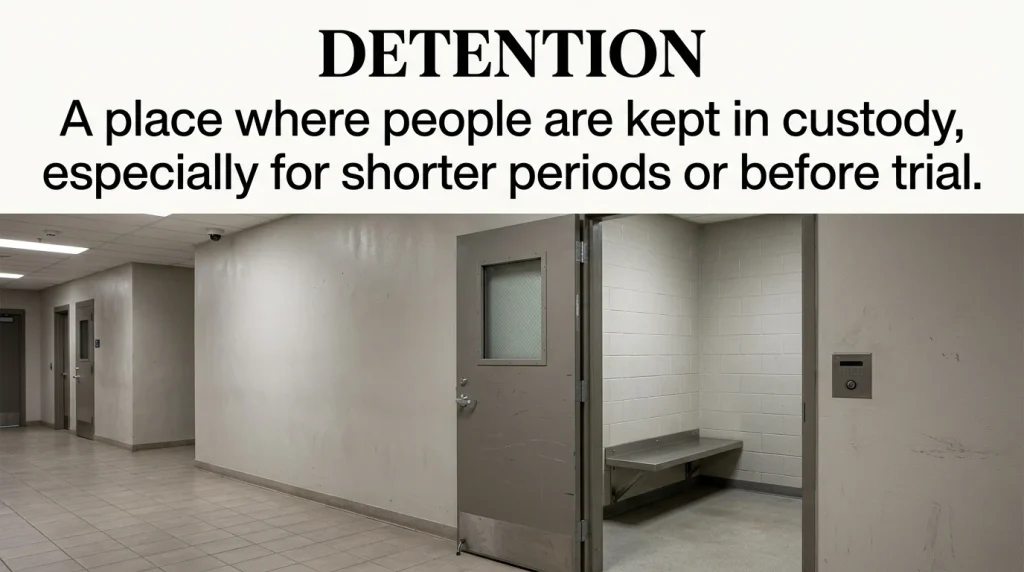
Jail (Noun) — US /dʒeɪl/ | UK /dʒeɪl/
Meaning: A place where people are kept in custody, especially for shorter periods or before trial.
Tone/Register: Everyday, neutral.
Example:
The guards took him to the jail beneath the fortress.
The building looked more like a jail than a castle.
Lockup (Noun) — US /ˈlɑːkˌʌp/ | UK /ˈlɒkˌʌp/
Meaning: A place where people are temporarily held in custody.
Tone/Register: Informal, everyday.
Example:
The suspect spent the night in a small lockup.
The village had a basic lockup near the courthouse.
Gaol (Noun) — US /dʒeɪl/ | UK /dʒeɪl/
Meaning: An older British spelling of “jail” referring to a prison.
Tone/Register: Historical, British, literary.
Example:
The prisoner was taken to the ancient gaol.
The novel describes a gloomy medieval gaol.
Prison Cell (Noun) — US /ˈprɪzən sɛl/ | UK /ˈprɪzən sɛl/
Meaning: A secured room specifically designed to confine a prisoner.
Tone/Register: Neutral, descriptive.
Example:
The knight woke up inside a prison cell.
His prison cell was cold and completely dark.
Holding Cell (Noun) — US /ˈhoʊldɪŋ sɛl/ | UK /ˈhəʊldɪŋ sɛl/
Meaning: A temporary room where a person is kept before being moved elsewhere.
Tone/Register: Formal, legal.
Example:
The guards placed the suspect in a holding cell.
She waited in the holding cell for questioning.
Detention Cell (Noun) — US /dɪˈtɛnʃən sɛl/ | UK /dɪˈtɛnʃən sɛl/
Meaning: A secured room used to hold someone in custody.
Tone/Register: Formal, official.
Example:
The prisoner remained in a detention cell overnight.
The facility contained several detention cells.
Detention Room (Noun) — US /dɪˈtɛnʃən ruːm/ | UK /dɪˈtɛnʃən ruːm/
Meaning: A room where someone is temporarily confined or held.
Tone/Register: Formal.
Example:
The guard led the visitor into the detention room.
The detention room was monitored continuously.
Brig (Noun) — US /brɪɡ/ | UK /brɪɡ/
Meaning: A prison or detention area, especially on a military ship or naval base.
Tone/Register: Military, formal.
Example:
The sailor was sent to the brig after the incident.
The captain ordered the prisoner taken to the brig.
Stockade (Noun) — US /stɑːˈkeɪd/ | UK /stɒˈkeɪd/
Meaning: An enclosed area surrounded by a strong fence, historically sometimes used to hold prisoners.
Tone/Register: Historical, military.
Example:
The captured soldiers were held inside the stockade.
Guards surrounded the stockade at night.
Penitentiary (Noun) — US /ˌpɛnɪˈtɛnʃəri/ | UK /ˌpɛnɪˈtɛnʃəri/
Meaning: A prison, especially a large or formal correctional institution.
Tone/Register: Formal.
Example:
The criminal was transferred to a state penitentiary.
The old penitentiary dominated the landscape.
Correctional Facility (Noun) — US /kəˈrɛkʃənəl fəˈsɪləti/ | UK /kəˈrɛkʃənəl fəˈsɪləti/
Meaning: An official institution where people are confined and managed by the correctional system.
Tone/Register: Formal, institutional.
Example:
The prisoner was moved to a correctional facility.
The correctional facility had strict security measures.
Confinement Chamber (Noun) — US /kənˈfaɪnmənt ˈtʃeɪmbər/ | UK /kənˈfaɪnmənt ˈtʃeɪmbə/
Meaning: An enclosed chamber designed or used for keeping someone confined.
Tone/Register: Formal, descriptive, literary.
Example:
The explorer discovered a hidden confinement chamber.
The chamber appeared to have held prisoners centuries ago.
Underground Prison (Noun) — US /ˈʌndərɡraʊnd ˈprɪzən/ | UK /ˈʌndəɡraʊnd ˈprɪzən/
Meaning: A prison located below ground level.
Tone/Register: Neutral, descriptive.
Example:
The rebels were held in an underground prison.
The underground prison was hidden beneath the fortress.
Underground Cell (Noun) — US /ˈʌndərɡraʊnd sɛl/ | UK /ˈʌndəɡraʊnd sɛl/
Meaning: A prison cell located beneath the surface.
Tone/Register: Neutral, descriptive.
Example:
The prisoner was placed in an underground cell.
An underground cell was discovered beneath the ruins.
Hidden Chamber (Noun) — US /ˈhɪdən ˈtʃeɪmbər/ | UK /ˈhɪdən ˈtʃeɪmbə/
Meaning: A concealed room that is difficult to find or access.
Tone/Register: Neutral, literary.
Example:
The explorers found a hidden chamber beneath the castle.
The hidden chamber contained old weapons.
Dark Chamber (Noun) — US /dɑːrk ˈtʃeɪmbər/ | UK /dɑːk ˈtʃeɪmbə/
Meaning: A chamber characterized mainly by a lack of light.
Tone/Register: Descriptive, literary.
Example:
The prisoner waited inside the dark chamber.
A single torch illuminated the dark chamber.
Vault (Noun) — US /vɔːlt/ | UK /vɔːlt/
Meaning: A secure enclosed room, often underground, traditionally used for storage or protection.
Tone/Register: Neutral, formal.
Example:
The secret passage ended at an underground vault.
The ancient vault was hidden beneath the castle.
Crypt (Noun) — US /krɪpt/ | UK /krɪpt/
Meaning: An underground room, especially one beneath a church, used as a burial place.
Tone/Register: Historical, literary.
Example:
The characters entered a forgotten crypt.
The crypt beneath the church was centuries old.
Note: A crypt is not normally a synonym for a prison. It works only when the context emphasizes an underground, dark, enclosed setting.
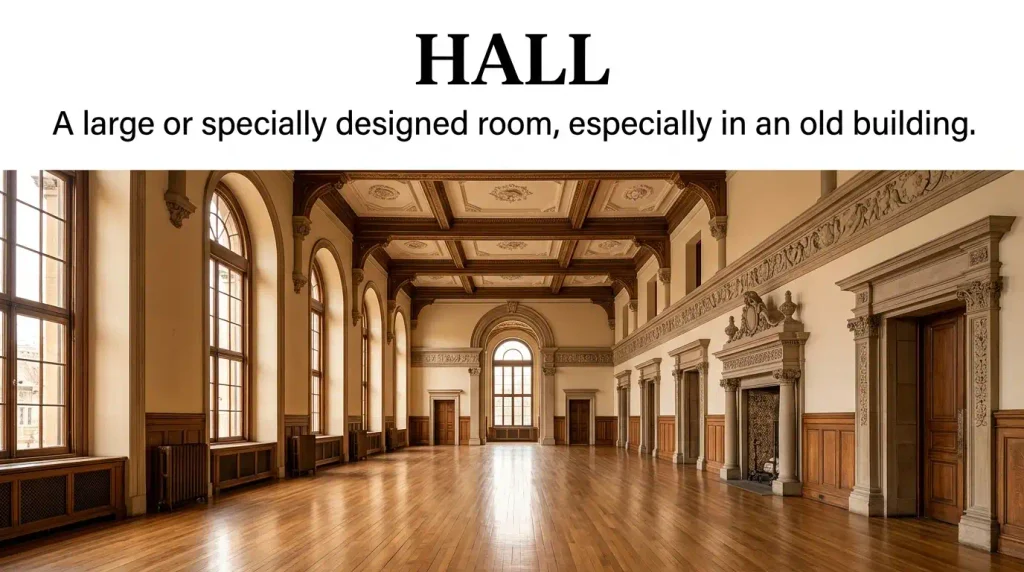
Chamber (Noun) — US /ˈtʃeɪmbər/ | UK /ˈtʃeɪmbə/
Meaning: A large or specially designed room, especially in an old building.
Tone/Register: Neutral, literary.
Example:
The king ordered the prisoner into a stone chamber.
The chamber was deep beneath the fortress.
Keep (Noun) — US /kiːp/ | UK /kiːp/
Meaning: The strongest central tower of a medieval castle.
Tone/Register: Historical, architectural.
Example:
The prisoners were kept beneath the castle keep.
The ancient keep still stands above the village.
Note: A keep is not itself a direct synonym for dungeon. It is closely related because historical dungeons were often associated with castles and keeps.
Fortress Prison (Noun) — US /ˈfɔːrtrəs ˈprɪzən/ | UK /ˈfɔːtrəs ˈprɪzən/
Meaning: A prison located inside or associated with a fortified structure.
Tone/Register: Historical, descriptive.
Example:
The island fortress prison became famous for its harsh conditions.
The fortress prison was almost impossible to escape from.
Torture Chamber (Noun) — US /ˈtɔːrtʃər ˈtʃeɪmbər/ | UK /ˈtɔːtʃə ˈtʃeɪmbə/
Meaning: A room historically associated with the torture of prisoners.
Tone/Register: Dark, historical, dramatic.
Example:
The guide described the castle’s old torture chamber.
The fictional villain led the hero into a torture chamber.
Note: This is more specific and darker than dungeon, so it should not be used as a general replacement.
Gaoler’s Cell (Noun) — US /ˈdʒeɪlərz sɛl/ | UK /ˈdʒeɪləz sɛl/
Meaning: A prison cell associated with a historical jailer or prison.
Tone/Register: Historical, literary.
Example:
The prisoner was locked inside the gaoler’s cell.
The gaoler’s cell stood beneath the old fortress.
Dungeon Chamber (Noun) — US /ˈdʌndʒən ˈtʃeɪmbər/ | UK /ˈdʌndʒən ˈtʃeɪmbə/
Meaning: A chamber within or resembling a dungeon.
Tone/Register: Literary, fantasy.
Example:
The wizard disappeared into the dungeon chamber.
The dungeon chamber contained an ancient altar.
Underground Holding Area (Noun) — US /ˈʌndərɡraʊnd ˈhoʊldɪŋ ˈɛriə/ | UK /ˈʌndəɡraʊnd ˈhəʊldɪŋ ˈeəriə/
Meaning: A below-ground place where people are temporarily confined.
Tone/Register: Descriptive, formal.
Example:
The guards moved the prisoners to an underground holding area.
The underground holding area was hidden from visitors.
Dark Cellar (Noun) — US /dɑːrk ˈsɛlər/ | UK /dɑːk ˈsɛlə/
Meaning: A dark room beneath a building, especially when used figuratively to suggest a dungeon-like space.
Tone/Register: Informal, descriptive.
Example:
The abandoned house had a dark cellar.
The children imagined the cellar was a dungeon.
Pit (Noun) — US /pɪt/ | UK /pɪt/
Meaning: A deep hole or enclosed depression, sometimes used in fictional settings as a place of imprisonment.
Tone/Register: Neutral, dramatic.
Example:
The villain threw the prisoner into a deep pit.
The pit beneath the castle was almost impossible to escape.
Undercrypt (Noun) — US /ˈʌndərkrɪpt/ | UK /ˈʌndəkrɪpt/
Meaning: An underground crypt or burial chamber, especially in fantasy or historical writing.
Tone/Register: Literary, fantasy.
Example:
The adventurers entered the ancient undercrypt.
The undercrypt stretched beneath the ruined monastery.
Note: This is a contextual alternative rather than a standard everyday synonym for dungeon.
Prison Chamber (Noun) — US /ˈprɪzən ˈtʃeɪmbər/ | UK /ˈprɪzən ˈtʃeɪmbə/
Meaning: A chamber used specifically for imprisoning someone.
Tone/Register: Neutral, literary.
Example:
The knight was placed inside a prison chamber.
The prison chamber had thick stone walls.
Secure Cell (Noun) — US /sɪˈkjʊr sɛl/ | UK /sɪˈkjʊə sɛl/
Meaning: A strongly protected room used to confine a person.
Tone/Register: Formal, modern.
Example:
The suspect was placed in a secure cell.
The secure cell had a reinforced door.
Forbidden Chamber (Noun) — US /fəˈbɪdən ˈtʃeɪmbər/ | UK /fəˈbɪdən ˈtʃeɪmbə/
Meaning: A room that people are forbidden to enter, especially in fiction.
Tone/Register: Literary, dramatic.
Example:
The hero discovered a forbidden chamber below the castle.
Nobody knew what was hidden inside the forbidden chamber.
Gloomy Prison (Noun) — US /ˈɡluːmi ˈprɪzən/ | UK /ˈɡluːmi ˈprɪzən/
Meaning: A prison characterized by darkness, sadness, or an oppressive atmosphere.
Tone/Register: Descriptive, literary.
Example:
The story begins inside a gloomy prison.
The gloomy prison stood beneath the royal palace.
Captivity Chamber (Noun) — US /kæpˈtɪvəti ˈtʃeɪmbər/ | UK /kæpˈtɪvəti ˈtʃeɪmbə/
Meaning: A room used to keep someone captive.
Tone/Register: Formal, literary.
Example:
The hero escaped from the captivity chamber.
The captivity chamber had a heavy iron door.
Prison House (Noun) — US /ˈprɪzən haʊs/ | UK /ˈprɪzən haʊs/
Meaning: A building or place used to confine prisoners.
Tone/Register: Historical, formal.
Example:
The captured rebels were taken to the old prison house.
The prison house stood beside the fortress.
Gaolhouse (Noun) — US /ˈdʒeɪlˌhaʊs/ | UK /ˈdʒeɪlˌhaʊs/
Meaning: A historical term for a building used as a prison or jail.
Tone/Register: Historical, British.
Example:
The prisoners were locked inside the ancient gaolhouse.
The gaolhouse had thick stone walls.
Lockhouse (Noun) — US /ˈlɑːkˌhaʊs/ | UK /ˈlɒkˌhaʊs/
Meaning: A secure building or room used for confinement or protection in certain historical contexts.
Tone/Register: Historical, descriptive.
Example:
The guards brought the captive to the old lockhouse.
Nobody could enter the lockhouse without permission.
Guardhouse (Noun) — US /ˈɡɑːrdˌhaʊs/ | UK /ˈɡɑːdˌhaʊs/
Meaning: A building where guards are stationed, sometimes containing temporary holding spaces.
Tone/Register: Military, historical.
Example:
The prisoner was held briefly in the guardhouse.
Soldiers watched the entrance from the guardhouse.
Prison Ward (Noun) — US /ˈprɪzən wɔːrd/ | UK /ˈprɪzən wɔːd/
Meaning: A section of a prison where confined people are housed.
Tone/Register: Formal, institutional.
Example:
The prisoner was moved to a restricted prison ward.
The prison ward remained heavily guarded.
Detention Area (Noun) — US /dɪˈtɛnʃən ˈɛriə/ | UK /dɪˈtɛnʃən ˈeəriə/
Meaning: A designated place where people are kept in custody.
Tone/Register: Formal, official.
Example:
The guards escorted the suspect to the detention area.
The detention area was located below the main building.
Detention Facility (Noun) — US /dɪˈtɛnʃən fəˈsɪləti/ | UK /dɪˈtɛnʃən fəˈsɪləti/
Meaning: A secure institution used to hold people in custody.
Tone/Register: Formal, institutional.
Example:
The prisoners were transferred to a detention facility.
The detention facility operated around the clock.
Prison Compound (Noun) — US /ˈprɪzən ˈkɑːmpaʊnd/ | UK /ˈprɪzən ˈkɒmpaʊnd/
Meaning: A secured area containing buildings or spaces used for imprisonment.
Tone/Register: Formal, descriptive.
Example:
The soldiers guarded the prison compound.
The prison compound was surrounded by high walls.
Walled Prison (Noun) — US /wɔːld ˈprɪzən/ | UK /wɔːld ˈprɪzən/
Meaning: A prison surrounded by strong walls for security.
Tone/Register: Historical, descriptive.
Example:
The rebels were taken to a walled prison.
The walled prison overlooked the valley.
Fortified Prison (Noun) — US /ˈfɔːrtəfaɪd ˈprɪzən/ | UK /ˈfɔːtɪfaɪd ˈprɪzən/
Meaning: A heavily protected prison built within or alongside defensive structures.
Tone/Register: Historical, formal.
Example:
The king used the fortress as a fortified prison.
Escaping from the fortified prison seemed impossible.
Stone Prison (Noun) — US /stoʊn ˈprɪzən/ | UK /stəʊn ˈprɪzən/
Meaning: A prison constructed mainly from stone, especially in historical or fictional settings.
Tone/Register: Descriptive, literary.
Example:
The knight was imprisoned in a cold stone prison.
The stone prison stood beneath the ruined castle.
Subterranean Chamber (Noun) — US /ˌsʌbtəˈreɪniən ˈtʃeɪmbər/ | UK /ˌsʌbtəˈreɪniən ˈtʃeɪmbə/
Meaning: A room located completely or partly below ground level.
Tone/Register: Formal, academic, literary.
Example:
Archaeologists discovered a subterranean chamber beneath the castle.
The subterranean chamber contained ancient markings.
Subterranean Prison (Noun) — US /ˌsʌbtəˈreɪniən ˈprɪzən/ | UK /ˌsʌbtəˈreɪniən ˈprɪzən/
Meaning: A prison located underground.
Tone/Register: Formal, descriptive.
Example:
The prisoners disappeared into a subterranean prison.
The subterranean prison was hidden beneath the fortress.
Lower Chamber (Noun) — US /ˈloʊər ˈtʃeɪmbər/ | UK /ˈləʊə ˈtʃeɪmbə/
Meaning: A chamber situated on a lower level of a building or structure.
Tone/Register: Neutral, descriptive.
Example:
The guards led him into the lower chamber.
The lower chamber was cold and poorly lit.
Stone Cellar (Noun) — US /stoʊn ˈsɛlər/ | UK /stəʊn ˈsɛlə/
Meaning: A cellar built from stone, especially one that creates a dungeon-like atmosphere.
Tone/Register: Descriptive, literary.
Example:
The old house had a damp stone cellar.
The stone cellar felt strangely similar to a dungeon.
Underground Vault (Noun) — US /ˈʌndərɡraʊnd vɔːlt/ | UK /ˈʌndəɡraʊnd vɔːlt/
Meaning: A secure enclosed space located beneath the ground.
Tone/Register: Neutral, historical, descriptive.
Example:
The explorers entered an underground vault.
The underground vault had a heavy iron door.
Hidden Prison (Noun) — US /ˈhɪdən ˈprɪzən/ | UK /ˈhɪdən ˈprɪzən/
Meaning: A concealed place where people are secretly imprisoned.
Tone/Register: Dramatic, literary.
Example:
The heroes discovered a hidden prison beneath the palace.
The hidden prison had remained unknown for years.
Secret Chamber (Noun) — US /ˈsiːkrət ˈtʃeɪmbər/ | UK /ˈsiːkrət ˈtʃeɪmbə/
Meaning: A concealed room that is unknown or inaccessible to most people.
Tone/Register: Literary, mysterious.
Example:
The map revealed a secret chamber below the castle.
The secret chamber contained a locked chest.
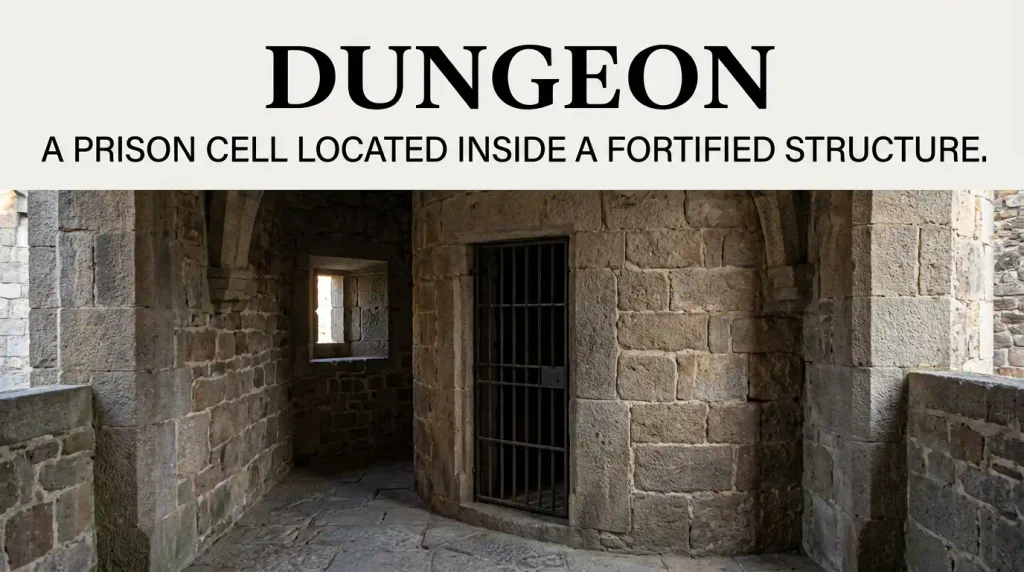
Fortress Cell (Noun) — US /ˈfɔːrtrəs sɛl/ | UK /ˈfɔːtrəs sɛl/
Meaning: A prison cell located inside a fortified structure.
Tone/Register: Historical, descriptive.
Example:
The captured warrior was placed in a fortress cell.
The fortress cell had thick walls and an iron door.
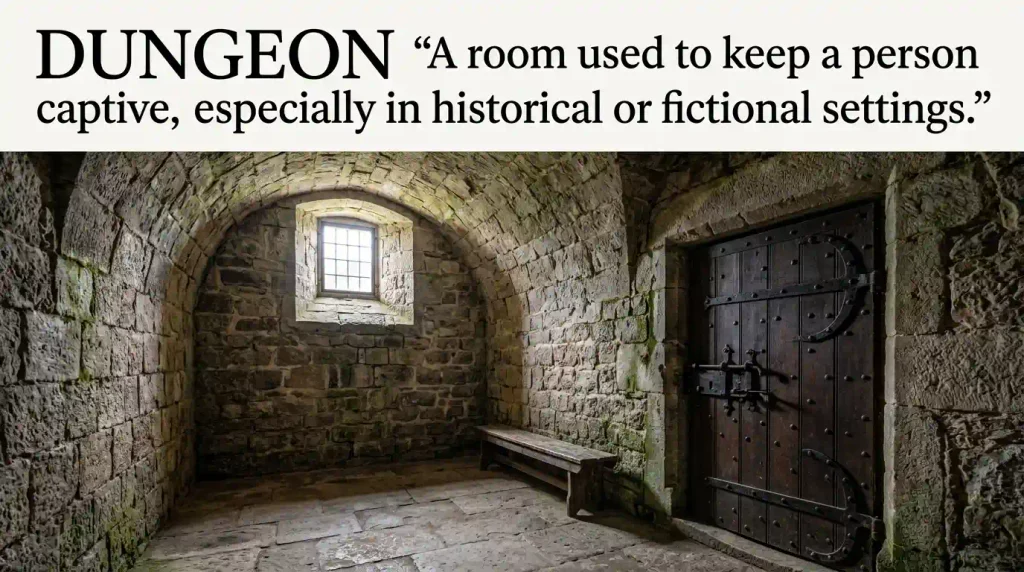
Captive Chamber (Noun) — US /ˈkæptɪv ˈtʃeɪmbər/ | UK /ˈkæptɪv ˈtʃeɪmbə/
Meaning: A room used to keep a person captive, especially in historical or fictional settings.
Tone/Register: Literary, dramatic.
Example:
The princess was held in a captive chamber.
The captive chamber was hidden beneath the tower.
Synonyms for “Dungeon” by Tone
Tone matters because not every alternative creates the same mental picture.
Positive or Adventurous
In fantasy and gaming, words such as vault, hidden chamber, dungeon chamber, undercrypt, and forbidden chamber can create excitement and mystery.
They are useful when the setting contains treasure, secrets, puzzles, or adventure rather than only suffering.
Neutral
For straightforward writing, cell, prison, jail, detention cell, holding cell, prison chamber, and correctional facility are more natural.
These choices work well in educational, legal, historical, and everyday contexts.
Negative or Dark
For a frightening atmosphere, torture chamber, gloomy prison, underground prison, dark chamber, and confinement chamber can make the setting feel more threatening.
However, some of these expressions are stronger than dungeon, so context is important.
Playful or Informal
In casual storytelling, someone might describe an unpleasant basement as a dark cellar or jokingly call it a dungeon.
For example, a messy basement might be humorously described as “my little dungeon.”
“Dungeon” vs Close Alternatives
| Word | Main Difference | Best Use |
|---|---|---|
| Dungeon | Dark prison, often associated with castles | Historical and fantasy settings |
| Cell | Small room for one or more prisoners | Everyday and modern prison contexts |
| Prison | General institution for confinement | Formal and general writing |
| Jail | Place where people are held in custody | Everyday English |
| Vault | Secure enclosed room, often underground | Mystery and historical settings |
| Crypt | Underground burial chamber | Religious and historical settings |
| Keep | Main fortified tower of a castle | Medieval architecture |
| Torture chamber | Room specifically associated with torture | Dark historical or fictional scenes |
The key difference is simple: dungeon combines a sense of imprisonment with an old, dark, fortress-like environment. A cell focuses on confinement, while a prison describes the broader institution.
How “Dungeon” Changes by Context
Daily Conversation
In ordinary conversation, dungeon is uncommon unless someone is discussing a castle, fantasy story, game, or a very dark basement.
For example, someone might jokingly say, “My basement looks like a dungeon.”
Here, the word is figurative rather than literal.
Writing or Blogging
Bloggers can use dungeon when discussing medieval castles, fantasy books, video games, horror stories, or historical sites.
However, repeating the word too often can make writing feel monotonous. Alternatives such as cell, underground chamber, or fortress prison can improve variety.
Professional or Academic Tone
Academic writing usually requires precise terminology.
Instead of using dungeon for every historical prison, a writer may need to use prison cell, detention chamber, fortified prison, or another historically accurate term.
The most important rule is accuracy. Do not choose a synonym simply because it sounds sophisticated.
Creative or Informal Use
Creative writers have more freedom.
A fantasy writer might use forbidden chamber, undercrypt, dark chamber, or vault to create suspense.
Likewise, a humorous writer might call a cluttered basement a dungeon for comic effect.
Common Mistakes Learners Make
Using “Prison” in Every Situation
Prison is broader than dungeon.
A dungeon usually creates a specific historical or fantasy image. A modern prison does not necessarily have stone walls, underground rooms, or castle architecture.
Treating “Cell” and “Dungeon” as Identical
A cell is normally a single room used for confinement.
A dungeon can refer to a larger area or an entire underground prison setting.
Therefore, replacing one with the other can change the image.
Calling Every Underground Room a Dungeon
An underground room is not automatically a dungeon.
A basement, vault, cellar, crypt, and dungeon can all be underground, but their purposes differ.
Using “Torture Chamber” Too Freely
A torture chamber specifically suggests torture.
Consequently, it is much stronger than dungeon and should be used only when the context supports that meaning.
Confusing “Keep” With “Dungeon”
A keep is a fortified tower.
A dungeon is associated with imprisonment.
They can exist in the same castle, but they are not interchangeable.
Native Usage Notes
Native speakers usually choose dungeon when they want a strong historical, medieval, fantasy, or dramatic image.
For modern imprisonment, cell, jail, or prison sounds much more natural.
Meanwhile, writers use phrases such as underground chamber, hidden chamber, and fortress prison when they want greater descriptive precision.
In fiction, word choice also controls atmosphere. Cell sounds restrained and realistic. Dungeon sounds darker and more medieval. Vault sounds mysterious. Torture chamber sounds disturbing.
For more vocabulary practice, you can also explore related synonym articles and compare how different words change tone and context.
Real-Life Mini Scenarios
Workplace Scenario
A writer is describing an extremely uncomfortable storage basement.
Instead of repeating “dungeon,” the writer could say:
“The basement felt like a dark cellar.”
This sounds natural because the writer is describing atmosphere rather than an actual prison.
Social Scenario
A friend shows you a messy basement.
You might jokingly say:
“Wow, this place looks like a dungeon!”
Here, dungeon is humorous and figurative.
Media and Pop Culture
Fantasy movies often use dungeon to describe underground locations where characters are imprisoned or forced to complete dangerous challenges.
In this setting, words such as hidden chamber, undercrypt, and forbidden chamber can add variety.
Writing and Storytelling
A novelist may first introduce a place as a dungeon.
Later, the writer can describe specific areas as cells, stone chambers, or underground passages.
This technique avoids repetition while making the setting more vivid.
How to Choose the Best Synonym for Dungeon
The best alternative depends on what you actually mean.
For a small place where a prisoner is held, cell is the most natural choice.
When referring to a general place of imprisonment, prison works better.
For temporary custody, choose holding cell or lockup.
In a historical British context, gaol may be the most appropriate term.
To describe a mysterious underground room, consider hidden chamber, vault, or dark chamber.
A room specifically associated with torture is better called a torture chamber.
When discussing a medieval castle tower, use keep rather than dungeon.
Therefore, the most accurate synonym is always the one that preserves the intended meaning.
Interactive Practice Quiz
Choose the best answer for each situation.
1. A prisoner is locked in a small room inside a modern prison. Which word fits best?
A. Vault
B. Cell
C. Keep
D. Crypt
2. A medieval story describes prisoners held beneath a castle. Which word is most suitable?
A. Dungeon
B. Office
C. Apartment
D. Garage
3. A person is temporarily held by police before being processed. Which term fits best?
A. Holding cell
B. Keep
C. Crypt
D. Vault
4. A writer describes a room used specifically for historical torture. Which term is most precise?
A. Cell
B. Chamber
C. Torture chamber
D. Prison
5. A medieval castle’s strongest central tower is being described. Which word should you use?
A. Dungeon
B. Keep
C. Jail
D. Lockup
6. A hidden underground room contains ancient treasure. Which alternative creates a mysterious feeling?
A. Hidden chamber
B. Jail
C. Penitentiary
D. Lockup
7. Which word is most appropriate for a formal modern correctional institution?
A. Correctional facility
B. Dungeon
C. Undercrypt
D. Dark cellar
8. A British historical novel describes an old prison. Which word may fit particularly well?
A. Gaol
B. Vault
C. Keep
D. Cellar
9. A basement is being described humorously as frightening and dark. Which word could work figuratively?
A. Dungeon
B. Penitentiary
C. Brig
D. Detention cell
10. Which word specifically means an underground burial chamber?
A. Crypt
B. Jail
C. Lockup
D. Brig
11. A military ship has an area where detained sailors are held. Which word is most appropriate?
A. Brig
B. Vault
C. Crypt
D. Cellar
12. A writer wants a formal phrase for a room where someone is confined. Which option works best?
A. Confinement chamber
B. Keep
C. Cellar
D. Stockade
13. Which word is broader than “dungeon” and describes an institution for imprisonment?
A. Prison
B. Vault
C. Chamber
D. Crypt
14. A secure underground room stores valuable objects. Which word fits best?
A. Vault
B. Jail
C. Brig
D. Gaol
15. A fantasy writer wants a dark, mysterious room that people are forbidden to enter. Which phrase works best?
A. Forbidden chamber
B. Holding cell
C. Correctional facility
D. Lockup
Reflection Task
Write one original sentence using cell, dungeon, vault, hidden chamber, prison, or forbidden chamber. Then ask yourself: Does my chosen word create the exact image I intended?
Answer Key: 1-B | 2-A | 3-A | 4-C | 5-B | 6-A | 7-A | 8-A | 9-A | 10-A | 11-A | 12-A | 13-A | 14-A | 15-A
FAQs
1. What is the closest synonym for dungeon in everyday English?
The closest everyday alternatives are cell, prison, and jail, but none has the same meaning. A dungeon usually suggests a dark, old, enclosed prison associated with a castle or fortress. Cell focuses on the room itself, while prison describes the broader institution. For historical or fantasy writing, dungeon is often the most precise choice.
2. What is a good synonym for dungeon in fantasy writing?
For fantasy writing, useful alternatives include hidden chamber, forbidden chamber, undercrypt, vault, dark chamber, and prison chamber. The best choice depends on the scene. Use vault for mystery or treasure, forbidden chamber for secrecy, and prison chamber when imprisonment is the main idea.
3. What is the difference between a dungeon and a prison cell?
A prison cell is normally one enclosed room where a prisoner is kept. A dungeon has a broader historical and atmospheric meaning. It often refers to a dark prison area inside or beneath a castle or fortress. As a result, a dungeon may contain several cells, passages, chambers, or other spaces.
4. Can basement be used as a synonym for dungeon?
Basement is not a direct synonym for dungeon. A basement is simply a floor or room below ground level. However, you can describe a basement as “dungeon-like” when it feels dark, gloomy, old, or uncomfortable. In casual speech, people sometimes jokingly call a dark basement a dungeon.
5. Is “vault” the same as “dungeon”?
No. A vault usually serves as a secure enclosed room for storage, protection, or sometimes burial. In contrast, a dungeon usually describes a dark place where people are held as prisoners. Both terms can refer to underground spaces in fantasy or historical writing, but they create different meanings and mental images.
6. What is the formal synonym for dungeon?
There is no single formal synonym that perfectly replaces dungeon in every situation. Depending on the context, formal alternatives include detention chamber, confinement chamber, prison chamber, detention cell, and correctional facility. In academic writing, choose the term that describes the actual function and historical setting rather than simply choosing a more formal-sounding word.
7. What is a good synonym for dungeon in a historical context?
In historical writing, prison cell, gaol, fortress prison, confinement chamber, or underground prison may work depending on the evidence. Dungeon itself is also appropriate when the historical source or setting supports it. However, writers should avoid assuming that every medieval underground room was a prison.
8. Can dungeon be used figuratively?
Yes. Dungeon can also describe a place that feels dark, unpleasant, isolated, or oppressive. For example, someone might jokingly describe a messy basement as a “dungeon.” This usage is informal and creates a dramatic or humorous effect rather than describing an actual historical prison.
Conclusion
Choosing the right synonym for dungeon depends on meaning, setting, and tone. A cell sounds practical, while a dungeon creates a darker historical or fantasy image.
Words such as prison, jail, vault, chamber, and gaol can add variety. However, each has its own meaning, so accuracy should always come first.
For students and writers, learning these alternatives improves vocabulary and makes essays, blogs, stories, and conversations more precise and engaging.
The best way to remember them is to practice. Try using these words in your own emails, essays, stories, and daily conversations.
Keep exploring vocabulary, compare words by context, and practice creating your own sentences. Small word choices can make your English much stronger.

Shahzeena Shazadi is the founder and lead writer at VocablyHub.com, where she creates accurate, reader-focused English language content designed to help people communicate with clarity and confidence. She specializes in synonyms, antonyms, word meanings, idioms, and practical vocabulary guides that simplify complex language concepts for everyday use. Every article is carefully researched, fact-checked, and written in clear, accessible language using reliable references and real-world examples. Her goal is to provide helpful, trustworthy content that supports learners at every stage of their English language journey.
Her editorial approach focuses on accuracy, transparency, and user value while following modern content quality standards. She regularly reviews and updates content to keep information relevant, useful, and easy to understand. Through VocablyHub.com, Shahzeena Shazadi is committed to publishing reliable language resources that help students, writers, educators, professionals, and English learners expand their vocabulary, improve their writing skills, and communicate with confidence in academic, professional, and everyday situations.