
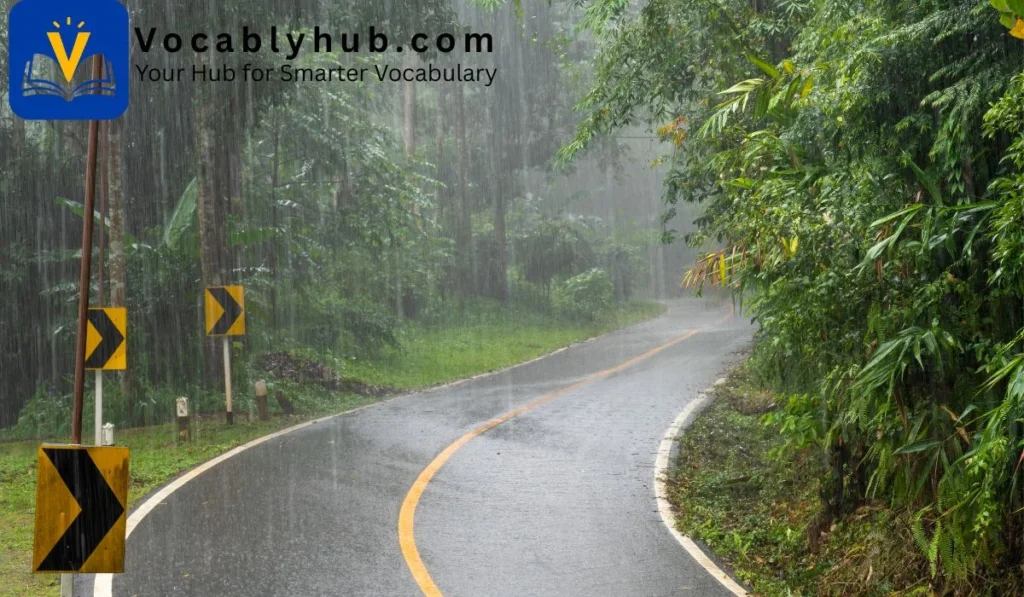
Synonyms for jungle help you describe dense, wild forests. Imagine stepping into a thick, tangled mass of green trees and vines. The dense wilderness is home to many different animal species.
Synonyms for jungle let writers capture these untamed landscapes vividly. Expanding your daily vocabulary elevates your overall writing style. This descriptive noun is frequently used in travel blogs, literature, and nature documentaries.
Synonyms for jungle are essential for students, bloggers, content writers, and daily English users. Using precise terms transforms weak writing into compelling prose. Furthermore, it allows native speakers to convey exact environmental settings.
What Does “Jungle” Really Mean?
Jungle describes an overgrown, dense forest found typically in tropical regions with heavy rainfall. The emotional tone is typically wild, mysterious, and awe-inspiring. Native speakers use it when talking about thick tropical vegetation or chaotic urban environments.
It functions as a noun. A simple definition is a wild, tangled forest with thick vegetation.
Connotative Meaning
The emotional tone of this word is predominantly adventurous, mysterious, or chaotic.
(Connotation refers to the emotional or cultural associations surrounding a word, apart from its literal dictionary definition.)
Etymology
The term originates from the Sanskrit word “jaṅgala,” meaning rough and arid ground, which evolved through Hindi into British colonial usage.
- Old English (450–1100): The concept was expressed using native Germanic words like “wudu” (wood) or “weald” (wold).
- Middle English (1100–1500): Early explorers used terms like wildwood to describe dense, uncultivated regions.
- Modern English (1500–Present): Adopted from South Asian languages to specifically mean thick tropical forests.
Pronunciation (US & UK – IPA)
- US: /ˈdʒʌŋ.ɡəl/
- UK: /ˈdʒʌŋ.ɡəl/
Syllables
jun-gle
Affixation Pattern
- Root: jaṅgala (Sanskrit origin)
- Prefix: None
- Suffix: -le (noun-forming suffix)
Synonyms List
Rainforest (Noun) — US / UK: /ˈreɪn.fɔːr.ɪst/ / /ˈreɪn.fɔː.rɪst/
- Meaning: A luxuriant, dense forest rich in biodiversity found in heavy rainfall areas.
- Tone/Register: Scientific / Environmental
- Examples:
- The Amazon rainforest is home to thousands of unique plant species.
- Conservationists work hard to protect fragile rainforest ecosystems from logging.
Wilderness (Noun) — US / UK: /ˈwɪl.dər.nəs/ / /ˈwɪl.dər.nəs/
- Meaning: An uncultivated, uninhabited, and natural area.
- Tone/Register: Literary / Descriptive
- Examples:
- Hikers explored the deep mountain wilderness during their summer trip.
- Living in the Alaskan wilderness requires immense survival skills.
Forest (Noun) — US / UK: /ˈfɔːr.ɪst/ / /ˈfɔː.rɪst/
- Meaning: A large area covered chiefly with trees and undergrowth.
- Tone/Register: Standard / Common
- Examples:
- They walked through the pine forest looking for fallen pinecones.
- Deer ran quickly through the quiet autumn forest.
Woods (Noun) — US / UK: /wʊdz/ / /wʊdz/
- Meaning: A smaller tract of land covered with trees.
- Tone/Register: Everyday / Casual
- Examples:
- Children built a small treehouse deep in the neighborhood woods.
- Our dog loves chasing squirrels through the nearby woods.
Thicket (Noun) — US / UK: /ˈθɪk.ɪt/ / /ˈθɪk.ɪt/
- Meaning: A dense group of bushes or trees.
- Tone/Register: Descriptive / Literary
- Examples:
- The frightened rabbit hid quickly inside a thorny thicket.
- Berry pickers navigated carefully around the dense blackberry thicket.
Undergrowth (Noun) — US / UK: /ˈʌn.dər.ɡroʊθ/ / /ˈʌn.dər.ɡrəʊθ/
- Meaning: Low-growing shrubs and plants beneath forest trees.
- Tone/Register: Botanical / Descriptive
- Examples:
- Lizards scurried through the damp forest undergrowth.
- Clearing the thick undergrowth revealed an old stone path.
Selva (Noun) — US / UK: /ˈsɛl.və/ / /ˈsɛl.və/
- Meaning: A dense tropical rain forest, especially in the Amazon basin.
- Tone/Register: Geographical / Formal
- Examples:
- Explorers charted remote rivers winding through the South American selva.
- The humid rainforest was home to many colorful bird species.
Woodland (Noun) — US / UK: /ˈwʊd.lənd/ / /ˈwʊd.lənd/
- Meaning: Land covered with trees and bushes.
- Tone/Register: Standard / Environmental
- Examples:
- Local councils manage this public woodland for hiking enthusiasts.
- Spring wildflowers bloomed across the shaded woodland floor.
Copse (Noun) — US / UK: /kɑːps/ / /kɒps/
- Meaning: A small group of trees or bushes.
- Tone/Register: Literary / Traditional
- Examples:
- A small copse of oak trees offered shade in the pasture.
- Birds nested safely within the quiet country copse.
Grove (Noun) — US / UK: /ɡroʊv/ / /ɡrəʊv/
- Meaning: A small group of trees, especially fruit-bearing ones.
- Tone/Register: Agricultural / Descriptive
- Examples:
- They picked fresh oranges from the family orchard grove.
- An olive grove stood peacefully beside the Mediterranean villa.
Timberland (Noun) — US / UK: /ˈtɪm.bər.lænd/ / /ˈtɪm.bə.lænd/
- Meaning: Forest land with trees suitable for commercial timber.
- Tone/Register: Business / Forestry
- Examples:
- The logging company purchased vast acres of remote timberland.
- Sustainable timberland management protects future wood supplies.
Bush (Noun) — US / UK: /bʊʃ/ / /bʊʃ/
- Meaning: Wild, uncultivated scrubland country, especially in Australia or Africa.
- Tone/Register: Regional / Casual
- Examples:
- Kangaroos bounded across the dry Australian bush.
- Safari guides tracked wildlife deep in the African bush.
Scrub (Noun) — US / UK: /skrʌb/ / /skrʌb/
- Meaning: Vegetation consisting of stunted trees or shrubs.
- Tone/Register: Geographical / Technical
- Examples:
- Desert scrub survived the long summer drought without water.
- Wildfires swept quickly through the dry coastal scrub.
Labyrinth (Noun) — US / UK: /ˈlæb.ə.rɪnθ/ / /ˈlæb.ə.rɪnθ/
- Meaning: A complicated irregular network of passages or dense growth.
- Tone/Register: Metaphorical / Literary
- Examples:
- Vines formed a natural labyrinth inside the deep jungle.
- He got lost within the labyrinth of city alleyways.
Maze (Noun) — US / UK: /meɪz/ / /meɪz/
- Meaning: A confusing network of paths or tangled vegetation.
- Tone/Register: Casual / Descriptive
- Examples:
- The garden hedge formed a complex maze for visitors.
- Mangrove roots created a watery maze along the coast.
Tangle (Noun) — US / UK: /ˈtæŋ.ɡəl/ / /ˈtæŋ.ɡəl/
- Meaning: A confused mass of twisted items or vegetation.
- Tone/Register: Casual / Expressive
- Examples:
- Fallen branches created a difficult tangle across the trail.
- Her necklace was caught in a frustrating tangle.
Overgrowth (Noun) — US / UK: /ˈoʊ.vər.ɡroʊθ/ / /ˈəʊ.və.ɡrəʊθ/
- Meaning: Excessive plant growth blocking paths or structures.
- Tone/Register: Descriptive / Common
- Examples:
- Gardeners cut back the heavy overgrowth near the fence.
- Nature reclaimed the abandoned house through aggressive overgrowth.
Jungle (Metaphorical) — US / UK: /ˈdʒʌŋ.ɡəl/ / /ˈdʒʌŋ.ɡəl/
- Meaning: A wild, lawless, or highly competitive environment.
- Tone/Register: Idiomatic / Casual
- Examples:
- Corporate life is often described as a cutthroat concrete jungle.
- Navigating the stock market feels like walking through a financial jungle.
Tropical Forest (Noun Phrase) — US / UK: /ˈtrɑː.pɪ.kəl ˈfɔːr.ɪst/ / /ˈtrɒ.pɪ.kəl ˈfɔː.rɪst/
- Meaning: A dense forest occurring in tropical climates.
- Tone/Register: Scientific / Formal
- Examples:
- Rare orchids bloom continuously inside the tropical forest.
- Researchers studied monkey behavior in the tropical forest canopy.
Primeval Forest (Noun Phrase) — US / UK: /praɪˈmiː.vəl ˈfɔːr.ɪst/ / /praɪˈmiː.vəl ˈfɔː.rɪst/
- Meaning: An ancient forest that has never been logged or disturbed.
- Tone/Register: Literary / Academic
- Examples:
- Environmentalists fought to preserve the ancient primeval forest.
- Walking through the primeval forest felt like stepping back in time.
Old-growth Forest (Noun Phrase) — US / UK: /oʊld ɡroʊθ ˈfɔːr.ɪst/ / /əʊld ɡrəʊθ ˈfɔː.rɪst/
- Meaning: A forest that has attained great age without significant disturbance.
- Tone/Register: Ecological / Formal
- Examples:
- The old-growth forest provided a sanctuary for endangered owls.
- Scientists measured giant trees within the protected old-growth forest.
Jungle Canopy (Noun Phrase) — US / UK: /ˈdʒʌŋ.ɡəl ˈkæn.ə.pi/ / /ˈdʒʌŋ.ɡəl ˈkæn.ə.pi/
- Meaning: The high overhead roof of branches and leaves in a jungle.
- Tone/Register: Descriptive / Scientific
- Examples:
- Brightly colored parrots flew across the thick jungle canopy.
- Sunlight barely pierced the dense, dark jungle canopy.
Green Hell (Noun Phrase) — US / UK: /ɡriːn hɛl/ / /ɡriːn hɛl/
- Meaning: A dramatic term for a hostile, impassable jungle.
- Tone/Register: Idiomatic / Dramatic
- Examples:
- Early explorers nicknamed the Amazon basin a true green hell.
- Soldiers trained hard to survive in the humid green hell.
Sylvan (Noun/Adj) — US / UK: /ˈsɪl.vən/ / /ˈsɪl.vən/
- Meaning: Consisting of or associated with woods; pleasantly rural.
- Tone/Register: Literary / Poetic
- Examples:
- The cabin offered a peaceful sylvan retreat for writers.
- Poets often praise the quiet beauty of sylvan landscapes.
Timber (Noun) — US / UK: /ˈtɪm.bər/ / /ˈtɪm.bə/
- Meaning: Wood prepared for building and carpentry use.
- Tone/Register: Commercial / Industrial
- Examples:
- Workers harvested strong timber for constructing new homes.
- Logs of pine timber were stacked neatly at the sawmill.
Scrubland (Noun) — US / UK: /ˈskrʌb.lænd/ / /ˈskrʌb.lænd/
- Meaning: Land covered with scrub vegetation.
- Tone/Register: Geographical / Technical
- Examples:
- Ranchers grazed cattle across the rocky scrubland.
- Dry scrubland stretched out endlessly toward the horizon.
Brushwood (Noun) — US / UK: /ˈbrʌʃ.wʊd/ / /ˈbrʌʃ.wʊd/
- Meaning: Small branches and twigs lying on the ground or overgrown.
- Tone/Register: Descriptive / Rural
- Examples:
- They gathered dry brushwood to start the evening campfire.
- Fallen brushwood blocked the narrow dirt trail.
Underbrush (Noun) — US / UK: /ˈʌn.dər.brʌʃ/ / /ˈʌn.dər.brʌʃ/
- Meaning: Shrubs and small trees growing under large trees.
- Tone/Register: Standard / Common
- Examples:
- Wild boars rustled through the dry underbrush.
- Hikers cleared away stray underbrush to set up their tent.
Mangrove (Noun) — US / UK: /ˈmæŋ.ɡroʊv/ / /ˈmæŋ.ɡrəʊv/
- Meaning: A tree that grows in shallow tidal water in tropical areas.
- Tone/Register: Ecological / Botanical
- Examples:
- Kayakers paddled through the twisting mangrove channels.
- Mangrove roots protect coastal areas from storm surges.
Jungle Hideout (Noun Phrase) — US / UK: /ˈdʒʌŋ.ɡəl ˈhaɪd.aʊt/ / /ˈdʒʌŋ.ɡəl ˈhaɪd.aʊt/
- Meaning: A secret shelter concealed within a dense forest.
- Tone/Register: Casual / Storytelling
- Examples:
- The movie heroes retreated to their secret jungle hideout.
- Explorers discovered an abandoned research camp acting as a jungle hideout.
Overgrown Woods (Noun Phrase) — US / UK: /ˈoʊ.vər.ɡroʊnd wʊdz/ / /ˈəʊ.və.ɡrəʊnd wʊdz/
- Meaning: Unmanaged woodland filled with excessive growth.
- Tone/Register: Descriptive / Casual
- Examples:
- An old rusted car sat abandoned in the overgrown woods.
- Kids avoided playing near the dark, overgrown woods after dusk.
Thicket Patch (Noun Phrase) — US / UK: /ˈθɪk.ɪt pætʃ/ / /ˈθɪk.ɪt pætʃ/
- Meaning: A localized cluster of dense bushes.
- Tone/Register: Casual / Descriptive
- Examples:
- A small thicket patch provided cover for resting deer.
- Birds chirped happily from inside the thicket patch.
Fern Brakes (Noun Phrase) — US / UK: /fɜːrn breɪks/ / /fɜːn breɪks/
- Meaning: An area densely overgrown with ferns.
- Tone/Register: Botanical / Literary
- Examples:
- Green fern brakes lined the edges of the misty stream.
- Moose grazed peacefully near the lush fern brakes.

Jungle Basin (Noun Phrase) — US / UK: /ˈdʒʌŋ.ɡəl ˈbeɪ.sɪn/ / /ˈdʒʌŋ.ɡəl ˈbeɪ.sɪn/
- Meaning: A low-lying area covered in dense jungle vegetation.
- Tone/Register: Geographical / Scientific
- Examples:
- Heavy rains flooded the low-lying jungle basin.
- Rare amphibians thrived within the remote jungle basin.
Jungle Trail (Noun Phrase) — US / UK: /ˈdʒʌŋ.ɡəl treɪl/ / /ˈdʒʌŋ.ɡəl treɪl/
- Meaning: A narrow path carved through thick jungle growth.
- Tone/Register: Adventure / Travel
- Examples:
- Tourists followed their guide along the muddy jungle trail.
- Monkeys swung overhead while hikers walked the jungle trail.
Tropical Wilderness (Noun Phrase) — US / UK: /ˈtrɑː.pɪ.kəl ˈwɪl.dər.nəs/ / /ˈtrɒ.pɪ.kəl ˈwɪl.dər.nəs/
- Meaning: Untamed natural land located in tropical climates.
- Tone/Register: Formal / Descriptive
- Examples:
- Expeditions ventured deep into the unexplored tropical wilderness.
- Rare jaguars roam freely across the protected tropical wilderness.
Tangled Thicket (Noun Phrase) — US / UK: /ˈtæŋ.ɡəld ˈθɪk.ɪt/ / /ˈtæŋ.ɡəld ˈθɪk.ɪt/
- Meaning: A thicket made impassable by twisted vines and branches.
- Tone/Register: Literary / Expressive
- Examples:
- Lost hikers struggled to push through the tangled thicket.
- A rabbit vanished instantly inside the tangled thicket.
Uncharted Woods (Noun Phrase) — US / UK: /ʌnˈtʃɑːr.tɪd wʊdz/ / /ʌnˈtʃɑː.tɪd wʊdz/
- Meaning: Forest areas that have not been mapped or explored.
- Tone/Register: Adventure / Literary
- Examples:
- Cartographers marked the uncharted woods with question marks.
- Legends spoke of ancient treasures hidden within the uncharted woods.
Green Maze (Noun Phrase) — US / UK: /ɡriːn meɪz/ / /ɡriːn meɪz/
- Meaning: A descriptive term for a dense, confusing forest.
- Tone/Register: Poetic / Descriptive
- Examples:
- Sunlight filtered down through the green maze of leaves.
- Travelers easily lost their direction inside the green maze.
Fern Forest (Noun Phrase) — US / UK: /fɜːrn ˈfɔːr.ɪst/ / /fɜːn ˈfɔː.rɪst/
- Meaning: A forest dominated by giant tree ferns.
- Tone/Register: Botanical / Descriptive
- Examples:
- Prehistoric ferns filled the damp floor of the fern forest.
- Mist rolled gently through the ancient fern forest.
Jungle Labyrinth (Noun Phrase) — US / UK: /ˈdʒʌŋ.ɡəl ˈlæb.ə.rɪnθ/ / /ˈdʒʌŋ.ɡəl ˈlæb.ə.rɪnθ/
- Meaning: A confusing network of jungle paths and vines.
- Tone/Register: Literary / Expressive
- Examples:
- Escaping the jungle labyrinth required a reliable compass.
- Vines wrapped around trees like a massive jungle labyrinth.
Wild Woods (Noun Phrase) — US / UK: /waɪld wʊdz/ / /waɪld wʊdz/
- Meaning: Natural woods left entirely untouched by humans.
- Tone/Register: Casual / Descriptive
- Examples:
- Children loved playing make-believe in the wild woods behind town.
- Owls hooted loudly throughout the dark wild woods at night.
Rainforest Canopy (Noun Phrase) — US / UK: /ˈreɪn.fɔːr.ɪst ˈkæn.ə.pi/ / /ˈreɪn.fɔː.rɪst ˈkæn.ə.pi/
- Meaning: The upper layer of a rainforest formed by mature tree crowns.
- Tone/Register: Scientific / Ecological
- Examples:
- Sloths spend their entire lives high up in the rainforest canopy.
- Drones captured stunning aerial views of the rainforest canopy.
Primeval Jungle (Noun Phrase) — US / UK: /praɪˈmiː.vəl ˈdʒʌŋ.ɡəl/ / /praɪˈmiː.vəl ˈdʒʌŋ.ɡəl/
- Meaning: An ancient, untouched tropical jungle environment.
- Tone/Register: Literary / Formal
- Examples:
- Scientists discovered a new insect species deep in the primeval jungle.
- The primeval jungle remained untouched by modern human interference.
Dense Forest (Noun Phrase) — US / UK: /dɛns ˈfɔːr.ɪst/ / /dɛns ˈfɔː.rɪst/
- Meaning: A forest packed closely with trees and vegetation.
- Tone/Register: Standard / Common
- Examples:
- Search parties combed the dense forest for the missing hiker.
- Fog rolled thick and heavy across the dense forest floor.
Synonyms for “Jungle” by Tone
Understanding tone helps writers choose the exact right word for their audience. Words carry emotional weight that shapes how readers perceive a message.
- Positive Tone: Rainforest, Wilderness, Woodland, Grove, Sylvan, Tropical Wilderness, Fern Forest.
- Neutral Tone: Forest, Woods, Thicket, Undergrowth, Selva, Copse, Timberland, Bush, Scrub, Woodland, Tropical Forest, Primeval Forest, Old-growth Forest, Timber, Scrubland, Brushwood, Underbrush, Mangrove, Dense Forest.
- Negative Tone: Labyrinth, Maze, Tangle, Overgrowth, Green Hell, Jungle Labyrinth.
Mini Comparison
Jungle vs. Rainforest vs. Woods
- Jungle: Focuses on thick, tangled, impenetrable tropical vegetation with heavy undergrowth. Use it for dramatic or wild settings.
- Rainforest: Focuses on a scientific ecological definition involving high annual rainfall and rich biodiversity. Use it in academic or environmental contexts.
- Woods: Focuses on a smaller, milder temperate tract of trees that is easy to walk through. Use it for everyday outdoor descriptions.
Context-Based Usage
In daily conversation, speakers often use simpler words like woods or forest. People prefer natural phrasing when talking to friends or family members about outdoor walks.
In writing and blogging, content creators choose terms like rainforest or wilderness to add strong environmental depth and professional accuracy. This creates vivid imagery for readers.
In professional or academic writing, authors rely on formal choices such as old-growth forest or timberland. These words maintain an authoritative, scientific tone.
Common Mistakes and Native Usage
Learners frequently misuse these terms by applying jungle to any group of trees, even temperate pine parks. A clean park with neat rows of pines is never a jungle.
Another common error is confusing tone. Using a dramatic phrase like green hell for a peaceful local park sounds unnatural.
Native speakers reserve these specific nouns for settings that match the exact density, climate, and geography. Furthermore, they avoid overusing them in every single sentence.
Real-Life Mini Scenarios
- Workplace: Managing multiple chaotic projects at once felt like navigating a concrete jungle.
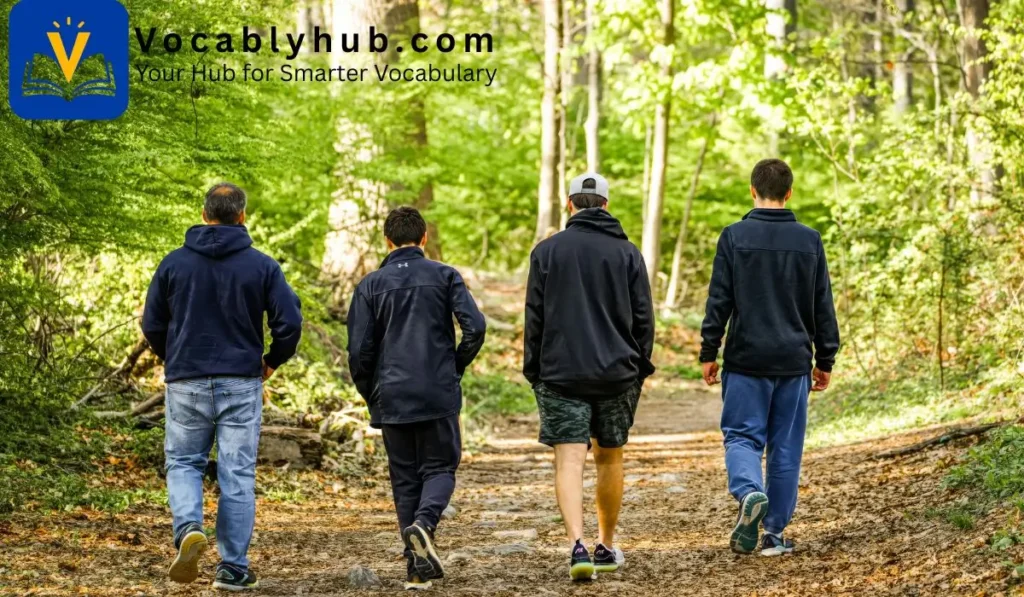
- Social Situations: Walking through the dense park trails felt like exploring a mini wilderness.
- Media / Pop Culture: The nature documentary explored hidden life within the Amazonian rainforest.
- Writing / Storytelling: The adventure novel described heroes hacking their way through an untamed jungle.
Conclusion
Using the right synonyms for jungle helps you describe dense forests, tropical wilderness, and areas filled with thick vegetation more accurately. Choosing the right alternative can make your writing more vivid and engaging.
By learning synonyms for jungle, you can understand the differences between words such as rainforest, wilderness, woodland, thicket, and vegetation. Each word has a slightly different meaning, so context is important when selecting the best option.
Keep practicing synonyms for jungle by using these alternatives in your writing and everyday conversations. Expanding your vocabulary will help you communicate more clearly, create stronger descriptions, and make your English more expressive.
Interactive Practice Quiz
- The explorers traveled deep into the dense ________.
- A. Desert
- B. Rainforest
- C. Meadow
- Many rare animals live in the tropical ________.
- A. Woodland
- B. Prairie
- C. Tundra
- The hikers struggled to move through the thick ________.
- A. Thicket
- B. Plain
- C. Valley
- The documentary showed the diverse wildlife of the Amazon ________.
- A. Rainforest
- B. Grassland
- C. Coastline
- Vines and trees covered the dense ________.
- A. Forest
- B. Desert
- C. Shore
- The small village was surrounded by a vast tropical ________.
- A. Wilderness
- B. Farmland
- C. Garden
- They followed a narrow path through the tangled ________.
- A. Vegetation
- B. Snowfield
- C. Orchard
- The researchers spent months studying plants in the remote ________.
- A. Rainforest
- B. Plateau
- C. Valley
- The abandoned garden had become an overgrown ________ of weeds and vines.
- A. Thicket
- B. Meadow
- C. Pasture
- The expedition explored a vast area of untouched tropical ________.
- A. Wilderness
- B. Farmland
- C. Park
Reflection Task:
Write one original sentence using the synonym “rainforest” to describe an environmental setting.
Answer Key:
- B, 2. A, 3. A, 4. A, 5. A, 6. A, 7. A, 8. A, 9. A, 10. A
Frequently Asked Questions
1. Can “jungle” apply to city environments?
Yes, native speakers often use “concrete jungle” metaphorically to describe a crowded, chaotic, and highly competitive city environment.
2. What is the main difference between a jungle and a forest?
A jungle specifically implies dense, impenetrable tropical vegetation with thick vines and undergrowth, whereas a forest can be any large area of trees in various climates.
3. Is jungle spelled with a silent letter?
No, every letter in “jungle” is pronounced clearly according to its standard phonetic syllable breakdown.
4. Can this word be used in professional writing?
While common in general prose, formal or scientific writing often prefers precise terms like tropical forest, rainforest, or woodland.
5. How can I practice using these synonyms daily?
You can substitute these words into your travel writing, journal entries, or nature descriptions whenever you want to vary your outdoor vocabulary.

Shahzeena Shazadi is the founder and lead writer at VocablyHub.com, where she creates accurate, reader-focused English language content designed to help people communicate with clarity and confidence. She specializes in synonyms, antonyms, word meanings, idioms, and practical vocabulary guides that simplify complex language concepts for everyday use. Every article is carefully researched, fact-checked, and written in clear, accessible language using reliable references and real-world examples. Her goal is to provide helpful, trustworthy content that supports learners at every stage of their English language journey.
Her editorial approach focuses on accuracy, transparency, and user value while following modern content quality standards. She regularly reviews and updates content to keep information relevant, useful, and easy to understand. Through VocablyHub.com, Shahzeena Shazadi is committed to publishing reliable language resources that help students, writers, educators, professionals, and English learners expand their vocabulary, improve their writing skills, and communicate with confidence in academic, professional, and everyday situations.