
Looking for the right synonyms for messed with can help you express your ideas more clearly and naturally. The phrase “messed with” can have different meanings depending on the context, such as interfering with something, teasing someone, changing something, or causing trouble.
Understanding synonyms for messed with gives you more precise vocabulary for everyday conversations, writing, and professional situations. Words like interfered with, tampered with, disturbed, and teased can work well when the context is clear.
In this guide, you’ll discover useful synonyms for messed with along with simple meanings and examples. Each alternative can help you choose the best word based on what you actually mean.
Whether you want to describe someone interfering with your plans, altering an object, or joking around with another person, these alternatives will make your English more accurate and expressive.
What Does “Messed With” Really Mean?
The phrase messed with primarily means to interfere with something, tamper with an object, or bother someone playfully or maliciously.
It can also mean to handle things carelessly or tinker with machinery without proper technical knowledge.
Native speakers use this phrasal verb idiomatically in both casual social conflicts and descriptive daily contexts.
Its part of speech is a multi-word phrasal verb combined with a prepositional modifier.
In simple English, it means disturbing a system, altering an object incorrectly, or annoying another person.
Connotative Meaning
The emotional tone of this expression is mostly informal, edgy, or warning, depending entirely on the immediate context.
- Positive tone: Playing harmless pranks or tinkering creatively with electronics.
- Negative tone: Vandalizing property, cyber tampering, or bullying another person.
- Neutral tone: Adjusting a mechanical setting or experimenting cautiously with a tool.
- Connotation (the emotional or cultural association attached to a word beyond its literal definition).
Etymology
The term stems from the noun mess, originating from Old French mes, meaning a portion of food.
- Old English (450–1100): The native Germanic roots focused on mixing foods and disordered states.
- Middle English (1100–1500): The term evolved to describe a dirty collection of items or jumbled provisions.
- Modern English (1500–Present): It expanded into verbs and phrasal expressions meaning to disrupt or tamper.
Pronunciation & Syllables
- US: /mɛst wɪð/
- UK: /mɛst wɪð/
- Syllables: messed-with
- Affixation Pattern: A regular past-tense verb combined with a prepositional particle.
Synonyms List
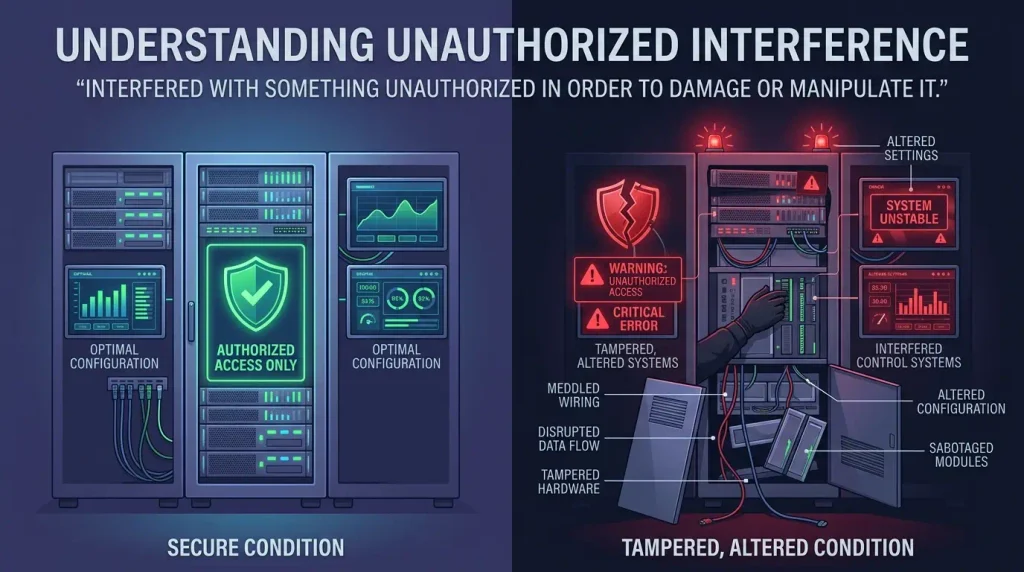
Tampered (Verb) — US: /ˈtæmpərd/ | UK: /ˈtæmpəd/
Meaning: Interfered with something unauthorized in order to damage or manipulate it.
Tone/Register: Formal, legal, and serious.
Examples:
Someone tampered with the laboratory lock over the weekend.
The detective realized the secure evidence file was tampered with.
Interfered (Verb) — US: /ˌɪntərˈfɪrd/ | UK: /ˌɪntəˈfɪəd/
Meaning: Prevented a process from continuing or getting in someone’s way.
Tone/Register: Standard and professional.
Examples:
He interfered with the team project by deleting core files.
She never interfered in her adult children’s personal decisions.
Meddled (Verb) — US: /ˈmɛdəld/ | UK: /ˈmɛdəld/
Meaning: Interfered in something without being asked or welcomed.
Tone/Register: Informal and disapproving.
Examples:
She meddled in her neighbor’s personal family business constantly.
Do not let anyone meddle with your creative workflow.
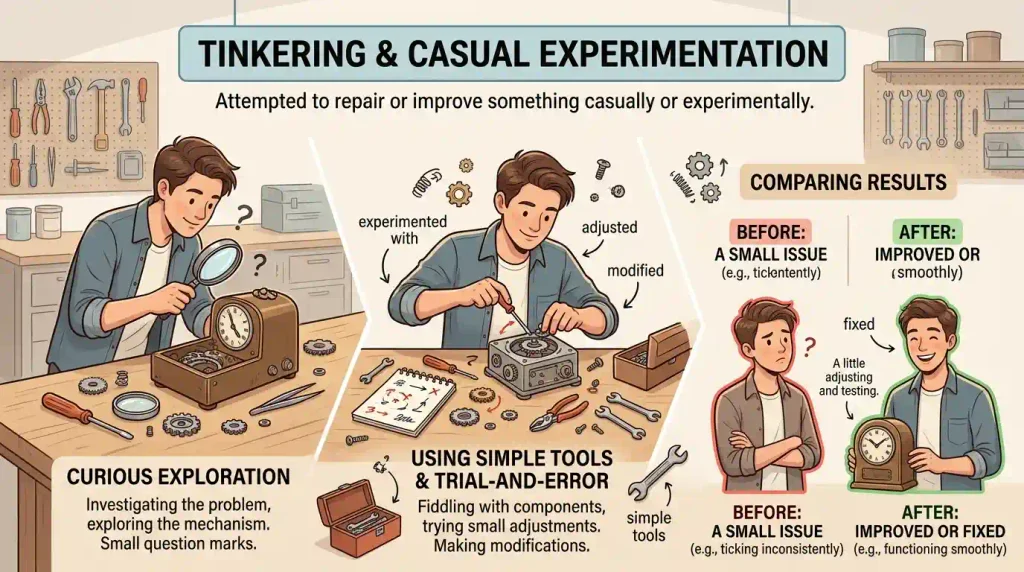
Tinkered (Verb) — US: /ˈtɪŋkərd/ | UK: /ˈtɪŋkəd/
Meaning: Attempted to repair or improve something casually or experimentally.
Tone/Register: Casual and hands-on.
Examples:
He tinkered with the old motorcycle engine all Sunday afternoon.
She tinkered with the website code until the layout looked right.
Fiddled (Verb) — US: /ˈfɪdəld/ | UK: /ˈfɪdəld/
Meaning: Touched or adjusted something nervously or repeatedly with hands.
Tone/Register: Informal and everyday.
Examples:
The boy fiddled with his pocket watch during the long lecture.
She fiddled with the radio dial to find a clear station.
Dabbled (Verb) — US: /ˈdæbəld/ | UK: /ˈdæbəld/
Meaning: Took part in an activity casually or superficially.
Tone/Register: Conversational and relaxed.
Examples:
He dabbled in painting during his college summer break.
She dabbled with coding before committing to a computer science degree.
Toyed (Verb) — US: /tɔɪd/ | UK: /tɔɪd/
Meaning: Acted without serious intent or played casually with an idea or object.
Tone/Register: Literary and expressive.
Examples:
He toyed with the idea of moving abroad for a new job.
The cat toyed with the mouse before catching it completely.
Bullied (Verb) — US: /ˈbʊlid/ | UK: /ˈbʊlid/
Meaning: Used superior strength or influence to intimidate someone.
Tone/Register: Serious and emotional.
Examples:
Older students bullied the younger kids near the playground gate.
He refused to be bullied into signing the unfair contract.
Harassed (Verb) — US: /ˈhærəst/ | UK: /ˈhærəst/
Meaning: Subjected someone to aggressive pressure or intimidation.
Tone/Register: Formal and legal.
Examples:
The persistent telemarketers harassed customers with daily calls.
She reported the online user who harassed her on social media.
Pestered (Verb) — US: /ˈpɛstərd/ | UK: /ˈpɛstəd/
Meaning: Troubled or annoyed someone with frequent, persistent requests.
Tone/Register: Informal and common.
Examples:
The puppy pestered its owner for attention during dinner.
She pestered her brother until he shared his snacks.
Sabotaged (Verb) — US: /ˈsæbətɑːʒd/ | UK: /ˈsæbətɑːʒd/
Meaning: Deliberately destroyed, damaged, or obstructed something.
Tone/Register: Professional and dramatic.
Examples:
A disgruntled employee sabotaged the factory computer network.
Bad weather sabotaged their plans for an outdoor wedding.
Vandalized (Verb) — US: /ˈvændəlaɪzd/ | UK: /ˈvændəlaɪzd/
Meaning: Action deliberately used to damage public or private property.
Tone/Register: Formal and legal.
Examples:
Unknown vandals vandalized the park benches with spray paint.
The historic building was vandalized late last night.
Ransacked (Verb) — US: /ˈrænsækt/ | UK: /ˈrænsækt/
Meaning: Searched a place hurriedly and thoroughly, causing disorder.
Tone/Register: Narrative and dramatic.
Examples:
Burglars ransacked the house looking for hidden valuables.
The toddler ransacked the toy box in minutes.
Disrupted (Verb) — US: /dɪsˈrʌptɪd/ | UK: /dɪsˈrʌptɪd/
Meaning: Interrupted an event, activity, or process by causing a disturbance.
Tone/Register: Formal and professional.
Examples:
Heavy snowfall disrupted train schedules across the region.
Loud construction noise disrupted the afternoon lecture.
Altered (Verb) — US: /ˈɔːltərd/ | UK: /ˈɔːltəd/
Meaning: Changed or caused to change in character or composition.
Tone/Register: Standard and technical.
Examples:
Tailors altered the suit jacket to fit him perfectly.
Digital edits altered the original appearance of the photograph.
Disturbed (Verb) — US: /dɪˈstɜːrbd/ | UK: /dɪˈstɜːbd/
Meaning: Interrupted the normal functioning or peace of something.
Tone/Register: Formal and descriptive.
Examples:
Loud construction work disturbed the afternoon quiet.
An unexpected error disturbed the software processing queue.
Monkeyed (Verb) — US: /ˈmʌŋkid/ | UK: /ˈmʌŋkid/
Meaning: Tampered with or played with a mechanical device or system.
Tone/Register: Informal and idiomatic.
Examples:
Someone monkeyed with the thermostat settings again.
Never monkey with electrical wiring without experience.
Disarranged (Verb) — US: /ˌdɪsəˈreɪndʒd/ | UK: /ˌdɪsəˈreɪndʒd/
Meaning: Put something out of order or made untidy.
Tone/Register: Formal and descriptive.
Examples:
Strong winds disarranged the papers on the desk.
The tidy shelves were disarranged by the search.
Disconnected (Verb) — US: /ˌdɪskəˈnɛktɪd/ | UK: /ˌdɪskəˈnɛktɪd/
Meaning: Broke the connection between parts or devices.
Tone/Register: Technical and standard.
Examples:
He disconnected the battery before fixing the engine.
The storm disconnected power across three districts.
Intercepted (Verb) — US: /ˌɪntərˈsɛptɪd/ | UK: /ˌɪntəˈsɛptɪd/
Meaning: Obstructed someone or something on their way to prevent arrival.
Tone/Register: Formal and tactical.
Examples:
Guards intercepted the unauthorized package at the gate.
The defender intercepted the pass near the goal line.
Impinged (Verb) — US: /ɪmˈpɪndʒd/ | UK: /ɪmˈpɪndʒd/
Meaning: Had a negative effect or encroachment on something.
Tone/Register: Academic and formal.
Examples:
The new building impinged on their sunlight and privacy.
Noise pollution impinged upon the quiet nature reserve.
Intruded (Verb) — US: /ɪnˈtruːdɪd/ | UK: /ɪnˈtruːdɪd/
Meaning: Put oneself deliberately where one is not wanted or welcome.
Tone/Register: Formal and serious.
Examples:
Sales calls intruded on his family dinner time.
Uninvited guests intruded into the private meeting.
Encroached (Verb) — US: /ɪnˈkroʊtʃt/ | UK: /ɪnˈkrəʊtʃt/
Meaning: Advanced beyond usual or acceptable limits gradually.
Tone/Register: Legal and formal.
Examples:
Urban development encroached upon the natural forest.
Their neighbor’s fence encroached upon his property line.
Trespassed (Verb) — US: /ˈtrɛspəst/ | UK: /ˈtrɛspəst/
Meaning: Entered someone’s land or property without permission.
Tone/Register: Legal and formal.
Examples:
Signs warned people not to trespass near the railway tracks.
Hikers accidentally trespassed on private agricultural fields.
Infringed (Verb) — US: /ɪnˈfrɪndʒd/ | UK: /ɪnˈfrɪndʒd/
Meaning: Acted to limit or undermine something like a right or law.
Tone/Register: Legal and professional.
Examples:
The new policy infringed upon employee privacy rights.
Pirated software infringed on international copyright laws.
Violated (Verb) — US: /ˈvaɪəleɪtɪd/ | UK: /ˈvaɪəleɪtɪd/
Meaning: Broke or failed to comply with a rule, law, or agreement.
Tone/Register: Serious and formal.
Examples:
The company violated environmental safety regulations.
Hackers violated the secure server firewall protocols.
Compromised (Verb) — US: /ˈkɑːmprəmaɪzd/ | UK: /ˈkɒmprəmaɪzd/
Meaning: Made something vulnerable to danger or security risks.
Tone/Register: Professional and cybersecurity.
Examples:
A weak password compromised the entire database system.
The undercover agent’s identity was accidentally compromised.
Corrupted (Verb) — US: /kəˈrʌptɪd/ | UK: /kəˈrʌptɪd/
Meaning: Caused damage or impurity in files, morals, or systems.
Tone/Register: Technical and formal.
Examples: A sudden power outage corrupted the project file.
Dishonest leaders corrupted the municipal administration.
Marred (Verb) — US: /mɑːrd/ | UK: /mɑːd/
Meaning: Impaired the appearance or quality of something; spoiled.
Tone/Register: Literary and formal.
Examples:
A large scratch marred the surface of the antique table.
Rainstorms marred their weekend camping trip plans.
Blemished (Verb) — US: /ˈblɛmɪʃt/ | UK: /ˈblɛmɪʃt/
Meaning: Spoiled the appearance or perfection of something.
Tone/Register: Descriptive and literary.
Examples:
A minor error blemished her otherwise flawless resume.
The fruit was bruised and blemished upon delivery.
Flawed (Verb) — US: /flɔːd/ | UK: /flɔːd/
Meaning: Had imperfections or weaknesses that impaired effectiveness.
Tone/Register: Analytical and critical.
Examples:
The initial business model proved fundamentally flawed.
Logic errors flawed his academic research argument.
Distracted (Verb) — US: /dɪˈstræktɪd/ | UK: /dɪˈstræktɪd/
Meaning: Prevented someone from giving full attention to something.
Tone/Register: Standard and everyday.
Examples:
Noisy traffic distracted him during his final exam.
She tried not to let social media distract her workflow.
Juggled (Verb) — US: /ˈdʒʌɡəld/ | UK: /ˈdʒʌɡəld/
Meaning: Handled several things at once or manipulated items playfully.
Tone/Register: Versatile and common.
Examples:
She juggled multiple tasks during the morning shift.
The performer juggled glowing balls on stage.
Distorted (Verb) — US: /dɪˈstɔːrtɪd/ | UK: /dɪˈstɔːtɪd/
Meaning: Pulled or twisted out of shape or misrepresented facts.
Tone/Register: Formal and analytical.
Examples:
Bad data distorted the final survey results.
Heat waves distorted the view of the distant horizon.
Dislocated (Verb) — US: /ˈdɪsləˌkeɪtɪd/ | UK: /ˈdɪsləˌkeɪtɪd/
Meaning: Disturbed the normal arrangement or position of something.
Tone/Register: Medical and technical.
Examples:
The heavy impact dislocated his shoulder joint.
Traffic accidents disrupted normal city transit routes.
Meddlesome (Adjective) — US: /ˈmɛd.səm/ | UK: /ˈmɛd.səm/
Meaning: Characterized by intrusive interference in other people’s affairs.
Tone/Register: Formal and critical.
Examples:
Her meddlesome relative questioned every choice she made.
Management discouraged meddlesome behavior among team leads.
Butt-In (Verb Phrase) — US: /bʌt ɪn/ | UK: /bʌt ɪn/
Meaning: Interrupted or joined a conversation or situation uninvited.
Tone/Register: Informal and colloquial.
Examples:
He always likes to butt in when others are speaking.
Please do not butt in while we are discussing the budget.
Interposed (Verb) — US: /ˌɪntərˈpoʊzd/ | UK: /ˌɪntəˈpəʊzd/
Meaning: Placed oneself between or intervened in a dispute.
Tone/Register: Formal and literary.
Examples:
The manager interposed to settle the argument quickly.
She interposed a polite comment to defuse the tension.
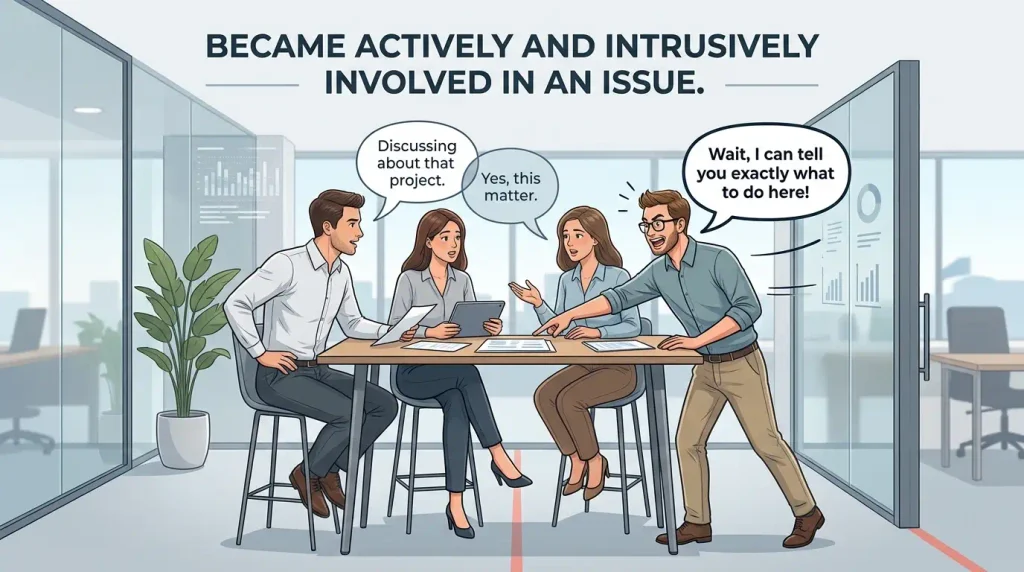
Meddled-In (Verb Phrase) — US: /ˈmɛdəld ɪn/ | UK: /ˈmɛdəld ɪn/
Meaning: Became actively and intrusively involved in an issue.
Tone/Register: Conversational and disapproving.
Examples:
He meddled in affairs that did not concern him.
She resented people who meddled in her private life.
Intermeddled-With (Verb Phrase) — US: /ˌɪntərˈmɛdəld wɪð/ | UK: /ˌɪntəˈmɛdəld wɪð/
Meaning: Engaged in unauthorized meddling with systems or objects.
Tone/Register: Archaic and formal.
Examples:
Old town records showed who meddled with local taxes.
Do not let untrained staff meddle with secure archives.
Tampered-With (Verb Phrase) — US: /ˈtæmpərd wɪð/ | UK: /ˈtæmpəd wɪð/
Meaning: Handled or altered an object with malicious intent.
Tone/Register: Legal and serious.
Examples:
The official seal was clearly tampered with last night.
Inspectors found that the packaging was tampered with.
Interfered-With (Verb Phrase) — US: /ˌɪntərˈfɪərd wɪð/ | UK: /ˌɪntəˈfɪəd wɪð/
Meaning: Obstructed or hindered the proper progress of something.
Tone/Register: Professional and standard.
Examples:
Normal operations were interfered with by the outage.
His studies were interfered with by constant noise.
Toyed-With (Verb Phrase) — US: /tɔɪd wɪð/ | UK: /tɔɪd wɪð/
Meaning: Handled or considered something without genuine seriousness.
Tone/Register: Expressive and casual.
Examples:
She toyed with her necklace while listening to the proposal.
He toyed with the concept before writing the essay.
Fiddled-With (Verb Phrase) — US: /ˈfɪdəld wɪð/ | UK: /ˈfɪdəld wɪð/
Meaning: Made nervous or casual adjustments to an item.
Tone/Register: Informal and everyday.
Examples:
The speaker fiddled with the microphone switch anxiously.
She fiddled with her keys while waiting outside.
Tinkered-With (Verb Phrase) — US: /ˈtɪŋkərd wɪð/ | UK: /ˈtɪŋkəd wɪð/
Meaning: Experimented with modifications on a physical device.
Tone/Register: Casual and hands-on.
Examples:
He tinkered with the bicycle gears until they shifted smoothly.
The coder tinkered with the script to optimize speed.
Monkeyed-Around (Verb Phrase) — US: /ˈmʌŋkid əˈraʊnd/ | UK: /ˈmʌŋkid əˈraʊnd/
Meaning: Acted playfully or handled equipment carelessly.
Tone/Register: Informal and conversational.
Examples:
Workers were told not to monkey around near heavy machinery.
The teens monkeyed around in the empty parking lot.
Bullied-Around (Verb Phrase) — US: /ˈbʊlid əˈraʊnd/ | UK: /ˈbʊlid əˈraʊnd/
Meaning: Dominated or pushed around by an aggressive person.
Tone/Register: Emotional and serious.
Examples:
She refused to be bullied around by her coworkers.
Recruits should not be bullied around on day one.
Pestered-By (Verb Phrase) — US: /ˈpɛstərd baɪ/ | UK: /ˈpɛstəd baɪ/
Meaning: Annoyed persistently by frequent requests or actions.
Tone/Register: Informal and common.
Examples: He felt pestered by constant notifications on his phone.
The author was pestered by questions about the sequel.
Harassed-By (Verb Phrase) — US: /ˈhærəst baɪ/ | UK: /ˈhærəst baɪ/
Meaning: Subjected to continuous aggressive pressure or trouble.
Tone/Register: Formal and legal.
Examples:
The journalist was harassed by aggressive interviewers.
She felt harassed by the repetitive phone solicitors.
Sabotaged-By (Verb Phrase) — US: /ˈsæbətɑːʒd baɪ/ | UK: /ˈsæbətɑːʒd baɪ/
Meaning: Rendered inoperative or ruined through intentional harm.
Tone/Register: Professional and dramatic.
Examples:
The launch was sabotaged by a critical software glitch.
Their efforts were sabotaged by poor communication.
Vandalized-By (Verb Phrase) — US: /ˈvændəlaɪzd baɪ/ | UK: /ˈvændəlaɪzd baɪ/
Meaning: Damaged intentionally by destructive trespassers.
Tone/Register: Formal and legal.
Examples:
The stadium wall was vandalized by rival sports fans.
Public art displays were vandalized by unknown youths.
Ransacked-By (Verb Phrase) — US: /ˈrænsækt baɪ/ | UK: /ˈrænsækt baɪ/
Meaning: Turned upside down and searched in a disorderly manner.
Tone/Register: Narrative and descriptive.
Examples:
The office was ransacked by burglars looking for cash.
Her drawers were ransacked by her curious younger sibling.
Disrupted-By (Verb Phrase) — US: /dɪsˈrʌptɪd baɪ/ | UK: /dɪsˈrʌptɪd baɪ/
Meaning: Thrown into confusion or disorder by an event.
Tone/Register: Formal and professional.
Examples:
The ceremony was disrupted by a sudden thunderstorm.
Classes were disrupted by the fire alarm test.
Altered-By (Verb Phrase) — US: /ˈɔːltərd baɪ/ | UK: /ˈɔːltəd baɪ/
Meaning: Modified or changed in character by external forces.
Tone/Register: Standard and technical.
Examples:
The document was altered by an unauthorized user.
Landscape views were altered by new construction projects.
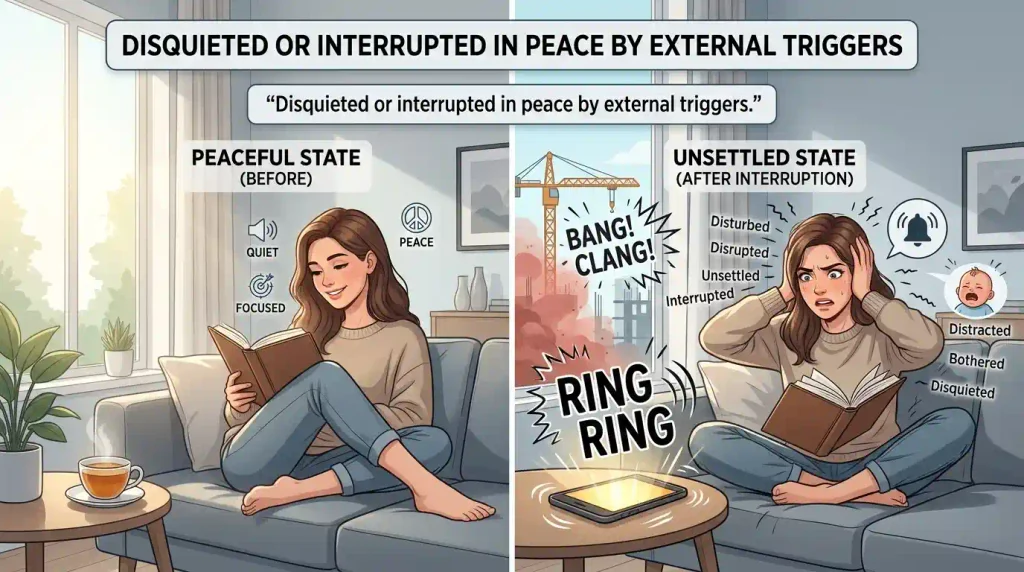
Disturbed-By (Verb Phrase) — US: /dɪˈstɜːrbd baɪ/ | UK: /dɪˈstɜːbd baɪ/
Meaning: Disquieted or interrupted in peace by external triggers.
Tone/Register: Formal and emotional.
Examples:
Residents were disturbed by strange noises at midnight.
She was disturbed by the unexpected news report.
Synonyms by Tone
Understanding tone ensures your narrative writing matches your exact communication goal.
- Positive Tone: Tinkered, dabbled, juggled.
- Neutral Tone: Altered, disrupted, adjusted, touched.
- Negative Tone: Sabotaged, vandalized, harassed, bullied, tampered, violated.
- Playful/Informal Tone: Pestered, monkeyed, fiddled.
Selecting the correct tone prevents misunderstandings in stories, academic papers, and professional articles.
Mini Comparison
Tampered vs. Tinkered vs. Sabotaged
While all three words relate to altering things, their nuances differ significantly.
- Tampered focuses on unauthorized, sneaky, or malicious interference with security or devices.
- Tinkered emphasizes casual, harmless, or experimental adjustments to fix or test things.
- Sabotaged describes intentional, destructive ruin aimed at causing complete failure.
- Therefore, use tampered for illegal tweaks, tinkered for casual adjustments, and sabotaged for deliberate ruin.
Context-Based Usage
In daily conversation, native speakers prefer simple words like messed with or bothered for ease. However, professional and legal writing calls for terms like tampered, harassed, or disrupted. Creative storytelling benefits greatly from expressive verbs like ransacked, toyed, or tormented. Matching your vocabulary to your specific audience keeps your message clear and engaging.
Common Mistakes & Native Usage
Common Mistakes Learners Make
- Using formal legal words like tampered in casual playground stories sounds overly dramatic.
- Confusing harmless tinkering with malicious sabotage can misrepresent character actions in narratives.
- Overusing slang phrases like messed with in formal academic essays makes the tone unprofessional.
Register Notes
- Spoken English favors casual, idiomatic phrasal verbs.
- Written English rewards precise single-word verbs for maximum clarity and impact.
Real-Life Mini Scenarios
- Workplace: Management discovered that someone tampered with the confidential employee payroll files.
- Social Situations: Younger siblings constantly pestered him while he tried to study for exams.
- Media / Pop Culture: Tech thrillers often feature hackers who sabotage secure government databases.
- Writing or Storytelling: The detective realized someone ransacked the study before the theft occurred.
Conclusion
Mastering a synonym for messed with elevates your narrative writing and enriches your daily storytelling. Exploring diverse vocabulary options allows you to express exact shades of interference or disruption with complete confidence.
Consistent practice helps these fresh expressions become a natural, permanent part of your active writing vocabulary toolkit. Finding the right synonym for messed with transforms simple drafts into engaging stories that capture reader attention.
Try utilizing your favorite new synonym for messed with in your next story, essay, or chat today. Consistent daily application ensures your communication always remains clear, professional, and memorable.
Interactive Practice Quiz
- Which synonym best fits unauthorized, illegal interference with security equipment?
A) Tinkered
B) Tampered
C) Dabbled
D) Juggled - Which word fits best when someone casually experiments with a machine engine?
A) Sabotaged
B) Tinkered
C) Harassed
D) Bullied - Which term works best for children repeatedly asking for snacks?
A) Pestered
B) Vandalized
C) Ransacked
D) Tampered - When describing a thief searching a room chaotically, you might use:
A) Ransacked
B) Tinkered
C) Dabbled
D) Altered - Which synonym implies persistent online or phone intimidation?
A) Harassed
B) Played
C) Toyed
D) Fiddled - What is the tone of the word tampered in modern professional writing?
A) Casual
B) Legal and serious
C) Playful
D) Joyful - Which word describes adjusting a radio dial nervously with hands?
A) Fiddled
B) Sabotaged
C) Vandalized
D) Bullied - Where is the word vandalized most accurately applied in legal reports?
A) Property damage and graffiti
B) Poetry writing
C) Software coding
D) Financial accounting - Why use synonyms instead of repeating messed with in a story?
A) To confuse readers
B) To improve descriptive writing flow
C) To make text shorter
D) To avoid spelling tests
Answer Key: 1. B, 2. B, 3. A, 4. A, 5. A, 6. 7. A,8. A, 9. B
Reflection Task: Write one original sentence using the word tinkered to describe working on a hobby project.
FAQs
1. What is the most formal synonym for messed with in legal writing?
Tampered and interfered are the most formal and legally accurate synonyms for describing unauthorized disruption or manipulation of property and evidence.
2. Can I use tinkered when talking about malicious computer hacking?
Tinkering implies casual, harmless experimentation or repair; using it for malicious hacking downplays the severity of the cyber attack.
3. How do I choose between pestered and harassed?
Use pestered for minor, annoying everyday requests from friends or kids, and reserve harassed for severe, persistent, and aggressive intimidation.
4. Is messed with only used in negative situations?
No, it can sometimes be used in playful contexts, such as friends teasing each other or someone harmlessly tinkering with a gadget.
5. What is a good storytelling alternative when a room is searched messily?
Words like ransacked or disrupted serve as excellent narrative alternatives when describing a chaotic search or disturbed environment.

Shahzeena Shazadi is the founder and lead writer at VocablyHub.com, where she creates accurate, reader-focused English language content designed to help people communicate with clarity and confidence. She specializes in synonyms, antonyms, word meanings, idioms, and practical vocabulary guides that simplify complex language concepts for everyday use. Every article is carefully researched, fact-checked, and written in clear, accessible language using reliable references and real-world examples. Her goal is to provide helpful, trustworthy content that supports learners at every stage of their English language journey.
Her editorial approach focuses on accuracy, transparency, and user value while following modern content quality standards. She regularly reviews and updates content to keep information relevant, useful, and easy to understand. Through VocablyHub.com, Shahzeena Shazadi is committed to publishing reliable language resources that help students, writers, educators, professionals, and English learners expand their vocabulary, improve their writing skills, and communicate with confidence in academic, professional, and everyday situations.